Vocabulary: Batch 78

#7701 to #7800 (100 entries)

#7800

insight [family]

insight /ˈɪnsaɪt/ noun
  • the capacity to gain an accurate and deep intuitive understanding of a person or thing

    This paper is alive with sympathetic insight into Shakespeare.

insightful /ˈɪnsaɪtfəl/ adjective

Common compliment for analysis or commentary ("that's an insightful observation"). Related noun: insight.

  • showing accurate understanding

    She made several insightful comments.

#7799

fever

fever
fever
fever /ˈfiːvɚ/ noun
  1. an abnormally high body temperature, usually accompanied by shivering, headache, and in severe instances, delirium

    She had a slight fever.

  2. (figurative) a state of great excitement or agitation

    World Cup fever swept the country.

fever vs. cold

These are not the same kind of thing: a fever is a symptom (a raised body temperature), while a cold is an illness (a viral infection). A cold may or may not come with a fever.

fever
A symptom, not a disease: an abnormally high body temperature that can accompany many different illnesses (flu, infections, COVID, etc.). You measure it with a thermometer.
cold
A specific mild viral infection of the nose and throat. Its usual signs are sneezing, a runny or blocked nose, and a sore throat; it often causes no fever or only a mild one.
  • You can have a cold without a fever, and a fever without a cold.
  • The flu is more likely than a cold to cause a noticeable fever, which is one way people tell them apart.
#7798

during

during /ˈdʊrɪŋ/ preposition
  • throughout or at some point in a period of time

    Please turn off your phone during the movie.

#7797

room

room /ruːm/ noun

Uncountable when meaning available space ('no room to move'); countable when meaning a chamber ('a bedroom'). 'Room for improvement' = capacity to get better.

  1. a part of a building enclosed by walls, floor, and ceiling

    She walked into the living room.

  2. available space for something

    There's no room in the trunk for another bag.

space vs. room

Both mean available area, but 'space' is the broader, more abstract word (including outer space), while 'room' as uncountable usually refers to space needed for something specific to fit or happen.

space
The general word for empty area, physical or figurative: desk space, parking space, personal space, outer space.
room
Uncountable 'room' means space needed for a purpose ('room to grow', 'no room to park'); it also has a separate countable sense meaning an enclosed chamber in a building.
  • 'Make space' and 'make room' are near-synonyms, but 'room' leans toward space needed for a specific thing to fit or happen.
  • Only 'room' has the countable, walls-and-a-door sense (a bedroom, a hotel room).
#7796

space

space /speɪs/ noun

'Outer space' (the universe), 'personal space', 'give me some space' (emotional distance), 'parking space'.

  1. an amount of unoccupied area or room available for use

    There's not much space left in the closet.

  2. the physical universe beyond Earth's atmosphere

    The rocket launched into space.

space vs. room

Both mean available area, but 'space' is the broader, more abstract word (including outer space), while 'room' as uncountable usually refers to space needed for something specific to fit or happen.

space
The general word for empty area, physical or figurative: desk space, parking space, personal space, outer space.
room
Uncountable 'room' means space needed for a purpose ('room to grow', 'no room to park'); it also has a separate countable sense meaning an enclosed chamber in a building.
  • 'Make space' and 'make room' are near-synonyms, but 'room' leans toward space needed for a specific thing to fit or happen.
  • Only 'room' has the countable, walls-and-a-door sense (a bedroom, a hotel room).
#7795

throughout

throughout /θruːˈaʊt/ preposition

Both spatial ("throughout the house") and temporal ("throughout the year"). More formal than "all through".

  • in every part of; during the entire time

    It rained throughout the day.

#7794

excavate [family]

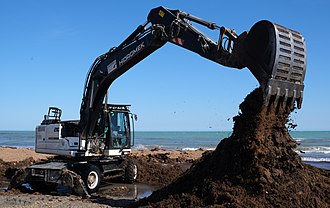
excavator
excavator
excavate /ˈekskəveɪt/ transitive verb
past: excavated /ˈekskəveɪtɪd/
pp: excavated /ˈekskəveɪtɪd/
  1. to dig or hollow out (a hole, tunnel, or area), especially with machinery

    Workers excavated a deep trench for the foundation.

  2. to uncover something buried by removing earth carefully, especially in archaeology

    Archaeologists excavated the ancient Roman city, layer by layer.

excavator /ˈekskəveɪtɚ/ countable noun vehicle
  1. a large machine used for digging, typically with a long arm and a bucket on the end; a digger

    Two yellow excavators were tearing down the old warehouse.

  2. a person who excavates, especially an archaeologist or construction worker

    The lead excavator of the dig was a professor from Oxford.

excavation /ˌekskəˈveɪʃən/ noun
  • the action of digging or the site being dug, especially an archaeological one

    The excavation uncovered pottery dating back 3,000 years.

#7793

bulldozer [family]

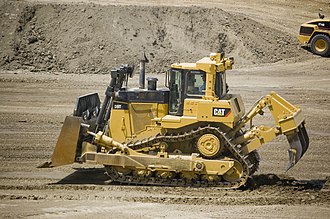
bulldozer
bulldozer
bulldozer /ˈbʊlˌdoʊzɚ/ countable noun vehicle

As a verb, "to bulldoze" can mean to forcefully push aside opposition ("He bulldozed his way into the meeting").

  • a powerful tracked vehicle with a wide blade at the front for clearing earth

    The bulldozer leveled the old building site.

bulldoze /ˈbʊldoʊz/ transitive verb
past: bulldozed /ˈbʊldoʊzd/
pp: bulldozed /ˈbʊldoʊzd/

Often metaphorical: "bulldoze through opposition", push aside forcefully. From bulldozer (added earlier).

  1. to clear or demolish with a bulldozer

    They bulldozed the old building.

  2. to forcibly push aside

    He bulldozed his way to the front.

#7792

rain [family]

rain
rain
rain /reɪn/ uncountable noun weather

Homophone: reign, rein. 'Rain check' = postpone an offer. 'Right as rain' = perfectly fine.

  1. water that falls from clouds in drops

    The rain lasted all afternoon.

  2. a large quantity of things falling

    A rain of bullets hit the wall.

rain /reɪn/ verb
past: rained /reɪnd/
pp: rained /reɪnd/

'It's raining cats and dogs' = very heavy rain. Often impersonal: 'it rained'.

  1. to fall as rain

    It rained heavily last night.

  2. to fall in large quantities

    Confetti rained down on the crowd.

rainy /ˈreɪni/ adjective

'Rainy day fund' / 'save for a rainy day' = money set aside for emergencies.

  • having or characterized by a lot of rain

    It was a cold, rainy day.

#7791

learn [family]

learn /lɝn/ verb
past: learned /lɝːnd/ or learnt /lɝːnt/ (chiefly British)
pp: learned /lɝːnd/ or learnt /lɝːnt/ (chiefly British)

'Learn the ropes' = master the basics.

  • to gain knowledge or skill through study, experience, or teaching

    She's learning to play the guitar.

learned /ˈlɝnɪd/ adjective

As the adjective ('scholarly') it has two syllables, 'LERN-id'; the past tense 'learned' is one syllable, /lɝːnd/.

  • having or showing great knowledge; scholarly

    She is a learned professor of classics.

learning /ˈlɝnɪŋ/ uncountable noun

"Machine learning": AI subfield. "Lifelong learning": modern education concept. "Learning curve": difficulty of mastering a new skill.

  • the acquisition of knowledge or skills

    Learning a new language takes time.

#7790

eat

eat /iːt/ verb
past: ate /eɪt/
pp: eaten /ˈiːtən/

"Eat one's words" = retract a statement. "Eat humble pie" = admit a mistake. "Eat one's heart out": taunt for envy.

  • to put food in the mouth and swallow

    What did you eat for lunch?

#7789

David

David /ˈdeɪvɪd/ proper noun

From Hebrew Dawid (beloved). One of the most common English male names. Biblical King David slew Goliath; 'David and Goliath' = underdog vs. giant. Short forms: Dave, Davey.

  • a male given name of Hebrew origin

    David is one of the most popular names in English-speaking countries.

#7788

sugar [family]

sugar
sugar
sugar /ˈʃʊɡɚ/ uncountable noun food

Chemically sucrose. The world's leading source is sugarcane (~80%), followed by sugar beet (~20%).

  1. a sweet crystalline substance obtained from sugarcane or sugar beet, used to sweeten food and drink

    Do you take sugar in your coffee?

  2. (informal) a term of endearment

    How are you doing, sugar?

cane sugar /ˌkeɪn ˈʃʊɡɚ/ uncountable noun

Chemically identical to beet sugar (both are sucrose), but some bakers prefer cane sugar for caramelization. Often labeled on packaging to distinguish from beet-derived sugar.

  • sugar produced from sugarcane

    This soda is made with pure cane sugar.

table sugar /ˌteɪbəl ˈʃʊɡɚ/ uncountable noun

The refined white granulated sugar most people keep at home. Used in technical/nutritional contexts to distinguish from other sugars like glucose, fructose, or lactose.

  • ordinary refined white sugar as used in cooking and at meals

    The recipe calls for two cups of table sugar.

cane sugar vs. table sugar

Both are sucrose, but the labels highlight different things: source plant vs. everyday kitchen use.

cane sugar
Specifies the source: sugar refined from sugarcane (as opposed to sugar beet). Often printed on packaging as a selling point, since some consumers and bakers prefer it for flavor or perceived quality, even though it is chemically identical to beet sugar.
table sugar
Specifies the form and context: the ordinary refined white granulated sugar kept at home for cooking and sweetening drinks. Used especially in nutrition and chemistry to distinguish sucrose from other sugars (glucose, fructose, lactose). Can come from either cane or beet.
  • Cane sugar can be table sugar; table sugar can be cane sugar. The terms are not opposites but describe different attributes (source vs. form).
  • Brown sugar, raw sugar, and powdered sugar are all made from sucrose too, but processed differently.
#7787

cane

cane /keɪn/ countable noun

"Sugar cane": major tropical crop. "Cane" as walking aid for the visually impaired/elderly. "Caning": historical corporal punishment.

  1. a long thin plant stem

    They harvested the sugar cane.

  2. a stick used as a walking aid

    The old man walked with a cane.

#7786

phrase [family]

phrase /freɪz/ countable noun

Linguistic: less than a clause. "Catchphrase": memorable saying. "Turn of phrase": distinctive way of speaking.

  • a short group of words

    That's a common phrase in English.

paraphrase /ˈpærəfreɪz/ transitive verb
past: paraphrased /ˈpærəfreɪzd/
pp: paraphrased /ˈpærəfreɪzd/
  • to express the meaning of something using different words, especially for clarity

    You can either quote or paraphrase the poem.

paraphrase /ˈpærəfreɪz/ countable noun
  • a rewording of something written or spoken by someone else

    She gave a paraphrase of the text.

idiom vs. phrase

Every idiom is a phrase, but not every phrase is an idiom. The key difference is whether the meaning can be worked out from the individual words.

phrase
Any short group of words that functions as a unit, whether or not its meaning is transparent. 'In the morning', 'very quickly', and 'kick the bucket' are all phrases. The broadest, most general term.
idiom
A specific kind of phrase whose meaning cannot be deduced from its individual words. 'Kick the bucket' (= die) and 'break a leg' (= good luck) are idioms; 'in the morning' is not, because the words mean exactly what they say.
  • In casual use, people sometimes say 'phrase' when they mean 'idiom' or 'expression', but in linguistics the distinction is clear.
  • All idioms are phrases, but 'phrase' also covers literal, transparent word groups that idioms by definition exclude.
#7785

idiom [family]

idiom /ˈɪdiəm/ countable noun

Examples: "kick the bucket", "piece of cake", "raining cats and dogs". Often impossible to translate literally: major challenge for language learners.

  • a phrase whose meaning is not deducible from individual words

    "Break a leg" is an English idiom meaning good luck.

idiomatic /ˌɪdiəˈmætɪk/ adjective
  • using, containing, or denoting expressions that are natural to a native speaker

    Distinctive idiomatic phrases.

idiom vs. phrase

Every idiom is a phrase, but not every phrase is an idiom. The key difference is whether the meaning can be worked out from the individual words.

phrase
Any short group of words that functions as a unit, whether or not its meaning is transparent. 'In the morning', 'very quickly', and 'kick the bucket' are all phrases. The broadest, most general term.
idiom
A specific kind of phrase whose meaning cannot be deduced from its individual words. 'Kick the bucket' (= die) and 'break a leg' (= good luck) are idioms; 'in the morning' is not, because the words mean exactly what they say.
  • In casual use, people sometimes say 'phrase' when they mean 'idiom' or 'expression', but in linguistics the distinction is clear.
  • All idioms are phrases, but 'phrase' also covers literal, transparent word groups that idioms by definition exclude.
#7784

tram

tram
tram
tram /træm/ countable noun vehicle
  • a passenger vehicle powered by electricity conveyed by overhead cables, and running on rails laid in a public road

    I caught the tram to the city center.

#7783

blink

blink /blɪŋk/ verb
past: blinked /blɪŋkt/
pp: blinked /blɪŋkt/

"Blink and you'll miss it" = happens very fast. "In the blink of an eye" = very quickly.

  1. to close and open the eyes quickly

    He blinked in the bright sunlight.

  2. (of a light) to flash on and off

    The cursor blinked on the screen.

blink /blɪŋk/ countable noun
  • an act of blinking

    He stared at her without a single blink.

squint vs. blink

Both involve closing the eyes, but they differ in how much, how long, and why.

squint
To partly close the eyes and hold them that way, usually to see better in bright light or to focus on something small or distant. Duration: sustained (seconds or longer). The eyes stay partly open.
blink
To fully close and reopen the eyes very quickly, either reflexively (every few seconds) or in reaction to surprise, bright light, or dryness. Duration: a fraction of a second. The eyes close completely.
  • Squinting is deliberate and sustained; blinking is usually involuntary and instantaneous.
  • Both can be responses to bright light, but squinting narrows the eyes to reduce glare while blinking briefly shuts them entirely.
#7782

squint

squint /skwɪnt/ verb
past: squinted /ˈskwɪntɪd/
pp: squinted /ˈskwɪntɪd/
  • look at someone or something with one or both eyes partly closed in an attempt to see more clearly or as a reaction to strong light

    The bright sun made them squint.

squint /skwɪnt/ countable noun
  • an act of looking with eyes partly closed, or a condition in which the eyes point in different directions

    She looked at him with a squint.

squint vs. blink

Both involve closing the eyes, but they differ in how much, how long, and why.

squint
To partly close the eyes and hold them that way, usually to see better in bright light or to focus on something small or distant. Duration: sustained (seconds or longer). The eyes stay partly open.
blink
To fully close and reopen the eyes very quickly, either reflexively (every few seconds) or in reaction to surprise, bright light, or dryness. Duration: a fraction of a second. The eyes close completely.
  • Squinting is deliberate and sustained; blinking is usually involuntary and instantaneous.
  • Both can be responses to bright light, but squinting narrows the eyes to reduce glare while blinking briefly shuts them entirely.
#7781

torch

torch
torch
torch /tɔːrtʃ/ countable noun

British: "torch" = flashlight (American). The Olympic torch is carried in a relay before each Games. "Carry a torch for" = have a secret romantic feeling for.

  1. a portable light made from a stick with a flame at one end

    They lit their way with torches.

  2. (British) a flashlight

    He shone the torch into the cave.

flashlight vs. torch

Both can refer to a portable handheld light, but the word choice depends on dialect and, for torch, on whether you mean a battery-powered device or a burning stick.

flashlight
The standard American English word for a battery-powered portable light. Universally understood in the US; less common in British English.
torch
In British English, the everyday word for what Americans call a flashlight. In all dialects, also means a stick with a burning flame at one end (the older, original sense). Context usually makes clear which is meant.
  • In international contexts (tech specs, product packaging), 'flashlight' is often used to avoid ambiguity.
  • The Olympic torch and 'torch song' always use the fire/passion sense, never the battery-powered one.
#7780

flashlight

flashlight
flashlight
flashlight /ˈflæʃlaɪt/ countable noun

American term. British: torch. Modern smartphones include built-in flashlights. LED has replaced incandescent bulbs in most.

  • (US) a handheld battery-powered light

    He shone the flashlight into the cave.

flashlight vs. torch

Both can refer to a portable handheld light, but the word choice depends on dialect and, for torch, on whether you mean a battery-powered device or a burning stick.

flashlight
The standard American English word for a battery-powered portable light. Universally understood in the US; less common in British English.
torch
In British English, the everyday word for what Americans call a flashlight. In all dialects, also means a stick with a burning flame at one end (the older, original sense). Context usually makes clear which is meant.
  • In international contexts (tech specs, product packaging), 'flashlight' is often used to avoid ambiguity.
  • The Olympic torch and 'torch song' always use the fire/passion sense, never the battery-powered one.
#7779

grapple

grapple /ˈɡræpəl/ verb
past: grappled /ˈɡræpəld/
pp: grappled /ˈɡræpəld/

Wrestling moves: "grappling". "Grapple with a problem": figurative for engaging difficulty. From Old French "grappil" (small hook).

  1. to seize and struggle with

    The two men grappled on the floor.

  2. to struggle to deal with

    He grappled with the difficult question.

#7778

degenerate [family]

degenerate /dɪˈdʒenəreɪt/ intransitive verb
past: degenerated /dɪˈdʒenəreɪtɪd/
pp: degenerated /dɪˈdʒenəreɪtɪd/
  • to decline or deteriorate physically, mentally, or morally

    The debate degenerated into a brawl.

degenerate /dɪˈdʒenərət/ adjective

Note the different vowel ending from the verb: /-rət/ (adjective/noun) vs /-reɪt/ (verb), like moderate/aggregate.

  • having declined in physical, mental, or moral standards

    A degenerate lifestyle.

degenerate /dɪˈdʒenərət/ countable noun
  • a person who has lost or lacks respectable standards of behavior

    He was dismissed as a hopeless degenerate.

degeneracy /dɪˈdʒenɚəsi/ uncountable noun
  • the state or property of being degenerate

    A society plunged into moral degeneracy.

degenerative /dɪˈdʒenɚətɪv/ adjective
  • (of a disease or symptom) characterized by progressive, often irreversible deterioration

    Alzheimer's is a degenerative disease.

degen /ˈdiːdʒen/ noun

Internet/crypto slang clipping of 'degenerate'. Originally pejorative, now often self-applied with ironic pride, especially in gambling and speculative trading communities.

  • (informal) a degenerate person, especially one who engages in reckless gambling or speculation

    The crypto degens were up all night watching charts.

#7777

clinch [family]

clinch /klɪntʃ/ verb
past: clinched /klɪntʃt/
pp: clinched /klɪntʃt/
  • to confirm or settle (a contract or bargain)

    To clinch a deal.

clincher /ˈklɪntʃɚ/ countable noun
  • a fact, argument, or event that settles a matter conclusively

    His second goal was the clincher.

clinch /klɪntʃ/ countable noun
  • a close embrace, especially a romantic one; (boxing) a hold in which opponents grapple to avoid blows

    They kissed in a passionate clinch.

#7776

flash [family]

flash /flæʃ/ verb
past: flashed /flæʃt/
pp: flashed /flæʃt/

"News flash" : breaking news. "Flash in the pan" : brief success. "Flash mob" : coordinated public gathering. "Flashback" : sudden memory.

  • to shine briefly or suddenly

    Lightning flashed across the sky.

flash /flæʃ/ countable noun
  • a brief burst of light or activity

    In a flash, he was gone.

flashy /ˈflæʃi/ adjective
  • attracting attention by being bright, expensive, or showy, sometimes in a way considered vulgar

    He drives a flashy red sports car.

#7775

reconcile [family]

reconcile /ˈrekənsaɪl/ verb
past: reconciled /ˈrekənsaɪld/
pp: reconciled /ˈrekənsaɪld/
  1. to restore friendly relations between

    The couple managed to reconcile after their fight.

  2. to make two ideas or facts compatible

    It is difficult to reconcile his words with his actions.

reconciliation /ˌrekənsɪliˈeɪʃən/ noun
  • the restoration of friendly relations

    The truth and reconciliation commission heard testimony from both sides.

irreconcilable /ˌɪrekənˈsaɪləbəl/ adjective

Common in legal filings: "irreconcilable differences".

  • not able to be made compatible or resolved

    They cited irreconcilable differences in their divorce filing.

#7774

inherent [family]

inherent /ɪnˈhɪrənt/ adjective

From Latin inhaerere (to stick in or to). 'Inherent in' = existing as a natural, built-in part of.

  • existing in something as a permanent, essential, or characteristic attribute

    Any form of mountaineering has its inherent dangers.

inherently /ɪnˈhɪrəntli/ adverb
  • in a way that is a basic or permanent part of something; intrinsically

    The job is inherently dangerous.

#7773

inherit [family]

inherit /ɪnˈherɪt/ transitive verb
past: inherited /ɪnˈherɪtɪd/
pp: inherited /ɪnˈherɪtɪd/

Used both literally (money/property) and biologically (genes/traits). "The meek shall inherit the earth": Sermon on the Mount.

  1. to receive (money, property) from a deceased person

    She inherited the house from her grandmother.

  2. to derive (a quality) from one's parents genetically

    He inherited his father's temper.

inheritance tax /ɪnˈherɪtəns ˌtæks/ countable noun

Also called "estate tax" (US) or "death tax" (politically loaded term). Controversial: some see it as fair; others as double taxation.

  • a tax on money or property received from someone who has died

    They worried about the inheritance tax on the estate.

inheritor /ɪnˈherɪtɚ/ countable noun

More gender-neutral than "heir" (which traditionally referred to males). "Heiress" was used for women.

  • a person who inherits something

    She was the sole inheritor of his fortune.

inheritance /ɪnˈherɪtəns/ noun
  • a thing that is inherited; the action of inheriting

    He came into a comfortable inheritance.

heir /er/ countable noun

Silent "h". Homophone with "air". "Heir apparent": the person currently first in line to inherit (usually a throne).

  • a person who inherits property or rank

    Prince William is heir to the British throne.

heiress /ˈerəs/ countable noun

Famous: Paris Hilton (Hilton hotel heiress). "Heiress" is sometimes considered dated; "heir" can apply to any gender in modern usage.

  • a female heir, especially to great wealth

    She was the heiress to a steel fortune.

heirloom /ˈerluːm/ countable noun

"Heirloom tomato/seed": traditional plant variety preserved through generations of seed-saving.

  • a valuable object passed down through generations

    The watch is a family heirloom.

#7772

entitle [family]

entitle /ɪnˈtaɪtəl/ transitive verb
past: entitled /ɪnˈtaɪtəld/
pp: entitled /ɪnˈtaɪtəld/
  1. to give someone the right to do or have something

    Your ticket entitles you to one free drink.

  2. to give a name or title to (a book, film, etc.)

    She entitled her memoir "A Long Way Home".

entitled /ɪnˈtaɪtəld/ adjective

Often pejorative: 'entitled people' = those who act as if they deserve special treatment without earning it.

  1. having a right to something

    You are entitled to a full refund.

  2. believing oneself to be inherently deserving of privileges

    She came across as spoiled and entitled.

entitlement /ɪnˈtaɪtəlmənt/ noun

"Sense of entitlement" usually has a negative connotation - thinking one deserves special treatment.

  1. the fact of having a right to something

    Your entitlement to vacation increases with years of service.

  2. the belief that one is inherently deserving of privileges or special treatment

    His sense of entitlement made him difficult to work with.

#7771

goodwill

goodwill /ˌɡʊdˈwɪl/ uncountable noun

In accounting, goodwill is the value of a company's reputation and customer relationships, included as an intangible asset.

  1. friendly, helpful, or cooperative feelings

    He sent the gift as a gesture of goodwill.

  2. (business) the established reputation of a business, regarded as a quantifiable asset

    The company's goodwill is worth millions.

#7770

wipe [family]

wiper blade
1wiper blade
wet wipe
2wet wipe
wipe /waɪp/ verb
past: wiped /waɪpt/
pp: wiped /waɪpt/

"Wipe out" = destroy completely, or fall hard while surfing. "Wipe clean" = erase entirely. In computing: erase a drive.

  • to clean or dry by rubbing

    He wiped the table with a cloth.

wiper /ˈwaɪpɚ/ countable noun

"Windshield wiper" (US) / "windscreen wiper" (UK) - invented 1903 by Mary Anderson. Now standard on all motor vehicles.

  • a device that wipes, especially a windshield wiper

    The wipers couldn't keep up with the heavy rain.

wiper blade /ˈwaɪpɚ bleɪd/ countable noun

The blade is the replaceable rubber-edged part; the wiper also includes the arm and mechanism.

  • 1the rubber-edged strip that clears rain from a vehicle window

    The mechanic replaced both wiper blades before the rainy season.

wet wipe /ˌwet ˈwaɪp/ countable noun

Also called a moist towelette (formal/airline term). Usually disposable; some are flushable but many cause sewer blockages.

  • 2a small moistened disposable cloth used for cleaning

    She pulled out a wet wipe to clean the baby's hands.

#7769

complement [family]

complement /ˈkɑːmpləmənt/ transitive verb
past: complemented /ˈkɑːmpləmentɪd/
pp: complemented /ˈkɑːmpləmentɪd/

Homophone with "compliment" (praise): easy to confuse. Memory aid: complement = completes; compliment = flatters with an "i".

  • to add to in a way that improves or makes attractive

    The wine complements the meal beautifully.

complement /ˈkɑːmpləmənt/ countable noun
  • a thing that completes or goes well with another

    The dessert was the perfect complement to the meal.

complementary /ˌkɑːmpləˈmentɚi/ adjective

"Complementary colors": colors that contrast pleasingly (e.g., red and green). Don't confuse with "complimentary" (free of charge).

  • combining well to enhance each other

    They have complementary skills.

#7768

exquisite

exquisite /ɪkˈskwɪzɪt/ adjective

Stress may also fall on the first syllable (/ˈekskwɪzɪt/) in older usage.

  1. extremely beautiful and delicate

    She wore an exquisite silk dress.

  2. intensely felt; acute

    The pain in his back was exquisite.

#7767

smell [family]

smell /smel/ transitive verb
past: smelled /smɛld/ or smelt /smelt/ (chiefly British)
pp: smelled /smɛld/ or smelt /smelt/ (chiefly British)
  • to perceive or detect the odor of something using the nose

    She could smell the fresh bread baking.

smell /smel/ countable noun
  1. the faculty of perceiving odors

    Dogs have an excellent sense of smell.

  2. a quality perceived by the sense of smell

    There was a strange smell coming from the kitchen.

smelly /ˈsmeli/ adjective

Always negative (unpleasant smell), unlike the neutral noun 'smell'.

  • having a strong or unpleasant smell

    He peeled off his smelly socks after the run.

odor vs. smell

Both refer to something perceived through the nose, but they differ in neutrality, formality, and typical context.

smell
The most general, everyday word for any nose-perceived quality, good or bad. Also the standard word for the sense itself ('sense of smell'). Neutral by default; context or an adjective determines whether it is pleasant or unpleasant.
odor
More formal and slightly technical (used in science, medicine, product labeling). In everyday speech it leans negative, implying something unpleasant, but in technical contexts it is neutral. British spelling: odour.
  • For clearly pleasant smells, prefer aroma, fragrance, or scent.
  • For clearly unpleasant smells, stench and stink are stronger than odor.
#7766

odor [family]

odor /ˈoʊdɚ/ countable noun

British spelling: odour. Often used for unpleasant smells; for pleasant ones, "fragrance" or "aroma" is more common.

  • a distinctive smell, often unpleasant

    There was a strange odor coming from the basement.

body odor /ˈbɑːdi ˌoʊdɚ/ uncountable noun

Abbreviated BO. British spelling: body odour. Caused mainly by bacteria on the skin breaking down sweat.

  • an unpleasant smell produced by sweat on the body

    Showering daily helps prevent body odor.

deodorant /diˈoʊdɚənt/ noun

Distinct from antiperspirant: deodorants mask or neutralize smell; antiperspirants block sweat. Many products combine both.

  • a substance applied to the body to prevent or mask unpleasant smells

    She put on deodorant before going to the gym.

deodorize /diˈoʊdəraɪz/ transitive verb
past: deodorized /diˈoʊdəraɪzd/
pp: deodorized /diˈoʊdəraɪzd/
  • to remove or hide an unpleasant smell

    Baking soda can deodorize the fridge.

odor vs. smell

Both refer to something perceived through the nose, but they differ in neutrality, formality, and typical context.

smell
The most general, everyday word for any nose-perceived quality, good or bad. Also the standard word for the sense itself ('sense of smell'). Neutral by default; context or an adjective determines whether it is pleasant or unpleasant.
odor
More formal and slightly technical (used in science, medicine, product labeling). In everyday speech it leans negative, implying something unpleasant, but in technical contexts it is neutral. British spelling: odour.
  • For clearly pleasant smells, prefer aroma, fragrance, or scent.
  • For clearly unpleasant smells, stench and stink are stronger than odor.
#7765

patron [family]

patron /ˈpeɪtrən/ countable noun

"Patron saint": protector saint of a place or activity. "Patron of the arts": wealthy supporter. "Patrons" can also just mean customers (of a restaurant, store, etc.).

  • a person who gives financial support to an organization or cause

    She is a patron of the museum.

patronize /ˈpeɪtrənaɪz/ transitive verb
past: patronized /ˈpeɪtrənaɪzd/
pp: patronized /ˈpeɪtrənaɪzd/

British spelling: patronise. Two senses are almost opposites: one positive (be a customer), one negative (talk down to). Context decides.

  1. to be a regular customer of

    They patronize the local bakery.

  2. to treat in a way that is condescending

    Don't patronize me!

patronage /ˈpeɪtrənɪdʒ/ noun

In politics: "patronage" often means giving jobs to political supporters (cronyism).

  • the support given by a patron; customers' regular use of a business

    The arts depend on private patronage.

patronizing /ˈpeɪtrənaɪzɪŋ/ adjective

"Patronizing": almost always negative. Often used about tone of voice or attitude. Antonym would be "respectful" or "egalitarian".

  • treating others as if they were inferior

    His patronizing tone annoyed her.

patroness /ˈpeɪtrənəs/ countable noun

Gendered and somewhat old-fashioned; patron is now often used for any gender.

  • a woman who supports an artist, charity, or institution

    The duchess was a patroness of the museum.

#7764

Cathay

Cathay /kæˈθeɪ/ proper noun

From medieval Latin Cataya, via Marco Polo's Catai, ultimately from Khitan (契丹). Still used in the airline name Cathay Pacific and in poetic/literary contexts.

  • an archaic or literary name for China, especially northern China

    Marco Polo's accounts of Cathay captivated European imaginations for centuries.

#7763

blunder

blunder /ˈblʌndɚ/ countable noun
  • a careless or stupid mistake

    Forgetting his wife's birthday was a major blunder.

blunder /ˈblʌndɚ/ intransitive verb
past: blundered /ˈblʌndɚd/
pp: blundered /ˈblʌndɚd/
  1. to make a careless mistake

    The candidate blundered in the debate.

  2. to move clumsily or as if unable to see

    He blundered through the dark room.

#7762

extol [family]

extol /ɪkˈstoʊl/ transitive verb
past: extolled /ɪkˈstoʊld/
pp: extolled /ɪkˈstoʊld/
  • to praise enthusiastically

    He extolled the virtues of the Russian peoples.

extolling /ɪkˈstoʊlɪŋ/ noun

Often seen in 'extolling the virtues of'; note the doubled l before -ing (extol -> extolling).

  • the act of praising something enthusiastically

    His constant extolling of the new policy grew tiresome.

#7761

boo

boo /buː/ interjection

Also used playfully to startle someone: 'Boo! Did I scare you?'

  1. an exclamation to show disapproval or contempt, especially at a performance

    The crowd booed when the referee made the call.

  2. an exclamation used to surprise or frighten someone

    She jumped out from behind the door and shouted 'Boo!'

boo /buː/ verb
past: booed /buːd/
pp: booed /buːd/
  • to shout 'boo' at someone to express disapproval

    The audience booed the comedian off stage.

#7760

merit

merit /ˈmerɪt/ noun

"On its own merits" = considering only its inherent qualities.

  1. (uncountable) the quality of being good or worthy of praise

    There is some merit in his argument.

  2. (countable) a good feature or quality of something

    The plan has many merits.

merit /ˈmerɪt/ transitive verb
past: merited /ˈmerɪtɪd/
pp: merited /ˈmerɪtɪd/
  • to deserve or be worthy of

    His efforts merit recognition.

#7759

make [family]

make-up
make-up
make /meɪk/ verb
past: made /meɪd/
pp: made /meɪd/

Past: made. One of the most common verbs. "Make it" = succeed. "Make do" = manage with what's available. Hundreds of uses.

  • to form or create something

    She made a cake.

homemaker /ˈhoʊmmeɪkɚ/ countable noun
  • a person, especially a housewife, who manages a home

    A busy homemaker.

home-made /ˌhoʊmˈmeɪd/ adjective
  • made at home, rather than in a store or factory

    Home-made soup.

make-up /ˈmeɪk ʌp/ noun
  • cosmetics such as lipstick or powder applied to the face

    She wore a lot of make-up.

self-made /ˌselfˈmeɪd/ adjective

Often used: "self-made millionaire/billionaire". Criticized concept: nobody achieves wealth entirely alone.

  • having achieved wealth or success by one's own efforts

    He's a self-made man.

make it /ˈmeɪk ɪt/ idiom
  1. to succeed, especially in a career or difficult venture

    Few actors make it in Hollywood.

  2. to survive; to live through a difficult situation

    The doctors weren't sure he'd make it to 25.

  3. to manage to arrive somewhere or attend something

    I don't think I can make it to the party tonight.

make the best of /ˌmeɪk ðə ˈbest əv/ idiom
  • to deal with a difficult or unsatisfactory situation as well as possible

    The hotel was awful, but we tried to make the best of it.

make my day /ˌmeɪk maɪ ˈdeɪ/ idiom

Famously used by Clint Eastwood as Dirty Harry (1983): 'Go ahead, make my day.' Can be sincere (you've made me happy) or a threatening dare (give me an excuse).

  1. to make someone very happy

    That phone call really made my day.

  2. (as a dare) to challenge someone to do something, implying you welcome the confrontation

    'Go ahead, make my day,' he said, daring them to try.

#7758

immerse [family]

immerse /ɪˈmɝrs/ transitive verb
past: immersed /ɪˈmɝrst/
pp: immersed /ɪˈmɝrst/

Immerse is usually followed by in for the figurative sense: immerse oneself in a project, book, or culture.

  1. to put something completely under a liquid

    Immerse the vegetables in ice water to stop them cooking.

  2. to involve oneself deeply in an activity, subject, or environment

    She immersed herself in the language and culture.

immersion /ɪˈmɝrʒən/ noun

Language immersion teaches or surrounds learners in the target language. In technology, immersion can also mean a highly absorbing simulated experience.

  1. the act or state of being completely covered by a liquid

    The device is designed to withstand full immersion in water.

  2. deep mental involvement in an activity, subject, or environment

    Language immersion gives learners sustained exposure to everyday speech.

immersive /ɪˈmɝrsɪv/ adjective

Common in media and technology: immersive theater, immersive audio, immersive VR.

  • providing deep involvement that makes the surrounding world feel less present

    The museum created an immersive exhibit using sound and projected images.

immersed /ɪˈmɝrst/ adjective
  1. completely covered by liquid

    The sensor remained immersed in water for an hour.

  2. giving full attention to an activity or subject

    She was immersed in the novel and did not hear the phone.

#7757

immense [family]

immense /ɪˈmens/ adjective

From Latin immensus (immeasurable). Stronger than "big" or "large".

  • extremely large

    They have immense wealth.

immensely /ɪˈmensli/ adverb

Common as a strong intensifier ("immensely popular", "immensely grateful").

  • to a great extent

    I enjoyed the film immensely.

#7756

vacate [family]

vacate /ˈveɪkeɪt/ transitive verb
past: vacated /ˈveɪkeɪtɪd/
pp: vacated /ˈveɪkeɪtɪd/

From Latin "vacare" (to be empty). Legal: "vacate a judgment" = annul. Real estate: tenants must "vacate the premises".

  • to leave a place that one was occupying

    Please vacate the room by noon.

vacation /veɪˈkeɪʃən/ noun

US "vacation" = UK "holiday". Originally meant "vacating" one's normal place. "On vacation": common phrase. "Vacation home": second house for holidays.

  • a period of time spent away from work or school for rest or travel

    They went on vacation to Hawaii.

vacant /ˈveɪkənt/ adjective

"Vacant expression": blank, distracted look.

  • not filled or occupied

    There were several vacant seats.

vacancy /ˈveɪkənsi/ countable noun

"No vacancy": sign at full hotels. "Job vacancy": open position. "Vacancy": feeling of emptiness or loss.

  • an unoccupied position or job

    The hotel has no vacancies tonight.

empty vs. vacant

Both mean 'not containing anything or anyone', but empty is the everyday general word, while vacant is more formal and implies something is available to be filled or occupied.

empty
The broadest word: nothing inside at all. Works for containers ('empty bottle'), rooms, streets, feelings ('empty promise'), and abstractions. Neutral and common.
vacant
Specifically means unoccupied and available: a vacant seat, a vacant lot, a job vacancy. Also describes a blank facial expression ('vacant stare'). More formal than empty; rarely used for containers.
  • An empty room has nothing in it; a vacant room is unoccupied and available for someone to use.
  • You say 'empty bottle', never 'vacant bottle'. You say 'vacant position', rarely 'empty position'.
#7755

empty

empty /ˈempti/ adjective
  1. containing nothing; not filled or occupied

    The fridge is completely empty.

  2. having no meaning or value

    His words felt empty.

empty /ˈempti/ verb
past: emptied /ˈemptid/
pp: emptied /ˈemptid/
  1. to remove all the contents of something

    She emptied the dishwasher.

  2. (of a river) to flow into a larger body of water

    The river empties into the sea.

empty vs. vacant

Both mean 'not containing anything or anyone', but empty is the everyday general word, while vacant is more formal and implies something is available to be filled or occupied.

empty
The broadest word: nothing inside at all. Works for containers ('empty bottle'), rooms, streets, feelings ('empty promise'), and abstractions. Neutral and common.
vacant
Specifically means unoccupied and available: a vacant seat, a vacant lot, a job vacancy. Also describes a blank facial expression ('vacant stare'). More formal than empty; rarely used for containers.
  • An empty room has nothing in it; a vacant room is unoccupied and available for someone to use.
  • You say 'empty bottle', never 'vacant bottle'. You say 'vacant position', rarely 'empty position'.
#7754

gluten

gluten
gluten
gluten /ˈɡluːtən/ uncountable noun

Gives bread its elasticity. "Gluten-free": necessary for celiac disease (~1% of people), trendy diet for others. From Latin "gluten" (glue).

  • a protein in wheat and some other grains

    She avoids gluten because of celiac disease.

#7753

delegate [family]

delegate /ˈdelɪɡeɪt/ verb
past: delegated /ˈdelɪɡeɪtɪd/
pp: delegated /ˈdelɪɡeɪtɪd/

Stress shifts: verb /ˈdelɪɡeɪt/, noun /ˈdelɪɡət/. A key management skill: 'learn to delegate'.

  • entrust (a task or responsibility) to another person, typically one who is less senior than oneself

    She delegates routine tasks to her assistant.

delegate /ˈdelɪɡət/ countable noun
  • a person sent or authorised to represent others, in particular an elected representative

    The conference was attended by delegates from 50 countries.

delegation /ˌdeləˈɡeɪʃən/ noun

Two senses: the group itself ("a delegation arrived") and the act of delegating ("good delegation is key to management").

  1. a body of people sent to represent others

    A delegation from the UN visited the area.

  2. the assigning of responsibility to another

    Effective delegation is a key skill for managers.

#7752

confectioner [family]

confectioner /kənˈfekʃənɚ/ countable noun
  • a person whose occupation is making or selling candy and other sweets

    He bought chocolate from the local confectioner.

confectioners’ sugar /kənˈfekʃənɚz ˌʃʊɡɚ/ uncountable noun
  • finely powdered sugar with cornstarch added, used for making icing

    Dust the cake with confectioners' sugar.

confectionery /kənˈfekʃəneri/ noun food

Two senses: the sweets themselves (uncountable) or the shop that sells them (countable).

  1. sweets and chocolates considered collectively

    The store sells a wide range of confectionery.

  2. a shop that sells sweets

    She popped into the confectionery for some fudge.

#7751

condiment

condiment /ˈkɑːndəmənt/ countable noun food

Common condiments: ketchup, mustard, mayonnaise, soy sauce, hot sauce.

  • a substance such as salt, mustard, or pickle that is used to add flavor to food

    The table was set with various condiments.

#7750

butcher [family]

butcher
butcher
butcher /ˈbʊtʃɚ/ countable noun

"Butcher" (figurative): incompetent surgeon, or someone who badly mangles something ("he butchered the song"). "Butcher block": kitchen counter material.

  • a person whose job is to cut and sell meat

    The butcher prepared the steaks.

butchery /ˈbʊtʃɚi/ noun

From butcher. Two senses: literal trade and figurative slaughter. Often used about wartime atrocities.

  1. the trade of slaughtering and cutting up animals

    He learned butchery from his father.

  2. savage and indiscriminate killing

    The war resulted in mass butchery.

#7749

micromanage

micromanage /ˈmaɪkroʊˌmænɪdʒ/ transitive verb
past: micromanaged /ˈmaɪkroʊˌmænɪdʒd/
pp: micromanaged /ˈmaɪkroʊˌmænɪdʒd/

Always negative. Implies the manager does not trust their team. Opposite approach: delegate.

  • to control every small detail of someone's work, leaving them no autonomy

    She tends to micromanage her staff, checking every email before it goes out.

#7748

awe [family]

awe /ɔː/ uncountable noun

"In awe of" = deeply respectful or impressed by. "Awesome" originally meant inspiring awe.

  • a feeling of reverential respect mixed with fear or wonder

    They stood in awe of the cathedral's beauty.

awe /ɔː/ transitive verb
past: awed /ɔːd/
pp: awed /ɔːd/
  • to inspire with awe

    The grandeur of the canyon awed the visitors.

awestruck /ˈɔːstrʌk/ adjective
  • filled with or revealing awe

    Awestruck spectators.

awesome /ˈɔːsəm/ adjective

Originally meant inspiring awe/dread; modern informal use means simply "excellent".

  1. extremely impressive or daunting; inspiring awe

    The awesome power of the storm was terrifying.

  2. (informal) extremely good; excellent

    That concert was awesome.

#7747

short [family]

short /ʃɔːrt/ adjective

"In short" = briefly. "Short on time" = lacking time. "Short circuit": electrical fault. "Short film": under 40 minutes.

  1. measuring little from end to end

    He's short for his age.

  2. lasting only a small amount of time

    It was a short meeting.

short-change /ˌʃɔːrt ˈtʃeɪndʒ/ transitive verb
past: short-changed /ˌʃɔːrt ˈtʃeɪndʒd/
pp: short-changed /ˌʃɔːrt ˈtʃeɪndʒd/
  • to cheat (someone) by giving them less than the correct amount of change

    I think I've been short-changed at the bar.

shortfall /ˈʃɔːrtfɔːl/ countable noun
  • a deficit of something required or expected

    A shortfall in revenue.

shortage /ˈʃɔːrtɪdʒ/ noun
  • a state or situation in which something needed cannot be obtained in sufficient amounts

    A shortage of hard cash.

shortly /ˈʃɔːrtli/ adverb

Synonyms: soon, presently, in a moment. "Shortly after" = soon after. "Shortly" can also mean curtly ("he answered shortly") but this sense is less common.

  • in a short time; soon

    The meeting will begin shortly.

in short /ɪn ˈʃɔːrt/ adverb

A discourse marker used to summarize or conclude. Synonyms: briefly, to sum up, in a nutshell.

  • used to introduce a summary of what has just been said

    The food was bad, the service was slow, and the bill was outrageous. In short, a terrible experience.

#7746

come [family]

come /kʌm/ intransitive verb
past: came /keɪm/
pp: come /kʌm/
  1. to move or travel toward the speaker or listener

    Please come here for a minute.

  2. to arrive at a particular place or time

    The bus comes every fifteen minutes.

  3. to happen; to occur

    Big changes will come in the new year.

  4. to reach a particular state or condition

    My shoes are coming apart at the seams.

newcomer /ˈnuːkʌmɚ/ countable noun
  • a person or thing that has recently arrived in a place or joined a group

    A newcomer to the village.

come up with /ˌkʌm ˈʌp wɪð/ phrasal verb
past: came up with /ˌkeɪm ˈʌp wɪð/
pp: come up with /ˌkʌm ˈʌp wɪð/
  • to produce or think of (an idea, plan, or solution)

    She came up with a brilliant idea.

come down /ˌkʌm ˈdaʊn/ phrasal verb
past: came down /ˌkeɪm ˈdaʊn/
pp: come down /ˌkʌm ˈdaʊn/
  1. to fall and land on the ground

    A lot of trees came down in the storm.

  2. to decrease in amount or level

    Gas prices have come down recently.

come up /ˌkʌm ˈʌp/ phrasal verb
past: came up /ˌkeɪm ˈʌp/
pp: come up /ˌkʌm ˈʌp/

Distinct from 'come up with' (to produce/invent). 'Come up' means to arise, not to create.

  1. to arise or be mentioned, especially in discussion

    His name came up in the meeting.

  2. to happen unexpectedly

    Something came up, so I'll be late.

  3. (of an event) to approach in time

    Her birthday is coming up next week.

come along /ˌkʌm əˈlɔːŋ/ phrasal verb
past: came along /ˌkeɪm əˈlɔːŋ/
pp: come along /ˌkʌm əˈlɔːŋ/

'Come along!' can also be an encouraging or impatient prompt to hurry or cheer up.

  1. to make progress; to develop or improve

    The project is coming along nicely.

  2. to arrive or appear

    A chance like this comes along once in a lifetime.

  3. to accompany someone

    Do you want to come along with us?

come to /ˌkʌm ˈtuː/ phrasal verb
past: came to /ˌkeɪm ˈtuː/
pp: come to /ˌkʌm ˈtuː/

Three distinct uses: (1) total/amount ('the bill comes to $50'), (2) regain consciousness ('she came to after fainting'), (3) reach a point ('when it comes to cooking, she's the best').

  1. to amount to (a total)

    The bill comes to $87.

  2. to regain consciousness

    He came to a few minutes after fainting.

  3. to reach or arrive at (a state, decision, or topic)

    When it comes to grammar, practice is everything.

#7745

harmony [family]

harmony /ˈhɑːrməni/ noun

From Greek harmonia (joint, agreement). Used both musically and in social/personal contexts.

  1. (music) the combination of simultaneous musical notes

    The choir sang in beautiful harmony.

  2. agreement or peaceful coexistence

    They lived in harmony with their neighbors.

harmonic /hɑːrˈmɑːnɪk/ adjective

Also a noun in music: a frequency that is a multiple of the fundamental.

  • relating to harmony

    The piece has a complex harmonic structure.

harmonious /hɑːrˈmoʊniəs/ adjective
  • forming a pleasing or consistent whole

    They had a harmonious working relationship.

harmonize /ˈhɑːrmənaɪz/ verb
past: harmonized /ˈhɑːrmənaɪzd/
pp: harmonized /ˈhɑːrmənaɪzd/

BrE spelling: harmonise.

  1. to add notes to a melody to produce harmony

    She harmonized the melody with a descending bass line.

  2. to make or become consistent or compatible

    The new rules aim to harmonize trade standards across the region.

#7744

pique

pique /piːk/ transitive verb
past: piqued /piːkt/
pp: piqued /piːkt/

Homophone of "peak" and "peek". From French. "Pique someone's interest/curiosity" = arouse it.

  1. to stimulate (interest or curiosity)

    The headline piqued my curiosity.

  2. to feel irritated or resentful

    He was piqued by her dismissive tone.

pique /piːk/ uncountable noun
  • a feeling of irritation or resentment

    He left the meeting in a fit of pique.

#7743

bean [family]

bean
1bean
broad bean
2broad bean
mung bean
3mung bean
bean /biːn/ countable noun food
  • 1an edible seed of a legume plant

    The soup contains black beans.

broad bean /ˈbrɔːd biːn/ countable noun food vegetable

Also called fava bean (especially in American English). A large flat green bean, popular in Mediterranean and Middle Eastern cooking.

  • 2a large flat edible bean with a thick green pod

    Broad beans are delicious with a little olive oil and lemon.

mung bean /ˈmʌŋ biːn/ countable noun food vegetable

The source of common bean sprouts in Asian cooking. Also ground into flour for glass noodles (cellophane noodles).

  • 3a small round green bean, widely used in Asian cuisine, often sprouted

    Mung bean sprouts are a staple in stir-fries.

#7742

cartel

cartel /kɑːrˈtel/ countable noun

Cartels are illegal in most countries' antitrust law. Famous drug cartels (Sinaloa, Medellín) gave the word a darker modern association.

  1. an association of independent businesses or countries that join together to control production, pricing, or marketing of a product, often to limit competition

    OPEC is a cartel of oil-producing nations.

  2. (especially of drug trafficking) a powerful illegal organization that controls a market through violence and corruption

    The cartel ran cocaine through three different countries before reaching the US.

#7741

cardiac [family]

cardiac /ˈkɑːrdiæk/ adjective medical

From Greek kardia (heart). Same root as "cardio" (cardiovascular exercise).

  • relating to the heart

    He suffered cardiac problems.

cardiac arrest /ˈkɑːrdiæk əˈrest/ countable noun medical

Different from a heart attack (myocardial infarction). Cardiac arrest = heart stops beating; heart attack = blocked blood flow to heart muscle.

  • the sudden stopping of the heart

    He died of cardiac arrest.

cardiology /ˌkɑːrdiˈɑːlədʒi/ uncountable noun medical
  • the branch of medicine that deals with the heart

    She specialized in cardiology.

cardiologist /ˌkɑːrdiˈɑːlədʒɪst/ countable noun medical
  • a heart specialist

    The cardiologist recommended bypass surgery.

cardiovascular /ˌkɑːrdioʊˈvæskjəlɚ/ adjective medical

"Cardiovascular disease" (CVD): leading cause of death worldwide. "Cardio" exercise (running, cycling, swimming) strengthens the cardiovascular system.

  • relating to the heart and blood vessels

    Cardiovascular exercise is important for health.

cardio /ˈkɑːrdioʊ/ uncountable noun medical

Short for cardiovascular exercise. Also used as a prefix meaning 'heart' (cardiopulmonary, cardiomyopathy).

  • (informal) exercise that raises the heart rate, such as running, cycling, or swimming

    I do thirty minutes of cardio every morning.

#7740

inflame / inflamed [family]

inflame /ɪnˈfleɪm/ transitive verb
past: inflamed /ɪnˈfleɪmd/
pp: inflamed /ɪnˈfleɪmd/
  • to make feelings stronger or make body tissue swollen

    The speech inflamed public anger.

inflamed /ɪnˈfleɪmd/ adjective medical
  • red, swollen, and painful; emotionally stirred up

    The wound looked inflamed.

inflammation /ˌɪnfləˈmeɪʃən/ noun medical
  • a localized condition in which part of the body becomes red, swollen, hot, and often painful

    The cream reduces inflammation.

inflammatory /ɪnˈflæmətɔːri/ adjective
  1. causing anger or strong emotion

    The mayor withdrew the inflammatory remark.

  2. relating to swelling or irritation in the body

    The doctor prescribed an anti-inflammatory drug.

#7739

aspirin

aspirin
aspirin
aspirin /ˈæspɚɪn/ noun medical

Originally a Bayer trademark. Unrelated etymologically to "aspire".

  • a common drug used to reduce pain, fever, and inflammation

    He took two aspirin for his headache.

#7738

acetaminophen [group]

acetaminophen
acetaminophen
acetaminophen /əˌsiːtəˈmɪnəfən/ uncountable noun medical

The standard American English name. Brand name: Tylenol (US). Reduces pain and fever but is NOT anti-inflammatory (unlike ibuprofen or aspirin).

  • a common drug used to relieve pain and reduce fever

    The doctor recommended acetaminophen for the child's fever.

paracetamol /ˌpærəˈsiːtəmɔːl/ uncountable noun medical

The standard name outside the US (UK, Australia, most of the world). Brand names: Panadol, Calpol. Same drug as acetaminophen.

  • (chiefly British) a common drug used to relieve pain and reduce fever; acetaminophen

    She took two paracetamol for her headache.

#7737

histamine [family]

histamine /ˈhɪstəmiːn/ uncountable noun medical

Released by body cells during allergic reactions.

  • a chemical released by body cells during allergic reactions, causing itching, swelling, and inflammation

    Histamine causes the runny nose and itchy eyes of hay fever.

antihistamine /ˌæntiˈhɪstəmiːn/ countable noun medical

'anti-' + histamine.

  • a drug that counteracts the effects of histamine, used to treat allergies

    She took an antihistamine for her hay fever.

#7736

magazine

magazine
1magazine
magazine
2magazine
magazine /ˈmæɡəziːn/ countable noun

From Arabic "makhzan" (storehouse). Two senses share that root: periodical (storehouse of articles) and ammunition holder. "Zine": small self-published magazine.

  1. 1a periodical publication with articles and pictures

    He reads tech magazines.

  2. 2a container holding bullets in a gun

    He loaded a fresh magazine.

#7735

beat [family]

beat /biːt/ transitive verb
past: beat /biːt/
pp: beaten /ˈbiːtən/
  • to strike (a person or an animal) repeatedly and violently so as to hurt or injure them

    He beat him with a stick.

beat /biːt/ countable noun
  • a main accent or rhythmic unit in music or poetry

    The song has a strong, driving beat.

beat /biːt/ adjective
  • (informal) exhausted; very tired

    I'm beat, I'm going to bed.

beaten /ˈbiːtən/ adjective

Past participle of "beat". "Off the beaten path/track": away from well-known places. "Beaten down": emotionally defeated.

  1. having been hit repeatedly

    The beaten dog cowered in the corner.

  2. defeated

    He looked beaten after the long argument.

beaten-up /ˌbiːtən ˈʌp/ adjective

Also spelled 'beaten up' (without hyphen) when used predicatively: 'the car looked beaten up'. Hyphenated before a noun: 'a beaten-up car'.

  1. worn out or damaged by age and use

    He drove a beaten-up old truck.

  2. bruised and injured from being hit repeatedly

    She looked beaten-up after the fight.

#7734

infantry [family]

infantry
infantry
infantry /ˈɪnfəntri/ uncountable noun

From Italian "infanteria" (foot soldiers), from "infante" (youth, foot soldier). Cavalry fights mounted; infantry fights on foot.

  • soldiers who fight on foot, as a branch of an army

    The infantry advanced through the valley under heavy fire.

infantryman /ˈɪnfəntrimən/ countable noun

Plural: infantrymen.

  • a soldier who serves in the infantry

    Each infantryman carried sixty pounds of gear on the march.

#7733

cohere [family]

cohere /koʊˈhɪr/ verb
past: cohered /koʊˈhɪrd/
pp: cohered /koʊˈhɪrd/
  • be united; form a whole

    Our ideas are beginning to cohere.

coherence /koʊˈhɪrəns/ noun
  • the quality of being logical and consistent

    This raises further questions on the coherence of state policy.

coherent /koʊˈhɪrənt/ adjective

Opposite: incoherent. Used for arguments, writing, speech, and people ('she was barely coherent after the accident').

  1. logical and well-organized; easy to understand

    She presented a coherent argument for the policy change.

  2. (of a person) able to speak clearly and logically

    He was too exhausted to be coherent.

#7732

rest [family]

rest /rest/ intransitive verb
past: rested /ˈrestɪd/
pp: rested /ˈrestɪd/
  • to cease work or movement in order to relax, refresh, or recover strength

    He needed to rest after the long hike.

rest /rest/ noun
  1. a period of relaxing, sleeping, or doing nothing

    Get plenty of rest before the exam.

  2. the remaining people or things; the remainder

    I'll deal with the rest tomorrow.

restful /ˈrestfəl/ adjective

A quiet, soothing quality: 'restful colors', 'a restful weekend'. Contrast restless (unable to relax or stay still).

  • having a quiet, soothing quality that helps you relax

    We spent a restful weekend at the lake.

restless /ˈrestləs/ adjective

"Restless leg syndrome" - a medical condition causing an urge to move the legs. Contrast restful.

  • unable to relax or sit still, often from anxiety, boredom, or excess energy

    The children grew restless during the long car ride.

leftover vs. rest

Both can mean 'what remains', but leftover focuses on unused surplus (especially food), while the rest is the general-purpose phrase for everything else in a set.

leftover
Something remaining after the main part has been used or consumed. Strongly associated with food ('leftovers' = uneaten portions saved for later). As an adjective, describes anything surplus: 'leftover paint', 'leftover budget'.
the rest
The remaining people, things, or amount in any context. Neutral and universal: 'the rest of the team', 'the rest of the day', 'eat the rest'. Does not carry the food/surplus connotation that 'leftover' does.
  • "Leftovers" (plural noun) almost always means saved food. "The rest" never specifically implies food unless context makes it clear.
  • "The rest" works as a subject ('the rest are coming') while "leftover" is typically a modifier or object, not a subject on its own.
#7731

leftover

leftover /ˈleftoʊvɚ/ noun

Usually plural 'leftovers'.

  • something, especially food, remaining after the rest has been used or consumed

    A meal made from leftovers.

leftover /ˈleftoʊvɚ/ adjective
  • remaining over; surplus

    Leftover food.

leftover vs. rest

Both can mean 'what remains', but leftover focuses on unused surplus (especially food), while the rest is the general-purpose phrase for everything else in a set.

leftover
Something remaining after the main part has been used or consumed. Strongly associated with food ('leftovers' = uneaten portions saved for later). As an adjective, describes anything surplus: 'leftover paint', 'leftover budget'.
the rest
The remaining people, things, or amount in any context. Neutral and universal: 'the rest of the team', 'the rest of the day', 'eat the rest'. Does not carry the food/surplus connotation that 'leftover' does.
  • "Leftovers" (plural noun) almost always means saved food. "The rest" never specifically implies food unless context makes it clear.
  • "The rest" works as a subject ('the rest are coming') while "leftover" is typically a modifier or object, not a subject on its own.
#7730

bibliography [family]

bibliography /ˌbɪbliˈɑːɡrəfi/ countable noun

From Greek biblion (book) + graphia (writing). Distinct from a 'works cited' list, which only includes sources directly cited in the text.

  1. a list of the books and articles consulted or referred to in a scholarly work, usually at the end

    The bibliography runs to ten pages.

  2. a list of all the books and articles written about a particular subject or by a particular author

    She compiled a comprehensive bibliography of 19th-century feminist literature.

bibliographic /ˌbɪbliəˈɡræfɪk/ adjective
  • relating to bibliographies or the identification and description of books

    The librarian provided bibliographic details for each source.

#7729

coerce [family]

coerce /koʊˈɝs/ transitive verb
past: coerced /koʊˈɝst/
pp: coerced /koʊˈɝst/
  • to persuade someone to do something against their will by force or threats

    He was coerced into signing the confession.

coercion /koʊˈɝʒən/ uncountable noun
  • the practice of forcing someone to do something through threats or intimidation

    The contract was signed under coercion.

coercive /koʊˈɝsɪv/ adjective
  • using force or threats to make someone do something

    The regime used coercive tactics against dissidents.

#7728

opaque [family]

opaque /oʊˈpeɪk/ adjective

Antonym of transparent. Also figurative: "opaque language" = hard to understand. "Opaque" became a buzzword in finance for hard-to-value assets that helped cause the 2008 crisis.

  1. not able to be seen through

    The bottle is made of opaque glass.

  2. hard to understand

    The contract was full of opaque language.

opacity /oʊˈpæsəti/ uncountable noun

In graphics software, "opacity" is the inverse of transparency, often expressed as a percentage.

  • the quality of being opaque

    You can adjust the layer's opacity.

#7727

anecdote [family]

anecdote /ˈænɪkdoʊt/ countable noun
  • a short amusing or interesting story about a real incident or person

    He told an anecdote about meeting the president.

anecdotal /ˌænɪkˈdoʊtəl/ adjective

"Anecdotal evidence" is often contrasted with statistical/scientific evidence and considered weak.

  1. based on personal stories or single examples rather than systematic study or hard data

    There's anecdotal evidence that the new drug works, but no controlled studies yet.

  2. consisting of or characterized by anecdotes (short personal stories)

    His lectures are always entertaining and anecdotal.

#7726

fiesta

fiesta /fiˈestə/ countable noun

Spanish for 'feast/festival'.

  • a festival or lively celebration, especially in Spanish-speaking communities

    The town holds a fiesta every summer.

#7725

rule [family]

rule /ruːl/ countable noun

"Rule of thumb" = a rough practical method. "Golden rule" = treat others as you'd like to be treated.

  • a principle governing conduct or procedure

    You must follow the rules.

rule /ruːl/ verb
past: ruled /ruːld/
pp: ruled /ruːld/

"Rule out" = exclude as a possibility. "Rule of law" = principle that all are subject to law.

  1. to exercise ultimate power or authority over

    Queen Elizabeth II ruled for 70 years.

  2. to give an authoritative decision

    The judge ruled in her favor.

ruling /ˈruːlɪŋ/ countable noun
  • an authoritative decision or pronouncement, especially one made by a judge

    The ruling was reversed in the appeal court.

ruling /ˈruːlɪŋ/ adjective

"The ruling party", "the ruling class" - common collocations for the group currently in power.

  • exercising power or influence

    The ruling party won by a landslide.

overrule /ˌoʊvɚˈruːl/ transitive verb
past: overruled /ˌoʊvɚˈruːld/
pp: overruled /ˌoʊvɚˈruːld/

"Objection overruled!": judge's classic courtroom phrase. Higher courts can overrule lower courts' decisions.

  • to reject or set aside an earlier decision

    The judge overruled the objection.

rule out /ˈruːl aʊt/ phrasal verb
past: ruled out /ˈruːld aʊt/
pp: ruled out /ˈruːld aʊt/

Very common in medical and investigative contexts: doctors rule out diagnoses, detectives rule out suspects.

  1. to exclude something as a possibility

    The doctor ruled out a fracture after looking at the X-ray.

  2. to prevent something from happening

    The heavy rain ruled out any chance of a picnic.

#7724

moonlight [family]

moonlight /ˈmuːnlaɪt/ uncountable noun
  • the light of the moon

    They walked along the beach in the moonlight.

moonlight /ˈmuːnlaɪt/ intransitive verb
past: moonlighted /ˈmuːnlaɪtɪd/
pp: moonlighted /ˈmuːnlaɪtɪd/

Often implies the second job is informal or secret from the main employer.

  • to have a second job in addition to one's regular employment, especially secretly or at night

    She moonlights as a bartender on weekends.

moonlit /ˈmuːnlɪt/ adjective

A literary/poetic word. Common collocations: moonlit night, moonlit sky, moonlit path.

  • lit by the moon

    They danced under the moonlit sky.

#7723

jelly / Jell-O [group]

Jell-O
Jell-O
jelly /ˈdʒeli/ noun food

US "jelly" = clear fruit spread (without solids); UK "jelly" = US "Jell-O" (gelatin dessert). US fruit spread with chunks = "jam".

  • (US) a clear fruit spread; (UK) a gelatin dessert

    He spread jelly on his toast.

Jell-O /ˈdʒeloʊ/ uncountable noun food

Brand name (capitalized) often used generically. Kraft Heinz product. Various flavors and colors. Associated with cafeteria food and 1950s American cuisine.

  • a brand of gelatin dessert

    The kids loved the green Jell-O.

#7722

bell pepper

bell pepper
bell pepper
bell pepper /ˈbel ˌpepɚ/ countable noun vegetable

Mainly American English. British English: (sweet) pepper or capsicum. Comes in red, yellow, green, and orange varieties.

  • a large, hollow, mild-tasting pepper used as a vegetable, shaped roughly like a bell

    Slice the red bell pepper into thin strips for the salad.

#7721

rock [family]

rock
rock
rock /rɑːk/ countable noun

Root of rocky.

  1. the solid mineral material forming part of the earth's surface

    They climbed over the rocks along the shore.

  2. a genre of popular music with a strong beat, usually played on electric instruments

    He grew up listening to classic rock.

rock /rɑːk/ verb
past: rocked /rɑːkt/
pp: rocked /rɑːkt/
  1. to move gently backward and forward or from side to side

    She rocked the baby to sleep.

  2. (informal) to be very good or exciting

    That concert really rocked.

rocky /ˈrɑːki/ adjective

"Rocky relationship" = unstable. The Rocky Mountains in North America are named for being rocky.

  1. consisting of or full of rocks

    They walked along the rocky shore.

  2. (figurative) full of difficulties; unstable

    The company has had a rocky year.

on the rocks /ɑːn ðə ˈrɑːks/ idiom

'Jim Beam on the rocks' = served over ice cubes, no mixer.

  1. (of a drink) served over ice cubes

    I'll have a whiskey on the rocks.

  2. (figurative, of a relationship or plan) in serious trouble; close to failing

    Their marriage has been on the rocks for months.

stone vs. rock

Both name solid mineral matter, but they differ in typical size, formality, and regional habit: stone leans smaller and more shaped or built, while rock is the broader word for a large mineral mass and, especially in American English, also the everyday word for a small handheld lump.

stone
The default British English word for a small piece you'd find in your shoe or throw, and also for shaped or built material (a stone wall, a gravestone). Works as a countable object or an uncountable material.
rock
The default American English word for that same small handheld lump (American kids throw rocks, not stones), and the general word in both dialects for a large, solid mineral mass or boulder (solid as a rock).
  • British speakers often say stone where American speakers say rock for a small lump; both dialects use rock for large geological formations.
  • Stone also names a UK weight unit (1 stone = 14 lbs); rock also names the music genre - neither sense carries over to the other word.
#7720

stone [family]

stone
stone
stone /stoʊn/ countable noun

"Stone Age" : prehistoric period. "A stone's throw away" = nearby. "Leave no stone unturned" = search thoroughly. UK weight unit: 1 stone = 14 lbs.

  • a hard piece of rock

    He picked up a small stone.

stony /ˈstoʊni/ adjective

Common collocation: "stony silence", "stony stare".

  1. made of or covered with stones

    They walked along the stony beach.

  2. (of a person's expression or attitude) showing no feeling or sympathy; cold and hard

    She met his apology with a stony silence.

stone vs. rock

Both name solid mineral matter, but they differ in typical size, formality, and regional habit: stone leans smaller and more shaped or built, while rock is the broader word for a large mineral mass and, especially in American English, also the everyday word for a small handheld lump.

stone
The default British English word for a small piece you'd find in your shoe or throw, and also for shaped or built material (a stone wall, a gravestone). Works as a countable object or an uncountable material.
rock
The default American English word for that same small handheld lump (American kids throw rocks, not stones), and the general word in both dialects for a large, solid mineral mass or boulder (solid as a rock).
  • British speakers often say stone where American speakers say rock for a small lump; both dialects use rock for large geological formations.
  • Stone also names a UK weight unit (1 stone = 14 lbs); rock also names the music genre - neither sense carries over to the other word.
#7719

enclose [family]

enclose /ɪnˈkloʊz/ transitive verb
past: enclosed /ɪnˈkloʊzd/
pp: enclosed /ɪnˈkloʊzd/

"Please find enclosed": formal letter phrasing (now mostly replaced by "attached" in email).

  • to surround or close off on all sides

    The garden is enclosed by a fence.

enclosed /ɪnˈkloʊzd/ adjective
  • surrounded or closed in

    Please find enclosed the documents you requested.

enclosure /ɪnˈkloʊʒɚ/ countable noun

"Animal enclosure" - zoo habitat. In formal letters: "enclosure" (abbreviated "Enc.") lists attached documents.

  • an area surrounded by a fence or wall

    The zoo built a new enclosure for the tigers.

#7718

eggs Benedict

eggs Benedict
eggs Benedict
eggs Benedict /ˌɛɡz ˈbɛnədɪkt/ noun food

A classic American brunch dish. Variations include eggs Florentine (spinach instead of ham) and eggs Royale (smoked salmon).

  • a brunch dish of poached eggs and ham or bacon on toasted English muffins, topped with hollandaise sauce

    She always orders eggs Benedict when we go out for brunch.

#7717

dim sum

dim sum
dim sum
dim sum /ˈdɪm ˈsʌm/ uncountable noun food

From Cantonese 點心 (dim2 sam1, "touch the heart"). Traditionally served with tea (yum cha) from rolling carts in large restaurants.

  • a Chinese meal of small savory dishes such as dumplings, spring rolls, and steamed buns, typically served with tea

    We went for dim sum on Sunday morning.

#7716

falafel

falafel
falafel
falafel /fəˈlɑːfəl/ countable noun food

From Arabic. A staple of Middle Eastern and Mediterranean cuisine, often served in pita bread with tahini sauce.

  • a deep-fried ball or patty made from ground chickpeas or fava beans, herbs, and spices

    She ordered a falafel wrap with hummus and pickles.

#7715

kebab

kebab
kebab
kebab /kəˈbɑːb/ countable noun food

Also spelled kabob (AmE). From Arabic/Turkish. Varieties include shish kebab (skewered), doner kebab (rotating spit), and seekh kebab (ground meat).

  • a dish of pieces of meat, fish, or vegetables roasted or grilled on a skewer or spit

    We grilled chicken kebabs with peppers and onions.

#7714

hickey / love bite [group]

hickey /ˈhɪki/ countable noun

American informal. British equivalent: love bite.

  • a red or purplish mark left on the skin (usually the neck) by prolonged kissing or sucking

    He tried to cover the hickey with the collar of his shirt.

love bite /ˈlʌv baɪt/ countable noun

British informal. American equivalent: hickey.

  • the same as a hickey: a red mark on the skin caused by kissing

    She had a love bite on her neck after the party.

#7713

omakase

omakase
omakase
omakase /ˌoʊməˈkɑːseɪ/ uncountable noun food

From Japanese お任せ ("I'll leave it up to you"). The diner trusts the chef to select the best available ingredients, typically at the sushi counter.

  • a style of Japanese dining in which the chef selects and serves a sequence of dishes based on the freshest ingredients available

    We sat at the counter and ordered the omakase.

#7712

donburi

donburi
donburi
donburi /ˈdɑːnbʊri/ countable noun food

From Japanese 丼. Often shortened to -don in compound names: gyudon (beef bowl), katsudon (pork cutlet bowl), oyakodon (chicken-and-egg bowl), tendon (tempura bowl).

  • a Japanese rice bowl dish with meat, fish, vegetables, or other toppings served over a bowl of steamed rice

    She ordered a donburi topped with teriyaki chicken and pickled ginger.

#7711

takoyaki

takoyaki
takoyaki
takoyaki /ˌtɑːkoʊˈjɑːki/ uncountable noun food

From Japanese 蛸焼き: tako (octopus) + yaki (grilled). Originated in Osaka in the 1930s. Cooked in a special molded pan.

  • a Japanese street food consisting of small round balls of batter filled with diced octopus, cooked in a specially shaped griddle

    We bought takoyaki from a street vendor in Osaka.

#7710

yaki

yaki /ˈjɑːki/ combining form food

From Japanese 焼き (grilled/fried). Appears in many Japanese loanwords: takoyaki, yakitori, teriyaki, sukiyaki, okonomiyaki, yakiniku.

  • a Japanese combining form meaning grilled, fried, or cooked over direct heat

    Many Japanese dish names end in yaki, indicating they are grilled or fried.

#7709

set meal

set meal
set meal
set meal /ˈsɛt miːl/ countable noun food

Also called a fixed-price meal or prix fixe. In Japanese restaurants, this is called teishoku (定食), typically rice, soup, a main dish, and pickles.

  • a meal served in a restaurant at a fixed price, usually consisting of a predetermined combination of courses or dishes

    The lunch set meal comes with rice, miso soup, and grilled fish.

#7708

bonito flakes / katsuobushi [group]

bonito flakes
bonito flakes
bonito flakes /bəˈniːtoʊ fleɪks/ noun food

Shaved flakes of dried, fermented, and smoked skipjack tuna. A foundation of Japanese cooking, used to make dashi stock.

  • thin shavings of dried and smoked bonito fish, used as a seasoning and stock base in Japanese cuisine

    She sprinkled bonito flakes on top of the tofu.

bonito /bəˈniːtoʊ/ countable noun food

From Spanish. Refers to several species of fish related to tuna, especially skipjack tuna (katsuo).

  • a medium-sized fish of the mackerel family, related to and resembling tuna

    They caught a large bonito while fishing offshore.

katsuobushi /ˌkɑːtsuːoʊˈbuːʃi/ uncountable noun food

From Japanese 鰹節. One of the hardest foods in the world when fully dried; traditionally shaved with a special plane (katsuobushi kezuriki).

  • blocks or flakes of dried, fermented, and smoked skipjack tuna used as a fundamental ingredient in Japanese cooking

    Katsuobushi is essential for making authentic dashi.

#7707

nori / laver [group]

nori
nori
nori /ˈnɔːri/ uncountable noun food

From Japanese 海苔. The standard word for thin dried seaweed sheets used to wrap sushi and onigiri.

  • thin sheets of dried edible seaweed, used especially in Japanese cuisine to wrap sushi

    She wrapped the rice in a sheet of nori.

laver /ˈleɪvɚ/ uncountable noun food

The broader English/Welsh term for edible seaweed. Welsh laverbread (bara lawr) is a traditional dish made from laver.

  • an edible seaweed with thin flat fronds, used as food in Wales and East Asia

    Laver is harvested along the Welsh coast and made into laverbread.

#7706

savor / savory [family]

savor /ˈseɪvɚ/ transitive verb
past: savored /ˈseɪvɚd/
pp: savored /ˈseɪvɚd/
  • to enjoy the full flavor or experience of something slowly

    She savored every bite of the dessert.

savory /ˈseɪvɚi/ adjective food

British spelling: savoury. Opposite of sweet in food contexts.

  • salty or spicy rather than sweet

    She prefers savory snacks to candy.

#7705

fluff [family]

fluff /flʌf/ uncountable noun
  • soft fibers from fabrics such as wool or cotton that accumulate in small light clumps

    He brushed some fluff off his suit.

fluff /flʌf/ transitive verb
past: fluffed /flʌft/
pp: fluffed /flʌft/
  1. to shake or pat something into a soft, full shape

    She fluffed up the pillows before her guests arrived.

  2. (informal) to make a mistake, especially in speaking one's lines

    The actor fluffed his lines in the final scene.

fluffy /ˈflʌfi/ adjective
  • of, like, or covered with fluff

    A fluffy kitten.

#7704

floss [family]

candyfloss
candyfloss
floss /flɔːs/ uncountable noun

'Candy floss' (UK) = cotton candy. 'Flossing' is also a dance move.

  • a soft thread used to clean between the teeth

    Use floss after brushing.

floss /flɔːs/ verb
past: flossed /flɔːst/
pp: flossed /flɔːst/
  • to clean between the teeth with floss

    The dentist told him to floss daily.

candyfloss /ˈkændiflɔːs/ uncountable noun food
  • a mass of fluffy spun sugar, usually pink, wrapped around a stick (British)

    Eating candyfloss at the fair.

#7703

impregnate [family]

impregnate /ɪmˈpreɡneɪt/ transitive verb
past: impregnated /ɪmˈpreɡneɪtɪd/
pp: impregnated /ɪmˈpreɡneɪtɪd/
  1. to make (a woman or female animal) pregnant

    The bull was used to impregnate several cows.

  2. to soak or saturate (a material) with a substance

    Wood impregnated with preservatives lasts much longer.

impregnated /ɪmˈpreɡneɪtɪd/ adjective
  1. made pregnant

    The impregnated female returns to her nesting site.

  2. soaked or infused with a substance

    The cloth was impregnated with a water-repellent chemical.

#7702

bivalve

bivalve
bivalve
bivalve /ˈbaɪvælv/ countable noun sea creature

From Latin bi- (two) + valva (leaf of a door). The two 'doors' are the shell halves. Common edible bivalves: clam, mussel, oyster, scallop.

  • a mollusk with a hinged shell of two halves, such as a clam, mussel, oyster, or scallop

    Bivalves filter water through their gills to feed on plankton.

#7701

palate [family]

palate /ˈpælət/ countable noun

Homophones: 'palette' (artist's board) and 'pallet' (shipping frame).

  • the roof of the mouth; a person's sense of taste

    The wine pleased his palate.

palatable /ˈpælətəbəl/ adjective
  1. (of food or drink) pleasant to taste

    A palatable wine.

  2. (figurative) acceptable or satisfactory

    They softened the report to make it more palatable.

unpalatable /ʌnˈpælətəbəl/ adjective
  1. not pleasant to taste

    The medicine has an unpalatable, bitter flavor.

  2. (figurative) difficult to accept or put up with

    He had to face the unpalatable truth.

cleft palate /ˌkleft ˈpælət/ countable noun
  • a birth condition in which the roof of the mouth has an opening

    The baby had surgery to repair a cleft palate.