Vocabulary: Batch 79

#7801 to #7900 (100 entries)

#7900

shadow [family]

shadow /ˈʃædoʊ/ countable noun
  • a dark shape made when light is blocked

    The tree cast a long shadow.

shadow /ˈʃædoʊ/ transitive verb
past: shadowed /ˈʃædoʊd/
pp: shadowed /ˈʃædoʊd/
  • to follow closely in order to observe

    The trainee shadowed a senior nurse.

overshadow /ˌoʊvɚˈʃædoʊ/ verb
past: overshadowed /ˌoʊvɚˈʃædoʊd/
pp: overshadowed /ˌoʊvɚˈʃædoʊd/
  • tower above and cast a shadow over; appear much more prominent or important than

    His impressive performances overshadowed the rest of the team.

shadowy /ˈʃædoʊi/ adjective

Also figurative: "shadowy figure", mysterious/suspicious person. "Shadowy organization": secretive group.

  • full of shadows; mysterious

    He saw a shadowy figure in the alley.

foreshadow /fɔːrˈʃædoʊ/ transitive verb
past: foreshadowed /fɔːrˈʃædoʊd/
pp: foreshadowed /fɔːrˈʃædoʊd/

Common literary device: hints at future plot. Often used in retrospective analysis: "The opening scene foreshadowed the tragic ending."

  • to be a warning or sign of something in the future

    The opening scene foreshadowed the tragedy.

#7899

embargo

embargo /ɪmˈbɑːrɡoʊ/ countable noun
  • an official ban on trade with a particular country

    An embargo on grain sales.

embargo /ɪmˈbɑːrɡoʊ/ transitive verb
past: embargoed /ɪmˈbɑːrɡoʊd/
pp: embargoed /ɪmˈbɑːrɡoʊd/
  • to impose an official ban on trade with

    The UN voted to embargo the regime.

#7898

continent [family]

continent
continent
continent /ˈkɑːntənənt/ countable noun

Seven traditional continents: Africa, Antarctica, Asia, Australia/Oceania, Europe, North America, South America. In UK, "the Continent" = continental Europe.

  • one of the world's main landmasses

    Africa is the second-largest continent.

continental /ˌkɑːntəˈnentəl/ adjective

"Continental" (British) often means "European mainland" (as in continental breakfast, continental flair). "Continental Congress": early American legislature.

  • relating to a continent, especially mainland Europe

    She has a continental style of dressing.

continental breakfast /ˌkɑːntəˌnentəl ˈbrekfəst/ countable noun

Contrast: "English breakfast" / "full English", much larger meal with bacon, eggs, beans, etc. "Continental" was lighter as offered in European hotels.

  • a light breakfast of coffee, bread, and pastries

    The hotel offers a free continental breakfast.

continental drift /ˌkɑːntəˌnentəl ˈdrɪft/ uncountable noun

Theory proposed by Alfred Wegener (1912), initially mocked but vindicated by plate tectonics in the 1960s. All continents were once joined as Pangaea.

  • the gradual movement of the continents over the earth's surface

    Continental drift explains why Africa and South America seem to fit together.

#7897

oriental

oriental /ˌɔːriˈentəl/ adjective

Use with care: applied to people, "oriental" is now considered outdated or offensive in American English; "Asian" is preferred. Still acceptable for objects (oriental rug, oriental cuisine).

  • of or relating to East Asia

    They collect oriental rugs.

#7896

diabolical [family]

diabolical /ˌdaɪəˈbɑːlɪkəl/ adjective

From Greek diabolos ("devil").

  1. characteristic of the devil; extremely evil

    The villain's diabolical plan threatened the city.

  2. (informal, British) extremely bad

    The traffic was diabolical this morning.

diabolic /ˌdaɪəˈbɑːlɪk/ adjective

Less common variant of diabolical.

  • characteristic of the devil; devilish

    He had a diabolic grin on his face.

#7895

yawn

yawn /jɔːn/ verb
past: yawned /jɔːnd/
pp: yawned /jɔːnd/

Contagious: seeing or hearing yawning often triggers your own. Cause not fully understood, but linked to tiredness, boredom, brain cooling. "Yawn": also slang for something boring.

  • to open the mouth wide due to tiredness or boredom

    She yawned during the lecture.

#7894

in the distance

in the distance /ɪn ðə ˈdɪstəns/ idiom

Also "off in the distance": a more informal, evocative variant using "off" to suggest something far away and somewhat indistinct.

  • far away but still visible or audible

    You can see the hills off in the distance.

#7893

Vermont

Vermont
Vermont
Vermont /vɚˈmɑːnt/ proper noun

A New England state, known for maple syrup, fall foliage, and Ben & Jerry's ice cream. Postal abbreviation: VT.

  • a landlocked US state in the New England region of the Northeast

    They drove up to Vermont to see the autumn leaves.

#7892

happen

happen /ˈhæpən/ intransitive verb
past: happened /ˈhæpənd/
pp: happened /ˈhæpənd/

"Happen to" + infinitive = to do something by chance, not on purpose: "I happen to have a day off on Monday" = it just turns out that way. "As it happens" = coincidentally.

  1. to occur or take place

    The accident happened right in front of the store.

  2. (followed by "to" + infinitive) to do or be something by chance

    I happen to have a day off on Monday, so I can come.

#7891

high beam

high beam /ˈhaɪ ˌbiːm/ countable noun car part

Usually plural "high beams" when referring to the lights actually in use. Opposite: low beam (the dimmer, downward-angled setting for normal driving).

  • the more intense, far-reaching headlight setting used on dark roads with no oncoming traffic

    She flashed her high beams to warn the other driver.

#7890

roundabout / traffic circle [group]

roundabout /ˈraʊndəbaʊt/ countable noun

British term. Also an adjective: "a roundabout way" = indirect. UK "magic roundabout": complex multi-roundabout intersection.

  • (UK) a circular road junction; a children's merry-go-round

    Take the second exit at the roundabout.

traffic circle /ˈtræfɪk ˌsɝkəl/ countable noun

American term for the same thing. "Rotary": New England variant. Larger and faster than UK "mini-roundabout".

  • (US) a circular road junction

    The new traffic circle reduced accidents.

rotary vs. roundabout vs. traffic circle

All three refer to a circular road junction where traffic flows around a central island; the word used depends on the variety of English and, in the US, the region.

rotary
New England (Massachusetts, Rhode Island) term for the junction; less common elsewhere in the US.
roundabout
The standard British English term, used throughout the UK, Ireland, Australia, and much of the rest of the English-speaking world.
traffic circle
The general American English term outside New England; what most Americans say and understand.
  • In most of the US, use "traffic circle"; in New England, "rotary" is common instead.
  • Use "roundabout" for British/Commonwealth English.
#7889

rotate [family]

rotate /ˈroʊteɪt/ verb
past: rotated /ˈroʊteɪtɪd/
pp: rotated /ˈroʊteɪtɪd/

In sports, "rotation" = the regular sequence of starting pitchers in baseball.

  1. to move or cause to move in a circle around a central axis

    The Earth rotates once every 24 hours.

  2. to alternate or take turns at a task

    The team members rotate the night shift.

rotation /roʊˈteɪʃən/ noun
  • the action of rotating; a regular cycle

    The teaching staff works on a rotation.

rotary /ˈroʊtɚi/ adjective

From Latin 'rotare' (to rotate). 'Rotary phone' had a dial. 'Rotary Club' is a service organization.

  • turning around a central point like a wheel

    an old rotary dial telephone

rotary /ˈroʊtɚi/ countable noun

American term.

  • (American) a traffic circle; a roundabout

    Take the second exit at the rotary.

rotary vs. roundabout vs. traffic circle

All three refer to a circular road junction where traffic flows around a central island; the word used depends on the variety of English and, in the US, the region.

rotary
New England (Massachusetts, Rhode Island) term for the junction; less common elsewhere in the US.
roundabout
The standard British English term, used throughout the UK, Ireland, Australia, and much of the rest of the English-speaking world.
traffic circle
The general American English term outside New England; what most Americans say and understand.
  • In most of the US, use "traffic circle"; in New England, "rotary" is common instead.
  • Use "roundabout" for British/Commonwealth English.
#7888

lumber / timber [group]

lumber
lumber
lumber /ˈlʌmbɚ/ uncountable noun

American English. British English usually says timber.

  • wood cut into boards or beams for building

    The price of lumber rose after the storm.

lumber /ˈlʌmbɚ/ intransitive verb
past: lumbered /ˈlʌmbɚd/
pp: lumbered /ˈlʌmbɚd/
  • to move in a slow heavy awkward way

    The bear lumbered across the road.

lumberjack /ˈlʌmbɚdʒæk/ countable noun
  • a person whose job is cutting down trees

    The lumberjack worked in the northern forest.

lumberman /ˈlʌmbɚmən/ countable noun
  • a person who works in the lumber industry

    The old lumberman knew every trail.

lumberyard /ˈlʌmbɚjɑːrd/ countable noun
  • a place where lumber is stored and sold

    We bought plywood at the lumberyard.

timber /ˈtɪmbɚ/ uncountable noun

British English commonly uses timber where American English uses lumber. In the US, "Timber!" is also shouted as a tree falls.

  • wood prepared for building; trees grown for wood

    The old house was built with local timber.

timber yard /ˈtɪmbɚjɑːrd/ countable noun

British equivalent of American "lumberyard".

  • a place where timber is stored and sold

    The carpenter bought oak boards at the timber yard.

timbered /ˈtɪmbɚd/ adjective
  • built with timber or covered with trees

    They stayed in a half-timbered cottage.

#7887

bayonet

bayonet
bayonet
bayonet /ˈbeɪənət/ countable noun
  • a blade that may be fixed to the muzzle of a rifle and used to stab an opponent in hand-to-hand fighting

    The soldiers fixed their bayonets.

#7886

dagger

dagger
dagger
dagger /ˈdæɡɚ/ countable noun

Idiom: 'to look daggers at someone' means to look at them with fierce hostility.

  • a short knife with a pointed and edged blade, used as a weapon

    He drew his dagger.

#7885

cringe [family]

cringe /krɪndʒ/ verb
past: cringed /krɪndʒd/
pp: cringed /krɪndʒd/

'Cringeworthy' means causing embarrassment.

  1. to bend or shrink back in fear or servility

    The dog cringed at the raised hand.

  2. to feel or show embarrassment or disgust

    She cringed at the awful pun.

cringing /ˈkrɪndʒɪŋ/ adjective
  • shrinking back in fear; excessively servile or embarrassing

    a cringing apology

cringe /krɪndʒ/ adjective

Internet slang.

  • (informal) embarrassing or awkward, especially in a way that provokes secondhand embarrassment

    That video is so cringe.

#7884

uncanny

uncanny /ʌnˈkæni/ adjective
  • strange in a way that seems mysterious or unnatural

    She has an uncanny ability to predict trends.

#7883

chrome / chromium [family]

chrome
chrome
chrome /kroʊm/ uncountable noun

"Chrome": Google's web browser (2008). Cars famously feature chrome trim. Shorter informal form of "chromium".

  • a shiny silvery metal coating; a web browser

    The car has shiny chrome trim.

chromium /ˈkroʊmiəm/ uncountable noun

Element 24 on periodic table. From Greek "chroma" (color): many of its compounds are brightly colored.

  • a hard silvery-white metal

    Stainless steel contains chromium.

#7882

chassis

chassis /ˈtʃæsi/ countable noun

Plural same as singular (chassis). Silent "s" at end. From French.

  • the base frame of a vehicle or piece of machinery

    The chassis of the car was reinforced.

#7881

wrench

wrench
wrench
wrench /rentʃ/ countable noun

American term; British: spanner. "Throw a wrench in (the works)" = disrupt a plan.

  1. a tool for gripping and turning nuts and bolts

    He tightened the bolt with a wrench.

  2. a sudden, violent twist or pull

    He gave the lid a sharp wrench.

wrench /rentʃ/ verb
past: wrenched /rentʃt/
pp: wrenched /rentʃt/
  1. to pull or twist suddenly and violently

    She wrenched the door open.

  2. to cause great emotional pain

    It wrenched his heart to leave them.

#7880

hut

hut
hut
hut /hʌt/ countable noun

Smaller and simpler than a "cabin". "Pizza Hut": pizza chain. "Mud hut", "beach hut", "ski hut": common types.

  • a small simple shelter

    They stayed in a thatched hut.

#7879

wedge

wedge /wedʒ/ countable noun
  1. a piece of wood, metal, or other material with one thick end and a thin edge, used for splitting, lifting, or securing

    He used a wedge to prop the door open.

  2. a wedge-shaped piece (often of food)

    She squeezed a wedge of lemon into her tea.

  3. (figurative) something that creates division or separation between two parties

    The disagreement drove a wedge between the partners.

wedge /wedʒ/ verb
past: wedged /wedʒd/
pp: wedged /wedʒd/
  • to fix in position using a wedge, or to force something into a tight space

    She wedged the door open with a book.

#7878

taxi / cab [family]

cab
cab
cab /kæb/ countable noun vehicle

Short for taxicab in everyday speech.

  • a taxi

    We took a cab to the airport.

cab /kæb/ countable noun
  • the driver's compartment of a truck or train

    The driver climbed into the cab.

taxicab /ˈtæksiˌkæb/ countable noun vehicle
  • a car with a driver that passengers hire for a ride

    A taxicab stopped outside the hotel.

taxi /ˈtæksi/ countable noun vehicle
  • a car with a driver that passengers hire for a ride

    The taxi arrived five minutes early.

taxi /ˈtæksi/ intransitive verb
past: taxied /ˈtæksid/
pp: taxied /ˈtæksid/
  • for an aircraft to move slowly on the ground

    The plane taxied to the runway.

#7877

demolish [family]

demolish /dɪˈmɑːlɪʃ/ transitive verb
past: demolished /dɪˈmɑːlɪʃt/
pp: demolished /dɪˈmɑːlɪʃt/

Also figurative: 'demolish an argument' = refute it completely.

  1. to pull or knock down (a building)

    They demolished the old factory.

  2. (figurative) to destroy or refute completely

    Her closing argument demolished the defense's case.

demolition /ˌdeməˈlɪʃən/ noun
  • the action of demolishing something, especially a building

    The demolition of the stadium took just seconds.

#7876

breakdown [family]

breakdown /ˈbreɪkdaʊn/ countable noun

"Nervous breakdown": informal term for a sudden mental health crisis (not a clinical diagnosis).

  1. a mechanical failure

    They had a breakdown on the highway.

  2. a complete failure of a relationship or system

    There was a breakdown in communication.

  3. a detailed analysis

    He gave a breakdown of the costs.

break down /ˌbreɪk ˈdaʊn/ phrasal verb
past: broke down /ˌbroʊk ˈdaʊn/
pp: broken down /ˌbroʊkən ˈdaʊn/

Several senses: stop functioning (a car breaks down), fail emotionally (he broke down in tears), or separate into parts (break down the costs).

  1. to stop working because of a mechanical or electrical fault

    The old truck broke down on the highway.

  2. to lose emotional control

    She broke down in tears at the news.

  3. to separate something into simpler parts for analysis

    Let's break down the costs by category.

#7875

bounce [family]

bounce /baʊns/ verb
past: bounced /baʊnst/
pp: bounced /baʊnst/

'Bounce back' = recover. A 'bounced' check is one the bank refuses to pay. "Bounce around" = be jolted repeatedly, e.g. a car on a rough road.

  • to spring back after hitting a surface; to move up and down

    The ball bounced off the wall.

bounce /baʊns/ countable noun
  • an act of bouncing; springiness

    The old ball had lost its bounce.

bouncer /ˈbaʊnsɚ/ countable noun
  • a person employed to stop unwanted people from entering a bar or club

    The bouncer checked our IDs at the door.

bouncy /ˈbaʊnsi/ adjective
  • (of a surface or object) able to bounce or cause things to bounce; confident and lively

    A bouncy castle.

#7874

forest [family]

forest
forest
forest /ˈfɔːrəst/ countable noun

"Can't see the forest for the trees" = miss the big picture by focusing on details. "Rainforest": tropical forest with high rainfall.

  • a large area covered chiefly with trees and undergrowth

    They hiked through the dense forest for hours.

forestry /ˈfɔːrəstri/ uncountable noun

The science and practice of planting, managing, and conserving forests, distinct from the physical place itself.

  • the science or practice of planting, managing, and caring for forests

    She studied forestry at university before joining the parks service.

#7873

cut across

cut across /ˌkʌt əˈkrɔːs/ transitive verb
past: cut across /ˌkʌt əˈkrɔːs/
pp: cut across /ˌkʌt əˈkrɔːs/

Literal sense: take a direct or diagonal route through/over something rather than following the usual path. Figurative sense: apply to or affect several distinct groups or categories at once, ignoring the usual boundaries between them.

  1. to go across or through something by a direct or diagonal route, rather than the usual path

    The trail cuts across the field instead of following the road.

  2. (figurative) to apply to or be relevant across normally separate groups or categories

    The issue cuts across party lines.

#7872

sparse [family]

sparse /spɑːrs/ adjective

Often describes population, vegetation, or hair: "sparse population", "sparse forest", "sparse hair". Opposite: dense.

  • thinly scattered or distributed; not dense

    The region has a sparse population spread over a huge area.

sparsely /ˈspɑːrsli/ adverb

Common collocation: "sparsely populated", "sparsely furnished".

  • in a thinly scattered or distributed way

    The house was sparsely furnished.

#7871

off the back of the road

off the back of the road /ˌɔːf ðə ˈbæk əv ðə ˈroʊd/ idiom

Informal, chiefly Irish/British spatial usage. Describes a property or path reached via a short lane or side access rather than fronting directly onto the road.

  • situated just off to the side of or set back from a road, rather than directly facing it

    The cottage is off the back of the road, down a short lane.

#7870

wind [family]

wind /wɪnd/ noun

"Get wind of" = hear about. "In the wind" = about to happen.

  • (countable/uncountable) the natural movement of air, especially in the form of a current

    A cold wind was blowing from the north.

wind /waɪnd/ verb
past: wound /waʊnd/
pp: wound /waʊnd/

Different pronunciation from the noun! Past tense: wound /waʊnd/.

  1. to twist or turn something around something else

    She wound the bandage around his arm.

  2. (of a road, river, etc.) to follow a curving or twisting course

    The path winds through the forest.

  3. to turn a key or handle to operate a clock, toy, etc.

    He wound the old grandfather clock.

windy /ˈwɪndi/ adjective
  • having a lot of wind

    It's too windy for sailing today.

headwind /ˈhedwɪnd/ countable noun

Antonym: tailwind. Often used figuratively in business/economics: "economic headwinds".

  • a wind blowing against the direction of travel

    The plane was delayed by strong headwinds.

tailwind /ˈteɪlwɪnd/ countable noun
  • a wind blowing in the direction of travel, helping things move faster

    With a strong tailwind, the flight arrived early.

unwind /ʌnˈwaɪnd/ verb
past: unwound /ʌnˈwaʊnd/
pp: unwound /ʌnˈwaʊnd/

Past tense: unwound. Pronunciation matches the verb "wind" /waɪnd/, not the noun.

  1. to undo something that has been wound or coiled

    She unwound the bandage from her wrist.

  2. to relax after a period of stress

    He likes to unwind with a glass of wine after work.

unwound /ˌʌnˈwaʊnd/ adjective
  • relaxed after a period of work or tension

    He felt completely unwound.

windmill /ˈwɪndmɪl/ countable noun
  • a building with sails or vanes that turn in the wind and generate power to grind grain into flour

    A traditional Dutch windmill.

wound up /ˌwaʊnd ˈʌp/ adjective
  • very nervous, tense, or angry

    He was too wound up to sleep.

rewind /ˌriːˈwaɪnd/ transitive verb
past: rewound /ˌriːˈwaʊnd/
pp: rewound /ˌriːˈwaʊnd/
  • to wind a tape or film back to the beginning

    He rewound the tape to the start.

rewind /ˌriːˈwaɪnd/ countable noun
  • a mechanism for rewinding

    Press the rewind button.

#7869

mulch [family]

mulch /mʌltʃ/ uncountable noun

Common types: bark, straw, compost, gravel. Retains soil moisture and suppresses weeds.

  • a layer of material spread on soil to retain moisture, suppress weeds, and enrich the ground

    She spread mulch around the rose bushes.

mulch /mʌltʃ/ transitive verb
past: mulched /mʌltʃt/
pp: mulched /mʌltʃt/
  • to cover soil with mulch, or to shred plant material into mulch

    He mulched the flower beds before winter.

mulcher /ˈmʌltʃɚ/ countable noun

Often a lawn mower attachment or standalone garden machine that shreds leaves, branches, or clippings.

  • a machine that shreds leaves, branches, or garden waste into mulch

    The lawn mower doubles as a mulcher, chopping grass clippings into fine mulch.

#7868

yap

yap /jæp/ intransitive verb
past: yapped /jæpt/
pp: yapped /jæpt/

Small dogs yap. Informal figurative sense: to talk incessantly, especially about trivial matters ("yapping away about parking").

  1. to bark shrilly and repeatedly

    The little terrier yapped at every passing car.

  2. (informal) to talk continuously, especially about unimportant things

    He was still yapping away about parking when the meeting started.

#7867

back [family]

back
back
back /bæk/ countable noun body

"Back", many idioms: "behind one's back", "back to back", "have someone's back". Body part: spine area. Football: defensive position.

  • the rear surface of the body

    He has a sore back.

back /bæk/ adverb
  • in or to the place where someone was before

    Please come back soon.

back street /ˈbæk striːt/ countable noun
  • a minor street away from the main roads

    A labyrinth of back streets.

back /bæk/ transitive verb
past: backed /bækt/
pp: backed /bækt/
  1. to support someone or something

    Her family backed her decision to move abroad.

  2. to move backward

    He backed the car out of the driveway.

back up /ˈbæk ʌp/ phrasal verb
past: backed up /ˈbækt ʌp/
pp: backed up /ˈbækt ʌp/

Several senses: move backward (back up the car), support (back up a claim), make a copy of data (back up your files).

  1. to support or corroborate

    Her testimony backed up his story.

  2. to make a copy of computer data for safekeeping

    Remember to back up your files before the update.

backup /ˈbækˌʌp/ countable noun

Closed-compound spelling of the noun, distinct from the two-word phrasal verb "back up".

  1. a copy of data kept in case the original is lost or damaged

    She restored the files from a backup.

  2. a person or thing that can be used to replace or help another if necessary

    The understudy served as backup for the lead role.

#7866

downright

downright /ˈdaʊnraɪt/ adverb

Used as intensifier, typically before negative adjectives: "downright rude", "downright dangerous".

  • thoroughly; completely

    That's downright wrong.

#7865

stretch

stretch /stretʃ/ verb
past: stretched /stretʃt/
pp: stretched /stretʃt/

"Stretch the truth": exaggerate. "Final stretch": last segment of a race or project. "By any stretch of the imagination": even with broad interpretation.

  • to extend or make longer

    She stretched after the long flight.

stretch /stretʃ/ countable noun
  • a continuous period of time or area

    It was a difficult stretch.

#7864

pack [family]

pack /pæk/ countable noun animal
  1. a container, especially a small one, in which something is packed or sold

    He bought a pack of cigarettes.

  2. a group of animals, especially wolves or dogs, that hunt together; (figurative) any group

    A pack of wolves circled the deer.

  3. a complete set of playing cards

    He shuffled the pack and dealt the cards.

pack /pæk/ verb
past: packed /pækt/
pp: packed /pækt/
  1. to put things into a container, especially for storage or transport

    She packed her suitcase the night before the trip.

  2. to fill a space tightly with people or things

    Fans packed the stadium for the championship game.

package /ˈpækɪdʒ/ countable noun
  1. an object or group of objects wrapped or boxed together, especially for posting or transport

    The mail carrier left a package at the door.

  2. a set of related items, services, or proposals offered or sold together

    The hotel offers a honeymoon package with dinner and spa treatments included.

package /ˈpækɪdʒ/ transitive verb
past: packaged /ˈpækɪdʒd/
pp: packaged /ˈpækɪdʒd/
  • to put something into a container or wrapper for sale or transport

    The cookies are packaged in small foil bags.

packed /pækt/ adjective
  1. completely full of people or things; crowded

    The concert hall was packed.

  2. ("packed with") containing a lot of

    This book is packed with useful tips.

packet /ˈpækɪt/ countable noun

In British usage, often a small bag of crisps, sugar, etc. In American usage often "pack" instead.

  1. a small package or container, especially of food or merchandise

    He opened a packet of biscuits.

  2. (computing/networking) a small unit of data sent across a network

    The internet breaks files into small packets for transmission.

packaging /ˈpækɪdʒɪŋ/ uncountable noun

The material (boxes, wrap, containers) used to package a product, distinct from the countable "a package".

  • material used to wrap or protect goods before selling or shipping them

    The company switched to biodegradable packaging.

#7863

pulmonology [family]

pulmonology /ˌpʊlməˈnɑːlədʒi/ uncountable noun
  • the branch of medicine concerned with the lungs and respiratory system

    He was referred to pulmonology after his chronic cough persisted.

pulmonary /ˈpʊlməneri/ adjective
  • relating to the lungs

    A pulmonary embolism is a blockage in an artery in the lungs.

pulmonologist /ˌpʊlməˈnɑːlədʒɪst/ countable noun
  • a doctor who specializes in lung and respiratory conditions

    The pulmonologist diagnosed her with asthma.

#7862

orthopedics [family]

orthopedics /ˌɔːrθəˈpiːdɪks/ uncountable noun

British spelling: orthopaedics.

  • the branch of medicine dealing with bones, joints, and muscles

    He specializes in orthopedics after years of treating sports injuries.

orthopedic /ˌɔːrθəˈpiːdɪk/ adjective
  • relating to the correction or treatment of bone and muscle problems

    She wears orthopedic shoes to support her arches.

orthopedist /ˌɔːrθəˈpiːdɪst/ countable noun
  • a doctor who specializes in bones, joints, and muscles

    The orthopedist recommended surgery for his torn ligament.

#7861

dermatology [family]

dermatitis
dermatitis
dermatology /ˌdɝməˈtɑːlədʒi/ uncountable noun
  • the branch of medicine concerned with skin, hair, and nails

    She specializes in dermatology.

dermatitis /ˌdɝməˈtaɪtɪs/ uncountable noun
  • inflammation of the skin, often with redness and itching

    The cream reduced her dermatitis.

dermatologist /ˌdɝməˈtɑːlədʒɪst/ countable noun
  • a doctor who specializes in skin diseases

    A dermatologist checked the mole.

#7860

slop

slop /slɑːp/ uncountable noun

"AI slop": 2020s internet slang for low-effort, mass-produced AI-generated text, images, or video flooding online platforms. Older sense: "slop bucket", "hog slop".

  1. unappetizing liquid or semi-liquid food, especially waste fed to animals

    The farmer poured slop into the pig trough.

  2. (informal) low-quality, often mass-produced content, especially AI-generated material

    Critics complain that AI slop is drowning out genuine human creativity online.

#7859

deteriorate [family]

deteriorate /dɪˈtɪriəreɪt/ intransitive verb
past: deteriorated /dɪˈtɪriəreɪtɪd/
pp: deteriorated /dɪˈtɪriəreɪtɪd/

More formal than "get worse". Common collocations: health, weather, relationship, situation.

  • to become progressively worse

    His health deteriorated rapidly.

deterioration /dɪˌtɪriəˈreɪʃən/ noun
  • the process of becoming progressively worse

    Doctors noted a rapid deterioration in his condition.

#7858

tobacco

tobacco
tobacco
tobacco /təˈbækoʊ/ uncountable noun

"Tobacco leaf", "chewing tobacco", "tobacco industry": common collocations. Native to the Americas; historically central to colonial-era trade.

  • the dried, cured leaves of a plant, smoked or chewed, especially in cigarettes

    Tobacco farming was once central to the regional economy.

#7857

imitate [family]

imitate /ˈɪməteɪt/ transitive verb
past: imitated /ˈɪməteɪtɪd/
pp: imitated /ˈɪməteɪtɪd/
  1. to follow or copy something or someone as a model

    Children often imitate their parents.

  2. to mimic, often for comic effect

    He's good at imitating celebrity voices.

imitation /ˌɪməˈteɪʃən/ noun

"Imitation is the sincerest form of flattery."

  1. (uncountable) the action of imitating

    He learned by imitation.

  2. (countable) a copy of something, especially one made to look real

    This is an imitation of an antique chair.

imitative /ˈɪmətətɪv/ adjective
  • following or copying a model or example

    The early symphonies were imitative of Beethoven.

imitator /ˈɪməteɪtɚ/ countable noun
  • a person who copies the behavior or actions of someone else

    Many imitators tried to copy his style.

#7856

hazard [family]

hazard /ˈhæzɚd/ countable noun

"Hazard lights": flashing emergency lights on a car. "Occupational hazard": risk associated with one's job. Famous: "The Dukes of Hazzard" (TV show).

  • a danger or risk

    Smoking is a major health hazard.

hazardous /ˈhæzɚdəs/ adjective
  • risky; dangerous

    hazardous waste; a hazardous journey

#7855

amend [family]

amend /əˈmend/ verb
past: amended /əˈmendɪd/
pp: amended /əˈmendɪd/
  • make minor changes in (a text) in order to make it fairer, more accurate, or more up-to-date

    The rule was amended to apply only to non-members.

amendment /əˈmendmənt/ countable noun

"First Amendment" (US): freedom of speech, religion, press. "Fifth Amendment": right against self-incrimination. "Second Amendment": gun rights.

  • a change to a law or document

    They passed an amendment to the bill.

#7854

confound

confound /kənˈfaʊnd/ transitive verb
past: confounded /kənˈfaʊndɪd/
pp: confounded /kənˈfaʊndɪd/

In statistics, "confounding variable" = one that distorts the apparent relationship between cause and effect.

  1. to confuse or perplex

    The results of the experiment confounded the scientists.

  2. to prove a theory or expectation wrong

    She confounded the critics with her brilliant performance.

#7853

imminent [family]

imminent /ˈɪmɪnənt/ adjective

Frequently confused with "eminent" (famous, distinguished) and "immanent" (inherent, indwelling, a philosophical term). All three are pronounced almost identically.

  • about to happen very soon, usually used for something bad or undesirable

    The forecaster warned of imminent thunderstorms.

imminence /ˈɪmɪnəns/ uncountable noun
  • the quality of being about to happen very soon

    The imminence of the deadline put everyone on edge.

#7852

tandem

tandem /ˈtændəm/ countable noun

"In tandem" = together or in cooperation. Also used attributively for anything arranged one behind the other, e.g. "tandem bike" (this noun sense) and "tandem trailer" (a trailer with axles/units in a row).

  • a bicycle with two or more seats one behind the other

    They rode a tandem along the beach path.

tandem /ˈtændəm/ adverb
  • alongside each other; together

    The two teams worked in tandem on the project.

#7851

other / another [group]

other /ˈʌðɚr/ adjective

Can modify singular or plural nouns ("the other book", "the other books"), unlike "another" (singular only). "The other" also works as a pronoun.

  • used to refer to a person or thing that is different or distinct from one already mentioned

    I'll take the other seat.

another /əˈnʌðɚr/ adjective

From "an" + "other". Singular only - use "other" (not "anothers") for plural. "One another" = reciprocal pronoun, like "each other".

  • one more; an additional or different one

    Would you like another cup of coffee?

#7850

either / neither [group]

either /ˈiːðɚr/ determiner

Also pronounced /ˈaɪðɚr/ - both are standard American English, free variation (not an AmE/BrE split). Also functions as pronoun, conjunction ("either...or"), and adverb ("I don't like it either").

  • one or the other of two; each of two

    You can park on either side of the street.

neither /ˈniːðɚr/ determiner

Also pronounced /ˈnaɪðɚr/, same free variation as "either". Takes a singular verb: "Neither answer is correct." Also functions as pronoun, conjunction ("neither...nor"), and adverb ("She didn't go, and neither did I").

  • not the one or the other of two; not either

    Neither of the two plans worked.

#7849

revamp

revamp /ˌriːˈvæmp/ transitive verb
past: revamped /ˌriːˈvæmpt/
pp: revamped /ˌriːˈvæmpt/

To renovate or give new form to.

  • to give new and improved form, structure, or appearance to

    They revamped the company's website.

revamp /ˈriːvæmp/ countable noun
  • an act of revamping; a renovation

    The menu got a complete revamp.

#7848

shard

shard /ʃɑːrd/ countable noun
  • a piece of broken ceramic, metal, glass, or rock, typically having sharp edges

    Shards of glass flew in all directions.

#7847

logistics [family]

logistics /ləˈdʒɪstɪks/ noun

Often treated as singular or plural. Military origin.

  • the detailed coordination of a complex operation, especially moving supplies, people, or equipment

    The logistics of the tour are a nightmare.

logistic /ləˈdʒɪstɪk/ adjective
  • relating to logistics

    a logistic challenge

logistical /ləˈdʒɪstɪkəl/ adjective
  • relating to logistics

    logistical support

#7846

landscape

landscape
landscape
landscape /ˈlændskeɪp/ countable noun

In document/screen settings: "landscape" = horizontal orientation; "portrait" = vertical. "Landscape painting": major art genre (Constable, Turner, Bob Ross).

  • all the visible features of an area of land

    The Scottish landscape is breathtaking.

#7845

commit [family]

commit /kəˈmɪt/ verb
past: committed /kəˈmɪtɪd/
pp: committed /kəˈmɪtɪd/

Several meanings: pledge, perpetrate (a crime), or place in custody. "Commit to memory" = memorize. Git: "commit changes" to a repository.

  1. to pledge to a course of action

    They committed to the project.

  2. to perform a crime or wrongdoing

    He committed murder.

committee /kəˈmɪti/ countable noun

"A camel is a horse designed by a committee": joke about decision-making by group. "Committee": formal noun for a working group.

  • a group appointed to consider a matter

    The committee will report next week.

commitment /kəˈmɪtmənt/ noun

"Fear of commitment": relationship issue (commonly attributed, often unfairly, to men). "Commitment ceremony": same-sex equivalent of marriage before legalization.

  • the state of being dedicated to a cause or activity

    They have a strong commitment to quality.

#7844

adhere [family]

adhere /ədˈhɪr/ intransitive verb
past: adhered /ədˈhɪrd/
pp: adhered /ədˈhɪrd/

From Latin ad- ("to") + haerere ("stick"). Same root as cohere, inherent.

  1. to stick fast to (a surface or substance)

    The label won't adhere to wet glass.

  2. to believe in and follow the practices of

    She strictly adheres to her diet.

adherence /ədˈhɪrəns/ uncountable noun
  • attachment or commitment to a person, cause, or belief

    His adherence to the rules was strict.

adherent /ədˈhɪrənt/ countable noun
  • a supporter of a particular party, person, or set of ideas

    He's an adherent of free-market economics.

adhesion /ədˈhiːʒən/ uncountable noun
  • the action or process of adhering to a surface or object

    The glue's adhesion failed in the heat.

adhesive /ədˈhiːsɪv/ countable noun
  • a substance used for sticking objects or materials together; glue

    He used a strong adhesive to repair the broken vase.

#7843

pomegranate

pomegranate
pomegranate
pomegranate /ˈpɑːmɪɡrænɪt/ countable noun fruit
  • a round fruit with tough red skin and many juicy, seed-filled arils inside

    She sprinkled pomegranate seeds over the salad.

#7842

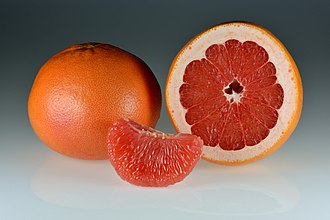
grapefruit

grapefruit
grapefruit
grapefruit /ˈɡreɪpfruːt/ noun fruit

Named because the fruit grows in grape-like clusters. A hybrid of pomelo and orange. Notable: grapefruit interacts dangerously with many medications.

  • a large round citrus fruit with a yellow skin and slightly bitter flesh

    He had a grapefruit for breakfast.

#7841

honeydew

honeydew
honeydew
honeydew /ˈhʌnidjuː/ countable noun fruit

Short for "honeydew melon": a winter melon with smooth pale rind and sweet pale green flesh, milder than cantaloupe. Unrelated technical sense: the sugary secretion aphids leave on plant leaves.

  • a large melon with a smooth pale rind and sweet pale green flesh

    She sliced a ripe honeydew for the fruit salad.

#7840

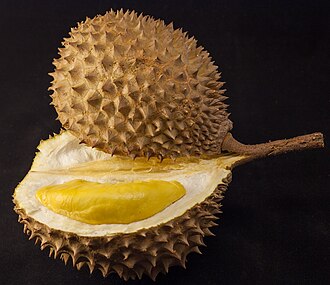
durian

durian
durian
durian /ˈdʊriən/ countable noun fruit

Banned in some hotels and transit systems for its smell.

  • a large, spiky tropical fruit with a strong smell and creamy flesh

    Durian smells terrible but tastes sweet.

#7839

coconut [family]

coconut
1coconut
coconut palm
2coconut palm
coconut milk
3coconut milk
coconut /ˈkoʊkənʌt/ countable noun fruit
  • 1a large hard tropical fruit with white flesh and liquid inside

    They served rice with coconut milk.

coconut palm /ˈkoʊkənʌt pɑːm/ countable noun

The tropical tree (Cocos nucifera) that bears coconuts.

  • 2the tall tropical palm tree that produces coconuts

    Coconut palms lined the white-sand beach.

coconut milk /ˈkoʊkənʌt mɪlk/ uncountable noun

Made from grated coconut flesh, not the thin 'coconut water' inside the shell.

  • 3a rich white liquid made from the grated flesh of coconuts, used in cooking

    The curry is simmered slowly in coconut milk.

#7838

female

female /ˈfiːmeɪl/ adjective

More clinical/biological register than 'woman'. Common in forms, medical, and scientific contexts ('female patient', 'female lion').

  1. of or denoting the sex that produces eggs or bears offspring

    The clinic recorded the patient's sex as female.

  2. (as a noun) a female person or animal

    The female was noticeably smaller than the male.

man / woman vs. male / female

Man/woman are the everyday social words for adult humans; male/female are the more clinical, biological terms, used for sex rather than gender identity or social role, and often applied to animals as well as people.

man
The ordinary word for an adult human who is male; used in everyday social contexts.
woman
The ordinary word for an adult human who is female; used in everyday social contexts.
male
The biological/clinical term for the sex that produces sperm; used on forms, in medicine, and for animals as well as people ('a male lion').
female
The biological/clinical term for the sex that produces eggs or bears offspring; used on forms, in medicine, and for animals as well as people ('a female lion').
  • Using 'male'/'female' to describe a specific person in casual conversation (e.g., 'a male walked into the store') can sound clinical, distancing, or even dehumanizing; 'man'/'woman' is the natural everyday choice for people.
  • 'Male'/'female' are the only options for non-human animals and for describing biological sex on forms or in scientific writing.
#7837

male

male /meɪl/ adjective

More clinical/biological register than 'man'. Common in forms, medical, and scientific contexts ('male patient', 'male lion').

  1. of or denoting the sex that produces sperm

    The clinic recorded the patient's sex as male.

  2. (as a noun) a male person or animal

    Only one male was present in the group.

man / woman vs. male / female

Man/woman are the everyday social words for adult humans; male/female are the more clinical, biological terms, used for sex rather than gender identity or social role, and often applied to animals as well as people.

man
The ordinary word for an adult human who is male; used in everyday social contexts.
woman
The ordinary word for an adult human who is female; used in everyday social contexts.
male
The biological/clinical term for the sex that produces sperm; used on forms, in medicine, and for animals as well as people ('a male lion').
female
The biological/clinical term for the sex that produces eggs or bears offspring; used on forms, in medicine, and for animals as well as people ('a female lion').
  • Using 'male'/'female' to describe a specific person in casual conversation (e.g., 'a male walked into the store') can sound clinical, distancing, or even dehumanizing; 'man'/'woman' is the natural everyday choice for people.
  • 'Male'/'female' are the only options for non-human animals and for describing biological sex on forms or in scientific writing.
#7836

woman [family]

woman /ˈwʊmən/ countable noun
  • an adult female human being

    A woman at the front desk helped me.

women /ˈwɪmən/ plural noun

Plural of woman. Note the vowel change: woman /ˈwʊmən/, women /ˈwɪmən/.

  • more than one adult female human being

    Three women joined the research team.

man / woman vs. male / female

Man/woman are the everyday social words for adult humans; male/female are the more clinical, biological terms, used for sex rather than gender identity or social role, and often applied to animals as well as people.

man
The ordinary word for an adult human who is male; used in everyday social contexts.
woman
The ordinary word for an adult human who is female; used in everyday social contexts.
male
The biological/clinical term for the sex that produces sperm; used on forms, in medicine, and for animals as well as people ('a male lion').
female
The biological/clinical term for the sex that produces eggs or bears offspring; used on forms, in medicine, and for animals as well as people ('a female lion').
  • Using 'male'/'female' to describe a specific person in casual conversation (e.g., 'a male walked into the store') can sound clinical, distancing, or even dehumanizing; 'man'/'woman' is the natural everyday choice for people.
  • 'Male'/'female' are the only options for non-human animals and for describing biological sex on forms or in scientific writing.
#7835

man [family]

man /mæn/ countable noun

Plural: men. Increasingly avoided as a generic term for "human" in favor of "person", "humanity", etc.

  1. an adult male human being

    There were five men and three women in the meeting.

  2. (generic, dated) a human being of either sex; humankind

    Man has explored every continent on Earth.

  3. (informal) used as a form of address, often with emphasis

    Hey man, how's it going?

man /mæn/ transitive verb
past: manned /mænd/
pp: manned /mænd/
  • to operate or staff (a piece of equipment or a position), traditionally implying male staff but now used regardless of gender

    Volunteers manned the phones during the fundraiser.

men /men/ plural noun

Plural of man.

  • more than one adult male human being

    Two men were waiting outside.

tradesman /ˈtreɪdzmən/ countable noun
  • a worker skilled in a particular craft; a person engaged in trading or a trade

    He hired a local tradesman to fix the roof.

manpower /ˈmænpaʊɚ/ uncountable noun
  • the number of people working or available for work or service

    A shortage of manpower.

manly /ˈmænli/ adjective

Increasingly considered dated/loaded with gender stereotypes. "Manly" used in marketing of beer, razors, trucks. Critique: "toxic masculinity".

  • having qualities traditionally associated with men

    He had a deep manly voice.

man / woman vs. male / female

Man/woman are the everyday social words for adult humans; male/female are the more clinical, biological terms, used for sex rather than gender identity or social role, and often applied to animals as well as people.

man
The ordinary word for an adult human who is male; used in everyday social contexts.
woman
The ordinary word for an adult human who is female; used in everyday social contexts.
male
The biological/clinical term for the sex that produces sperm; used on forms, in medicine, and for animals as well as people ('a male lion').
female
The biological/clinical term for the sex that produces eggs or bears offspring; used on forms, in medicine, and for animals as well as people ('a female lion').
  • Using 'male'/'female' to describe a specific person in casual conversation (e.g., 'a male walked into the store') can sound clinical, distancing, or even dehumanizing; 'man'/'woman' is the natural everyday choice for people.
  • 'Male'/'female' are the only options for non-human animals and for describing biological sex on forms or in scientific writing.
#7834

coma

coma /ˈkoʊmə/ noun
  • a state of deep unconsciousness that lasts for a prolonged or indefinite period, caused especially by severe injury or illness

    A crash that left him in a coma.

#7833

period [family]

period /ˈpɪriəd/ countable noun punctuation
  1. a length of time

    The store was closed for a short period.

  2. the punctuation mark .

    Put a period at the end of the sentence.

  3. a monthly discharge of blood from the uterus (menstruation)

    She was cramping because her period had just started.

periodical /ˌpɪriˈɑːdɪkəl/ countable noun
  • a magazine or newspaper published at regular intervals

    Academic periodicals.

periodic /ˌpɪriˈɑːdɪk/ adjective
  • occurring or recurring at regular intervals

    She scheduled periodic checkups with her doctor.

#7832

marsh [family]

marsh
marsh
marsh /mɑːrʃ/ noun
  • an area of low-lying land which is flooded in wet seasons or at high tide, and typically remains waterlogged at all times

    The marsh is home to many bird species.

marshland /ˈmɑːrʃlænd/ uncountable noun
  • land consisting of marshes

    The reserve protects thousands of acres of marshland.

#7831

causeway

causeway
causeway
causeway /ˈkɔːzweɪ/ countable noun

Often built across water, marshland, or low ground. The Singapore-Malaysia Causeway is a famous example.

  • a raised road or path across low or wet ground or water

    The causeway connects the island to the mainland.

#7830

defendant

defendant /dɪˈfendənt/ countable noun

Opposite: "plaintiff" (civil) or "prosecution" (criminal). "Co-defendants": multiple defendants in same case. Right to counsel guaranteed in serious criminal cases.

  • a person against whom a legal case is brought

    The defendant pleaded not guilty.

#7829

plaintiff

plaintiff /ˈpleɪntɪf/ noun
  • a person who brings a case against another in a court of law

    The plaintiff commenced an action for damages.

#7828

service area

service area
service area
service area /ˈsɝvɪs ˌeriə/ countable noun

British English also uses "services" informally ("stop at the services"). American English often says "rest area" or "rest stop" for a simpler version without fuel/food.

  • a place beside a highway with facilities such as fuel, food, and restrooms

    We stopped at the service area to refuel.

#7827

toll booth

toll booth
toll booth
toll booth /ˈtoʊl buːð/ countable noun

Also written as one word, "tollbooth". Many modern highways use electronic tolling (e.g., E-ZPass) instead.

  • a booth where drivers stop to pay a toll

    Traffic backed up at the toll booth.

#7826

toll [family]

toll
toll
toll /toʊl/ countable noun

"Death toll" = the number of deaths from an event. "Take a toll on" = cause damage to. "Toll road" = a road requiring payment to use.

  1. a charge payable for using a road or bridge

    They paid the toll at the bridge.

  2. the cost or damage caused by something

    Stress has taken its toll on her health.

death toll /ˈdeθ toʊl/ countable noun
  • the number of deaths resulting from a particular circumstance

    The death toll from the earthquake.

#7825

speed limit

speed limit /ˈspiːd ˌlɪmɪt/ countable noun

"Exceed the speed limit" = drive faster than legally allowed.

  • the maximum speed legally allowed on a particular stretch of road

    The speed limit on this highway is 65 miles per hour.

#7824

median

median
median
median /ˈmiːdiən/ countable noun

Also called a "median strip" or, in British English, a "central reservation".

  • a strip of land separating opposing lanes of traffic on a road

    The car crossed the median and hit oncoming traffic.

#7823

interchange [family]

interchange
interchange
interchange /ˈɪntɚtʃeɪndʒ/ noun

As a verb the stress shifts to inter-CHANGE.

  1. an exchange of things, especially ideas or information, between people

    An interchange of ideas.

  2. a road junction, especially on a highway, designed so that traffic streams do not cross

    The motorway interchange.

interchange /ˌɪntɚˈtʃeɪndʒ/ transitive verb
past: interchanged /ˌɪntɚˈtʃeɪndʒd/
pp: interchanged /ˌɪntɚˈtʃeɪndʒd/
  • to put (each of two things) in the place of the other; to alternate

    The words 'shall' and 'will' can often be interchanged without changing the meaning.

interchangeable /ˌɪntɚˈtʃeɪndʒəbəl/ adjective
  • able to be swapped without making any difference

    The parts are interchangeable.

#7822

freeway

freeway
freeway
freeway /ˈfriːweɪ/ countable noun

Mostly American West Coast usage (California especially). "Free" originally referred to no tolls, not speed.

  • a multi-lane highway with no tolls and controlled access

    Traffic on the freeway was bumper-to-bumper.

expressway vs. highway vs. freeway

All three describe fast, major roads, but usage varies by American region: 'highway' is the most general and formal term, while 'expressway' and 'freeway' are more regional words for controlled-access, high-speed roads.

highway
The broadest, most neutral term for any major road; used in official names ('Highway 101') and everyday speech nationwide.
expressway
Common in the northeastern US; emphasizes fast travel with limited intersections, often (but not always) tolled.
freeway
Common on the US West Coast, especially California; specifically implies no tolls ("free" of charge) and full controlled access.
  • A 'freeway' and an 'expressway' can describe the same kind of road (multi-lane, controlled-access); the words mostly just differ by region.
  • British English uses 'motorway' for this concept instead of any of these three.
#7821

highway

highway
highway
highway /ˈhaɪweɪ/ countable noun

The most general term; used both formally ("U.S. Highway 1") and informally for any major road. "Highway robbery" = a rip-off.

  • a main road, especially one connecting towns or cities

    They drove for hours on the highway.

expressway vs. highway vs. freeway

All three describe fast, major roads, but usage varies by American region: 'highway' is the most general and formal term, while 'expressway' and 'freeway' are more regional words for controlled-access, high-speed roads.

highway
The broadest, most neutral term for any major road; used in official names ('Highway 101') and everyday speech nationwide.
expressway
Common in the northeastern US; emphasizes fast travel with limited intersections, often (but not always) tolled.
freeway
Common on the US West Coast, especially California; specifically implies no tolls ("free" of charge) and full controlled access.
  • A 'freeway' and an 'expressway' can describe the same kind of road (multi-lane, controlled-access); the words mostly just differ by region.
  • British English uses 'motorway' for this concept instead of any of these three.
#7820

expressway

expressway
expressway
expressway /ɪkˈspresweɪ/ countable noun

Common in the northeastern US (e.g., New York, Boston). Emphasizes speed of travel over regular streets.

  • a road designed for fast travel, usually with controlled access and few intersections

    We took the expressway to avoid downtown traffic.

expressway vs. highway vs. freeway

All three describe fast, major roads, but usage varies by American region: 'highway' is the most general and formal term, while 'expressway' and 'freeway' are more regional words for controlled-access, high-speed roads.

highway
The broadest, most neutral term for any major road; used in official names ('Highway 101') and everyday speech nationwide.
expressway
Common in the northeastern US; emphasizes fast travel with limited intersections, often (but not always) tolled.
freeway
Common on the US West Coast, especially California; specifically implies no tolls ("free" of charge) and full controlled access.
  • A 'freeway' and an 'expressway' can describe the same kind of road (multi-lane, controlled-access); the words mostly just differ by region.
  • British English uses 'motorway' for this concept instead of any of these three.
#7819

chrysanthemum

chrysanthemum
chrysanthemum
chrysanthemum /krɪˈsænθəməm/ countable noun flower

Often shortened to "mum" in American English. National flower of Japan; symbol of the Japanese imperial family (the "Chrysanthemum Throne"). In some cultures (much of Europe), associated with funerals and grief rather than celebration.

  • a garden plant with brightly colored, often ball-shaped flowers, blooming in autumn

    The autumn festival displayed hundreds of chrysanthemums.

#7818

lily

lily
lily
lily /ˈlɪli/ countable noun flower

Symbol of purity in Christianity (especially Mary). "Lily-white" = innocent or all-white (sometimes racially loaded). "Gild the lily" = unnecessary embellishment.

  • a flower with large showy petals

    She arranged white lilies in the vase.

#7817

narcissism [family]

narcissus
narcissus
narcissism /ˈnɑːrsɪsɪzəm/ uncountable noun

From the myth of Narcissus, who fell in love with his own reflection.

  • excessive admiration of oneself

    His posts reveal a streak of narcissism.

narcissistic /ˌnɑːrsɪˈsɪstɪk/ adjective
  • showing excessive self-admiration

    Her narcissistic boss took credit for everyone's work.

narcissus /nɑːrˈsɪsəs/ countable noun flower

Irregular plural: narcissi /nɑːrˈsɪsaɪ/.

  • a spring flower such as a daffodil

    Narcissus bloomed beside the path.

#7816

hydrangea

hydrangea
hydrangea
hydrangea /haɪˈdreɪndʒə/ countable noun flower

From Greek 'hydor' (water) + 'angeion' (vessel), referring to its cup-shaped seed capsules. Flower color can shift with soil pH: acidic soil produces blue flowers, alkaline soil produces pink.

  • a shrub with large, rounded clusters of pink, blue, or white flowers

    Blue hydrangeas lined the garden path.

#7815

peony

peony
peony
peony /ˈpiːəni/ countable noun flower

Large, showy, often fragrant blooms. National flower of China; popular in wedding bouquets.

  • a plant with large, showy pink, red, or white flowers

    The garden was full of blooming peonies.

#7814

lavender

lavender
lavender
lavender /ˈlævəndɚ/ noun flower

Famous fields in Provence, France. Used in aromatherapy, soaps, and cooking.

  • (uncountable) a small shrub with grayish leaves and bluish-purple flowers, used in perfumes and to scent linen

    The garden was filled with lavender.

lavender /ˈlævəndɚ/ noun color
  • (uncountable) a pale purple color

    She painted the walls a soft lavender.

#7813

orchid

orchid
orchid
orchid /ˈɔːrkɪd/ countable noun flower

One of the largest flowering plant families (about 28,000 species). Vanilla comes from an orchid.

  • a plant with showy, often fragrant flowers in unusual shapes and colors

    She received a bouquet of white orchids.

#7812

carnation

carnation
carnation
carnation /kɑːrˈneɪʃn/ noun flower
  • a double-flowered cultivated variety of clove pink, with gray-green leaves and showy pink, white, or red flowers

    A red carnation.

#7811

overdose

overdose /ˈoʊvɚdoʊs/ countable noun

Often abbreviated OD (as both noun and verb). The opioid epidemic in the US has dramatically increased overdose deaths.

  • an excessive and dangerous dose of a drug

    She died from an accidental overdose.

#7810

overcook

overcook /ˌoʊvɚˈkʊk/ transitive verb
past: overcooked /ˌoʊvɚˈkʊkt/
pp: overcooked /ˌoʊvɚˈkʊkt/

Common cause of dry meat or mushy vegetables. Compare undercook.

  • to cook (food) for too long, spoiling its texture or flavor

    The chicken was overcooked and dry.

#7809

overlook

overlook /ˌoʊvɚˈlʊk/ transitive verb
past: overlooked /ˌoʊvɚˈlʊkt/
pp: overlooked /ˌoʊvɚˈlʊkt/

Two distinct senses. "Overlook" can mean fail to notice (a mistake) or deliberately ignore.

  1. to fail to notice

    He overlooked an important detail.

  2. to have a view from above

    The hotel overlooks the bay.

#7808

cannabis

cannabis /ˈkænəbɪs/ uncountable noun
  • a tall plant with a stiff upright stem; marijuana

    They grow cannabis for medicinal purposes.

marijuana vs. cannabis

They refer to the same plant and drug, but 'cannabis' is the broader, more formal/scientific term, while 'marijuana' specifically emphasizes the psychoactive drug form and carries more informal, sometimes politically loaded, connotations.

cannabis
The scientific and increasingly preferred legal/medical term for the plant genus and its products, including non-psychoactive uses like hemp and CBD.
marijuana
The more common everyday word specifically for the dried leaves and flowers used as a recreational or medicinal drug; historically tied to anti-drug legislation in the US.
  • Legal and medical writing increasingly prefers 'cannabis' over 'marijuana', partly due to the latter's racially charged history in early 20th-century US drug policy.
  • 'Cannabis' can also refer to non-drug uses (hemp fiber, CBD oil); 'marijuana' almost always implies the psychoactive drug.
#7807

marijuana

marijuana
marijuana
marijuana /ˌmærəˈwɑːnə/ uncountable noun
  • cannabis, especially as smoked or consumed as a psychoactive drug

    He was arrested for possessing marijuana.

marijuana vs. cannabis

They refer to the same plant and drug, but 'cannabis' is the broader, more formal/scientific term, while 'marijuana' specifically emphasizes the psychoactive drug form and carries more informal, sometimes politically loaded, connotations.

cannabis
The scientific and increasingly preferred legal/medical term for the plant genus and its products, including non-psychoactive uses like hemp and CBD.
marijuana
The more common everyday word specifically for the dried leaves and flowers used as a recreational or medicinal drug; historically tied to anti-drug legislation in the US.
  • Legal and medical writing increasingly prefers 'cannabis' over 'marijuana', partly due to the latter's racially charged history in early 20th-century US drug policy.
  • 'Cannabis' can also refer to non-drug uses (hemp fiber, CBD oil); 'marijuana' almost always implies the psychoactive drug.
#7806

morphine

morphine /ˈmɔːrfiːn/ uncountable noun

Named after Morpheus, the Greek god of dreams. Derived from opium poppy. Powerful pain reliever, highly addictive.

  • a strong painkilling drug obtained from opium

    He was given morphine for the pain.

#7805

opiate / opioid [family]

opiate /ˈoʊpiət/ countable noun

"Opiate": natural compounds from opium poppy (morphine, codeine). "Religion is the opiate of the masses": Marx (often misquoted).

  • a drug derived from opium

    Morphine is an opiate.

opioid /ˈoʊpiɔɪd/ countable noun

"Opioid", broader term: includes synthetic (fentanyl, oxycodone). "Opioid epidemic": major US public health crisis since the 2010s.

  • any drug acting like an opiate, natural or synthetic

    Fentanyl is a powerful synthetic opioid.

opium vs. opioid

Opium is the raw natural substance itself; opioid is the broad modern medical category of drugs (natural, semi-synthetic, or fully synthetic) that act on the same brain receptors as opium.

opium
The actual dried substance harvested from the opium poppy's seed pod; a specific drug, not a category.
opioid
The umbrella term for any substance, natural or synthetic, that binds to opioid receptors: covers opium-derived opiates (morphine, codeine) as well as fully lab-made drugs (fentanyl, oxycodone) that never touch a poppy.
  • All opium-derived drugs are opioids, but most opioids (like fentanyl) are not derived from opium at all.
  • 'Opioid epidemic' refers to the modern crisis, driven mostly by synthetic and semi-synthetic opioids, not opium itself.
#7804

opium

opium
opium
opium /ˈoʊpiəm/ uncountable noun
  • a reddish-brown heavy-scented addictive drug prepared from the juice of the opium poppy, used as a narcotic and in medicine as an analgesic

    An opium den.

opium vs. opioid

Opium is the raw natural substance itself; opioid is the broad modern medical category of drugs (natural, semi-synthetic, or fully synthetic) that act on the same brain receptors as opium.

opium
The actual dried substance harvested from the opium poppy's seed pod; a specific drug, not a category.
opioid
The umbrella term for any substance, natural or synthetic, that binds to opioid receptors: covers opium-derived opiates (morphine, codeine) as well as fully lab-made drugs (fentanyl, oxycodone) that never touch a poppy.
  • All opium-derived drugs are opioids, but most opioids (like fentanyl) are not derived from opium at all.
  • 'Opioid epidemic' refers to the modern crisis, driven mostly by synthetic and semi-synthetic opioids, not opium itself.
#7803

play-off

play-off /ˈpleɪ ɔːf/ countable noun
  • an additional game or match played to decide the outcome of a tied contest, or a series of games played to determine a championship

    They lost in the play-offs.

#7802

resin [family]

resin
resin
resin /ˈrezən/ noun

Used in many materials: epoxy resin (adhesive), resin-cast figurines (collectibles). "Cannabis resin": slang for hashish.

  • a sticky substance secreted by some trees, or a synthetic equivalent

    The amber is fossilized tree resin.

resinous /ˈrezɪnəs/ adjective
  • containing or smelling like sticky plant resin

    The wood gave off a resinous scent.

#7801

pitch [family]

pitch /pɪtʃ/ countable noun

Many meanings: sports field, sound frequency, business presentation, tar substance. "Sales pitch", "elevator pitch": short persuasive presentations.

  1. (British) a playing field

    The football pitch was muddy.

  2. the degree of highness or lowness of a sound

    She has perfect pitch.

  3. a persuasive speech, especially a sales talk

    He gave a winning sales pitch.

pitch /pɪtʃ/ verb
past: pitched /pɪtʃt/
pp: pitched /pɪtʃt/
  1. to throw or hurl

    He pitched the ball to the catcher.

  2. to present (an idea or product)

    She pitched her startup to investors.

pitcher /ˈpɪtʃɚ/ countable noun

In baseball, the pitcher throws the ball to the batter. In British English: pitcher = jug (less common in modern speech).

  1. (baseball) the player who throws the ball

    He's the team's best pitcher.

  2. a large container for liquids

    She brought out a pitcher of lemonade.

pitchfork /ˈpɪtʃfɔːrk/ countable noun

"Torches and pitchforks": cliché image of an angry mob, especially in old horror films.

  • a farming tool with two or three long prongs

    The farmer lifted hay with a pitchfork.

pitched /pɪtʃt/ adjective

"Pitched battle": intense fight. "Pitched roof": sloped roof (vs. flat).

  • set at a particular slope or intensity

    They had a pitched argument.

pitch-dark /ˌpɪtʃ ˈdɑːrk/ adjective

Also written 'pitch dark' or 'pitch-black'. From 'pitch' the black tar substance.

  • completely dark; without any light

    The basement was pitch-dark.