Vocabulary: vegetable

33 entries

#8349

enoki

enoki
enoki
enoki /ɪˈnoʊki/ uncountable noun vegetable

Also called "enokitake" or "golden needle mushroom". Long thin white stems with tiny caps, common in Japanese and Korean cooking (hot pot, soups).

  • a long, thin, white edible mushroom used in East Asian cooking

    She added enoki to the hot pot.

#8348

daikon

daikon
daikon
daikon /ˈdaɪkɑːn/ countable noun vegetable

Japanese for "large root". Milder and larger than a typical Western radish; common in Japanese, Korean, and Chinese cuisine (e.g. in kimchi, pickles, soups).

  • a large, mild white radish common in East Asian cooking

    She grated fresh daikon to serve alongside the tempura.

#8347

leek

leek
leek
leek /liːk/ countable noun vegetable

A national emblem of Wales. Related to onions and garlic but milder.

  • a long, cylindrical vegetable with a white base and green leaves, related to the onion

    She sliced a leek for the potato soup.

#8332

spinach

spinach
spinach
spinach /ˈspɪnɪtʃ/ uncountable noun vegetable

Famous as Popeye's strength food, popularizing the myth that spinach is exceptionally high in iron.

  • a vegetable with large dark green leaves, eaten raw or cooked

    He made a spinach and feta salad.

#8331

broccoli

broccoli
broccoli
broccoli /ˈbrɑːkəli/ uncountable noun vegetable

From Italian, plural of broccolo ("sprout").

  • a dark green vegetable with a thick stem and many small flower buds at the top, eaten as a vegetable

    She steamed the broccoli for dinner.

broccoli vs. broccoli sprouts

Both come from the same plant, but broccoli refers to the mature vegetable (the thick stem and flower buds harvested after weeks of growth), while broccoli sprouts are the tiny seedlings harvested just days after germination.

broccoli
The familiar dark green vegetable: a thick stalk topped with dense clusters of unopened flower buds, typically cooked (steamed, roasted, stir-fried) before eating.
broccoli sprouts
Thin, pale-stemmed seedlings with tiny leaves, harvested only 3-5 days after the seed germinates. Usually eaten raw, added to salads or sandwiches, and prized for a much higher concentration of sulforaphane than the mature vegetable.
  • Broccoli sprouts are not a different vegetable species; they are simply broccoli harvested at an immature stage.
  • Broccoli sprouts have a peppery, slightly bitter taste similar to radish sprouts, unlike the milder taste of cooked broccoli.
#8330

cauliflower

cauliflower
cauliflower
cauliflower /ˈkɔːliflaʊɚ/ noun vegetable

"Cauliflower ear" = a deformed ear from repeated injury, common in boxing/wrestling.

  • a vegetable with a large white head of small, tightly packed flower buds surrounded by green leaves

    He roasted the cauliflower with olive oil.

#8329

okra

okra
okra
okra /ˈoʊkrə/ uncountable noun vegetable

Also called "lady's fingers" (British) or "gumbo". Releases a thickening mucilage when cooked - the basis of Cajun/Creole gumbo.

  • the long green seed pods of a tropical plant, eaten as a vegetable, especially in Southern American, African, and Indian cuisine

    Okra is the star ingredient in gumbo.

#8328

scallion / spring onion [group]

scallion
scallion
scallion /ˈskæliən/ countable noun vegetable

Common in American English; also called green onion.

  • a young onion with a long green stalk and mild flavor

    Sprinkle chopped scallions over the noodles.

spring onion /ˌsprɪŋ ˈʌnjən/ countable noun vegetable

Common in British English; in some places it may mean a slightly more mature young onion.

  • a young onion eaten for its green stalk and mild bulb

    The salad is topped with sliced spring onions.

#7743

bean [family]

broad bean
1broad bean
mung bean
2mung bean
broad bean /ˈbrɔːd biːn/ countable noun food vegetable

Also called fava bean (especially in American English). A large flat green bean, popular in Mediterranean and Middle Eastern cooking.

  • 1a large flat edible bean with a thick green pod

    Broad beans are delicious with a little olive oil and lemon.

mung bean /ˈmʌŋ biːn/ countable noun food vegetable

The source of common bean sprouts in Asian cooking. Also ground into flour for glass noodles (cellophane noodles).

  • 2a small round green bean, widely used in Asian cuisine, often sprouted

    Mung bean sprouts are a staple in stir-fries.

#7722

bell pepper

bell pepper
bell pepper
bell pepper /ˈbel ˌpepɚ/ countable noun vegetable

Mainly American English. British English: (sweet) pepper or capsicum. Comes in red, yellow, green, and orange varieties.

  • a large, hollow, mild-tasting pepper used as a vegetable, shaped roughly like a bell

    Slice the red bell pepper into thin strips for the salad.

#7385

eggplant

eggplant
eggplant
eggplant /ˈɛɡplænt/ countable noun vegetable

American name; British and much of the rest of the English-speaking world say 'aubergine'. Named for pale, egg-shaped varieties, though the common purple type is much larger.

  • a vegetable with smooth, glossy skin, usually deep purple, and spongy white flesh

    She sliced the eggplant and grilled it with olive oil.

#7384

lettuce

lettuce
lettuce
lettuce /ˈletəs/ uncountable noun vegetable

Final syllable pronounced /-əs/, not /-juːs/. "Iceberg", "romaine", "butter", "red leaf": common varieties. Slang for paper money ("green").

  • a leafy green vegetable used in salads

    He added lettuce to his sandwich.

#7383

celery

celery
celery
celery /ˈselɚi/ uncountable noun vegetable
  • a plant with crisp, long, pale green or whitish stalks, eaten raw or cooked as a vegetable

    She chopped some celery for the soup.

#7137

zucchini

zucchini
zucchini
zucchini /zuˈkiːni/ noun vegetable

American name; British: courgette. Originally from Italian.

  • a small, long, green vegetable, a variety of summer squash

    She grated zucchini into the bread batter.

#7136

cucumber

cucumber
cucumber
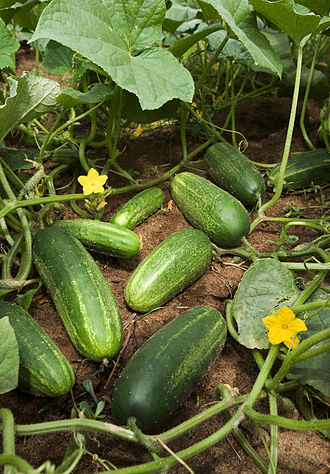
cucumber /ˈkjuːkʌmbɚ/ noun vegetable

"Cool as a cucumber": a common idiom meaning calm and composed. Cucumbers are used as cooling eye treatments in spa contexts.

  • a long green vegetable with watery flesh

    She added cucumber to her salad.

#7134

garlic

garlic
garlic
garlic /ˈɡɑːrlɪk/ uncountable noun vegetable

A single bulb is made up of individual 'cloves'. Long associated in folklore with warding off vampires.

  • a pungent bulb, made up of several cloves, used as a flavoring in cooking

    He crushed two cloves of garlic into the sauce.

#7133

onion

onion
onion
onion /ˈʌnjən/ countable noun vegetable

'Know your onions' = be knowledgeable. Cutting onions releases a gas that makes you cry.

  • a round vegetable with a strong smell and taste, made up of concentric layers

    Fry the onions until they turn golden.

#7132

potato

potato
potato
potato /pəˈteɪtoʊ/ countable noun vegetable

Irregular plural: 'potatoes' (not 'potatos'). "Couch potato" = a lazy person who watches a lot of TV. "Hot potato" = a controversial issue nobody wants to deal with.

  • a starchy root vegetable, usually with brown or red skin and white or yellow flesh

    He mashed the potatoes with butter and milk.

#7131

radish

radish
radish
radish /ˈrædɪʃ/ countable noun vegetable
  • a small, round, red-skinned root vegetable with a crisp, peppery taste, usually eaten raw in salads

    She added thinly sliced radishes to the salad for a peppery crunch.

#7130

carrot

carrot
carrot
carrot /ˈkærət/ countable noun vegetable

"Carrot and stick" - an incentive combined with a threat of punishment. The myth that carrots dramatically improve night vision originated as WWII British propaganda.

  • a long, tapering orange root vegetable

    She peeled and sliced the carrots for the stew.

#7126

cabbage

cabbage
cabbage
cabbage /ˈkæbɪdʒ/ noun vegetable
  • a vegetable with thick green or purple leaves growing in a tight ball

    He shredded the cabbage for coleslaw.

#7125

bok choy

bok choy
bok choy
bok choy /ˌbɑːk ˈtʃɔɪ/ uncountable noun vegetable

American name from Cantonese; British English calls it "pak choi". Mandarin: baicai. Also spelled 'bok choi'.

  • a type of Chinese cabbage with smooth white stalks and dark green leaves

    She stir-fried bok choy with garlic.

#6296

fava bean

fava bean
fava bean
fava bean /ˈfɑːvə biːn/ countable noun vegetable

"Fava" is the American name (from Italian fava); British English uses "broad bean". Famously referenced in the movie "The Silence of the Lambs".

  • a large flat edible bean (also called broad bean) from a plant of the pea family

    He served the lamb with fava beans and a nice chianti.

#6132

sweet potato

sweet potato
sweet potato
sweet potato /ˈswiːt pəˌteɪtoʊ/ countable noun vegetable

Different species from "yam" (a tropical tuber), though the names are often confused in American English.

  • the edible tuberous root of a tropical American plant, with reddish-brown skin and orange flesh

    He served roasted sweet potatoes for Thanksgiving.

#6130

green bean

green bean
green bean
green bean /ˈɡriːn biːn/ countable noun vegetable

Also called string beans or snap beans (American).

  • the long thin green pod of a bean plant, eaten as a vegetable

    She blanched the green beans for the salad.

#6129

bean sprout

bean sprout
bean sprout
bean sprout /ˈbiːn spraʊt/ countable noun vegetable

In American grocery stores, usually mung bean sprouts; in Asian cuisine, soybean sprouts are also common.

  • the young white shoot of a bean plant, especially the mung bean, eaten as a vegetable

    Add bean sprouts at the end of cooking to keep them crisp.

#6015

lentil

lentil
lentil
lentil /ˈlentəl/ countable noun vegetable

Comes in many colors: red, green, brown, black ("beluga"). A staple in Indian and Mediterranean cuisine.

  • a small flat dried seed of a leguminous plant, used as food

    She made a hearty lentil soup.

#5566

turnip

turnip
turnip
turnip /ˈtɝnɪp/ countable noun vegetable

In Scotland and northern England, jack-o'-lanterns were traditionally carved from turnips before pumpkins became popular.

  • a round root vegetable with white or yellowish flesh, used as food

    She added turnips to the stew.

#3893

squash [family]

squash
squash
squash /skwɑːʃ/ noun vegetable

"Summer squash" (zucchini, yellow), "winter squash" (butternut, acorn, pumpkin). "Squash" is also a racquet sport, popular in UK and Egypt.

  • a vegetable from the gourd family

    She made a soup with butternut squash.

#3502

corn [family]

corn
corn
corn /kɔːrn/ uncountable noun vegetable

In US: maize. In UK: any grain (wheat, barley, etc.), the US "corn" is called "maize" in UK. "Corny" = cheesy/cliché.

  • (US) maize; (UK) any cereal crop

    They grow corn in Iowa.

#3423

pepper [family]

pepper
pepper
pepper /ˈpepɚ/ noun vegetable
  • a sweet or hot vegetable of the capsicum family

    He bought a red pepper for the salad.

#3421

pea

pea
pea
pea /piː/ countable noun vegetable

"Two peas in a pod" = very similar people. "Pea-brained" = stupid. Mendel's pea experiments founded genetics.

  • a small round green seed eaten as a vegetable

    He doesn't like peas with his dinner.

#2845

yam

yam
yam
yam /jæm/ countable noun vegetable

In US, "yam" often refers to sweet potato (though botanically different). True yams are a different species, common in African and Asian cuisines.

  • a starchy tuberous vegetable

    She baked the yams for dinner.