Vocabulary: Batch 62

#6101 to #6200 (100 entries)

#6200

caviar

caviar
caviar
caviar /ˈkæviɑːr/ uncountable noun food

Traditionally served with mother-of-pearl spoons because metal can affect the taste.

  • the salted roe (eggs) of sturgeon or other large fish, eaten as a delicacy

    They served beluga caviar at the gala.

#6199

secular [family]

secular /ˈsekjəlɚ/ adjective

Antonym: religious or sacred. "Secularism" = the principle of separation of religion from government.

  • not connected with religious or spiritual matters

    The school provides a secular education.

secularism /ˈsekjəlɚɪzəm/ uncountable noun
  • the principle that religion should be separate from government or public institutions

    Secularism is written into the constitution.

secularized /ˈsekjələraɪzd/ adjective
  • made less religious or separated from religious control

    The school system became secularized.

secularize /ˈsekjələraɪz/ transitive verb
past: secularized /ˈsekjələraɪzd/
pp: secularized /ˈsekjələraɪzd/

British spelling: secularise.

  • to make something less religious or separate it from religious control

    The revolution sought to secularize the education system.

#6198

downplay

downplay /ˈdaʊnpleɪ/ transitive verb
past: downplayed /ˈdaʊnpleɪd/
pp: downplayed /ˈdaʊnpleɪd/
  • to make something appear less important or serious than it really is

    The company tried to downplay the security breach.

#6197

encroach [family]

encroach /ɪnˈkroʊtʃ/ intransitive verb
past: encroached /ɪnˈkroʊtʃt/
pp: encroached /ɪnˈkroʊtʃt/

Always intransitive; typically "encroach on/upon".

  • to gradually intrude on a person's territory, rights, or time

    The new building encroaches on the park.

encroachment /ɪnˈkroʊtʃmənt/ noun
  • the action of gradually intruding on a person's territory, rights, or time

    Residents protested the encroachment on the wetlands.

#6196

grift [family]

grift /ɡrɪft/ countable noun

American informal; the agent noun is "grifter". Recently popular in political journalism to describe self-enrichment schemes.

  • a petty swindle or confidence trick

    His career has been one long grift.

grift /ɡrɪft/ verb
past: grifted /ˈɡrɪftɪd/
pp: grifted /ˈɡrɪftɪd/
  • to obtain money by swindling or cheating

    He grifted his way through three states.

grifter /ˈɡrɪftɚ/ countable noun
  • a person who engages in petty swindles or confidence tricks

    The documentary exposed him as a lifelong grifter.

#6195

mussel

mussel
mussel
mussel /ˈmʌsəl/ countable noun sea creature food

Homophone of "muscle". Common in moules-frites (Belgian dish).

  • an edible shellfish with a dark elongated shell, found in fresh or salt water

    They ordered a bowl of mussels in white wine sauce.

#6194

airborne

airborne /ˈerbɔːrn/ adjective
  1. transported by, carried by, or through the air

    The plane is airborne.

  2. (of disease) transmitted through the air, typically by droplets

    Tuberculosis is an airborne disease.

#6193

depopulate [family]

depopulate /diːˈpɑːpjəleɪt/ transitive verb
past: depopulated /diːˈpɑːpjəleɪtɪd/
pp: depopulated /diːˈpɑːpjəleɪtɪd/
  • to substantially reduce the population of (a place)

    The plague depopulated entire villages.

depopulation /diːˌpɑːpjəˈleɪʃən/ uncountable noun
  • the reduction of a place's population, especially over a long period

    The famine led to widespread depopulation of the countryside.

#6192

congregate [family]

congregate /ˈkɑːŋɡrəɡeɪt/ intransitive verb
past: congregated /ˈkɑːŋɡrəɡeɪtɪd/
pp: congregated /ˈkɑːŋɡrəɡeɪtɪd/
  • to gather together in a crowd or group

    Students congregated in the courtyard.

congregation /ˌkɑːŋɡrəˈɡeɪʃən/ countable noun
  1. a group of people gathered for religious worship

    The congregation sang the closing hymn.

  2. a gathering or crowd

    A congregation of reporters waited outside the courthouse.

#6191

sanctuary

sanctuary /ˈsæŋktʃueri/ noun
  1. (uncountable) a place of refuge or safety

    The refugees sought sanctuary in the church.

  2. (countable) a nature reserve where animals are protected

    They visited a wildlife sanctuary in Kenya.

  3. (countable) a sacred or holy place, especially the most sacred part of a temple or church

    Only priests could enter the inner sanctuary.

#6190

memorandum / memo [group]

memorandum /ˌmeməˈrændəm/ countable noun

Plural: memorandums or memoranda. Often shortened to "memo".

  • a written message or note, especially in a business or diplomatic context

    The CEO sent a memorandum to all employees about the new policy.

memo /ˈmemoʊ/ countable noun
  • a written message, especially in business

    He sent a memo to the staff.

#6189

quell

quell /kwel/ transitive verb
past: quelled /kweld/
pp: quelled /kweld/
  1. to put an end to (typically a rebellion or other disorder), often by force

    Troops were sent in to quell the riot.

  2. to suppress (a feeling, especially an unpleasant one)

    She tried to quell her rising anxiety.

#6188

profuse [family]

profuse /prəˈfjuːs/ adjective
  • (especially of something offered or discharged) very plentiful; abundant

    She offered profuse apologies for being late.

profusion /prəˈfjuːʒən/ uncountable noun
  • an abundance or large quantity of something

    The garden was a profusion of colorful flowers.

#6187

lackluster [family]

lackluster /ˈlæklʌstɚ/ adjective

American spelling; British: lacklustre.

  • lacking in vitality, force, or conviction; uninspired

    The team gave a lackluster performance.

lacklustre /ˈlæklʌstɚ/ adjective

British spelling; American: lackluster.

  • lacking in vitality, force, or conviction; uninspired

    The team gave a lacklustre performance.

#6186

tout

tout /taʊt/ transitive verb
past: touted /ˈtaʊtɪd/
pp: touted /ˈtaʊtɪd/
  • to praise or promote something or someone, especially exaggeratedly

    The new drug is being touted as a cure-all.

tout /taʊt/ countable noun

British. American equivalent: "scalper".

  • (British) a person who sells event tickets at inflated prices outside the venue

    Ticket touts were arrested outside the stadium.

#6185

duo

duo /ˈduːoʊ/ countable noun

From Italian/Latin. Trio = three; quartet = four.

  • a pair of people or things, especially two performers or musicians

    The comedy duo has been performing for thirty years.

#6184

abominable

abominable /əˈbɑːmənəbəl/ adjective

"The Abominable Snowman" = the Yeti.

  • causing moral revulsion; very bad or unpleasant

    His treatment of his employees was abominable.

#6183

cramp [family]

cramp /kræmp/ noun

"Menstrual cramps" = pain during menstruation. "Cramp someone's style" = limit their freedom to act.

  • (countable/uncountable) a painful involuntary contraction of a muscle

    She got a cramp in her leg while swimming.

cramped /kræmpt/ adjective
  1. uncomfortably small or crowded

    They lived in a cramped apartment.

  2. (of handwriting) small and difficult to read

    His cramped handwriting was hard to decipher.

#6182

bitch

bitch /bɪtʃ/ countable noun

Vulgar slang in human contexts; neutral technical term in dog breeding. "Son of a bitch" is a common insult.

  1. a female dog

    The bitch had a litter of six puppies.

  2. (vulgar, offensive) a malicious or unpleasant woman

    Don't be such a bitch.

  3. (informal) a thing that is difficult or unpleasant

    That exam was a real bitch.

bitch /bɪtʃ/ intransitive verb
past: bitched /bɪtʃt/
pp: bitched /bɪtʃt/

Informal/vulgar.

  • to complain in a whining or spiteful way

    Stop bitching about the weather.

#6181

reinstate [family]

reinstate /ˌriːɪnˈsteɪt/ transitive verb
past: reinstated /ˌriːɪnˈsteɪtɪd/
pp: reinstated /ˌriːɪnˈsteɪtɪd/
  1. to restore someone to a former position or status

    After the investigation cleared him, he was reinstated as CEO.

  2. to bring back a rule, policy, or practice that has been discontinued

    The state reinstated the death penalty in 1976.

reinstatement /ˌriːɪnˈsteɪtmənt/ noun
  • the action of restoring someone or something to a previous state or position

    The union demanded the reinstatement of the fired workers.

#6180

litigate [family]

litigate /ˈlɪtəɡeɪt/ verb
past: litigated /ˈlɪtəɡeɪtɪd/
pp: litigated /ˈlɪtəɡeɪtɪd/
  • to take a dispute or claim to a court of law

    They decided to litigate rather than settle.

litigation /ˌlɪtəˈɡeɪʃən/ uncountable noun
  • the process of taking legal action; lawsuits collectively

    The two companies are in litigation over patent rights.

litigious /lɪˈtɪdʒəs/ adjective
  • unreasonably prone to going to law to settle disputes

    American culture has become increasingly litigious.

litigator /ˈlɪtəɡeɪtɚ/ countable noun
  • a lawyer who specializes in taking cases to court

    She's a tough corporate litigator.

#6179

spanner

spanner
spanner
spanner /ˈspænɚ/ countable noun

British English. American equivalent: "wrench". British idiom: "throw a spanner in the works" = sabotage or disrupt a plan; American equivalent: "throw a wrench in the works".

  • a tool with a shaped end used for gripping and turning nuts and bolts

    He tightened the bolt with a spanner.

#6178

grave [family]

grave /ɡreɪv/ countable noun

"Turn over in his grave" = an idiom meaning a dead person would be upset by something happening now.

  • a hole dug in the ground to bury a dead body

    They placed flowers on his grave.

grave /ɡreɪv/ adjective

Stronger than "serious".

  1. giving cause for alarm; serious

    He is in grave danger.

  2. solemn or somber in manner

    The doctor's expression was grave.

gravestone /ˈɡreɪvstoʊn/ countable noun

Also called "tombstone" or "headstone". Typically inscribed with name, dates, and sometimes an epitaph.

  • a stone marker placed at a grave

    His name was carved on the gravestone.

graveyard /ˈɡreɪvjɑːrd/ countable noun

Distinct from "cemetery": traditionally a graveyard adjoins a church, while a cemetery is independent. "Graveyard shift": overnight work shift.

  • a burial ground, especially one next to a church

    They walked through the old graveyard.

#6177

flaunt

flaunt /flɔːnt/ transitive verb
past: flaunted /ˈflɔːntɪd/
pp: flaunted /ˈflɔːntɪd/

Often confused with "flout" (to openly disregard a rule). "Flaunt" = show off; "flout" = defy.

  • to display something ostentatiously in order to provoke envy or admiration

    She flaunted her new diamond ring at the party.

#6176

solicit [family]

solicit /səˈlɪsɪt/ verb
past: solicited /səˈlɪsɪtɪd/
pp: solicited /səˈlɪsɪtɪd/
  1. to ask for or try to obtain something from someone

    They solicited donations from local businesses.

  2. (of a prostitute) to offer sexual services in a public place

    He was arrested for soliciting on the street corner.

solicitor /səˈlɪsətɚ/ countable noun

In British English, a solicitor is a lawyer who handles legal documents and advises clients (vs. a barrister, who argues in court). In American English, "solicitor" can mean someone who goes door-to-door selling things.

  • (British) a member of the legal profession qualified to give legal advice and draw up legal documents

    Consult a solicitor before signing the contract.

unsolicited /ˌʌnsəˈlɪsətɪd/ adjective

Often used of email ("unsolicited commercial email" = spam).

  • not asked for; given or done voluntarily

    She received unsolicited advice from her in-laws.

solicitation /səˌlɪsəˈteɪʃən/ noun
  1. the act of asking for or trying to obtain something from someone, especially money or business

    The charity began its annual solicitation of donations.

  2. (law) the act of trying to persuade someone to do something illegal, especially prostitution

    He was arrested for solicitation.

#6175

heinous

heinous /ˈheɪnəs/ adjective

Common collocation: "heinous crime".

  • (of an act) utterly odious or wicked

    He was convicted of a series of heinous crimes.

#6174

oath

oath /oʊθ/ countable noun

"Take an oath" / "under oath" = legal context.

  1. a solemn promise, often invoking a divine witness, regarding one's future action or behavior

    He took an oath of office as president.

  2. a swear word; a profane utterance

    He muttered an oath under his breath.

#6173

juggernaut

juggernaut
juggernaut
juggernaut /ˈdʒʌɡɚnɔːt/ countable noun

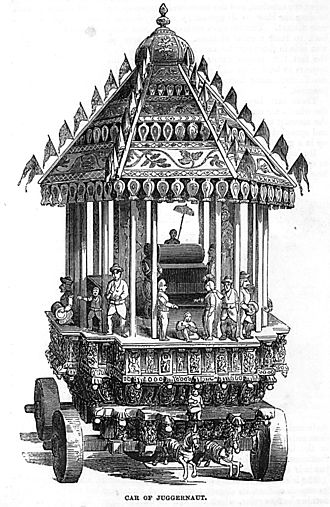
From the Sanskrit Jagannatha ("lord of the world"), a name for the Hindu deity Krishna. The term came into English from accounts of a massive religious chariot festival in India.

  1. a huge, powerful, and overwhelming force or institution

    The tech juggernaut has dominated the industry for years.

  2. (British) a very large heavy truck

    A juggernaut overturned on the motorway.

#6172

invincible [family]

invincible /ɪnˈvɪnsəbəl/ adjective
  • too powerful to be defeated or overcome

    The team seemed invincible until they lost in the final.

invincibility /ˌɪnvɪnsəˈbɪləti/ uncountable noun
  • the quality of being too powerful to be defeated or overcome

    The champion's aura of invincibility was shattered by the upset.

#6171

tempera

tempera
tempera
tempera /ˈtempɚə/ uncountable noun

Dominant European painting medium before oil paint became widespread in the 15th century. Many famous early Renaissance works are in tempera.

  • a paint made by mixing pigment with egg yolk and water, used especially in medieval and early Renaissance Europe

    The icon was painted in tempera on wood panel.

#6170

ail [family]

ail /eɪl/ transitive verb
past: ailed /eɪld/
pp: ailed /eɪld/

Archaic/formal; most commonly used in the construction "What ails you?".

  • to trouble or afflict (someone) in mind or body

    What ails the patient is unclear.

ailing /ˈeɪlɪŋ/ adjective
  1. in poor health; sick

    She visited her ailing mother every weekend.

  2. (of an organization or industry) in financial difficulty

    The government bailed out the ailing bank.

ailment /ˈeɪlmənt/ countable noun
  • an illness, typically a minor one

    The doctor diagnosed a common stomach ailment.

#6169

deign

deign /deɪn/ intransitive verb
past: deigned /deɪnd/
pp: deigned /deɪnd/

Usually implies condescension. "Deign to" + verb.

  • to do something that one considers to be beneath one's dignity

    He didn't even deign to reply to her letter.

#6168

Corinthian

Corinthian
Corinthian
Corinthian /kəˈrɪnθiən/ adjective

The three classical Greek architectural orders: Doric (simplest), Ionic (scrolls), and Corinthian (most ornate). Named after the ancient Greek city of Corinth.

  1. relating to the most ornate of the three classical Greek architectural orders, characterized by columns with capitals decorated with acanthus leaves

    The Roman temple featured Corinthian columns.

  2. of or relating to ancient Corinth

    Paul wrote two letters to the Corinthian church.

#6167

tribunal

tribunal /traɪˈbjuːnəl/ countable noun
  • a court of justice, especially a special one set up to handle a specific kind of case

    The war crimes tribunal began its hearings in The Hague.

#6166

ingrained [family]

ingrained /ɪnˈɡreɪnd/ adjective
  1. (of a habit, belief, or attitude) firmly fixed or established; difficult to change

    His prejudices are deeply ingrained.

  2. (of dirt or stains) deeply embedded and hard to remove

    There was ingrained dirt in the wood floor.

ingrain /ɪnˈɡreɪn/ transitive verb
past: ingrained /ɪnˈɡreɪnd/
pp: ingrained /ɪnˈɡreɪnd/

Usually appears as the past participle/adjective "ingrained".

  • to fix a habit, belief, or attitude firmly in someone's character

    Years of military discipline had ingrained a strict routine in him.

#6165

bogus

bogus /ˈboʊɡəs/ adjective
  • not genuine or true; fake

    He used a bogus passport to enter the country.

#6164

pretentious [family]

pretentious /prɪˈtenʃəs/ adjective
  • attempting to impress by affecting greater importance or merit than is actually possessed

    His pretentious vocabulary annoyed everyone at the dinner.

pretension /prɪˈtenʃən/ noun
  1. a claim to a particular quality or importance, especially an unjustified one

    He has no pretensions to being an expert.

  2. (uncountable) the quality of being pretentious

    The restaurant's menu was full of unnecessary pretension.

#6163

brigade

brigade /brɪˈɡeɪd/ countable noun

A brigade is typically 3,000-5,000 soldiers, between a regiment and a division.

  1. a large military unit consisting of several regiments or battalions

    The infantry brigade was deployed to the front.

  2. a group of people united by a common cause or characteristic

    The fire brigade arrived within minutes.

#6162

heckle [family]

heckle /ˈhekəl/ transitive verb
past: heckled /ˈhekəld/
pp: heckled /ˈhekəld/

The person doing the heckling is a "heckler".

  • to interrupt a public speaker or performer with comments, questions, or abuse

    The comedian was heckled throughout his set.

heckler /ˈhekəlɚ/ countable noun
  • a person who heckles a public speaker or performer

    Security escorted the heckler out of the theater.

#6161

sanguine

sanguine /ˈsæŋɡwɪn/ adjective

Originally referred to one of the four medieval humors, associated with blood and cheerfulness. From Latin sanguis ("blood").

  1. optimistic or cheerful, especially in difficult circumstances

    She remains sanguine about her prospects.

  2. (literary) blood-red

    The sky turned sanguine at sunset.

#6160

bimbo

bimbo /ˈbɪmboʊ/ countable noun

Derogatory and sexist; from Italian bambino ("baby").

  • (derogatory) an attractive but unintelligent young woman

    The tabloid portrayed her as a bimbo.

#6159

adrenalin [family]

adrenalin /əˈdrenəlɪn/ uncountable noun

Also spelled adrenaline (see sibling form). Scientific name: epinephrine. "Adrenaline rush" = a surge of excitement.

  • a hormone secreted by the adrenal glands that increases heart rate and prepares the body for action in stressful or exciting situations

    His adrenalin was pumping as he prepared to jump.

adrenaline /əˈdrenəlɪn/ uncountable noun

Also spelled adrenalin. Scientific name: epinephrine.

  • a hormone secreted by the adrenal glands that increases heart rate and prepares the body for action in stressful or exciting situations

    The adrenaline kicked in as the roller coaster began its descent.

#6158

beget

beget /bɪˈɡet/ transitive verb
past: begot /bɪˈɡɑːt/
pp: begotten /bɪˈɡɑːtən/

Archaic/biblical for fathering children. Modern usage typically figurative. Past tense: begot or begat; past participle: begotten.

  1. (archaic) to father (a child)

    Abraham begat Isaac.

  2. to cause; to bring about

    Violence begets violence.

#6157

sidestep

sidestep /ˈsaɪdstep/ transitive verb
past: sidestepped /ˈsaɪdstept/
pp: sidestepped /ˈsaɪdstept/
  1. to avoid (a problem or question) by addressing something else

    The politician sidestepped the question about taxes.

  2. to step out of the way of someone or something

    He sidestepped the puddle.

#6156

chatter [family]

chatter /ˈtʃætɚ/ intransitive verb
past: chattered /ˈtʃætɚd/
pp: chattered /ˈtʃætɚd/
  1. to talk rapidly and at length about unimportant matters

    The kids chattered excitedly on the way to the park.

  2. (of teeth) to click together repeatedly from cold or fear

    His teeth were chattering in the cold.

chatter /ˈtʃætɚ/ uncountable noun
  • continuous trivial talk

    The room was filled with chatter.

chatterbox /ˈtʃætɚbɑːks/ countable noun

Often affectionate, especially of children.

  • a person who talks a great deal, especially about unimportant things

    My little sister is a real chatterbox.

#6155

blue

blue
blue
blue /bluː/ adjective color
  • of the color of the sky on a clear day

    She wore a blue dress.

blue /bluː/ adjective

"Feeling blue" = sad. "Out of the blue" = unexpectedly. "True blue" = loyal.

  • (informal) feeling sad or melancholy

    He's been feeling a bit blue since his cat died.

blue /bluː/ noun color
  • (countable/uncountable) the color blue

    The room was painted in deep blue.

blue /bluː/ noun
  • (the blues) a genre of African American folk music characterized by melancholy themes

    He plays the blues on harmonica.

#6154

fluke

fluke /fluːk/ countable noun

Informal in the lucky-chance sense. Also a triangular flatfish, and a parasitic flatworm - different etymologies.

  • an unlikely chance occurrence, especially a stroke of good luck

    Winning the championship on his first try was a complete fluke.

#6153

mobilize [family]

mobilize /ˈmoʊbəlaɪz/ verb
past: mobilized /ˈmoʊbəlaɪzd/
pp: mobilized /ˈmoʊbəlaɪzd/
  1. to organize and prepare (people or resources), especially for a particular purpose or action

    The country mobilized its army for war.

  2. to bring something into use or action

    The campaign mobilized support among young voters.

mobilization /ˌmoʊbələˈzeɪʃən/ uncountable noun
  • the action of organizing and preparing people or resources for a particular purpose

    The mobilization of troops began at dawn.

#6152

traction

traction /ˈtrækʃən/ uncountable noun

"Gain traction" = a popular business/political idiom meaning to begin succeeding.

  1. the grip of a tire on a road or a wheel on a track

    The car lost traction on the icy road.

  2. (figurative) the support or interest that something gains

    The new product is gaining traction in the market.

  3. (medical) the application of a sustained pull on a limb or muscle to treat injuries

    He spent weeks in traction after the accident.

#6151

ruction

ruction /ˈrʌkʃən/ countable noun

Informal, often plural "ructions". British/Irish.

  • a disturbance or quarrel

    There were ructions when the bill came.

#6150

spook [family]

spook /spuːk/ countable noun

Informal in the ghost sense; spy sense is American informal.

  1. (informal) a ghost

    The kids thought the old house was full of spooks.

  2. (American slang) a spy

    He claims to have worked as a spook for the CIA.

spook /spuːk/ transitive verb
past: spooked /spuːkt/
pp: spooked /spuːkt/
  • to startle or frighten

    The sudden noise spooked the horse.

spooky /ˈspuːki/ adjective
  • eerie; unsettling

    The old mansion looked spooky in the moonlight.

#6149

dearth

dearth /dɝθ/ noun

Formal. Usually used in the singular with "a".

  • a scarcity or lack of something

    There is a dearth of qualified candidates for the position.

#6148

wield

wield /wiːld/ transitive verb
past: wielded /ˈwiːldɪd/
pp: wielded /ˈwiːldɪd/

Common collocations: "wield power/influence/authority", "wield a weapon".

  1. to hold and use a weapon or tool

    He wielded a heavy axe.

  2. to have and be able to use (power or influence)

    The senator wielded considerable influence in the party.

#6147

lenient [family]

lenient /ˈliːniənt/ adjective
  • more merciful or tolerant than expected; not harsh

    The judge was lenient with the first-time offender.

leniency /ˈliːniənsi/ uncountable noun

Often used in legal contexts: "plea for leniency". Adjective form: "lenient". From Latin "lenire" (soothe).

  • the quality of being merciful

    The defense begged for leniency.

#6146

covet [family]

covet /ˈkʌvət/ transitive verb
past: coveted /ˈkʌvətɪd/
pp: coveted /ˈkʌvətɪd/

From the biblical commandment "Thou shalt not covet thy neighbour's wife".

  • to yearn to possess something belonging to another, often inappropriately

    He coveted his neighbor's new sports car.

coveted /ˈkʌvətɪd/ adjective
  • greatly desired by others

    She won the coveted gold medal.

covetous /ˈkʌvətəs/ adjective
  • having or showing a great desire to possess something belonging to someone else

    He gave the watch a covetous glance.

#6145

gyrate [family]

gyrate /ˈdʒaɪreɪt/ intransitive verb
past: gyrated /ˈdʒaɪreɪtɪd/
pp: gyrated /ˈdʒaɪreɪtɪd/
  • to move in a circle or spiral, or to dance with rapid rotating movements of the hips

    The dancer gyrated to the rhythm of the music.

gyration /dʒaɪˈreɪʃən/ countable noun
  • a circular or spiral motion

    The dancer's gyrations drew a crowd.

#6144

shake-up

shake-up /ˈʃeɪkʌp/ countable noun
  • a radical reorganization of an organization or system

    The company announced a major management shake-up.

#6143

excerpt

excerpt /ˈeksɝpt/ countable noun
  • a short extract from a film, book, or piece of music

    The magazine published an excerpt from her new novel.

#6142

airlift

airlift /ˈerlɪft/ countable noun

The Berlin Airlift (1948-49) supplied West Berlin during the Soviet blockade.

  • the transportation of supplies or people by aircraft, especially in an emergency

    The military launched a massive airlift to deliver food to the refugees.

airlift /ˈerlɪft/ transitive verb
past: airlifted /ˈerlɪftɪd/
pp: airlifted /ˈerlɪftɪd/
  • to transport supplies or people by aircraft

    Injured climbers were airlifted off the mountain.

#6141

bluff

bluff /blʌf/ verb
past: bluffed /blʌft/
pp: bluffed /blʌft/

Famous in poker context.

  • to deceive someone by pretending to have strength, knowledge, or intentions that one does not have

    He was bluffing about having a good hand.

bluff /blʌf/ countable noun
  1. an attempt to deceive someone by pretending

    His threat to resign was just a bluff.

  2. a steep cliff, especially one along a river or coast

    They climbed to the top of the bluff to see the view.

#6140

attenuate [family]

attenuate /əˈtenjueɪt/ transitive verb
past: attenuated /əˈtenjueɪtɪd/
pp: attenuated /əˈtenjueɪtɪd/

Formal/technical. Common in physics (attenuation of signals) and medicine (attenuated vaccines).

  • to reduce the force, effect, or value of something

    The thick walls attenuated the noise from outside.

attenuated /əˈtenjueɪtɪd/ adjective
  • reduced in force, effect, or value

    The vaccine uses an attenuated strain of the virus.

attenuation /əˌtenjuˈeɪʃən/ uncountable noun

Common in physics/engineering: signal attenuation over distance.

  • the reduction of the force, effect, or value of something

    The fiber-optic cable was chosen for its low signal attenuation.

#6139

tread [family]

tread /tred/ verb
past: trod /trɑːd/
pp: trodden /ˈtrɑːdən/

Common idioms: "tread carefully", "tread water".

  1. to walk in a specified way

    She trod softly so as not to wake the baby.

  2. to step on or trample

    Please don't tread on the flowers.

tread /tred/ noun
  1. (uncountable) the manner or sound of walking

    He recognized her light tread on the stairs.

  2. (countable) the horizontal surface of a stair

    The wooden treads were worn smooth by years of use.

  3. (countable/uncountable) the pattern of grooves on a tire

    The tire's tread was nearly worn out.

treadle /ˈtredəl/ countable noun

Old sewing machines, pottery wheels, and bicycles used treadles. Largely replaced by electric motors in modern equipment.

  • a lever worked by the foot to drive a machine

    She pumped the treadle of the sewing machine.

treadmill /ˈtredmɪl/ countable noun

Originally a torture/labor device in Victorian prisons. Now mostly exercise equipment. "Hedonic treadmill", psychology: chasing happiness through more wealth/goods.

  • an exercise machine with a moving belt

    She ran on the treadmill for an hour.

#6138

underpin

underpin /ˌʌndɚˈpɪn/ transitive verb
past: underpinned /ˌʌndɚˈpɪnd/
pp: underpinned /ˌʌndɚˈpɪnd/
  1. to support, justify, or form the basis for something

    Several studies underpin this theory.

  2. to support a wall by inserting solid material beneath it

    They had to underpin the foundation to stop subsidence.

#6137

strident [family]

strident /ˈstraɪdənt/ adjective
  1. (of a sound) loud and harsh; grating

    The strident sound of the alarm woke everyone.

  2. (of an opinion or position) expressed in forceful, often aggressive terms

    She is a strident critic of the policy.

stridency /ˈstraɪdənsi/ uncountable noun
  • the quality of being strident; harshness of tone or expression

    The stridency of his opinions alienated potential allies.

#6136

utmost [family]

utmost /ˈʌtmoʊst/ adjective
  • greatest in extent, degree, or importance

    This matter is of utmost importance.

utmost /ˈʌtmoʊst/ noun

Phrase: "do one's utmost" = try as hard as one can.

  • the most one can do

    She did her utmost to help him.

upmost /ˈʌpmoʊst/ adjective
  • variant of utmost; highest or most prominent

    A matter of the upmost importance.

#6135

bullish

bullish /ˈbʊlɪʃ/ adjective

Antonym in finance: "bearish". Bulls thrust upward with horns; bears swipe downward with paws.

  1. (finance) characterized by rising prices or optimism about the stock market

    Analysts are bullish on tech stocks.

  2. confidently optimistic

    He is bullish about the company's prospects.

#6134

resonate [family]

resonate /ˈrezəneɪt/ intransitive verb
past: resonated /ˈrezəneɪtɪd/
pp: resonated /ˈrezəneɪtɪd/
  1. to produce a deep, full, reverberating sound

    The bell resonated through the valley.

  2. (figurative) to have particular significance or emotional impact

    Her speech resonated with the audience.

resonant /ˈrezənənt/ adjective

Used both for sound and for ideas that feel emotionally meaningful.

  1. deep, clear, and continuing to sound

    The cello has a warm, resonant tone.

  2. having strong emotional or symbolic meaning

    The image was resonant for many viewers.

resonance /ˈrezənəns/ uncountable noun
  1. the quality of being deep, full, and reverberating

    The singer's voice had a rich resonance.

  2. the power to evoke or suggest emotional or intellectual meaning

    The poem has particular resonance for anyone who has lost a parent.

#6133

green onion

green onion
green onion
green onion /ˌɡriːn ˈʌnjən/ countable noun

American: green onion or scallion; British: spring onion.

  • a young onion with a small white bulb and long green leaves, eaten raw or cooked

    Garnish the soup with chopped green onions.

#6132

sweet potato

sweet potato
sweet potato
sweet potato /ˈswiːt pəˌteɪtoʊ/ countable noun vegetable

Different species from "yam" (a tropical tuber), though the names are often confused in American English.

  • the edible tuberous root of a tropical American plant, with reddish-brown skin and orange flesh

    He served roasted sweet potatoes for Thanksgiving.

#6131

sweet pepper

sweet pepper
sweet pepper
sweet pepper /ˈswiːt ˌpepɚ/ countable noun

American: bell pepper; British: sweet pepper or capsicum. The non-spicy cultivar of capsicum.

  • a large mild capsicum, ripening to red, yellow, green, or orange, eaten raw or cooked

    She sliced a red sweet pepper for the salad.

#6130

green bean

green bean
green bean
green bean /ˈɡriːn biːn/ countable noun vegetable

Also called string beans or snap beans (American).

  • the long thin green pod of a bean plant, eaten as a vegetable

    She blanched the green beans for the salad.

#6129

bean sprout

bean sprout
bean sprout
bean sprout /ˈbiːn spraʊt/ countable noun vegetable

In American grocery stores, usually mung bean sprouts; in Asian cuisine, soybean sprouts are also common.

  • the young white shoot of a bean plant, especially the mung bean, eaten as a vegetable

    Add bean sprouts at the end of cooking to keep them crisp.

#6128

physique

physique /fɪˈziːk/ countable noun

From French.

  • the form, size, and development of a person's body

    The swimmer has an impressive physique.

#6127

corset [family]

corset
corset
corset /ˈkɔːrsɪt/ countable noun
  • a tight-fitting undergarment, traditionally worn by women to shape the torso, especially the waist

    Victorian women wore corsets to achieve the desired silhouette.

corseted /ˈkɔːrsɪtɪd/ adjective
  1. wearing a corset

    The corseted dancers struggled to breathe.

  2. (figurative) restricted or constrained

    The industry is corseted by outdated regulations.

#6126

steroid

steroid /ˈstɛrɔɪd/ countable noun

"On steroids" = an idiomatic way of saying "vastly more powerful/extreme" (e.g. "It's like Excel on steroids").

  • any of a large class of organic compounds with a characteristic molecular structure; in common usage, often refers to anabolic steroids used to build muscle, or to corticosteroids used to reduce inflammation

    He was banned from the sport for using steroids.

#6125

cave [family]

cave
cave
cave /keɪv/ countable noun
  • a natural underground space large enough for a person to enter

    They explored the deep cave with flashlights.

cave /keɪv/ intransitive verb
past: caved /keɪvd/
pp: caved /keɪvd/

"Cave in" = (1) collapse inward, (2) yield to pressure.

  • to give in to pressure or demands; to back down (often "cave in")

    After hours of negotiation, he finally caved.

cavernous /ˈkævɚnəs/ adjective
  • like a cavern in size, shape, or atmosphere

    A cavernous warehouse.

#6124

tone [family]

tone /toʊn/ countable noun

"Tone it down" = make less extreme. "Tone deaf" = (1) unable to distinguish musical pitch, (2) figuratively insensitive to a situation's mood.

  1. a musical or vocal sound with reference to its pitch, quality, and strength

    She spoke in a soothing tone.

  2. the general character, attitude, or mood of something

    The tone of the meeting turned tense.

  3. a shade or quality of color

    She chose paint in warm earth tones.

  4. the firmness of muscles or blood vessels

    Regular exercise improves muscle tone.

tone /toʊn/ transitive verb
past: toned /toʊnd/
pp: toned /toʊnd/

Usually "tone up" (firm the muscles) or "tone down" (make less extreme).

  1. to make firmer or more toned, especially muscles

    She does yoga to tone her body.

  2. ("tone down") to make something less extreme or intense

    He was asked to tone down his language for the family audience.

tonal /ˈtoʊnəl/ adjective
  1. relating to the tone or pitch of sounds, or to color tones

    Chinese is a tonal language.

  2. relating to the mood or character of a creative work

    There are tonal shifts throughout the novel.

tonality /toʊˈnæləti/ noun
  1. the character of a piece of music as determined by the key in which it is played

    The piece has an unusual tonality.

  2. the overall scheme of colors and tones in a painting

    He praised the painting's warm tonality.

#6123

dystrophy

dystrophy /ˈdɪstrəfi/ uncountable noun

Most commonly heard in "muscular dystrophy", a group of genetic diseases that cause progressive muscle weakness.

  • a disorder in which an organ or tissue of the body wastes away

    He was diagnosed with muscular dystrophy as a child.

#6122

glaze [family]

glaze /ɡleɪz/ verb
past: glazed /ɡleɪzd/
pp: glazed /ɡleɪzd/

"Eyes glaze over" = look distant or bored.

  1. to cover (something) with a smooth, shiny coating, such as a glassy surface on pottery or a sugary coating on food

    She glazed the doughnuts with sugar.

  2. to fit with glass

    The windows were glazed with thick double-pane glass.

glaze /ɡleɪz/ countable noun
  • a thin, shiny coating applied to pottery, food, or other surfaces

    The pottery has a beautiful blue glaze.

glazed /ɡleɪzd/ adjective
  1. covered with a glaze

    He bought a glazed doughnut.

  2. (of eyes) showing no interest or feeling

    His glazed eyes told her he wasn't listening.

#6121

strand

strand /strænd/ countable noun
  1. a single thin length of something such as thread, hair, or wire

    A strand of hair fell across her face.

  2. an element or aspect of a complex situation or idea

    This strand of the investigation is still ongoing.

strand /strænd/ transitive verb
past: stranded /ˈstrændɪd/
pp: stranded /ˈstrændɪd/

Most commonly used in the passive: "be stranded".

  • to leave someone in a place from which they cannot easily get away

    They were stranded at the airport overnight.

#6120

tube

tube /tuːb/ countable noun

"The Tube" = London Underground subway system. "Tube top" = a strapless top.

  1. a long hollow cylinder used for carrying liquids or gases

    The plumber replaced a copper tube.

  2. a flexible container with a screw cap, for holding paste or cream

    He squeezed a tube of toothpaste.

#6119

slice [family]

slice /slaɪs/ countable noun

"A slice of life" = a depiction of everyday experience.

  1. a thin, flat piece cut from something larger

    He ate a slice of pizza.

  2. a portion or share of something

    The company captured a large slice of the market.

slice /slaɪs/ verb
past: sliced /slaɪst/
pp: sliced /slaɪst/
  • to cut into thin flat pieces

    She sliced the bread for sandwiches.

sliced /slaɪst/ adjective
  • cut into slices, especially for sale ready-prepared

    He bought a packet of sliced ham.

#6118

cube

cube /kjuːb/ countable noun
  1. a solid three-dimensional shape with six equal square sides

    She dropped two ice cubes into the glass.

  2. (math) the number you get when you multiply a number by itself twice (n^3)

    The cube of 4 is 64.

cube /kjuːb/ transitive verb
past: cubed /kjuːbd/
pp: cubed /kjuːbd/
  1. to cut something into cubes

    Cube the potatoes before roasting.

  2. (math) to raise a number to the third power

    Six cubed is 216.

#6117

carton

carton /ˈkɑːrtən/ countable noun
  • a light box or container made of cardboard, used for holding liquids or other goods

    He bought a carton of milk.

#6116

clover

clover
clover
clover /ˈkloʊvɚ/ uncountable noun

A four-leaf clover is considered a symbol of good luck. The phrase "in clover" = living comfortably.

  • a small plant with three leaves and pink, white, or purple flowers, often grown for cattle to eat

    The cows grazed in a field of clover.

#6115

clove

clove
clove
clove /kloʊv/ countable noun food

Also: "a clove of garlic" = one segment of a garlic bulb (different etymology). Past tense of "cleave" (to split) is also "clove".

  • a dried flower bud of a tropical tree, used as a spice with a strong sweet smell

    She studded the ham with cloves before baking.

#6114

atrophy

atrophy /ˈætrəfi/ noun

From Greek: a- ("without") + trophe ("nourishment"). Opposite of hypertrophy (growth from use).

  • (uncountable) the gradual decline or wasting away of a body part or skill from disuse

    After weeks in a cast, his leg showed signs of atrophy.

atrophy /ˈætrəfi/ intransitive verb
past: atrophied /ˈætrəfid/
pp: atrophied /ˈætrəfid/
  • to gradually decline in effectiveness or vigor

    His language skills atrophied after years away from his home country.

#6113

under way

under way /ˌʌndɚ ˈweɪ/ adjective

Often written as one word "underway", though traditionally two words.

  • having started and in progress

    The investigation is now under way.

#6112

stump

stump /stʌmp/ countable noun

"Stump speech" = a standard political campaign speech (from the practice of politicians standing on tree stumps to address crowds).

  1. the bottom part of a tree left in the ground after the rest has been cut down

    They sat on a tree stump to rest.

  2. the remaining part of something that has been broken or worn down

    All that was left was a stump of pencil.

stump /stʌmp/ transitive verb
past: stumped /stʌmpt/
pp: stumped /stʌmpt/
  • to baffle or perplex

    The question stumped even the experts.

#6111

tabloid

tabloid /ˈtæblɔɪd/ countable noun

Antonym: broadsheet (a serious newspaper). Famous British tabloids: The Sun, Daily Mail.

  • a small-format newspaper with many pictures and short, often sensational stories

    The story made the front page of every tabloid.

#6110

gutter

gutter /ˈɡʌtɚ/ countable noun

"Mind in the gutter" = thinking about something crude or sexual.

  1. a shallow trough at the edge of a road or roof for carrying off rainwater

    He cleaned out the leaves from the gutter.

  2. (figurative) the lowest or most poverty-stricken level of society

    He rose from the gutter to become a millionaire.

#6109

wink

wink /wɪŋk/ verb
past: winked /wɪŋkt/
pp: winked /wɪŋkt/

"Forty winks" = a short nap.

  • to close and open one eye quickly, typically as a signal

    She winked at him conspiratorially.

wink /wɪŋk/ countable noun
  • an act of winking

    He gave her a quick wink.

#6108

brink [family]

brink /brɪŋk/ countable noun

Most commonly used figuratively: "on the brink of war/collapse/tears".

  1. the edge of a cliff, river, or other steep place

    They stood at the brink of the cliff.

  2. the point just before something happens, especially something bad

    The two nations were on the brink of war.

brinkmanship /ˈbrɪŋkmənʃɪp/ uncountable noun

Coined during the Cold War nuclear standoff era.

  • the practice of pushing dangerous events to the edge of disaster in order to achieve the most advantageous outcome

    The nuclear standoff was a textbook example of brinkmanship.

#6107

scoff

scoff /skɔːf/ intransitive verb
past: scoffed /skɔːft/
pp: scoffed /skɔːft/

Typically "scoff at".

  • to speak about or look at someone with mocking disrespect

    Critics scoffed at the idea.

#6106

grudge [family]

grudge /ɡrʌdʒ/ countable noun

"Hold a grudge" = continue to resent someone over a past wrong.

  • a persistent feeling of resentment, especially over a real or imagined wrong

    She still bears a grudge against him.

grudging /ˈɡrʌdʒɪŋ/ adjective

"Grudge": resentment, the noun root. "Hold a grudge" = stay resentful. "Grudging respect": admiring against one's will.

  • given or felt with reluctance

    He gave grudging approval.

begrudge /bɪˈɡrʌdʒ/ transitive verb
past: begrudged /bɪˈɡrʌdʒd/
pp: begrudged /bɪˈɡrʌdʒd/

Almost always used with a negative: "don't begrudge him his success".

  • to feel envious or resentful about someone's possession or enjoyment of something

    I don't begrudge him his success.

#6105

White Paper

White Paper /ˌwaɪt ˈpeɪpɚ/ countable noun

Originated in British government practice. In tech, also refers to authoritative reports promoting a product or technology.

  1. a government report giving information or proposals on an issue

    The ministry released a White Paper on education reform.

  2. (business/tech) an authoritative report or guide on a complex issue

    The startup published a white paper on its new blockchain protocol.

#6104

moot

moot /muːt/ adjective

"A moot point" originally meant a debatable question (from medieval moot courts); modern American usage often shifts to "irrelevant".

  1. subject to debate; doubtful

    Whether his actions were legal is a moot question.

  2. (American) having no practical significance; irrelevant

    Now that we've already decided, the issue is moot.

#6103

obfuscate [family]

obfuscate /ˈɑːbfəskeɪt/ transitive verb
past: obfuscated /ˈɑːbfəskeɪtɪd/
pp: obfuscated /ˈɑːbfəskeɪtɪd/

Formal/academic.

  • to make something unclear or difficult to understand, often deliberately

    The report seemed designed to obfuscate the true cost of the program.

obfuscation /ˌɑːbfəˈskeɪʃən/ uncountable noun
  • the act of making something unclear or confusing, often deliberately

    Critics accused the spokesperson of obfuscation.

#6102

intimate [family]

intimate /ˈɪntəmət/ adjective

Two pronunciations and parts of speech! The adjective is /ˈɪntəmət/, the verb (meaning "to hint") is /ˈɪntəmeɪt/.

  1. closely acquainted; very familiar

    They were intimate friends for years.

  2. private and personal

    They shared an intimate dinner.

  3. involving very close personal or sexual relationships

    She felt their relationship had become intimate.

intimate /ˈɪntəmeɪt/ transitive verb
past: intimated /ˈɪntəmeɪtɪd/
pp: intimated /ˈɪntəmeɪtɪd/
  • (formal) to imply or hint subtly

    He intimated that he was thinking of leaving.

intimacy /ˈɪntəməsi/ noun

Often used in relationship contexts, sometimes euphemistically for sexual relations.

  • close familiarity or friendship

    They shared a deep intimacy.

intimation /ˌɪntəˈmeɪʃən/ countable noun
  • an indication or hint

    The first intimations of trouble.

#6101

bona fide [family]

bona fide /ˌboʊnə ˈfaɪd/ adjective

From Latin, literally "in good faith".

  • genuine; real

    He's a bona fide expert on the subject.

bona fides /ˌboʊnə ˈfaɪdiːz/ plural noun
  • credentials or proof of a person's genuineness or qualifications

    She presented her bona fides to the committee.