Vocabulary: Batch 49

#4801 to #4900 (100 entries)

#4900

heroin

heroin /ˈheroʊɪn/ uncountable noun

Homophone with "heroine" (the female hero). The drug was originally marketed by Bayer in 1898 as a non-addictive cough suppressant: a tragic mistake. Highly addictive opioid.

  • a highly addictive illegal drug derived from morphine

    He died of a heroin overdose.
#4899

hemisphere

hemisphere /ˈheməsfɪr/ countable noun

From Greek hemi- (half) + sphaira (sphere). Northern/Southern hemispheres divided by equator; Eastern/Western by prime meridian. Brain: left/right hemispheres.

  • a half of a sphere, especially of the earth

    Australia is in the Southern Hemisphere.

#4898

height [family]

height /haɪt/ noun

"At the height of" + fame/power/fashion - a common construction for a peak moment.

  1. the measurement of someone or something from base to top

    What is your height?

  2. the most intense part of an experience or situation

    The party was at the height of its excitement.

heighten /ˈhaɪtən/ verb
past: heightened /ˈhaɪtənd/
pp: heightened /ˈhaɪtənd/

Almost always used figuratively (heighten awareness, tension, anxiety), not literally for physical height.

  • to make or become more intense

    The music heightened the emotional impact of the scene.

#4897

hearty

hearty /ˈhɑːrti/ adjective

Don't confuse with "hardy" (= strong, tough). "Hearty meal" is the most common collocation.

  1. loudly vigorous and cheerful

    He gave a hearty laugh.

  2. (of food) substantial and nourishing

    They served a hearty stew.

#4896

health [family]

health /helθ/ uncountable noun

"To your health!": a traditional toast when drinking. "Health" and "wealth" are often paired in proverbs.

  • the state of being free from illness

    Exercise is important for good health.

healthful /ˈhelθfəl/ adjective

More common in American English. Some style guides distinguish: "healthy" describes the person ("a healthy child"); "healthful" describes what produces health ("healthful food"). In practice, "healthy" is now used for both.

  • conducive to good health

    They follow a healthful diet.

healthy /ˈhelθi/ adjective

"Healthy" now covers both the person ("a healthy child") and what produces health ("a healthy diet"), a distinction once split with "healthful".

  • in good health; conducive to good health

    She eats a healthy diet.

#4895

haunt [family]

haunt /hɔːnt/ transitive verb
past: haunted /ˈhɔːntɪd/
pp: haunted /ˈhɔːntɪd/

From Old French hanter (to frequent). Both ghosts and memories can haunt.

  1. (of a ghost) to manifest itself in a place regularly

    They say a ghost haunts the old house.

  2. (of something unpleasant) to persistently disturb the mind

    Memories of the war haunted him.

haunted /ˈhɔːntɪd/ adjective
  1. inhabited by a ghost

    They explored the haunted mansion.

  2. showing signs of mental anguish

    He had a haunted look in his eyes.

haunting /ˈhɔːntɪŋ/ adjective
  • poignant and difficult to ignore or forget

    The film has a haunting soundtrack.

#4894

garnish

garnish /ˈɡɑːrnɪʃ/ transitive verb
past: garnished /ˈɡɑːrnɪʃt/
pp: garnished /ˈɡɑːrnɪʃt/

"Garnish" in finance/law also means to legally seize wages or money owed ("garnish wages").

  • to decorate (food) with small items

    Garnish the soup with chopped parsley.

garnish /ˈɡɑːrnɪʃ/ countable noun
  • a decoration added to food

    A lemon wedge makes a simple garnish.

#4893

harness

harness /ˈhɑːrnəs/ countable noun
  • a set of straps used to control or attach a person or animal

    The climber checked her harness.

harness /ˈhɑːrnəs/ transitive verb
past: harnessed /ˈhɑːrnəst/
pp: harnessed /ˈhɑːrnəst/

Commonly used metaphorically: "harness solar energy", "harness one's potential".

  • to control and make use of (natural resources, especially to produce energy)

    The dam harnesses the river's power.

#4892

woodwind

woodwind /ˈwʊdwɪnd/ countable noun

The four main orchestral families: strings, woodwinds, brass, percussion. Examples of woodwinds: flute, clarinet, oboe, bassoon, saxophone.

  • a musical instrument from the group that includes flutes, clarinets, and oboes

    She plays several woodwinds in the orchestra.

#4891

harmonica

harmonica
harmonica
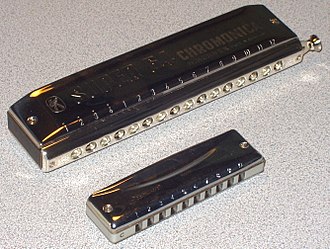
harmonica /hɑːrˈmɑːnɪkə/ countable noun musical instrument

Also called a "mouth organ" or "blues harp". Played by drawing and blowing through reeds. Iconic in American folk, blues, and country music.

  • a small rectangular wind instrument played by blowing through it

    He pulled out a harmonica and played a tune.

#4890

hard [family]

hard /hɑːrd/ adjective

Many idioms: "hard feelings", "hard time", "hard-boiled" (egg, or tough-talking detective fiction), "die hard".

  1. solid, firm, and resistant to pressure

    The ground was frozen hard.

  2. difficult to do or understand

    It was a hard exam.

hard /hɑːrd/ adverb
  • with a great deal of effort or force

    She worked hard all summer.

harden /ˈhɑːrdən/ verb
past: hardened /ˈhɑːrdənd/
pp: hardened /ˈhɑːrdənd/

Both literal (cement) and figurative (attitude, position). Compare "toughen".

  1. to make or become hard or harder

    The cement hardened overnight.

  2. to become or make less feeling or sympathetic

    Her face hardened at the news.

hardened /ˈhɑːrdənd/ adjective

"Hardened criminal": a common collocation meaning an experienced or unrepentant offender.

  • made hard; experienced and not easily affected

    He was a hardened soldier.

#4889

locker room

locker room /ˈlɑːkɚ ˌruːm/ countable noun

"Locker room talk" = vulgar or boastful talk among men (often about sex), the subject of much political controversy in the 2010s.

  • a room with lockers for storing clothes and personal items, especially at a gym or sports facility

    The players celebrated in the locker room after the win.

#4888

repeat [family]

repeat /rɪˈpiːt/ transitive verb
past: repeated /rɪˈpiːtɪd/
pp: repeated /rɪˈpiːtɪd/

"Repeat after me" - common classroom phrase. "Repeat offender" - someone who commits the same crime again.

  • to say or do something again

    Could you repeat that, please?

repeated /rɪˈpiːtɪd/ adjective
  • done or occurring again and again

    Despite repeated warnings, he ignored the rules.

repetition /ˌrepəˈtɪʃən/ noun

In fitness, often shortened to "reps" (e.g., "10 reps of squats"). "Spaced repetition": a memory technique used in flashcard apps like Anki.

  • the action of repeating something

    Learning requires repetition.

repeatedly /rɪˈpiːtɪdli/ adverb

Stronger than "often": implies many times, perhaps to the point of annoyance.

  • over and over again; many times

    He repeatedly denied the accusations.

#4887

harass [family]

harass /həˈræs/ transitive verb
past: harassed /həˈræst/
pp: harassed /həˈræst/

Two acceptable stress patterns: /ˈhærəs/ (older/British) and /həˈræs/ (American/modern). The second is now more common.

  • to subject to aggressive pressure or intimidation

    She was harassed by phone calls late at night.

harassment /həˈræsmənt/ uncountable noun

"Sexual harassment" is a major legal/workplace concept since the 1980s.

  • aggressive pressure or intimidation

    He was charged with harassment.

#4886

handicraft

handicraft /ˈhændikræft/ countable noun

"Handicrafts" (plural) often refers to a specific class of traditional crafts: knitting, pottery, weaving, etc.

  • a skill of making things by hand

    The shop sells local handicrafts.

#4885

rumble [family]

rumble /ˈrʌmbəl/ verb
past: rumbled /ˈrʌmbəld/
pp: rumbled /ˈrʌmbəld/

Different root from "grumble" (despite the similar sound). Rumble = a deep continuous sound.

  1. to make a deep, continuous sound

    Thunder rumbled in the distance.

  2. (of a stomach) to make a hungry noise

    My stomach was rumbling.

rumbling /ˈrʌmblɪŋ/ countable noun

Often plural: "rumblings of discontent" = early signs of dissatisfaction.

  • a continuous deep sound

    We heard the rumbling of the approaching train.

#4884

grumble

grumble /ˈɡrʌmbəl/ verb
past: grumbled /ˈɡrʌmbəld/
pp: grumbled /ˈɡrʌmbəld/

Implies low-level, persistent complaining rather than open protest. Compare "complain" (neutral) or "whine" (more childish).

  • to complain in a low, muttering voice

    He grumbled about the cost of food.

#4883

growl

growl /ɡraʊl/ verb
past: growled /ɡraʊld/
pp: growled /ɡraʊld/

Typically associated with dogs and other animals; "snarl" is similar but more aggressive. A stomach can also growl when hungry.

  1. (of an animal) to make a low, threatening sound

    The dog growled at the stranger.

  2. to say something in a low, angry voice

    "Get out," he growled.

#4882

groan

groan /ɡroʊn/ verb
past: groaned /ɡroʊnd/
pp: groaned /ɡroʊnd/

Homophone with "grown". Groan = a low sound; moan = similar but often implies emotional pain or pleasure.

  • to make a deep sound of pain or unhappiness

    He groaned as he sat down.

groan /ɡroʊn/ countable noun
  • a deep sound expressing pain or displeasure

    She let out a groan of frustration.

#4881

lubricate [family]

lubricate /ˈluːbrɪkeɪt/ transitive verb
past: lubricated /ˈluːbrɪkeɪtɪd/
pp: lubricated /ˈluːbrɪkeɪtɪd/

"Lube" is the informal short form. Alcohol is sometimes called "social lubricant".

  • to apply a substance to reduce friction

    He lubricated the engine.

lubricant /ˈluːbrɪkənt/ countable noun
  • a substance, such as oil or grease, used to reduce friction

    Use a silicone lubricant on the hinges.

lubrication /ˌluːbrɪˈkeɪʃən/ uncountable noun
  • the application of a substance to reduce friction

    The engine needs regular lubrication.

#4880

graze

graze /ɡreɪz/ verb animal
past: grazed /ɡreɪzd/
pp: grazed /ɡreɪzd/

"Grazing" (informal) can also mean snacking throughout the day rather than eating proper meals.

  1. (of animals) to eat grass in a field

    Cows grazed peacefully in the meadow.

  2. to touch or scrape lightly

    The bullet just grazed his arm.

graze /ɡreɪz/ countable noun
  • a slight scrape or scratch on the skin

    She fell and got a graze on her knee.

#4879

gospel

gospel /ˈɡɑːspəl/ countable noun

From Old English god + spel (good news). The four gospels: Matthew, Mark, Luke, John. "Gospel music" = a genre of Christian music originating in African American churches.

  1. the teaching of Jesus Christ; any of the first four books of the New Testament

    He read from the Gospel of Mark.

  2. something accepted as completely true

    You can take his word as gospel.

#4878

gorilla

gorilla
gorilla
gorilla /ɡəˈrɪlə/ countable noun animal

Homophone with "guerrilla" (fighter), which has the same pronunciation. The largest living primate. Famous: King Kong; Koko (the gorilla who learned sign language).

  • a large powerful African ape

    Mountain gorillas live in the cloud forests of central Africa.

#4877

goalkeeper

goalkeeper
goalkeeper
goalkeeper /ˈɡoʊlˌkiːpɚ/ countable noun

Often shortened to "goalie" or "keeper". The only player allowed to handle the ball with hands in soccer.

  • the player whose role is to stop the ball from entering the goal

    The goalkeeper made a brilliant save.

#4876

gloom [family]

gloom /ɡluːm/ uncountable noun

"Doom and gloom": a common phrase for excessive pessimism.

  1. partial or total darkness

    The figure emerged from the gloom.

  2. a state of depression or despondency

    Economic gloom settled over the country.

gloomy /ˈɡluːmi/ adjective
  1. dark or poorly lit

    The room was small and gloomy.

  2. depressed or melancholy

    He had a gloomy outlook on life.

#4875

glitter [family]

glitter /ˈɡlɪtɚ/ verb
past: glittered /ˈɡlɪtɚd/
pp: glittered /ˈɡlɪtɚd/

"All that glitters is not gold": proverb meaning appearances can deceive (from Shakespeare's Merchant of Venice).

  • to shine brightly with reflected light

    Diamonds glittered in the display case.

glitter /ˈɡlɪtɚ/ uncountable noun
  • tiny shiny particles used for decoration

    The Christmas card was covered in glitter.

glittering /ˈɡlɪtɚɪŋ/ adjective

Often used figuratively: "glittering career", "glittering prizes", impressive achievements. "Glittering" is more dignified than "glittery" (which suggests craft glitter).

  • shining with reflected light; impressive

    She had a glittering career.

glittery /ˈɡlɪtɚi/ adjective

"All that glitters is not gold": proverb. Glitter in cosmetics, crafts, and decoration. Associated with festivity (Christmas, New Year).

  • shining with small flashes of light

    She wore a glittery dress to the party.

#4874

gleam

gleam /ɡliːm/ intransitive verb
past: gleamed /ɡliːmd/
pp: gleamed /ɡliːmd/

"A gleam in someone's eye" = a hint of an idea or feeling. Often described as just before a baby is conceived: "You were just a gleam in your father's eye".

  • to shine softly

    His teeth gleamed white in the dark.

gleam /ɡliːm/ countable noun
  • a soft light or shine

    There was a gleam of hope.

#4873

glamour [family]

glamour /ˈɡlæmɚ/ uncountable noun

British spelling (and the most common spelling in fashion contexts). Etymologically from "grammar" (= magical learning, in Scots dialect).

  • the attractive or exciting quality of being charming and beautiful

    The film captures the glamour of old Hollywood.

glamor /ˈɡlæmɚ/ uncountable noun

American variant spelling, but "glamour" is still more common even in American writing.

  • (American variant) glamour

    The fashion magazine sells glamor.

glamorize /ˈɡlæməraɪz/ transitive verb
past: glamorized /ˈɡlæməraɪzd/
pp: glamorized /ˈɡlæməraɪzd/

British spelling: glamorise. Often negative: "glamorize violence/war/drugs".

  • to make something seem more attractive or glamorous than it really is

    The film was criticized for glamorizing drug use.

glamorous /ˈɡlæmɚəs/ adjective
  • having or relating to glamour

    She wore a glamorous dress to the gala.

#4872

geometry [family]

geometry /dʒiˈɑːmətri/ uncountable noun

From Greek geo (earth) + metria (measurement): originally land surveying. Euclid's "Elements" (c. 300 BC) is the foundational text.

  • the branch of mathematics concerned with the properties of points, lines, shapes, and space

    In high school we study geometry.

geometric /ˌdʒiːəˈmetrɪk/ adjective

"Geometric pattern" - common in art and design. "Geometric growth" - business term for rapid compounding growth.

  • relating to geometry or its methods

    The quilt has a geometric pattern.

#4871

gang [family]

gang /ɡæŋ/ countable noun

Neutral use: "a gang of friends", "a gang of workers". Negative use: organized criminal group.

  1. an organized group of criminals

    Police arrested members of a drug gang.

  2. (informal) a group of people who associate together

    He went out with his usual gang.

gangster /ˈɡæŋstɚ/ countable noun

Often associated with American organized crime: Al Capone, John Gotti, Lucky Luciano. "Gangster rap": a hip-hop subgenre.

  • a member of an organized group of violent criminals

    He played a gangster in the film.

#4870

gallop

gallop /ˈɡæləp/ verb
past: galloped /ˈɡæləpt/
pp: galloped /ˈɡæləpt/

Horse gaits in order of speed: walk, trot, canter, gallop. "Gallop" is also used metaphorically ("the disease galloped through the village").

  • (of a horse) to go at the fastest pace

    The horses galloped across the field.

gallop /ˈɡæləp/ countable noun
  • the fastest pace of a horse

    She broke into a gallop.

#4869

fission [family]

fission /ˈfɪʃən/ uncountable noun

From Latin fissus (split). Antonym in physics: fusion (combining nuclei). Nuclear power plants and atomic bombs use fission.

  • (physics) the splitting of an atomic nucleus, releasing energy

    Nuclear reactors use fission to generate electricity.

fissure /ˈfɪʃɚ/ countable noun

Same Latin root as "fission". "Anal fissure": a small tear in the lining of the anus (medical).

  • a long narrow opening or crack

    The earthquake opened a deep fissure in the ground.

#4868

fuse [family]

fuse /fjuːz/ countable noun

"Have a short fuse" = lose one's temper easily.

  1. a safety device in an electric circuit

    The fuse blew during the storm.

  2. a length of cord that is lit to ignite an explosive

    He lit the fuse and ran for cover.

fuse /fjuːz/ verb
past: fused /fjuːzd/
pp: fused /fjuːzd/
  • to join or blend to form a single entity

    The two metals fuse at high temperatures.

fusion /ˈfjuːʒən/ noun
  • the process or result of joining two or more things together to form a single entity

    Nuclear fusion.

diffuse /dɪˈfjuːz/ verb
past: diffused /dɪˈfjuːzd/
pp: diffused /dɪˈfjuːzd/
  • to spread out over a wide area or among a large number of people

    Technologies diffuse rapidly through society.

diffuse /dɪˈfjuːs/ adjective
  • spread out over a large area; not concentrated

    The room was lit by diffuse light.

#4867

fume

fume /fjuːm/ countable noun

Almost always plural "fumes" when referring to gas (exhaust fumes, paint fumes, toxic fumes).

  • gas or vapor with a strong smell, especially one that is harmful

    The room filled with fumes.

fume /fjuːm/ intransitive verb
past: fumed /fjuːmd/
pp: fumed /fjuːmd/
  • to be very angry

    She was still fuming about the meeting.

#4866

friction

friction /ˈfrɪkʃən/ noun

From Latin fricare (to rub). "Frictionless" = an ideal in design (e.g., "frictionless checkout").

  1. the resistance that one surface encounters when moving over another

    The brakes work by friction.

  2. conflict or disagreement

    There was friction between the two managers.

#4865

freak

freak /friːk/ countable noun

Once a neutral biological/circus term ("freak of nature"); now usually pejorative. Informal positive use: "control freak", "health freak" = obsessive enthusiast.

  1. a very unusual or unexpected occurrence

    His success was a freak of luck.

  2. (informal) a person regarded as strange because of unusual appearance or behavior

    The kids called him a freak.

freak /friːk/ verb
past: freaked /friːkt/
pp: freaked /friːkt/

"Freak out" (informal) = to lose control emotionally.

  • (informal) to become or cause to become very upset or excited

    He freaked when he saw the spider.

#4864

fragrant [family]

fragrant /ˈfreɪɡrənt/ adjective

Always positive: pleasant smells only. Negative equivalent: smelly, stinking, malodorous.

  • having a pleasant or sweet smell

    The garden was full of fragrant flowers.

fragrance /ˈfreɪɡrəns/ noun

In the cosmetics industry, "fragrance" is the polite/marketing term for perfume.

  • a pleasant, sweet smell

    The room was filled with the fragrance of lilies.

#4863

fowl

fowl /faʊl/ countable noun

Homophone with "foul" (= disgusting/unfair). Plural can be "fowl" or "fowls". "Game fowl" = wild birds hunted for sport or food.

  • a domesticated bird kept for eggs or meat, especially a chicken

    They keep fowl on the farm.

#4862

forsake [family]

forsake /fɚˈseɪk/ transitive verb
past: forsook /fɚˈsʊk/
pp: forsaken /fɚˈseɪkən/

Past: forsook; past participle: forsaken. Archaic/literary; modern equivalent is "abandon" or "give up". Famous from wedding vows: "forsaking all others".

  1. to abandon or leave someone

    He forsook his family for his career.

  2. to renounce or give up something valued

    She forsook her wealth to live simply.

forsaken /fɚˈseɪkən/ adjective
  • abandoned or left alone

    They found a forsaken village in the hills.

#4861

formula [family]

formula /ˈfɔːrmjələ/ countable noun

Plural: formulas or formulae. "Formula One" (F1) - top tier of international auto racing.

  • a mathematical relationship or rule expressed in symbols

    She memorized the formula for the area of a circle.

formulate /ˈfɔːrmjəleɪt/ transitive verb
past: formulated /ˈfɔːrmjəleɪtɪd/
pp: formulated /ˈfɔːrmjəleɪtɪd/

More formal than "come up with" or "work out". Common collocations: formulate a plan/policy/theory/strategy.

  1. to create or develop methodically

    They formulated a new strategy.

  2. to express in a clear and precise way

    She struggled to formulate her thoughts.

formulation /ˌfɔːrmjəˈleɪʃən/ noun
  • the action of creating or expressing something methodically

    The formulation of the new policy took months.

#4860

flunk

flunk /flʌŋk/ verb
past: flunked /flʌŋkt/
pp: flunked /flʌŋkt/

American informal. "Flunk out" = be expelled for poor grades. "Fail" is the standard formal term.

  • (American, informal) to fail an exam or course

    He flunked his chemistry test.

#4859

cornflake

cornflake
cornflake
cornflake /ˈkɔːrnfleɪk/ countable noun

Almost always used in the plural ("cornflakes"). Invented in 1894 by John Harvey Kellogg as a health food. Kellogg's Corn Flakes is the iconic brand.

  • a flake of toasted maize, eaten as a breakfast cereal with milk

    He had a bowl of cornflakes for breakfast.

#4858

fishery

fishery /ˈfɪʃɚi/ countable noun

Distinct from a "fish farm" (aquaculture); a fishery typically refers to harvesting wild fish.

  • an area where fish are caught commercially

    The cod fishery off Newfoundland collapsed in the 1990s.

#4857

fireproof

fireproof /ˈfaɪɚpruːf/ adjective

Compare with: waterproof, soundproof, bulletproof, all use the "-proof" suffix meaning "resistant to".

  • able to resist fire or great heat

    They stored the documents in a fireproof safe.

#4856

firework

firework
firework
firework /ˈfaɪɚwɝk/ countable noun

Usually plural. Invented in China around the 7th century. Common occasions: New Year's Eve, Fourth of July (US), Diwali, Guy Fawkes Night (UK, Nov 5).

  • a device producing a spectacular explosion of color and sound when ignited

    The fireworks display lit up the sky.

#4855

finite [family]

finite /ˈfaɪnaɪt/ adjective

From Latin finitus (limited). Antonym: infinite. In grammar, "finite verb" = a verb form marked for tense and person.

  • having limits or bounds

    The earth has finite resources.

infinite /ˈɪnfənət/ adjective

Antonym: finite. In math: "infinite series". "Infinite jest": David Foster Wallace novel. "To infinity and beyond!": Buzz Lightyear catchphrase.

  • having no limit

    There are infinite possibilities.

infinity /ɪnˈfɪnəti/ noun

Symbol: ∞ ("lemniscate"). "Infinity stones": fictional gems in the Marvel Cinematic Universe. Different sizes of infinity exist in math (Cantor's discoveries).

  • the state of being infinite; an unlimited quantity

    The line stretched into infinity.

#4854

Finn

Finn /fɪn/ proper noun

Homophone with "fin". Also a common given name in English (e.g., Finn from "Star Wars"). Adjective: Finnish.

  • a person from Finland

    Many Finns speak excellent English.

#4853

fiancé / fiancée [group]

fiancé /ˌfiːɑːnˈseɪ/ countable noun

French loanword. Note the accent. Masculine form (a man engaged to be married). Female form: fiancée (extra -e).

  • a man who is engaged to be married

    She introduced her fiancé to her parents.

fiancée /ˌfiːɑːnˈseɪ/ countable noun

Same pronunciation as fiancé. Feminine form. Both words follow French gender conventions: -é (masc), -ée (fem).

  • a woman who is engaged to be married

    He bought a ring for his fiancée.

#4852

mayor [family]

mayor /ˈmeɪɚ/ countable noun

Pronounced as one or two syllables depending on dialect. "Mayor" of London is a famous high-profile post in UK politics. American mayors are elected; in some countries they are appointed.

  • the elected head of a city, town, or borough

    The mayor announced new housing policies.

mayoress /ˈmeɪɚes/ countable noun

Two senses: a female mayor (older, falling out of use as "mayor" becomes gender-neutral), or the wife of a male mayor.

  • a female mayor, or the wife of a mayor

    The mayoress attended the ceremony.

#4851

borough

borough /ˈbɝoʊ/ countable noun

In British English, a town that has its own local government. In NYC, the five boroughs: Manhattan, Brooklyn, Queens, the Bronx, Staten Island.

  • a town or district that is an administrative unit

    He grew up in the borough of Brooklyn.

#4850

convene [family]

convene /kənˈviːn/ verb
past: convened /kənˈviːnd/
pp: convened /kənˈviːnd/

More formal than "meet" or "gather". Often used of official bodies (parliaments, councils, committees).

  • to come or bring together for a meeting

    The committee will convene next Tuesday.

convener /kənˈviːnɚ/ countable noun

American spelling. British: convenor. Both refer to the person who calls a meeting together or chairs it.

  • a person who arranges or chairs a meeting

    As the convener, she set the agenda.

convenor /kənˈviːnɚ/ countable noun

British spelling variant of convener.

  • (British variant) a convener

    He served as the convenor of the working group.

#4849

upheaval

upheaval /ʌpˈhiːvəl/ countable noun

Originally geological (the heaving up of the earth's crust). Now usually used figuratively for social or personal change.

  • a violent or sudden change or disruption

    The country experienced political upheaval.

#4848

empower [family]

empower /ɪmˈpaʊɚ/ transitive verb
past: empowered /ɪmˈpaʊɚd/
pp: empowered /ɪmˈpaʊɚd/

Often used in social/political contexts about marginalized groups. Buzzword in business and self-help contexts since the 1990s.

  1. to give (someone) the authority or power to do something

    The new law empowers police to make arrests.

  2. to make (someone) stronger and more confident

    Education empowers people to change their lives.

empowerment /ɪmˈpaʊɚmənt/ uncountable noun
  • the process of becoming stronger and more confident, especially in controlling one's life

    The course focuses on women's empowerment.

#4847

subdivide

subdivide /ˌsʌbdəˈvaɪd/ verb
past: subdivided /ˌsʌbdəˈvaɪdɪd/
pp: subdivided /ˌsʌbdəˈvaɪdɪd/

In real estate, to subdivide land = to split a large plot into smaller parcels for sale.

  • to divide (something already divided) into smaller parts

    The chapter is subdivided into three sections.

#4846

sprawl [family]

sprawl /sprɔːl/ verb
past: sprawled /sprɔːld/
pp: sprawled /sprɔːld/

"Urban sprawl" = the spread of cities into surrounding countryside, often criticized for environmental and social problems.

  1. to sit, lie, or fall with limbs spread out awkwardly

    He sprawled on the sofa.

  2. (of a place or thing) to spread out over a large area in an untidy way

    The city sprawls along the coast.

sprawled /sprɔːld/ adjective
  • spread out in an ungainly manner

    He lay sprawled on the floor.

#4845

wring

wring /rɪŋ/ transitive verb
past: wrung /rʌŋ/
pp: wrung /rʌŋ/

Past tense: wrung (NOT "wringed"). Homophone with "ring". "Wring one's hands" = a gesture of distress.

  1. to squeeze and twist (something) to remove liquid

    She wrung out the wet towel.

  2. to obtain with difficulty

    They wrung a confession from him.

#4844

flounder

flounder /ˈflaʊndɚ/ intransitive verb
past: floundered /ˈflaʊndɚd/
pp: floundered /ˈflaʊndɚd/

Don't confuse with "founder" (= to sink, fail). "Flounder" implies struggling but not necessarily failing.

  1. to struggle clumsily or helplessly

    He floundered for an answer.

  2. to struggle to move or stay upright

    They floundered through the snow.

flounder /ˈflaʊndɚ/ countable noun
  • a small flatfish

    They caught several flounder.

#4843

subvert [family]

subvert /səbˈvɝt/ transitive verb
past: subverted /səbˈvɝtɪd/
pp: subverted /səbˈvɝtɪd/

From Latin sub (from below) + vertere (to turn). Related: subversive, subversion.

  • to undermine the power and authority of (an established system)

    They tried to subvert the government.

subversion /səbˈvɝʒən/ uncountable noun
  • the act of undermining a system or authority

    The regime accused journalists of subversion.

subversive /səbˈvɝsɪv/ adjective
  • intended to undermine a system or authority

    The play was considered subversive.

#4842

rampant

rampant /ˈræmpənt/ adjective

Almost always negative: used for diseases, crime, corruption, weeds, inflation.

  • (of something undesirable) spreading unchecked

    Corruption was rampant in the regime.

#4841

rampage

rampage /ˈræmpeɪdʒ/ countable noun

"On a rampage" or "on the rampage": fixed phrase. Often used of mass shootings, riots, or violent storms.

  • a period of violent and uncontrollable behavior

    The elephants went on a rampage through the village.

#4840

exuberant [family]

exuberant /ɪɡˈzuːbɚənt/ adjective

From Latin exuberare (to be abundant). Stronger than "happy": suggests energy that overflows.

  • full of energy, excitement, and cheerfulness

    The children were exuberant after the party.

exuberance /ɪɡˈzuːbɚəns/ uncountable noun

"Irrational exuberance": phrase by Alan Greenspan (1996) describing stock-market enthusiasm not justified by fundamentals.

  • the quality of being exuberant

    Her youthful exuberance was contagious.

#4839

fertile [family]

fertile /ˈfɝtəl/ adjective

Used both biologically (able to reproduce) and metaphorically ("fertile imagination", "fertile ground for new ideas"). Antonym: barren, infertile.

  1. (of land) producing many crops

    The valley has fertile soil.

  2. (of a person or animal) able to produce offspring

    She is most fertile at this point in her cycle.

fertilizer /ˈfɝtəlaɪzɚ/ noun
  • a chemical or natural substance added to soil or land to increase its fertility

    We used a fertilizer to help our plants grow.

fertilize /ˈfɝtəlaɪz/ transitive verb
past: fertilized /ˈfɝtəlaɪzd/
pp: fertilized /ˈfɝtəlaɪzd/

British spelling: fertilise. Two senses: agriculture (add fertilizer) and biology (combine egg + sperm).

  • to add fertilizer to (soil); to cause an egg to develop

    They fertilize the fields each spring.

fertility /fɚˈtɪləti/ uncountable noun

"Fertility treatment", "fertility rate" - common in medicine and demographics.

  • the quality of being fertile; ability to produce offspring or crops

    The clinic specializes in fertility treatments.

#4838

familiar [family]

familiar /fəˈmɪljɚ/ adjective

"Familiar with" = knowing something well; "familiar to" = recognizable to someone.

  • well known from long or close association

    Her voice sounded familiar.

familiarity /fəˌmɪliˈærəti/ uncountable noun

"Familiarity breeds contempt" = a proverb meaning that close knowledge of someone or something leads to a loss of respect.

  • close acquaintance with something

    She has a deep familiarity with French literature.

#4837

falter [family]

falter /ˈfɔːltɚ/ intransitive verb
past: faltered /ˈfɔːltɚd/
pp: faltered /ˈfɔːltɚd/

Stronger than "hesitate": implies an unwanted weakness in resolve or movement.

  1. to lose strength or momentum

    His voice faltered as he spoke.

  2. to move unsteadily

    She faltered as she crossed the room.

faltering /ˈfɔːltɚɪŋ/ adjective
  • losing strength, confidence, or steadiness

    She gave a faltering explanation.

#4836

Fahrenheit

Fahrenheit /ˈfærənhaɪt/ adjective

Used mainly in the US. Most of the world uses Celsius (Centigrade). Water freezes at 32°F and boils at 212°F. Named after Daniel Gabriel Fahrenheit (1686-1736). "Fahrenheit 451" is Ray Bradbury's classic novel.

  • of or denoting a scale of temperature on which water freezes at 32° and boils at 212° under standard conditions

    The temperature was 75 degrees Fahrenheit.

#4835

faction [family]

faction /ˈfækʃən/ countable noun

Often negative: suggests division and conflict within a larger group. Adjective: factional.

  • a small dissenting group within a larger one

    A breakaway faction formed its own party.

factional /ˈfækʃənəl/ adjective
  • relating to or arising from factions within a group

    The party was weakened by factional infighting.

#4834

fable [family]

fable /ˈfeɪbəl/ countable noun

Most famous: Aesop's Fables (ancient Greek), e.g., "The Tortoise and the Hare", "The Fox and the Grapes". Adjective: fabled = legendary, famous.

  • a short story, usually with animals, teaching a moral

    He told the children a fable about honesty.

fabled /ˈfeɪbəld/ adjective

From "fable" (legendary tale). Implies almost-mythical status. "Fabled city of gold": common adventure-story trope.

  • famous, especially by being often talked about

    He visited the fabled lost city.

#4833

eyesight

eyesight /ˈaɪsaɪt/ uncountable noun

"20/20 vision" = normal eyesight. "Failing eyesight": common collocation for age-related decline.

  • the ability to see

    He has perfect eyesight.

#4832

eyelash

eyelash
eyelash
eyelash /ˈaɪlæʃ/ countable noun body

Often shortened to "lash". "Mascara" is the cosmetic used to darken/lengthen eyelashes. Average eyelash lifespan: about 3 months.

  • each of the short curved hairs growing on the edges of the eyelids

    A tear ran down her eyelashes.

#4831

extract

extract /ɪkˈstrækt/ transitive verb
past: extracted /ɪkˈstræktɪd/
pp: extracted /ɪkˈstræktɪd/

Verb stress on second syllable; noun stress on first.

  1. to remove or take out, especially by effort

    The dentist extracted the tooth.

  2. to obtain (information or a substance) from a source

    They extracted oil from the seeds.

extract /ˈekstrækt/ countable noun
  1. a short passage taken from a longer piece of writing

    She read an extract from the novel.

  2. a concentrated preparation of a substance

    Vanilla extract is used in baking.

#4830

expire [family]

expire /ɪkˈspaɪɚ/ intransitive verb
past: expired /ɪkˈspaɪɚd/
pp: expired /ɪkˈspaɪɚd/

From Latin expirare (to breathe out). Literally "to breathe one's last": hence the death sense.

  1. (of a document) to come to the end of its period of validity

    My passport expires next month.

  2. (formal) to die

    He expired peacefully in his sleep.

expiration /ˌekspəˈreɪʃən/ noun

"Expiration date" (American) = the date food or medicine becomes unsafe. British equivalent: "expiry date".

  • the end of the period of validity

    Check the expiration date on the milk.

expiry /ɪkˈspaɪri/ noun

(British); American often 'expiration date'.

  • the end of the period for which something is valid

    Check the expiry date on the carton.

#4829

exempt [family]

exempt /ɪɡˈzempt/ adjective

Related: exemption (noun). "Tax-exempt" = not required to pay tax.

  • free from an obligation or liability

    Charities are exempt from this tax.

exempt /ɪɡˈzempt/ transitive verb
past: exempted /ɪɡˈzemptɪd/
pp: exempted /ɪɡˈzemptɪd/
  • to free from an obligation

    Medical conditions exempt him from military service.

exemption /ɪɡˈzempʃən/ countable noun
  • a special case in which someone is excused from a rule or obligation

    She claimed a tax exemption for her home office.

#4828

exclude [family]

exclude /ɪkˈskluːd/ transitive verb
past: excluded /ɪkˈskluːdɪd/
pp: excluded /ɪkˈskluːdɪd/

Antonym: include.

  • to deny entry, access, or involvement

    They were excluded from the meeting.

exclusion /ɪkˈskluːʒən/ noun
  • the act of excluding

    The exclusion of certain groups was criticized.

exclusion zone /ɪkˈskluːʒən zoʊn/ countable noun

Famous: the Chernobyl Exclusion Zone (Ukraine), still off-limits to civilians after the 1986 nuclear disaster.

  • an area where entry is forbidden

    The military set up an exclusion zone around the site.

exclusionary /ɪkˈskluːʒəneri/ adjective
  • tending to exclude others

    They opposed the exclusionary immigration policy.

exclusive /ɪkˈskluːsɪv/ adjective

"Mutually exclusive": two things that can't both be true. "Exclusive interview": only one outlet gets it. "Exclusive club" = elite/private.

  • available only to a limited group

    This is an exclusive club.

exclusive /ɪkˈskluːsɪv/ countable noun
  • an exclusive interview or story

    The magazine landed an exclusive with the actor.

#4827

excellence [family]

excellence /ˈeksələns/ uncountable noun

"Your Excellency" = a formal title for ambassadors and certain heads of state.

  • the quality of being outstanding or extremely good

    The school is known for academic excellence.

excellent /ˈeksələnt/ adjective

"Excellent!": catchphrase from Bill & Ted's Excellent Adventure.

  • extremely good; outstanding

    She is an excellent cook.

#4826

examine [family]

examine /ɪɡˈzæmən/ transitive verb
past: examined /ɪɡˈzæmənd/
pp: examined /ɪɡˈzæmənd/
  1. to inspect closely

    The doctor examined the patient.

  2. to test the knowledge of (a student)

    The professor examined the students orally.

examiner /ɪɡˈzæmənɚ/ countable noun
  • a person who conducts an examination

    The driving examiner failed her.

examinee /ɪɡˌzæməˈniː/ countable noun

The "-ee" suffix marks the receiver/passive party (like employer/employee, interviewer/interviewee).

  • a person being examined

    The examinee waited nervously.

exam /ɪɡˈzæm/ countable noun

Short for "examination". Universal in academic English.

  • a formal test of knowledge

    She passed her math exam.

examination /ɪɡˌzæməˈneɪʃən/ noun

More formal than "exam". Also: medical examination, cross-examination (in court).

  • a detailed inspection or test

    The examination lasted three hours.

re-examine /ˌriːɪɡˈzæmən/ transitive verb
past: re-examined /ˌriːɪɡˈzæmənd/
pp: re-examined /ˌriːɪɡˈzæmənd/

Common in legal cross-examination (re-examine your witness after cross). Also: re-examine evidence, re-examine assumptions.

  • to examine again

    They re-examined the evidence.

#4825

evoke / revoke [group]

evoke /ɪˈvoʊk/ transitive verb
past: evoked /ɪˈvoʊkt/
pp: evoked /ɪˈvoʊkt/

From Latin e- (out) + vocare (to call). Same root as "voice", "vocal". Often used of memories, feelings, or images.

  • to bring (a memory, feeling, or image) to mind

    The smell evoked memories of childhood.

revoke /rɪˈvoʊk/ transitive verb
past: revoked /rɪˈvoʊkt/
pp: revoked /rɪˈvoʊkt/

Same Latin root as "evoke" (vocare = to call); re- = back. Common: revoke a license/passport/contract.

  • to officially cancel (a decision or law)

    The court revoked his driver's license.

evocation /ˌevəˈkeɪʃən/ noun
  • the act of bringing or recalling a feeling, memory, or image to the conscious mind

    The novel is a vivid evocation of 1920s Paris.

evocative /ɪˈvɑːkətɪv/ adjective
  • bringing strong memories, images, or feelings to mind

    The smell of pine is evocative of childhood vacations.

#4824

eternal [family]

eternal /ɪˈtɝnəl/ adjective

"Eternal Sunshine of the Spotless Mind": 2004 film. "The Eternal City" = Rome.

  • lasting or existing forever

    They swore eternal friendship.

eternity /ɪˈtɝnəti/ noun

Common hyperbole: "It took an eternity" = it took a very long time.

  • infinite or unending time

    They believed in life after death and the soul's eternity.

#4823

esteem [family]

esteem /ɪˈstiːm/ uncountable noun

From Latin aestimare (to value). Same root as "estimate".

  • respect and admiration

    She is held in high esteem by her colleagues.

esteemed /ɪˈstiːmd/ adjective

Often used in formal speeches: "my esteemed colleague".

  • respected and admired

    She is an esteemed professor.

self-esteem /ˌself ɪˈstiːm/ uncountable noun

A major concept in psychology since the 1960s; sometimes criticized for being overused or pseudoscientific.

  • confidence in one's own worth or abilities

    Failure can damage a child's self-esteem.

#4822

escort

escort /ˈeskɔːrt/ countable noun

"Escort" has come to be used euphemistically for a paid sexual companion, so context matters.

  • a person or vehicle accompanying another for protection or ceremony

    A police escort accompanied the convoy.

escort /ɪˈskɔːrt/ transitive verb
past: escorted /ɪˈskɔːrtɪd/
pp: escorted /ɪˈskɔːrtɪd/

Verb stress on second syllable; noun stress on first.

  • to accompany (someone) to a destination

    He escorted her to the door.

#4821

equate [family]

equate /ɪˈkweɪt/ verb
past: equated /ɪˈkweɪtɪd/
pp: equated /ɪˈkweɪtɪd/

Always with "with": "equate X with Y" = treat X as equivalent to Y. Related: equation, equator.

  • to consider as equal or equivalent

    Many equate wealth with happiness.

equation /ɪˈkweɪʒən/ countable noun

Famous: E = mc² (Einstein), F = ma (Newton). "Part of the equation": figurative phrase for a factor to consider.

  • a statement that two expressions are equal

    She solved the quadratic equation.

#4820

equal [family]

equal /ˈiːkwəl/ adjective

"All animals are equal, but some animals are more equal than others.": George Orwell, Animal Farm.

  • being the same in quantity, size, or status

    All citizens are equal before the law.

equality /ɪˈkwɑːləti/ uncountable noun
  • the state of being equal in status or rights

    The movement fights for gender equality.

equalize /ˈiːkwəlaɪz/ verb
past: equalized /ˈiːkwəlaɪzd/
pp: equalized /ˈiːkwəlaɪzd/

British spelling: equalise. In sports (especially soccer), to equalize = to score, making the scores level.

  • to make equal

    The bill aims to equalize pay between men and women.

equally /ˈiːkwəli/ adverb
  • to the same degree; in the same manner

    They are equally talented.

#4819

enlighten [family]

enlighten /ɪnˈlaɪtən/ transitive verb
past: enlightened /ɪnˈlaɪtənd/
pp: enlightened /ɪnˈlaɪtənd/

Often slightly sarcastic in modern use ("Please enlighten me" = explain it to me, sometimes patronizingly).

  • to give greater knowledge and understanding to

    The teacher enlightened the class on the topic.

enlightened /ɪnˈlaɪtənd/ adjective

"Enlightened self-interest" = pursuing one's own interests while considering long-term consequences for others.

  • having knowledge or insight; rational and well-informed

    They have a more enlightened approach to education.

enlightenment /ɪnˈlaɪtənmənt/ noun

"The Enlightenment" (capitalized) = the 17th-18th century intellectual movement in Europe emphasizing reason and science.

  • the state of having knowledge or understanding

    She sought spiritual enlightenment.

#4818

enhance [family]

enhance /ɪnˈhæns/ transitive verb
past: enhanced /ɪnˈhænst/
pp: enhanced /ɪnˈhænst/

More formal than "improve". Common collocations: enhance flavor, enhance security, enhance reputation.

  • to intensify or further improve the quality of

    The lighting enhanced the room's appearance.

enhancement /ɪnˈhænsmənt/ noun

Software "enhancements" = minor improvements (as opposed to bug fixes or major features).

  • an improvement or increase

    The update includes several enhancements.

#4817

endow [family]

endow /ɪnˈdaʊ/ transitive verb
past: endowed /ɪnˈdaʊd/
pp: endowed /ɪnˈdaʊd/

Related noun: endowment (money given as a permanent gift, often to a university). Harvard's endowment is the world's largest at over $50 billion.

  1. to give a large sum of money to (an institution)

    He endowed the university with millions.

  2. to provide with a quality or talent

    She is endowed with natural intelligence.

endowment /ɪnˈdaʊmənt/ noun

University endowments are large investment funds providing perpetual income. Princeton, Yale, Stanford all have endowments over $30 billion.

  • an income or property given to support a person or institution

    The college's endowment grew rapidly.

#4816

encyclopedia

encyclopedia
encyclopedia
encyclopedia /ɪnˌsaɪkləˈpiːdiə/ countable noun

From Greek enkyklios paideia (general education). Famous: Encyclopædia Britannica (since 1768). Wikipedia is now the world's most-used encyclopedia.

  • a book or set of books giving information on many subjects

    He consulted the encyclopedia for the answer.

#4815

elevate [family]

elevate /ˈeləveɪt/ transitive verb
past: elevated /ˈeləveɪtɪd/
pp: elevated /ˈeləveɪtɪd/

From Latin elevare (to lift up). Same root as "elevator" (American) and "elevation".

  1. to lift to a higher position

    Elevate your injured leg.

  2. to raise in status or character

    His new role elevated him to a senior position.

elevated /ˈeləveɪtɪd/ adjective

"Elevated train": train running on raised tracks (e.g., Chicago L). "Elevated levels": common medical phrase (e.g., "elevated blood sugar").

  • situated above the surrounding area; higher than normal

    He has elevated cholesterol.

elevation /ˌeləˈveɪʃən/ noun

"Elevation" measured in feet or meters above sea level. "High-elevation" places (e.g., Denver) have lower oxygen.

  • height above a given level, especially sea level

    The city sits at an elevation of 5,280 feet.

elevator /ˈeləveɪtɚ/ countable noun

American term. British: lift. "Elevator pitch": short persuasive speech short enough to deliver during an elevator ride.

  • (American) a platform or compartment for carrying people up and down

    Take the elevator to the 5th floor.

#4814

seasick

seasick /ˈsiːsɪk/ adjective

A form of motion sickness. Common remedies: scopolamine patches, ginger, looking at the horizon. Related: airsick, carsick.

  • feeling nauseous from the motion of a boat

    He got seasick on the ferry crossing.

#4813

nightmare [family]

nightmare /ˈnaɪtmer/ countable noun

From night + mare (an evil spirit thought to suffocate sleepers, unrelated to a horse). Used metaphorically for any awful situation.

  1. a frightening dream

    She woke from a terrible nightmare.

  2. a very unpleasant or stressful experience

    The journey home was a nightmare.

nightmarish /ˈnaɪtmerɪʃ/ adjective
  • resembling a nightmare; horrifying

    The accident scene was nightmarish.

#4812

apiece

apiece /əˈpiːs/ adverb

Always follows the thing being counted, never precedes ("three dollars apiece", not "apiece three dollars").

  • to, for, or by each one

    The tickets cost ten dollars apiece.

#4811

capex

capex /ˈkæpeks/ uncountable noun

Short for "capital expenditure". Distinct from opex (operating expenses, day-to-day costs). Used in business/finance.

  • (business) money spent on long-term physical assets like buildings or equipment

    The company's capex was up 20% this year.

#4810

outstrip

outstrip /ˌaʊtˈstrɪp/ transitive verb
past: outstripped /ˌaʊtˈstrɪpt/
pp: outstripped /ˌaʊtˈstrɪpt/

Past tense: outstripped (double p).

  • to move faster than or surpass

    Demand has outstripped supply.

#4809

stratosphere [family]

stratosphere
stratosphere
stratosphere /ˈstrætəsfɪr/ countable noun

Earth's atmospheric layers (bottom up): troposphere, stratosphere, mesosphere, thermosphere, exosphere. The ozone layer is in the stratosphere.

  1. the layer of the atmosphere above the troposphere, from about 10 to 50 km up

    Jet aircraft fly in the lower stratosphere.

  2. a very high level of achievement or importance

    His salary is in the stratosphere.

stratospheric /ˌstrætəˈsferɪk/ adjective
  • relating to the stratosphere; (informal) extremely high

    The company's growth has been stratospheric.

#4808

herald [family]

herald /ˈherəld/ transitive verb
past: heralded /ˈherəldɪd/
pp: heralded /ˈherəldɪd/
  • to be a sign that something is about to happen

    The cherry blossoms herald the arrival of spring.

herald /ˈherəld/ countable noun

Common newspaper name: "The Daily Herald", "Boston Herald", "Miami Herald".

  • a person who carried messages or made announcements; a sign of something to come

    In medieval times, heralds announced royal decrees.

heraldic /hɪˈrældɪk/ adjective
  • relating to heraldry

    The shield has heraldic symbols.

heraldry /ˈherəldri/ uncountable noun

Famous symbols: lions (England), eagles (Germany, US), fleur-de-lis (France).

  • the system of designing and describing coats of arms

    He studies medieval heraldry.

#4807

cache

cache /kæʃ/ countable noun

Homophone with "cash". From French cacher (to hide). Modern computing: a fast memory area that stores frequently accessed data.

  1. a hidden store of things

    Police found a cache of weapons.

  2. (computing) a temporary storage area for frequently used data

    Clear the browser cache to fix the issue.

#4806

piecemeal

piecemeal /ˈpiːsmiːl/ adjective

Usually slightly negative: implies lack of overall plan or coordination.

  • characterized by unsystematic partial measures

    The reforms were piecemeal and inadequate.

piecemeal /ˈpiːsmiːl/ adverb
  • one piece at a time

    The information was released piecemeal.

#4805

edible

edible /ˈedəbəl/ adjective

Distinct from "eatable" (which means "acceptable to eat", referring to taste). "Edible" simply means "not poisonous". In US slang, "edibles" = food containing cannabis.

  • fit to be eaten

    Be careful: not all mushrooms are edible.

#4804

eccentric [family]

eccentric /ɪkˈsentrɪk/ adjective

From Greek ekkentros (off-center). Often more affectionate than "weird": implies harmlessly unconventional.

  • unconventional and slightly strange

    He's a brilliant but eccentric professor.

eccentric /ɪkˈsentrɪk/ countable noun
  • an eccentric person

    The neighborhood is full of eccentrics.

eccentricity /ˌeksenˈtrɪsəti/ noun
  • the quality of being unconventional

    Her eccentricities made her a favorite at parties.

#4803

duration

duration /dʊˈreɪʃən/ noun

"For the duration" = until the end of something. From Latin durare (to last): same root as "durable", "endure".

  • the length of time something lasts

    What is the duration of the flight?

#4802

dressing

dressing /ˈdresɪŋ/ noun

Two distinct unrelated senses. "Salad dressing" = sauce for salad. "Dressing" on a wound = bandage/gauze.

  1. a sauce for food, especially salad

    What dressing would you like on your salad?

  2. a piece of material applied to a wound

    The nurse changed the dressing on his arm.

#4801

drought

drought
drought
drought /draʊt/ noun weather

Pronounced "drowt", not "drot". Often used metaphorically: "a drought of new ideas".

  • a prolonged period of abnormally low rainfall

    The region suffered a severe drought.