Vocabulary: Batch 76

#7501 to #7600 (100 entries)

#7600

slapstick

slapstick /ˈslæpstɪk/ uncountable noun film genre

Named after a physical prop (two flat sticks that make a loud slap on impact). Masters: Charlie Chaplin, Buster Keaton, the Three Stooges, Mr. Bean.

  • comedy based on exaggerated physical action, pratfalls, and absurd situations rather than wordplay

    The film relies heavily on slapstick.

#7599

noir [family]

noir /nwɑːr/ uncountable noun film genre

French for "black". As a standalone genre label, short for "film noir". Neo-noir = modern updates (e.g. "Blade Runner", "Chinatown").

  • a genre of film or fiction characterized by cynicism, dark themes, and morally ambiguous characters

    The director is known for his noir style.

film noir /ˌfɪlm ˈnwɑːr/ countable noun film genre

Classic era: 1940s-1950s Hollywood. Hallmarks: femme fatale, hard-boiled detective, low-key lighting, voice-over narration. "Double Indemnity" (1944) and "The Maltese Falcon" (1941) are textbook examples.

  • a style of crime film featuring cynical characters, shadowy cinematography, and bleak themes

    "Double Indemnity" is one of the greatest films noirs.

#7598

crime [family]

crime /kraɪm/ countable noun film genre

"Crime scene", "crime wave", "hate crime". "Crime and Punishment": Dostoyevsky novel. "Perfect crime": undetected one.

  • an act that breaks the law

    They were charged with a serious crime.

criminal /ˈkrɪmənəl/ countable noun

"Criminal record": record of past convictions. "White-collar criminal": financial/professional crimes.

  • a person who commits a crime

    The criminal was sentenced to ten years.

criminal court /ˈkrɪmənəl kɔːrt/ countable noun

Distinct from civil court. "International Criminal Court" (ICC): at The Hague, tries war crimes.

  • a court that deals with criminal cases

    The case was heard in criminal court.

decriminalize /diːˈkrɪmɪnəlaɪz/ transitive verb
past: decriminalized /diːˈkrɪmɪnəlaɪzd/
pp: decriminalized /diːˈkrɪmɪnəlaɪzd/

British: decriminalise.

  • to stop treating something as illegal or as a criminal offense

    Several states have decriminalized marijuana.

#7597

war

war /wɔːr/ countable noun film genre

"Declare war", "go to war", "at war". Distinct from "warfare" (the conduct of fighting, not the conflict itself).

  • a state of armed conflict between different nations or groups

    The two countries have been at war for years.

war /wɔːr/ intransitive verb film genre
past: warred /wɔːrd/
pp: warred /wɔːrd/
  • to engage in armed conflict

    The rival factions warred for control of the region.

#7596

musical

musical /ˈmjuːzɪkəl/ countable noun film genre

Broadway musicals (New York) and West End musicals (London) are the two major traditions. Famous examples: "The Phantom of the Opera", "Hamilton", "Les Miserables".

  • a film, play, or TV show in which singing and dancing play an essential part

    "La La Land" is a modern musical.

musical /ˈmjuːzɪkəl/ adjective
  1. relating to or accompanied by music

    She comes from a musical family.

  2. having a talent for or interest in music

    He's very musical.

#7595

western

western /ˈwestɚn/ countable noun film genre

Set in the American Old West (roughly 1860s-1900s). Subgenres: spaghetti western (Italian-made, e.g. Sergio Leone's films), revisionist western, space western. "The Good, the Bad and the Ugly" (1966) is the iconic example.

  • a film or novel set in the American frontier, typically featuring cowboys, outlaws, and gunfights

    John Wayne starred in dozens of westerns.

#7594

mystery [family]

mystery /ˈmɪstɚi/ countable noun film genre

"Murder mystery": popular fiction genre. "Mystery shopper": undercover quality assessor. Religious: ancient mystery cults required secret initiation.

  • something unknown or difficult to explain

    The cause remains a mystery.

mysterious /mɪˈstɪriəs/ adjective

"In mysterious ways": common religious phrase. "Tall, dark, and mysterious": romantic stereotype.

  • difficult to understand or explain

    He had a mysterious smile.

mystify /ˈmɪstɪfaɪ/ verb
past: mystified /ˈmɪstɪfaɪd/
pp: mystified /ˈmɪstɪfaɪd/
  • utterly bewilder or perplex (someone)

    Maladies that have mystified and alarmed researchers for over a decade.

#7593

animate [family]

animate /ˈænəmeɪt/ transitive verb
past: animated /ˈænəmeɪtɪd/
pp: animated /ˈænəmeɪtɪd/

From Latin anima (soul, life). Same root as "animal", "animation".

  1. to bring to life; to make lively

    Her enthusiasm animated the whole room.

  2. to create moving images of (a character) for film or video

    Disney animators animated Mickey Mouse.

inanimate /ɪnˈænəmət/ adjective

Adjective stress moves to second syllable; verb "animate" stresses first.

  • not alive; not having the qualities of a living being

    Rocks are inanimate objects.

animated /ˈænəmeɪtɪd/ adjective
  1. full of life; lively

    They had an animated discussion.

  2. (of film) made using animation

    It's an animated movie for kids.

animator /ˈænəmeɪtɚ/ countable noun
  • a person who creates animation

    He works as an animator at Pixar.

animation /ˌænəˈmeɪʃən/ noun film genre

Major studios: Disney, Pixar, Studio Ghibli (Japan), DreamWorks. Anime = Japanese animation.

  • the technique of making moving images from drawings or models

    The film features stunning animation.

#7592

document [family]

document /ˈdɑːkjəmənt/ countable noun

"Legal document", "Word document" (Microsoft Word file).

  • a piece of written, printed, or electronic matter that provides information or evidence

    Please sign the document.

document /ˈdɑːkjəment/ transitive verb
past: documented /ˈdɑːkjəmentɪd/
pp: documented /ˈdɑːkjəmentɪd/
  • to record something in written or other form

    She documented her travels in a journal.

documentary /ˌdɑːkjəˈmenʃɚi/ countable noun film genre

Famous documentarians: Ken Burns, Errol Morris, Michael Moore. "Mockumentary": fictional film in documentary style (e.g., The Office, Spinal Tap).

  • a film providing a factual report on a subject

    He made a documentary about climate change.

#7591

fantasy [family]

fantasy /ˈfæntəsi/ noun film genre

A daydream or unrealistic wish; also a fiction genre.

  1. the imagining of improbable or impossible things; a daydream

    He indulged in fantasies of winning the lottery.

  2. a genre of imaginative fiction involving magic and invented worlds

    She writes epic fantasy novels.

fantasize /ˈfæntəsaɪz/ verb
past: fantasized /ˈfæntəsaɪzd/
pp: fantasized /ˈfæntəsaɪzd/

British: fantasise.

  • to daydream about something one desires

    He fantasized about quitting his job.

fantastic /fænˈtæstɪk/ adjective
  1. extraordinarily good; wonderful

    We had a fantastic time at the beach.

  2. imaginative or strange; remote from reality

    The book is full of fantastic creatures.

fantasist /ˈfæntəsɪst/ countable noun
  • a person who indulges in fantasies, or who writes fantasy fiction

    He's a hopeless fantasist who's sure he'll be famous.

fantasia /fænˈteɪʒə/ countable noun

A musical or literary work of free, imaginative form.

  • a musical composition with a free form and often an improvisatory feel

    She performed a Bach fantasia.

#7590

sci-fi [family]

sci-fi /ˈsaɪfaɪ/ uncountable noun film genre

Informal clipping of "science fiction". Sometimes considered slightly lowbrow; purists prefer the full term for literary works.

  • science fiction, especially in film and television

    He's a huge sci-fi fan.

science fiction /ˈsaɪəns ˌfɪkʃən/ uncountable noun film genre

Pioneers: H.G. Wells, Jules Verne, Isaac Asimov, Arthur C. Clarke, Philip K. Dick, Ursula K. Le Guin.

  • fiction dealing with futuristic technology, space travel, time travel, or alien life

    "Dune" is a landmark of science fiction.

#7589

romance [family]

romance /roʊˈmæns/ noun film genre

From medieval French "romanz": originally referring to vernacular Romance-language tales. "Romance languages": derived from Latin (French, Spanish, Italian, Portuguese, Romanian).

  1. a love affair, especially a brief or intense one

    They had a whirlwind romance.

  2. a genre of novels or films about love

    She prefers romance novels.

romantic /roʊˈmæntɪk/ adjective
  • conducive to or characterized by the expression of love

    They had a romantic dinner by candlelight.

#7588

thrill [family]

thrill /θrɪl/ countable noun
  • a sudden strong feeling of excitement, pleasure, or fear

    She got a real thrill out of skydiving for the first time.

thrill /θrɪl/ transitive verb
past: thrilled /θrɪld/
pp: thrilled /θrɪld/
  • to cause someone to feel a sudden intense excitement or pleasure

    The acrobats thrilled the audience with their daring stunts.

thriller /ˈθrɪlɚ/ countable noun film genre

"Thriller" - Michael Jackson's 1982 album, the best-selling of all time. Common subgenres: psychological thriller, political thriller, legal thriller.

  • a novel, film, or play with an exciting plot involving crime or espionage

    He loves reading thrillers.

thrilling /ˈθrɪlɪŋ/ adjective
  • very exciting

    The final minutes were thrilling.

thrilled /θrɪld/ adjective

Common patterns: thrilled about/at something and thrilled to do something. Stronger than pleased.

  • extremely pleased and excited

    We were thrilled to learn that our proposal had been accepted.

#7587

horror [family]

horror /ˈhɔːrɚ/ noun film genre

"Horror movie": film genre. "To my horror": common formal phrase. Bigger feeling than "fear": combines fear with disgust.

  • intense fear or disgust

    She watched in horror as the car crashed.

horrified /ˈhɔːrəfaɪd/ adjective
  • feeling or showing horror

    She was horrified by what she saw.

horrible /ˈhɔːrəbəl/ adjective

Common intensifier in spoken English ("a horrible day"). Often used hyperbolically: "horrible weather" rarely means literally horrifying.

  • causing a feeling of horror; very unpleasant

    It was a horrible accident.

horrendous /hɔːˈrendəs/ adjective
  • extremely bad, unpleasant, or shocking

    Traffic was horrendous after the concert.

horrify /ˈhɔːrəfaɪ/ transitive verb
past: horrified /ˈhɔːrəfaɪd/
pp: horrified /ˈhɔːrəfaɪd/

Stronger than "shock" or "upset". Often used about discovering bad news.

  • to fill with horror

    The news horrified the community.

horrifying /ˈhɔːrəfaɪɪŋ/ adjective
  • causing horror

    It was a horrifying experience.

#7586

drama [family]

drama /ˈdrɑːmə/ countable noun film genre
  • a play or performance for theater or television; an exciting or emotional situation

    She acted in a school drama.

dramatic /drəˈmætɪk/ adjective

From Greek "dramatikos" (relating to drama). "Don't be so dramatic": common put-down for overreacting.

  • sudden or striking; theatrical

    There was a dramatic change in weather.

#7585

comedy [family]

comedy /ˈkɑːmədi/ noun film genre

"Stand-up comedy": solo performance. "Sitcom": situation comedy (TV genre). "Romantic comedy" (rom-com): popular film genre.

  • professional entertainment intended to make people laugh

    She studies improv comedy.

comedic /kəˈmiːdɪk/ adjective

"Comedic timing": skill of delivering jokes at the right moment.

  • of or related to comedy

    He has great comedic timing.

comedian /kəˈmiːdiən/ countable noun

Famous comedians: George Carlin, Robin Williams, Eddie Murphy, Dave Chappelle, Tina Fey, Amy Poehler.

  • a person who entertains by telling jokes

    He's a famous stand-up comedian.

comedienne /kəˌmiːdiˈen/ countable noun

From French: gendered feminine form. Increasingly considered dated; most female stand-ups now called "comedian". Like "actress" becoming "actor".

  • a female comedian

    The comedienne brought down the house.

#7584

act [family]

act /ækt/ verb
past: acted /ˈæktɪd/
pp: acted /ˈæktɪd/

"Act up" = behave badly (or machinery malfunction). "Act out" = enact, or misbehave. "Get one's act together" = become organized.

  1. to do something; to behave

    He acted quickly to stop the fire.

  2. to perform in a play or film

    She acts in the local theater.

act /ækt/ countable noun
  1. a thing done; a law

    It was an act of kindness.

  2. a main division of a play

    The play has three acts.

overact /ˌoʊvɚˈækt/ verb
past: overacted /ˌoʊvɚˈæktɪd/
pp: overacted /ˌoʊvɚˈæktɪd/
  • to act a role in an exaggerated manner

    The actors tended to overact.

interact /ˌɪntɚˈækt/ verb
past: interacted /ˌɪntɚˈæktɪd/
pp: interacted /ˌɪntɚˈæktɪd/
  • to act in such a way as to have an effect on another

    The two chemicals interact.

interaction /ˌɪntɚˈækʃən/ noun
  • reciprocal action or influence

    The interaction between the two groups.

interactive /ˌɪntɚˈæktɪv/ adjective
  • (of two people or things) influencing or having an effect on each other; (of a computer system) allowing two-way flow of information between it and a user

    An interactive display.

interactively /ˌɪntɚˈæktɪvli/ adverb
  • in a way that allows a two-way flow of information

    The software can be used interactively.

counteract /ˌkaʊntɚˈækt/ verb
past: counteracted /ˌkaʊntɚˈæktɪd/
pp: counteracted /ˌkaʊntɚˈæktɪd/
  • act against (something) in order to reduce its force or neutralize it

    Should we deliberately intervene in the climate system to counteract global warming?

enact /ɪˈnækt/ verb
past: enacted /ɪˈnæktɪd/
pp: enacted /ɪˈnæktɪd/
  • make (a bill or other proposal) law

    Legislation was enacted in 1987.

enactment /ɪˈnæktmənt/ uncountable noun
  • the act of making a law official

    Enactment of the bill took six months.

action /ˈækʃən/ uncountable noun film genre
  • the process of doing something

    The plan requires immediate action.

actionable /ˈækʃənəbəl/ adjective

Two senses: business jargon (clear enough to act on, "actionable insights"), and legal (grounds for a lawsuit). Often heard in tech and consulting.

  • able to be acted upon; (legal) giving cause for a lawsuit

    We need actionable feedback.

actor /ˈæktɚ/ countable noun

Gender-neutral in modern usage; "actress" is still common for women but increasingly seen as old-fashioned outside award categories.

  • a person who performs in a play, film, or TV show

    He's a well-known film actor.

actress /ˈæktrəs/ countable noun

Traditional feminine form; some prefer "actor" for all genders today.

  • a woman who performs in a play, film, or TV show

    She won an award for Best Actress.

#7583

ellipsis

ellipsis /ɪˈlɪpsɪs/ noun punctuation
  • the omission from speech or writing of a word or words that are superfluous or able to be understood from contextual clues; a set of dots indicating such an omission

    The sentence ends with an ellipsis.

#7582

underscore

underscore /ˈʌndərskɔːr/ countable noun punctuation
  • a line written or printed below a word or symbol, especially the character '_'

    Use an underscore between the words in the file name.

underscore /ˌʌndərˈskɔːr/ transitive verb
past: underscored /ˌʌndərˈskɔːrd/
pp: underscored /ˌʌndərˈskɔːrd/

Formal. Common subjects include a report, result, event, or example. It underscores a point, risk, or need.

  • to emphasize that something is important or to make its importance clearer

    The report underscores the need for stronger safety standards.

#7581

question [family]

question /ˈkwestʃən/ countable noun
  1. a sentence or matter that asks for an answer

    The student asked a difficult question.

  2. doubt about whether something is true or right

    There is no question that the plan is risky.

question /ˈkwestʃən/ transitive verb
past: questioned /ˈkwestʃənd/
pp: questioned /ˈkwestʃənd/
  • to ask someone questions or express doubt

    Police questioned the witness for an hour.

questionable /ˈkwestʃənəbəl/ adjective
  • doubtful as regards truth or quality

    It is questionable whether any of these exceptions is genuine.

question mark /ˈkwestʃən ˌmɑːrk/ countable noun punctuation
  • the punctuation mark ? used at the end of a question

    Don't forget the question mark at the end.

#7580

comma

comma /ˈkɑːmə/ countable noun punctuation

The "Oxford comma" (serial comma) is the comma before "and" in a list (red, white, and blue). Its use is debated but recommended in academic writing.

  • the punctuation mark , used to separate items in a list, clauses in a sentence, or to indicate a slight pause

    Use a comma to separate items in a list.

#7579

quote [family]

quote /kwoʊt/ transitive verb
past: quoted /ˈkwoʊtɪd/
pp: quoted /ˈkwoʊtɪd/

Originally a clipped form of "quotation". Now both noun and verb. "Quote unquote": verbal air quotes for skepticism.

  1. to repeat someone's words exactly

    He often quotes Shakespeare.

  2. to state a price

    They quoted us $500 for the repair.

quote /kwoʊt/ countable noun
  • a quotation or stated price

    That's a famous quote from Lincoln.

quotation /kwoʊˈteɪʃən/ countable noun

Often shortened to "quote". "Bartlett's Familiar Quotations": famous reference book of quotations (1855).

  • a group of words taken from a text and repeated

    He used a quotation from Shakespeare.

quotation mark /kwoʊˈteɪʃən mɑːrk/ countable noun punctuation

American style uses " " (double); British often uses ' ' (single). Other languages use different symbols (« » in French, „ " in German).

  • a punctuation mark (" or ') used to indicate a quotation

    Put the words in quotation marks.

#7578

apostrophe

apostrophe /əˈpɑːstrəfi/ countable noun punctuation

The mark is used in contractions and possessives: don't, Sarah's.

  • the punctuation mark ' used for omission or possession

    Do not put an apostrophe in a simple plural.

#7577

slash

slash /slæʃ/ verb
past: slashed /slæʃt/
pp: slashed /slæʃt/

"Slash prices" = reduce dramatically. The character / is called a "forward slash"; \ is a "backslash".

  1. to cut with a violent sweeping movement

    He slashed the canvas with a knife.

  2. to reduce greatly

    The store has slashed prices by 50%.

slash /slæʃ/ countable noun punctuation
  1. a cut made with a sweeping stroke

    There was a slash across the painting.

  2. the punctuation mark / used to separate alternatives or to write fractions

    Use a slash between yes/no.

#7576

backslash

backslash /ˈbækslæʃ/ countable noun punctuation

Introduced by Bob Bemer in 1961 for ASCII. Windows uses it as a path separator (C:\Users\); Unix uses the forward slash. In programming, \ is the escape character.

  • the symbol \, used in computing as an escape character or path separator

    Use a backslash to escape special characters in the string.

#7575

pipe

pipe
pipe
pipe /paɪp/ countable noun

Multiple senses: tube for fluids, smoking implement, musical instrument (bagpipes). "Pipe dream" = unrealistic hope. "Pipeline": common compound.

  1. a tube for carrying liquid or gas

    The water pipe burst.

  2. a smoking device with a bowl and stem

    He puffed on his pipe thoughtfully.

pipe /paɪp/ verb
past: piped /paɪpt/
pp: piped /paɪpt/
  • to convey by means of pipes

    Water is piped from the reservoir.

pipe /paɪp/ countable noun punctuation

In Unix shells, the pipe character | chains command output to input. Also called "vertical bar" in typography.

  • the symbol |, used in computing to chain commands or as a logical OR operator

    Use a pipe to send the output of one command to another.

conduit vs. pipe

Both are tubes that carry something through them, but they differ in register and figurative reach: conduit is more formal/technical and often figurative, while pipe is the everyday word and stays mostly literal.

conduit
A more formal or technical term, often a tube protecting electrical wires, or (figuratively) a channel through which something such as information, money, or influence passes.
pipe
The everyday general word for a rigid tube carrying liquid or gas; also names a smoking implement or a musical instrument (bagpipes), but is rarely used figuratively the way conduit is.
  • Use pipe for plumbing and everyday tubes carrying water, gas, or oil.
  • Use conduit for electrical wiring conduit, or figuratively ("a conduit for foreign aid").
#7574

brace [family]

brace /breɪs/ countable noun

"Knee brace", "back brace": orthopedic support. "Braces" (US) = teeth straighteners (UK: also "braces" = suspenders!). "Brace yourself": prepare for impact.

  • a device that supports or holds something firmly

    He wore a brace on his knee.

brace /breɪs/ verb
past: braced /breɪst/
pp: braced /breɪst/
  • to prepare for something difficult

    They braced themselves for bad news.

curly brace /ˈkɝli ˌbreɪs/ countable noun punctuation

Also called "curly bracket". Used in programming to delimit code blocks (C, Java, JavaScript) and in mathematics for set notation {1, 2, 3}.

  • the symbol { or }, used in pairs to enclose items in programming, mathematics, and writing

    Wrap the function body in curly braces.

#7573

bracket

bracket /ˈbrækət/ countable noun punctuation
  1. either of a pair of marks ( ) [ ] { } used in writing to enclose words or figures

    The author's name is in brackets.

  2. a category of similar people or things, especially defined by income or age

    He moved into a higher tax bracket.

  3. a right-angled support attached to a wall to hold up a shelf

    They mounted the shelf on two metal brackets.

#7572

parenthesis

parenthesis /pəˈrenθəsɪs/ countable noun punctuation

Plural: parentheses.

  1. a word, phrase, or clause inserted as an explanation or afterthought

    The sentence continued in parenthesis for another line.

  2. (usually plural) one of a pair of round brackets ( ) used to set off such an insertion

    Put the date in parentheses.

#7571

backtick

backtick /ˈbæktɪk/ countable noun punctuation

Also called "grave accent" (when used as a diacritical mark, e.g. in French: a, e, u). In programming, backticks delimit template literals in JavaScript and inline code in Markdown.

  • the symbol `, a left-leaning single quotation mark used in computing and as a diacritical mark

    Wrap the variable name in backticks.

#7570

dollar sign

dollar sign /ˈdɑːlɚ ˌsaɪn/ countable noun punctuation

Origin likely from a handwritten abbreviation of Spanish "peso". In programming, $ is a variable prefix in PHP, Perl, and shell scripts.

  • the symbol $, placed before a number to indicate an amount in dollars or other currencies

    The dollar sign goes before the number, not after.

#7569

hash [family]

hash /hæʃ/ countable noun
  1. a dish of chopped meat and vegetables fried together

    She ordered corned beef hash for breakfast.

  2. (informal) a confused or badly handled mess ("make a hash of")

    He made a hash of the presentation.

rehash /riːˈhæʃ/ transitive verb
past: rehashed /riːˈhæʃt/
pp: rehashed /riːˈhæʃt/

Usually slightly pejorative: implies lack of originality. "Hollywood rehashes" of old films. Originally referred to literal cooking (hash = chopped meat reheated).

  • to present old material again without significant change

    The movie just rehashes the original plot.

number sign /ˈnʌmbɚ ˌsaɪn/ countable noun punctuation

The symbol # has many names: "hash" (computing/social media), "number sign" (US), "pound sign" (US telephony). In social media, #topic is a "hashtag".

  • the symbol #, used to denote a number, a hashtag, or a musical sharp

    Type a number sign before the keyword to create a hashtag.

#7568

at sign

at sign /ˈæt ˌsaɪn/ countable noun punctuation

Also called "at symbol". Essential in email addresses (user@domain). Origin debated: possibly from a medieval scribal abbreviation of Latin "ad" (at/to).

  • the symbol @, used in email addresses and social media handles to identify users or locations

    Type the at sign before the domain name in an email address.

#7567

caret

caret /ˈkærət/ countable noun punctuation

Homophone of "carrot". In programming, ^ is the bitwise XOR operator in C-family languages. In regex, ^ matches the start of a line.

  • the symbol ^, used in proofreading to show where something should be inserted, or in computing/mathematics as an operator

    Place a caret where the missing word should go.

#7566

asterisk

asterisk /ˈæstɚɪsk/ countable noun punctuation
  • a symbol (*) used to mark printed or written text, typically as a reference to an annotation or to stand for omitted matter

    He had placed an asterisk next to the name.

#7565

exclaim [family]

exclaim /ɪkˈskleɪm/ verb
past: exclaimed /ɪkˈskleɪmd/
pp: exclaimed /ɪkˈskleɪmd/

Related: exclamation, exclamation mark (!). "\"What!\" he exclaimed": common storytelling phrase.

  • to cry out suddenly

    "That's amazing!" she exclaimed.

exclamation /ˌekskləˈmeɪʃən/ countable noun punctuation

"Exclamation mark/point" (!) - punctuation showing strong feeling.

  • a sudden cry or remark expressing strong emotion

    "Ouch!" was her only exclamation.

exclamation mark /ˌekskləˈmeɪʃən mɑːrk/ countable noun punctuation
  • the punctuation mark ( ! ) used after an exclamation or interjection

    Don't overuse exclamation marks in formal writing.

#7564

ampersand

ampersand /ˈæmpɚsænd/ countable noun punctuation

From a slurred reading of "and per se and" ("and by itself [means] and"). Common in company names (Johnson & Johnson) and informal writing.

  • the symbol & meaning "and"

    The firm was called Smith & Associates.

#7563

semicolon

semicolon /ˈsɛmikoʊlən/ countable noun punctuation

Stronger than a comma but weaker than a period. Joins two independent clauses that are closely related.

  • the punctuation mark ( ; ) used to separate two independent clauses or items in a complex list

    She loves reading; he prefers watching films.

#7562

colon

colon /ˈkoʊlən/ countable noun body

Two completely different meanings sharing the same word.

  • the main part of the large intestine

    She had her colon examined.

colon /ˈkoʊlən/ countable noun punctuation
  • the punctuation mark ( : ) used to introduce a list, quotation, or explanation

    Use a colon to introduce a list.

#7561

tilde

tilde /ˈtɪldə/ countable noun punctuation

From Spanish, itself from Latin titulus (title/label). Used as a diacritical mark in Spanish (n with tilde), in Portuguese (nasalization), and as the ~ symbol in programming and mathematics.

  • the symbol ~, used as a diacritical mark over a letter (especially n) or as a mathematical/computing operator

    In Spanish, the tilde over the n in "senor" changes the pronunciation to "senyor".

#7560

redact [family]

redact /rɪˈdækt/ transitive verb
past: redacted /rɪˈdæktɪd/
pp: redacted /rɪˈdæktɪd/

Most common in legal, government, and journalism contexts (e.g., redacted documents released under freedom-of-information laws).

  1. to censor or obscure parts of a text for legal, security, or privacy reasons before publication

    The names of witnesses were redacted from the released report.

  2. (formal) to edit a text for publication

    The papers were redacted by his literary executor.

redaction /rɪˈdækʃən/ noun
  • the action of censoring or obscuring parts of a text before publication

    The heavy redaction of the report frustrated journalists.

#7559

ovum [family]

ovum /ˈoʊvəm/ countable noun

Latin. Plural: ova. The mature female reproductive cell; synonym of "egg cell" in biology.

  • a mature female reproductive cell that can be fertilized by a sperm to produce an embryo

    The ovum is released from the ovary during ovulation.

ova /ˈoʊvə/ countable noun

Latin plural of ovum. In everyday English, "eggs" is far more common.

  • plural of ovum; egg cells

    Human ova are among the largest cells in the body.

#7558

rub

rub /rʌb/ verb
past: rubbed /rʌbd/
pp: rubbed /rʌbd/

"Rub the wrong way" = annoy. "Rub salt in the wound" = make a bad situation worse. "There's the rub": Shakespeare's Hamlet, meaning "that's the difficulty".

  • to move one's hand or an object back and forth on a surface

    She rubbed her tired eyes.

#7557

sore

sore /sɔːr/ adjective

"Stick out like a sore thumb" = be very noticeable in a negative way. American informal "sore" = angry, resentful ("He's still sore about losing").

  • painful or aching

    My legs are sore from running.

sore /sɔːr/ countable noun
  • a raw or painful place on the body

    She had cold sores on her lip.

#7556

impair [family]

impair /ɪmˈper/ verb
past: impaired /ɪmˈperd/
pp: impaired /ɪmˈperd/
  • weaken or damage something (especially a human faculty or function)

    Drug use that impairs job performance.

impairment /ɪmˈpermənt/ countable noun

Often in compounds: hearing impairment, visual impairment, cognitive impairment.

  • the state of being weakened or damaged, or a condition that weakens a particular faculty

    The test measures cognitive impairment in elderly patients.

impaired /ɪmˈperd/ adjective
  1. having a disability or diminished function

    Visually impaired students receive extra support.

  2. weakened or damaged

    Driving while impaired is a criminal offense.

#7555

fracture

fracture
fracture
fracture /ˈfræktʃɚ/ countable noun
  • a crack or break, especially in a bone

    The x-ray revealed a hairline fracture in his wrist.

fracture /ˈfræktʃɚ/ verb
past: fractured /ˈfræktʃɚd/
pp: fractured /ˈfræktʃɚd/
  1. to break or cause to break, especially a bone

    She fractured her ankle in the fall.

  2. (figurative) to cause divisions in a group, system, or relationship

    The scandal fractured the party.

#7554

salivate [family]

salivate /ˈsælɪveɪt/ intransitive verb
past: salivated /ˈsælɪveɪtɪd/
pp: salivated /ˈsælɪveɪtɪd/

Figurative: 'salivate over' = desire eagerly.

  • to produce saliva, especially in anticipation of food

    The smell of bacon made him salivate.

saliva /səˈlaɪvə/ uncountable noun
  • the watery liquid produced in the mouth; spit

    Saliva helps begin the digestion of food.

salivary /ˈsælɪveri/ adjective
  • relating to saliva

    the salivary glands

salivary gland /ˌsælɪveri ˈɡlænd/ countable noun
  • a gland that secretes saliva into the mouth

    Mumps causes the salivary glands to swell.

#7553

spay

spay /speɪ/ transitive verb
past: spayed /speɪd/
pp: spayed /speɪd/

Female-specific. General term: 'neuter' (either sex); male-specific: 'castrate'; broader/medical: 'sterilize'.

  • to remove the ovaries of (a female animal) so that it cannot reproduce

    We had our cat spayed before she was six months old.

#7552

pinch

pinch /pɪntʃ/ verb
past: pinched /pɪntʃt/
pp: pinched /pɪntʃt/

In a pinch means when there is an urgent need and no better option. Pinch is informal for steal in some varieties of English.

  1. to grip or squeeze sharply between the finger and thumb, often causing pain

    The child pinched the fabric to check how thick it was.

  2. to steal something small, informally

    Someone pinched my umbrella from the lobby.

  3. to make a situation difficult by reducing available money or resources

    Higher fuel prices are pinching household budgets.

pinch /pɪntʃ/ countable noun

A pinch of salt is a small quantity. Take something with a pinch of salt is chiefly British for treating it skeptically.

  1. an act of gripping or squeezing between the fingers

    She gave his arm a quick pinch to get his attention.

  2. a very small amount of a powder or other loose substance

    Add a pinch of salt to the sauce.

  3. a difficult shortage or financial pressure

    The business is feeling the pinch from higher borrowing costs.

#7551

stub

stub /stʌb/ transitive verb
past: stubbed /stʌbd/
pp: stubbed /stʌbd/

Almost always about toes ('stub my toe'). The phrasal verb 'stub out' means to extinguish a cigarette by pressing it against a surface.

  • to accidentally strike one's toe against a hard object

    She stubbed her toe on the bed frame in the dark.

stub /stʌb/ countable noun
  • a short remaining piece of something after the main part has been used, removed, or torn off

    He kept the stub from his concert ticket.

#7550

bump [family]

bump /bʌmp/ verb
past: bumped /bʌmpt/
pp: bumped /bʌmpt/

"Bump into" = meet by chance. "Bump up" = increase. "Goosebumps": skin reaction to cold or strong emotion.

  • to hit gently against something

    He bumped his head on the door.

bump /bʌmp/ countable noun
  • a small raised area or a slight collision

    She has a bump on her forehead.

bumpy /ˈbʌmpi/ adjective
  • of a surface: uneven, with many patches raised above the rest

    A bumpy road.

bumper /ˈbʌmpɚ/ countable noun
  • a bar at the front and back of a vehicle to absorb impact

    The car's bumper was dented in the accident.

bumper /ˈbʌmpɚ/ adjective
  • exceptionally large, fine, or successful

    A bumper crop.

#7549

trip

trip /trɪp/ countable noun

"Day trip", "business trip", "road trip". 1960s slang: "trip" = drug experience ("acid trip"). "Power trip": abuse of authority.

  • a journey to a place and back

    We took a trip to Paris.

trip /trɪp/ verb
past: tripped /trɪpt/
pp: tripped /trɪpt/
  • to catch one's foot and fall

    He tripped over the wire.

#7548

twist / twisty [family]

twist /twɪst/ verb
past: twisted /ˈtwɪstɪd/
pp: twisted /ˈtwɪstɪd/

"Twist someone's arm" = persuade against their will. "Twist of fate": unexpected turn of events. "Plot twist": surprising story development.

  1. to bend or turn into a different shape

    She twisted the wire into a loop.

  2. to injure a joint by turning it suddenly

    He twisted his ankle.

twist /twɪst/ countable noun
  • an unexpected development

    The movie has a great twist at the end.

twisty /ˈtwɪsti/ adjective

"Twisty plot": common in mystery/thriller reviews. "Twisty road": winding country road.

  • full of twists and turns

    The mountain road was twisty and dangerous.

#7547

scrap [family]

scrapbook
scrapbook
scrap /skræp/ countable noun

"Scrap metal": recycled metal. "Scrap" (informal) can also mean a small fight. Many idioms: "throw scraps to", "scrap of paper".

  • a small piece or amount of something

    He wrote her number on a scrap of paper.

scrape /skreɪp/ verb
past: scraped /skreɪpt/
pp: scraped /skreɪpt/

"Scrape by" / "scrape together": manage with difficulty. "Scrape" in tech: web scraping (extracting data from websites).

  1. to drag or pull a hard or sharp implement across (a surface)

    She scraped the ice off the windshield.

  2. to injure the skin by rubbing it against something rough

    I scraped my knee when I fell off my bike.

scrapbook /ˈskræpbʊk/ countable noun

"Scrapbooking": popular craft hobby, especially in America. Mostly displaced by digital photo apps.

  • a book of blank pages in which to paste photos, clippings, etc.

    She kept a scrapbook of her trip.

scrappy /ˈskræpi/ adjective
  • consisting of disorganized, untidy, or incomplete parts; determined, argumentative, or pugnacious

    A scrappy game.

scraper /ˈskreɪpɚ/ countable noun

"Skyscraper" is a famous compound. In tech, a "web scraper" extracts data from websites.

  • a tool used for scraping a surface

    He used a scraper to remove the old paint.

#7546

gland [family]

gland
gland
gland /ɡlænd/ countable noun body

Adjective: 'glandular'. Examples: thyroid gland, sweat glands, salivary glands.

  • an organ that produces and releases substances such as hormones, sweat, or saliva

    The thyroid gland helps regulate metabolism.

glandular /ˈɡlændʒəlɚ/ adjective
  • relating to or affecting a gland or glands

    Glandular fever is a common viral infection in young adults.

#7545

pancreas [family]

pancreas
pancreas
pancreas /ˈpæŋkriəs/ countable noun body

Produces insulin (controlling blood sugar) and digestive enzymes.

  • a large gland behind the stomach that secretes digestive enzymes and the hormone insulin

    The pancreas plays a key role in blood sugar regulation.

pancreatic /ˌpæŋkriˈætɪk/ adjective
  • relating to the pancreas

    Pancreatic cancer is one of the deadliest forms.

#7544

enzyme

enzyme /ˈenzaɪm/ countable noun

From Greek 'en' (in) + 'zyme' (leaven). Names usually end in '-ase' (e.g. lactase).

  • a protein produced by living cells that speeds up specific biochemical reactions

    Digestive enzymes break down food in the stomach.

#7543

insulin

insulin /ˈɪnsələn/ uncountable noun

Discovered by Banting and Best (1921), they won the Nobel Prize. Type 1 diabetics need insulin injections to survive. "Insulin resistance": precursor to type 2 diabetes.

  • a hormone that regulates blood sugar

    Diabetics often need insulin injections.

#7542

anus [family]

anus /ˈeɪnəs/ countable noun body

The adjective is 'anal'. Latin.

  • the opening at the end of the digestive tract through which waste leaves the body

    The medication is inserted into the anus.

anal /ˈeɪnəl/ adjective

(informal) 'anal' = excessively fussy, from Freud's 'anal-retentive'.

  1. relating to the anus

    He was treated for an anal infection.

  2. (informal) excessively neat, fussy, or obsessive about detail

    He's really anal about keeping his desk tidy.

#7541

rectum

rectum
rectum
rectum /ˈrektəm/ countable noun body

Plural: rectums or recta. From Latin "straight". Related: rectal (adj).

  • the final section of the large intestine, ending at the anus

    The doctor performed a digital rectal exam.

#7540

trunk

trunk
trunk
trunk /trʌŋk/ countable noun

Multiple senses: tree, body, large storage box, elephant's nose, US car storage (UK: boot). "Trunks": swim shorts.

  1. the main woody stem of a tree

    The trunk of the oak was enormous.

  2. a large strong box for travel

    They packed the trunk with old clothes.

  3. the long nose of an elephant

    The elephant lifted hay with its trunk.

  4. the human torso, not including the head, arms, or legs

    Rotate your trunk slowly during this stretch.

trunk /trʌŋk/ countable noun car part
  1. (US) the storage area at the back of a car

    Put the groceries in the trunk.

  2. the human torso, not including the head, arms, or legs

    Rotate your trunk slowly during this stretch.

#7539

abdomen [family]

abdomen /ˈæbdəmən/ countable noun body

Also pronounced /æbˈdoʊmən/. In insects, the rear body section.

  • the part of the body between the chest and the pelvis, containing the stomach and intestines

    The patient complained of pain in the lower abdomen.

abdominal /æbˈdɑːmɪnəl/ adjective
  • relating to the abdomen

    He had surgery to repair an abdominal hernia.

abdominals /æbˈdɑːmɪnəlz/ plural noun body

Informally shortened to 'abs'.

  • the muscles of the abdomen

    Crunches mainly work your abdominals.

#7538

groin

groin
groin
groin /ɡrɔɪn/ countable noun body
  • the area of the body where each of the legs meets the lower abdomen, or the muscles in that area

    He pulled a groin muscle while running.

#7537

follicle

follicle
follicle
follicle /ˈfɑːlɪkəl/ countable noun body
  • a small cavity, sac, or gland in the body, especially one from which a hair grows

    The shampoo claims to nourish hair follicles.

follicle vs. pore

Both are tiny structures in the skin, but a follicle is a sac that produces hair, while a pore is the opening on the skin's surface through which sweat or oil escapes.

follicle
A small cavity or sac embedded in the skin from which a hair grows. Each follicle contains the hair root and its surrounding sheath. Usually referred to as 'hair follicle'.
pore
A microscopic opening on the surface of the skin. Sweat pores release perspiration; sebaceous pores (connected to oil glands near hair follicles) release sebum. 'Clogged pores' is the everyday term for blocked sebaceous openings that cause acne.
  • A hair follicle sits deeper in the skin; the pore is the visible surface opening.
  • Skincare products that claim to 'shrink pores' are referring to the sebaceous pores, not sweat pores.
#7536

shin

shin
shin
shin /ʃɪn/ countable noun body

"Shin splints": painful condition affecting the front of the lower leg, common in runners. The shinbone is the tibia.

  • the front part of the leg below the knee

    He kicked her in the shin.

#7535

nostril

nostril /ˈnɑːstrəl/ countable noun body

From Old English nosþyrl (nose-hole). Plural: nostrils.

  • either of the two external openings of the nose

    He flared his nostrils in anger.

#7534

project [family]

project /ˈprɑːdʒekt/ countable noun

Noun stress on first syllable; verb /prəˈdʒekt/ on second. "Pet project": a personal endeavor someone cares deeply about.

  • an individual or collaborative enterprise

    She manages a research project.

projection /prəˈdʒekʃən/ countable noun

In psychology: "projection" = attributing one's own feelings to others. In statistics: "projection" = a forecast based on current data.

  1. an estimate or forecast of a future situation

    Sales projections look strong.

  2. the displaying of an image on a surface

    The projection on the screen was blurry.

  3. a part that sticks out from a larger structure, especially a bone

    The projection of the pelvic bone can be felt on each side of the body.

project /prəˈdʒekt/ transitive verb
past: projected /prəˈdʒektɪd/
pp: projected /prəˈdʒektɪd/

Noun stress on first syllable /ˈprɑːdʒekt/; verb stress on second /prəˈdʒekt/.

  1. to display (an image) on a surface

    They projected the movie onto the wall.

  2. to present oneself or a quality in a certain way

    She projects confidence in interviews.

projector /prəˈdʒektɚ/ countable noun
  • a device for projecting an image, especially of a film or slides, onto a screen

    He set up the projector for the presentation.

#7533

shaft

shaft /ʃæft/ countable noun

'Drive shaft' (in a vehicle) transmits rotational power from the engine to the wheels.

  1. a long, narrow vertical passage in a building or in the ground

    They descended into the mine shaft.

  2. a long, slender, often cylindrical part of something, such as a tool or vehicle

    He gripped the shaft of the spear.

  3. a ray of light

    A shaft of sunlight came through the window.

#7532

hail [family]

hail
hail
hail /heɪl/ uncountable noun weather

Distinct from snow or sleet. Hailstones can be golf-ball-sized or larger in severe storms.

  • pellets of frozen rain that fall in showers

    The hail damaged the car's roof.

hail /heɪl/ verb
past: hailed /heɪld/
pp: hailed /heɪld/

"Hail a cab" = signal a taxi to stop. "Hail Mary" = a Catholic prayer; also a last-ditch desperate attempt in American football.

  1. to call out to attract attention

    She hailed a taxi from the corner.

  2. to praise enthusiastically

    The film was hailed as a masterpiece.

hailstone /ˈheɪlstoʊn/ countable noun weather

Largest recorded hailstone: about 8 inches in diameter (Vivian, South Dakota, 2010).

  • a pellet of hail

    Hailstones the size of golf balls fell from the sky.

#7531

fray

fray /freɪ/ verb
past: frayed /freɪd/
pp: frayed /freɪd/

From Old French freier (Latin fricare, 'to rub'); unrelated to stitch despite both concerning fabric. The noun below ('a fight') is a separate homograph.

  1. (of fabric, rope, or edges) to become worn or unraveled at the edges

    The cuffs of his old shirt were fraying.

  2. (of nerves, tempers) to become strained or weakened

    Tempers were beginning to fray as the meeting dragged on.

fray /freɪ/ countable noun

Distinct meaning from the verb above. "Enter the fray" / "join the fray" = to get involved in a fight/competition.

  • a battle, fight, or noisy dispute; a competitive contest

    The new candidate joined the political fray last week.

fray vs. wear

Both describe damage from use, but fray is specific to threads or edges unraveling, while wear is the general word for gradual damage from friction or use.

fray
Describes fabric, rope, or (figuratively) nerves or tempers coming apart at the edges through rubbing or strain.
wear
The general, much broader word for gradual damage or thinning caused by ordinary use, not limited to edges or fabric.
  • Use fray specifically for threads or edges unraveling.
  • Use wear as the safe general word for damage from use.
#7530

rouge / rogue [group]

rouge /ruːʒ/ uncountable noun

French loanword. Rouge = red makeup; rogue = dishonest or uncontrolled person.

  • red makeup worn on the cheeks

    The actor wore heavy rouge on stage.

rogue /roʊɡ/ countable noun
  • a dishonest or unprincipled person

    The novel's hero is a charming rogue.

rogue /roʊɡ/ adjective
  • acting independently and dangerously

    A rogue trader caused huge losses.

#7529

passion fruit

passion fruit
passion fruit
passion fruit /ˈpæʃən fruːt/ countable noun fruit

The fruit of the passionflower vine.

  • a round tropical fruit with a tough rind and tart, seedy, aromatic pulp

    She drizzled passion fruit pulp over the cheesecake.

#7528

dragon fruit

dragon fruit
dragon fruit
dragon fruit /ˈdræɡən ˌfruːt/ countable noun fruit

Also called pitaya or pitahaya; grows on a climbing cactus.

  • a tropical fruit with bright pink or yellow skin and white or red speckled flesh

    The dragon fruit had a mild, slightly sweet flavor.

#7527

litchi

litchi
litchi
litchi /ˈliːtʃi/ countable noun fruit

Variant spelling of lychee; the fruit is common in East and Southeast Asian cuisines.

  • a small sweet tropical fruit with rough red skin

    The dessert was topped with chilled litchis.

#7526

rice cooker

rice cooker
rice cooker
rice cooker /ˈraɪs ˌkʊkɚ/ countable noun kitchen tool
  • an electric appliance that cooks rice automatically by steaming or boiling

    Just add water and rice, and the rice cooker does the rest.

#7525

pan [family]

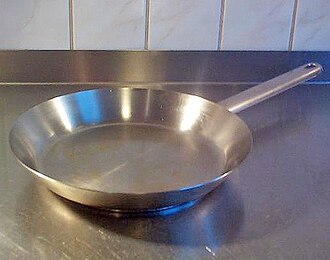
frying pan
frying pan
pan /pæn/ countable noun kitchen tool
  • a metal container, often with a long handle, used for cooking

    She heated the oil in a frying pan.

pan /pæn/ verb
past: panned /pænd/
pp: panned /pænd/

"Pan out" = to develop or turn out in a particular way. "Pan for gold" = sift sediment for gold using a shallow pan.

  1. to criticize severely, especially a creative work

    Critics panned the new movie.

  2. to move a camera horizontally to follow a subject or take in a wide view

    The camera panned across the crowd.

frying pan /ˈfraɪɪŋ ˌpæn/ countable noun kitchen tool
  • a shallow pan with sloping sides, used for frying food

    She fried the eggs in a frying pan.

#7524

wok

wok
wok
wok /wɑːk/ countable noun kitchen tool

Originated in Chinese cuisine; its curved shape allows for fast, high-heat stir-frying.

  • a large bowl-shaped pan used especially for stir-frying

    She tossed the vegetables in a sizzling wok.

#7523

chopping board / cutting board [group]

cutting board
cutting board
chopping board /ˈtʃɑːpɪŋ bɔːrd/ countable noun kitchen tool

Common in British English; American English usually says cutting board.

  • a flat board used as a surface for cutting food

    Put the onions on the chopping board.

cutting board /ˈkʌtɪŋ bɔːrd/ countable noun kitchen tool

Common in American English; British English often says chopping board.

  • a flat board used as a surface for cutting food

    Use a separate cutting board for raw chicken.

#7522

kettle [family]

kettle
kettle
kettle /ˈketəl/ countable noun kitchen tool

"Pot calling the kettle black": hypocritical criticism. "Kettle" is much more common in British English (for tea). "Put the kettle on": make tea.

  • a metal or plastic container for boiling water

    She put the kettle on for tea.

teakettle /ˈtiːketəl/ countable noun kitchen tool

American term, since the British just say "kettle". "Whistling teakettle": has a whistle that sounds when water boils.

  • a kettle for boiling water for tea

    The teakettle whistled when the water boiled.

#7521

range hood

range hood
range hood
range hood /ˈreɪndʒ ˌhʊd/ countable noun kitchen tool

Also called an 'extractor hood' (UK) or 'exhaust hood'.

  • a ventilation device above a stove that removes smoke, steam, and odors

    Turn on the range hood before you start frying.

#7520

microwave oven

microwave oven
microwave oven
microwave oven /ˈmaɪkroʊweɪv ˌʌvən/ countable noun kitchen tool

Usually just called a 'microwave' in everyday speech.

  • a kitchen appliance that cooks or heats food quickly using electromagnetic waves

    He heated the leftovers in the microwave oven.

#7519

Pegasus

Pegasus
Pegasus
Pegasus /ˈpɛɡəsəs/ proper noun animal
  • a winged horse in Greek mythology, born from the blood of Medusa

    Pegasus carried the hero Bellerophon through the sky.

#7518

unicorn

unicorn
unicorn
unicorn /ˈjuːnɪkɔːrn/ countable noun animal
  • a mythical horse-like creature with a single spiraled horn on its forehead

    Children love stories about unicorns.

#7517

mermaid

mermaid
mermaid
mermaid /ˈmɝmeɪd/ countable noun

From 'mere' (an old word for sea) + 'maid'. The male equivalent is a 'merman'.

  • a mythical sea creature with a woman's head and upper body and a fish's tail

    The story tells of a mermaid who fell in love with a prince.

#7516

urine [family]

urine /ˈjʊrən/ uncountable noun

Adjective: urinary. The verb (to urinate) and the casual noun (pee): different registers. "Urine sample": common medical test.

  • liquid waste produced by the kidneys

    The lab tested his urine.

urinary /ˈjʊrəneri/ adjective
  • relating to urine or the organs that produce and pass it

    a urinary tract infection

urinal /ˈjʊrənəl/ countable noun
  • a bowl or fixture attached to a wall, used by men for urinating

    The men's room had a row of urinals.

urinate /ˈjʊrəneɪt/ verb
past: urinated /ˈjʊrəneɪtɪd/
pp: urinated /ˈjʊrəneɪtɪd/
  • discharge urine

    He urinated in the bushes.

#7515

cubicle

cubicle /ˈkjuːbɪkəl/ countable noun

Famous in office culture; "cubicle farm" = an office filled with cubicles, often seen as soul-crushing.

  • a small partitioned area within a larger room, especially in an office for one worker

    He's been working in the same cubicle for fifteen years.

#7514

lard

lard
lard
lard /lɑːrd/ noun food
  • fat from a pig, melted down and used in cooking

    The pastry is made with lard.

lard /lɑːrd/ transitive verb
past: larded /ˈlɑːrdɪd/
pp: larded /ˈlɑːrdɪd/
  • to intersperse or fill (a text or speech) copiously with something

    His speech was larded with quotations.

#7513

pork belly

pork belly
pork belly
pork belly /ˈpɔːrk ˌbɛli/ uncountable noun food
  • a fatty cut of pork from the belly of the pig, often braised or roasted

    The chef braised the pork belly until it was tender.

#7512

bacon

bacon
bacon
bacon /ˈbeɪkən/ noun food
  • cured meat from the sides and belly of a pig, having distinct strips of fat and typically served in thin slices

    Crispy bacon.

#7511

rib

rib
rib
rib /rɪb/ countable noun body
  • one of the curved bones in the chest that protect the heart and lungs

    He broke a rib in the fall.

rib /rɪb/ countable noun
  • a piece of meat that includes one or more ribs

    They grilled pork ribs for dinner.

rib /rɪb/ transitive verb
past: ribbed /rɪbd/
pp: ribbed /rɪbd/

Informal. Usually friendly teasing, not cruel mocking.

  • to tease someone gently

    His friends ribbed him about his new haircut.

#7510

mince

mince
mince
mince /mɪns/ transitive verb
past: minced /mɪnst/
pp: minced /mɪnst/

"Not to mince words / not to mince one's words" = to speak frankly without softening the message.

  1. to cut or chop food, especially meat, into very small pieces

    Mince two cloves of garlic finely.

  2. to soften or moderate language to avoid offense (usually in negation)

    She doesn't mince words: she tells you exactly what she thinks.

mince /mɪns/ uncountable noun food

British. American equivalent: ground meat / ground beef.

  • meat (especially beef) that has been chopped or ground into small pieces

    She bought a pound of mince for the shepherd's pie.

#7509

prawn

prawn
prawn
prawn /prɔːn/ countable noun sea creature food

British English tends to say 'prawn' where American English says 'shrimp' (often for the larger ones).

  • a small edible shellfish similar to a shrimp, with a long body and legs

    We ordered a plate of grilled prawns.

#7508

shrimp

shrimp
shrimp
shrimp /ʃrɪmp/ countable noun sea creature food

British English tends to say prawn for the larger ones; 'shrimp' is more common in American English.

  1. a small, long-tailed shellfish that lives in water

    The shrimp scuttled along the seabed.

  2. this shellfish prepared and eaten as food

    We ordered a shrimp cocktail.

#7507

meatball

meatball
meatball
meatball /ˈmiːtbɔːl/ countable noun
  • a small ball of ground meat, often mixed with breadcrumbs and spices

    We had spaghetti and meatballs for dinner.

#7506

craw

craw /krɔː/ countable noun

Mostly seen in the idiom stick in one's craw = be hard to accept.

  1. the crop or throat of a bird

    The old anatomy book described the bird's craw.

  2. a person's throat or stomach, in idioms

    His smug apology stuck in my craw.

#7505

bird feeder

bird feeder
bird feeder
bird feeder /ˈbɝːd ˌfiːdɚ/ countable noun

Common types: tube feeders, hopper feeders, suet feeders (for high-fat food in winter).

  • a device that holds food put out for wild birds

    A cardinal landed on the bird feeder.

#7504

glide [family]

glider
glider
glide /ɡlaɪd/ intransitive verb
past: glided /ˈɡlaɪdɪd/
pp: glided /ˈɡlaɪdɪd/
  • to move smoothly and effortlessly

    The skater glided across the ice.

glider /ˈɡlaɪdɚ/ countable noun

Soaring (gliding without an engine) is a sport; pilots use rising air currents to stay aloft for hours.

  • a light aircraft designed to fly without an engine

    The glider was towed into the air by a small plane.

#7503

fly off

fly off /ˌflaɪ ˈɔːf/ phrasal verb
past: flew off /ˌfluː ˈɔːf/
pp: flown off /ˌfloʊn ˈɔːf/

Literal: birds/insects taking off suddenly. Figurative: "fly off the handle" = lose one's temper suddenly.

  • to depart suddenly by flying

    A magpie flew off with a piece of foil.

#7502

mate [family]

mate /meɪt/ countable noun

In UK/Australia: "mate" = friend (also: term of address). In US: less common. "Mate": also breeding partner in animals.

  • (UK) a friend; a sexual partner

    He met his mates at the pub.

checkmate /ˈtʃekmeɪt/ countable noun

From Persian "shah mat" (the king is helpless). End of chess game. Figurative: "checkmate", unbeatable position.

  • the winning move in chess

    She announced checkmate.

#7501

perch

perch /pɝtʃ/ countable noun
  1. a place where a bird rests or sits, typically a branch or bar

    The parrot returned to its perch.

  2. a high or precarious position or seat

    From his perch on the cliff he could see the whole valley.

perch /pɝtʃ/ intransitive verb
past: perched /pɝtʃt/
pp: perched /pɝtʃt/
  1. to sit or rest on something high or narrow

    The cat perched on the windowsill.

  2. to be situated on or above a high or precarious spot

    The village perches on the edge of a cliff.