Vocabulary: Batch 72

#7101 to #7200 (100 entries)

#7200

linen

linen
linen
linen /ˈlɪnən/ uncountable noun

From Latin linum (flax). "Bed linen" = sheets, pillowcases. "Don't air your dirty linen in public" = don't expose private problems.

  • cloth made from flax, used for sheets, clothes, etc.

    She wore a white linen dress.

#7199

cotton [family]

cotton
1cotton
cotton candy
2cotton candy
cotton /ˈkɑːtn/ uncountable noun
  • 1a soft white fibrous substance that surrounds the seeds of a tropical and subtropical plant and is used as textile fiber and thread for sewing

    A cotton shirt.

cotton candy /ˈkɑːtn ˌkændi/ uncountable noun food
  • 2a mass of fluffy spun sugar, usually pink, wrapped around a stick (US)

    Kids eating cotton candy.

#7198

leg [family]

leg
1leg
leggings
2leggings
leg /leɡ/ countable noun body
  • 1one of the limbs used for standing or walking

    He broke his leg skiing.

leg /leɡ/ countable noun
  1. one support of a table, chair, or similar object

    One table leg is loose.

  2. one stage of a trip or competition

    The final leg of the journey was by bus.

leggings /ˈleɡɪŋz/ plural noun
  • 2tight-fitting stretch pants, typically worn by women or girls

    She wore a pair of leggings.

#7197

panties / pantyhose [family]

pantyhose
pantyhose
panties /ˈpæntiz/ plural noun

American term for women's underpants; British: 'knickers'. Singular 'panty' appears in compounds (panty liner).

  • women's or girls' underpants

    She bought a pack of cotton panties.

pantyhose /ˈpæntihoʊz/ uncountable noun

American term; British: 'tights'.

  • a close-fitting garment covering the body from the waist to the toes, worn by women

    She wore sheer pantyhose under her skirt.

#7196

tights

tights
tights
tights /taɪts/ plural noun

Always plural. In American English opaque ones are 'tights' and sheer ones are 'pantyhose'; British English calls both 'tights'.

  • a close-fitting stretchy garment covering the hips, legs, and feet

    She wore black tights under her skirt.

#7195

stocking

stocking /ˈstɑːkɪŋ/ countable noun

"Christmas stocking": long sock hung by the chimney for Santa's gifts. Modern: "fishnet stockings", patterned hosiery.

  • a close-fitting covering for the foot and leg

    She wore black stockings with her dress.

#7194

sock

sock
sock
sock /sɑːk/ countable noun

Usually worn in pairs. 'Knock your socks off' = impress greatly. 'Pull your socks up' = make more effort. 'Sock away' = save money.

  • a knitted covering for the foot and lower leg, worn inside a shoe

    One of my socks has a hole in the toe.

#7193

camisole

camisole
camisole
camisole /ˈkæməsoʊl/ countable noun

Often shortened to 'cami'.

  • a woman's loose sleeveless top or undergarment with thin shoulder straps

    She wore a silk camisole under her jacket.

#7192

undershirt

undershirt /ˈʌndɚʃɝt/ countable noun

American term; British English: 'vest'.

  • a shirt worn under another shirt, next to the skin

    He wore a white undershirt beneath his dress shirt.

#7191

brassiere / bra [group]

brassiere
brassiere
brassiere /brəˈzɪr/ countable noun

From French brassière. Now usually shortened to "bra". The modern bra was patented in 1914.

  • a woman's undergarment supporting the breasts

    The store sells brassieres of all sizes.

bra /brɑː/ countable noun

Short for brassiere. "Sports bra": designed for high-impact activity. "Bra burning": a (largely mythical) symbol of 1960s feminism.

  • a woman's undergarment supporting the breasts

    She bought a new bra.

#7190

boxers

boxers
boxers
boxers /ˈbɑːksɚz/ plural noun

Short for 'boxer shorts', named after the shorts boxers wear. 'Boxer briefs' are a longer, tighter hybrid.

  • loose-fitting men's underpants

    He sleeps in a t-shirt and boxers.

#7189

briefs

briefs
briefs
briefs /briːfs/ plural noun

Always plural. Close-fitting, unlike loose 'boxers'. Not to be confused with a legal 'brief' (a summary document).

  • short, close-fitting underpants without legs

    He prefers briefs to boxers.

#7188

underwear

underwear /ˈʌndɚwer/ uncountable noun

Uncountable; also called 'undergarments' or informally 'undies'.

  • clothing worn next to the skin, underneath other clothes

    He packed a week's worth of clean underwear.

#7187

cap

cap
cap
cap /kæp/ countable noun
  1. a soft hat with a curved front

    He wore a baseball cap.

  2. a cover or top for a container

    Put the cap back on the bottle.

  3. an upper limit

    The city set a cap on rent increases.

cap /kæp/ transitive verb
past: capped /kæpt/
pp: capped /kæpt/
  • to cover, limit, or finish something

    The company capped overtime at ten hours a week.

#7186

hat

hat
hat
hat /hæt/ countable noun

'Old hat' = outdated. 'Wear many hats' = have many roles. 'Pass the hat' = collect money.

  • a shaped covering for the head, often with a brim

    She put on a wide-brimmed hat before going outside.

#7185

scarf

scarf
scarf
scarf /skɑːrf/ countable noun

Plural: scarves (or scarfs). Worn for warmth, style, or religious modesty (hijab is a scarf). "Scarf down" (verb) = eat quickly.

  • a long strip of fabric worn around the neck or head

    She wrapped a wool scarf around her neck.

#7184

bag [family]

handbag
handbag
bag /bæɡ/ countable noun

"In the bag" = certain. "Bag of tricks" = a person's resources. "Mixed bag" = a varied assortment.

  • a container made of flexible material

    She carried her groceries in a paper bag.

bag /bæɡ/ transitive verb
past: bagged /bæɡd/
pp: bagged /bæɡd/
  1. to put something into a bag

    The clerk bagged the groceries.

  2. (informal) to succeed in obtaining or catching

    He bagged the deal.

goody bag /ˈɡʊdi bæɡ/ countable noun
  • a bag containing promotional items or gifts given to attendees at a party or event

    We all got a goody bag at the end of the party.

handbag /ˈhændbæɡ/ countable noun
  • a small bag used by a woman to carry everyday personal items

    She rummaged through her handbag for her keys.

baggage /ˈbæɡɪdʒ/ uncountable noun

Always uncountable. "Emotional baggage" = unresolved past issues. "Baggage claim": airport area for collecting luggage.

  • bags carried in travel

    Their baggage was lost.

baggage car /ˈbæɡɪdʒ kɑːr/ countable noun

Train car for cargo, mail, and oversized luggage. UK: "luggage van".

  • a train carriage for luggage

    They loaded the trunk into the baggage car.

baggy /ˈbæɡi/ adjective

"Baggy jeans": 1990s hip-hop fashion. Often youthful or counterculture style choice.

  • loose-fitting

    He wore a baggy sweater.

#7183

boot

boot
boot
boot /buːt/ countable noun

Many compounds: cowboy boot, snow boot, combat boot, hiking boot, ankle boot. British: "boot" = trunk of a car (American). "Boot camp": military basic training; metaphorically, intensive training.

  • a sturdy item of footwear covering the foot and ankle

    She put on her hiking boots.

boot /buːt/ verb
past: booted /ˈbuːtɪd/
pp: booted /ˈbuːtɪd/

"Boot up" a computer = start it. "Reboot" = restart. Originally from "bootstrap" (computer starts itself by "pulling itself up by its bootstraps").

  • to start or restart a computer

    It takes time to boot the system.

#7182

sneaker / trainer [group]

sneaker
sneaker
sneaker /ˈsniːkɚ/ countable noun

American term. Usually plural "sneakers". "Sneakerhead" = a collector of athletic shoes.

  • (American) a soft shoe with a rubber sole, designed for sports or casual wear

    She bought a new pair of sneakers for the gym.

trainer /ˈtreɪnɚ/ countable noun

British term for sneaker. Distinct from the unrelated "trainer" meaning a person who trains others.

  • (British) a soft sports shoe; a sneaker

    He laced up his trainers and went for a run.

#7181

jumpsuit

jumpsuit
jumpsuit
jumpsuit /ˈdʒʌmpsuːt/ countable noun

Originally the one-piece garment worn by parachutists, who 'jumped' from planes.

  • a one-piece garment combining a top with trousers

    She wore a black jumpsuit to the party.

#7180

dress [family]

dress
dress
dress /dres/ countable noun
  • a one-piece garment for a woman or girl that covers the body and extends down over the legs

    A beautiful dress.

dress /dres/ verb
past: dressed /drest/
pp: dressed /drest/
  • to put clothes on (oneself or someone else)

    She dressed quickly and left for work.

dressy /ˈdresi/ adjective
  • (of clothes) suitable for formal occasions

    The invitation said the dress code was dressy casual.

#7179

blaze [family]

blazer
blazer
blaze /bleɪz/ countable noun

"Blaze of glory": going out spectacularly. "Trail blazer" = a pioneer.

  • a very large or fiercely burning fire

    The blaze destroyed three buildings.

blaze /bleɪz/ intransitive verb
past: blazed /bleɪzd/
pp: blazed /bleɪzd/
  • to burn fiercely or brightly

    The fire blazed all night.

blazer /ˈbleɪzɚ/ countable noun

Originally so named because of brightly colored ("blazing") boating jackets at Cambridge in the 1880s. Now associated with school uniforms and business casual.

  • a smart jacket, often part of a uniform

    He wore a navy blazer with the school crest.

blazing /ˈbleɪzɪŋ/ adjective

"Blazing hot": very hot. "Blazing row": violent argument. "Blazing Saddles": Mel Brooks comedy.

  • burning fiercely or extremely hot

    The blazing sun beat down on them.

#7178

skirt

skirt
skirt
skirt /skɝt/ countable noun
  • a garment fastened around the waist and hanging down, worn especially by women and girls

    She wore a long pleated skirt.

skirt /skɝt/ transitive verb
past: skirted /ˈskɝtɪd/
pp: skirted /ˈskɝtɪd/

'Skirt around an issue' = deal with it evasively rather than head-on.

  • to go around the edge of; to avoid (a subject or problem)

    The politician skirted the question about taxes.

#7177

shorts

shorts
shorts
shorts /ʃɔːrts/ plural noun

Always plural; a single item is 'a pair of shorts'.

  • short trousers that end at or above the knee

    He wore shorts and sandals in the summer heat.

#7176

trousers

trousers
trousers
trousers /ˈtraʊzɚz/ plural noun

British 'trousers' = American 'pants'. Always plural ('a pair of trousers'). 'Wear the trousers' = be the dominant partner.

  • an outer garment covering the body from the waist down, with a separate part for each leg

    He ironed his suit trousers.

#7175

pants

pants
pants
pants /pænts/ plural noun
  • (US) trousers; (UK) underpants

    He wore brown pants.

pants /pænts/ adjective
  • (British informal) bad; rubbish

    The film was absolutely pants.

#7174

jeans

jeans
jeans
jeans /dʒiːnz/ plural noun

Always plural; a single item is 'a pair of jeans'. Named after Genoa, Italy, where the fabric ('jean') originated.

  • casual trousers made of denim

    She changed into jeans after work.

#7173

tank top

tank top
tank top
tank top /ˈtæŋk tɑːp/ countable noun

American usage. In British English, 'tank top' can instead mean a sleeveless sweater worn over a shirt.

  • a sleeveless upper-body garment with wide shoulder straps

    She wore a tank top to the gym.

#7172

sweat [family]

sweat /swet/ verb
past: sweat /swet/ or sweated /ˈswetɪd/
pp: sweat /swet/ or sweated /ˈswetɪd/

Past tense: sweat or sweated. "No sweat" = no problem. "Sweat the small stuff" = worry about minor things. "Sweatshop": exploitative workplace.

  • to give off moisture through the skin when hot or nervous

    He was sweating after the run.

sweat /swet/ uncountable noun
  • moisture given off by the body

    His shirt was soaked with sweat.

sweater /ˈswetɚ/ countable noun

US "sweater" = UK "jumper". So named because it makes the wearer sweat. "Sweater weather": cool autumn temperatures.

  • a knitted upper garment with long sleeves

    She put on a wool sweater.

sweaty /ˈsweti/ adjective
  • covered with or smelling of sweat; causing sweat

    He wiped his sweaty palms on his jeans.

#7171

blouse

blouse /blaʊs/ countable noun

US: /blaʊs/; UK: /blaʊz/. Usually women's. Distinguished from "shirt" (which can be either gender, often more casual).

  • a woman's loose-fitting top

    She wore a silk blouse.

#7170

shirt

shirt
shirt
shirt /ʃɝt/ countable noun

'Keep your shirt on' = stay calm. 'Lose your shirt' = lose all your money.

  • a garment for the upper body, usually with a collar, sleeves, and a buttoned front

    He ironed his shirt for the interview.

#7169

t-shirt

t-shirt
t-shirt
t-shirt /ˈtiː ʃɝt/ countable noun

Named for its T shape when laid flat. Also spelled 'tee shirt' or shortened to 'tee'.

  • a short-sleeved casual top with no collar or buttons

    He wore jeans and a plain white t-shirt.

#7168

attire / attired [family]

attire /əˈtaɪɚ/ uncountable noun
  • clothes, especially of a particular or formal kind

    The invitation specifies formal attire.

attire /əˈtaɪɚ/ transitive verb
past: attired /əˈtaɪɚd/
pp: attired /əˈtaɪɚd/

Often used in passive form: "attired in...".

  • to dress someone in clothes of a particular kind

    He was attired in a dark suit and silk tie.

attired /əˈtaɪrd/ adjective

Formal word for dressed.

  • dressed in particular clothes

    The guests were elegantly attired.

#7167

nerve [family]

nerve /nɝv/ countable noun body

"Get on someone's nerves" = annoy. "Have nerve" = be bold/audacious. "A nerve of steel" = brave. "Pinched nerve": compressed nerve causing pain.

  • a fiber that carries impulses in the body

    He pinched a nerve in his back.

nerve agent /ˈnɝv ˌeɪdʒənt/ countable noun

Most lethal type of chemical weapon. Examples: VX, sarin, Novichok. Used in 2018 Skripal poisoning (UK).

  • a chemical weapon that disrupts the nervous system

    Sarin is a nerve agent.

nerve centre /ˈnɝv ˌsentɚ/ countable noun

British spelling "centre". American: "nerve center". Figurative: control hub of any organization or operation.

  • the headquarters or control center

    This room is the nerve centre of the operation.

nerve ending /ˈnɝv ˌendɪŋ/ countable noun body

The receptors that detect sensations. Skin has many; some areas more sensitive than others (fingertips, lips).

  • the end of a nerve where sensations are detected

    The fingertips have many nerve endings.

nerve gas /ˈnɝv ɡæs/ countable noun

Same as nerve agent. Banned by Chemical Weapons Convention (1993). Tokyo subway sarin attack (1995) was high-profile use.

  • a poisonous gas affecting the nerves

    The use of nerve gas is a war crime.

#7166

vein / artery [group]

vein
1vein
artery
2artery
vein /veɪn/ countable noun body

Carries deoxygenated blood back to the heart (except pulmonary veins). "In the same vein" = in the same manner/style.

  • 1a blood vessel that returns blood to the heart

    The nurse drew blood from a vein in his arm.

artery /ˈɑːrtɚi/ countable noun body

Carries oxygenated blood away from the heart (except the pulmonary artery). "Clogged arteries" - major risk factor for heart attacks.

  • 2a blood vessel that carries blood away from the heart

    The aorta is the body's largest artery.

intravenous /ˌɪntrəˈviːnəs/ adjective
  • existing or taking place within, or administered into, a vein or veins

    An intravenous drip.

veined /veɪnd/ adjective

Marble is famously veined. Botany: leaves have veins. Anatomy: bulging veins on hands/arms = often described as "veined".

  • marked with veins or vein-like lines

    The marble had a beautifully veined pattern.

arterial /ɑːrˈtɪriəl/ adjective

"Arterial road" = a major road in a network, like arteries in the body. From artery (the blood vessel).

  1. relating to an artery or arteries

    The doctor checked his arterial blood pressure.

  2. (of a road or other route) being one of the main routes in a system

    This is an arterial road into the city.

#7165

blood [family]

blood vessel
blood vessel
blood /blʌd/ uncountable noun
  • the red liquid that circulates in the arteries and veins of humans and other vertebrate animals

    He lost a lot of blood.

new blood /ˌnuː ˈblʌd/ uncountable noun
  • new members admitted to a group, especially as an invigorating force

    The company needs some new blood.

blood vessel /ˈblʌd vesl/ noun
  • a tubular structure carrying blood through the tissues and organs; a vein, artery, or capillary

    A burst blood vessel.

bloody /ˈblʌdi/ adjective

In UK: very common intensifier ("bloody hell!"), mildly profane to most, considered crude by some. In US: usually literal sense (covered in blood).

  • covered with blood; (British) used as a mild intensifier

    His shirt was bloody.

Bloody Mary /ˌblʌdi ˈmeri/ countable noun

Named after Mary I of England ("Bloody Mary" for executing Protestants). Cocktail invented ~1920s, popularized as hangover cure.

  • a cocktail of vodka, tomato juice, and spices

    She ordered a Bloody Mary for brunch.

#7164

joint

joint /dʒɔɪnt/ countable noun

Anatomy: knee, elbow joints. Construction: "joint", connection point. Slang: "joint" = marijuana cigarette, or low-quality establishment.

  • a place where two things meet

    His knee joint was injured.

joint /dʒɔɪnt/ adjective
  • shared or done together

    They have a joint bank account.

#7163

esophagus / oesophagus [family]

esophagus
esophagus
esophagus /ɪˈsɑːfəɡəs/ countable noun body

American spelling. British spelling: oesophagus.

  • the tube that carries food from the throat to the stomach

    Acid reflux can irritate the esophagus.

oesophagus /ɪˈsɑːfəɡəs/ countable noun body

British spelling of esophagus.

  • the tube that carries food from the throat to the stomach

    The report used the spelling oesophagus.

#7162

trachea / windpipe [group]

trachea
trachea
trachea /ˈtreɪkiə/ countable noun body
  • the tube carrying air from the throat to the lungs

    The trachea branches into two bronchi.

windpipe /ˈwɪndpaɪp/ countable noun body

Everyday word for trachea.

  • the trachea

    Food stuck near his windpipe.

#7161

bladder

bladder
bladder
bladder /ˈblædɚ/ countable noun body
  • an organ that stores urine

    The infection spread to his bladder.

#7160

thyroid

thyroid /ˈθaɪrɔɪd/ countable noun body

'Thyroid problems' affect energy and weight.

  • a large gland in the neck that produces hormones regulating growth and metabolism

    An underactive thyroid can cause fatigue and weight gain.

#7159

appendix

appendix /əˈpendɪks/ countable noun body

Plural: appendices or appendixes.

  • a small, tube-shaped organ attached to the large intestine

    She had her appendix removed.

appendix /əˈpendɪks/ countable noun
  • a section or table of additional matter at the end of a book or document

    There is a list of irregular verbs in the appendix.

#7158

kidney

kidney
kidney
kidney /ˈkɪdni/ countable noun body

Humans have two; one is often donated for transplant. "Kidney bean": named for its shape. "Kidney stones": painful mineral deposits.

  • either of two organs that filter the blood

    He donated a kidney to his brother.

#7157

stomach [family]

stomach
stomach
stomach /ˈstʌmək/ countable noun body

"Butterflies in stomach" = nervous. "Iron stomach" = can eat anything. "On an empty stomach": without eating first.

  • the organ that digests food

    His stomach growled with hunger.

stomach ache /ˈstʌmək eɪk/ countable noun

Spelling: two words (UK) or one (US: "stomachache"). Both common. "K" in "ache" is silent in "ache" /eɪk/.

  • a pain in the stomach

    He has a stomach ache.

stomachache /ˈstʌməkeɪk/ countable noun

American one-word spelling. Same meaning as "stomach ache".

  • a pain in the stomach

    She got a stomachache from the spicy food.

#7156

liver

liver
liver
liver /ˈlɪvɚ/ countable noun body

Largest internal organ. Crucial for filtering toxins and metabolism. Eaten in many cuisines (foie gras, liver and onions). Damage is often alcohol-related.

  • the large organ that processes nutrients and filters blood

    Excessive drinking can damage the liver.

#7155

lung

lung
lung
lung /lʌŋ/ countable noun body

Two in humans. "At the top of one's lungs" = as loudly as possible. "Iron lung": historical breathing aid for polio patients.

  • an organ for breathing

    Smoking damages the lungs.

#7154

ladder

ladder
ladder
ladder /ˈlædɚ/ countable noun

"Corporate ladder" - career hierarchy. "Social ladder" - class hierarchy. UK: "ladder in stockings" = US "run in stockings".

  • a vertical structure with rungs for climbing

    He climbed the ladder to the roof.

#7153

incentive [family]

incentive /ɪnˈsentɪv/ noun
  • a thing that motivates or encourages one to do something

    There is no incentive for customers to conserve water.

incentivize /ɪnˈsentɪvaɪz/ transitive verb
past: incentivized /ɪnˈsentɪvaɪzd/
pp: incentivized /ɪnˈsentɪvaɪzd/

British spelling: incentivise. Inflections: incentivized, incentivizing.

  • to motivate or encourage (someone) by offering a reward or benefit

    The subsidy incentivizes companies to cut their emissions.

#7152

parallel [family]

parallel bars
parallel bars
parallel /ˈpærəlel/ adjective

From Greek parallelos (alongside). In computing: "parallel processing" = doing multiple computations simultaneously. "Parallel universe" - sci-fi/physics concept.

  1. (of lines) side by side and never meeting

    The railway tracks are parallel.

  2. corresponding in some respect

    There are parallel themes in the two novels.

parallel bars /ˈpærəlel bɑːrz/ plural noun

Men's gymnastics apparatus. Different from "uneven bars" (women's apparatus). Both are now used by all genders in recreational gymnastics.

  • a pair of parallel bars used in gymnastics

    He performed a routine on the parallel bars.

parallel /ˈpærəlel/ countable noun

"Draw a parallel between" - a common collocation.

  • a person or thing similar or comparable to another

    Historians have drawn parallels between the two wars.

parallel /ˈpærəlel/ transitive verb
past: paralleled /ˈpærəleld/
pp: paralleled /ˈpærəleld/
  • to be similar or equivalent to; to run alongside

    Her career parallels her mother's in many ways.

unparalleled /ʌnˈpærəleld/ adjective

Tricky spelling: one r, then double l (paraLLel), then a single l before '-ed': un-para-llel-ed. Means having no equal.

  • having no equal; exceptional or unmatched

    The library offers unparalleled access to rare manuscripts.

#7151

cold

cold /koʊld/ adjective

Idioms: 'get cold feet' (become nervous), 'give someone the cold shoulder' (deliberately ignore them), 'cold call' (unsolicited sales call).

  1. at or having a low temperature

    The soup went cold before he could eat it.

  2. (of a person or manner) unfriendly or unemotional

    She gave him a cold stare and walked off.

cold /koʊld/ countable noun

'The common cold' is the full name. You 'catch' or 'have' a cold. Distinct from the flu, which is usually more severe.

  • a common mild viral infection of the nose and throat, causing sneezing, a sore throat, and a runny nose

    I caught a cold and couldn't stop sneezing.

cold /koʊld/ uncountable noun
  • a low temperature, especially in the atmosphere; the absence of heat

    She shivered in the biting cold.

fever vs. cold

These are not the same kind of thing: a fever is a symptom (a raised body temperature), while a cold is an illness (a viral infection). A cold may or may not come with a fever.

fever
A symptom, not a disease: an abnormally high body temperature that can accompany many different illnesses (flu, infections, COVID, etc.). You measure it with a thermometer.
cold
A specific mild viral infection of the nose and throat. Its usual signs are sneezing, a runny or blocked nose, and a sore throat; it often causes no fever or only a mild one.
  • You can have a cold without a fever, and a fever without a cold.
  • The flu is more likely than a cold to cause a noticeable fever, which is one way people tell them apart.
#7150

spend [family]

spend /spend/ transitive verb
past: spent /spent/
pp: spent /spent/
  • to give money as a payment for something

    She spends a lot of money on clothes.

spending /ˈspendɪŋ/ uncountable noun
  • money paid out; an amount of money spent

    The government is increasing its spending on education.

outspend /ˌaʊtˈspend/ transitive verb
past: outspent /ˌaʊtˈspent/
pp: outspent /ˌaʊtˈspent/

The prefix 'out-' here means 'to surpass or exceed in': outspend, outrun, outperform, outnumber. Past tense: outspent.

  • to spend more money than (someone or something else)

    The incumbent outspent her challenger by three to one.

#7149

reckless

reckless /ˈrekləs/ adjective

"Reckless driving" is a specific legal charge in many places. Commonly misspelled 'wreckless' by association with 'wreck', but 'reckless' has no W - it comes from the archaic verb 'reck' (to care or heed) + '-less', literally 'without care'.

  • acting without thinking or caring about the consequences

    He was charged with reckless endangerment.

#7148

wreck [family]

wreck
wreck
wreck /rek/ countable noun

"Train wreck" - disastrous situation (literal and figurative). "Nervous wreck" - extremely anxious person. "Wreck-It Ralph" - Disney animated film. Not related to 'reckless' (careless), which has no W.

  • a vehicle or building destroyed or seriously damaged

    They explored the shipwreck.

wreck /rek/ transitive verb
past: wrecked /rekt/
pp: wrecked /rekt/
  • to destroy; to ruin

    The storm wrecked their plans.

wreckage /ˈrekɪdʒ/ uncountable noun
  • the remains of something that has been badly damaged or destroyed

    Firemen had to cut him free from the wreckage.

#7147

viable [family]

viable /ˈvaɪəbəl/ adjective
  1. capable of working successfully; feasible

    The proposed investment was economically viable.

  2. (of a fetus, seed, or organism) capable of living or surviving under normal conditions

    At 24 weeks, the fetus is considered viable outside the womb.

viability /ˌvaɪəˈbɪləti/ uncountable noun
  • the ability to work successfully, or to survive and develop adequately

    Investors questioned the viability of the business plan.

#7146

tail [family]

tail
tail
tail /teɪl/ noun animal
  • the hindmost part of an animal, especially when prolonged beyond the rest of the body

    The dog wagged its tail.

tail /teɪl/ transitive verb
past: tailed /teɪld/
pp: tailed /teɪld/

Informal/crime-fiction usage: to tail a suspect.

  • to secretly follow and watch (someone)

    An undercover detective tailed the suspect for a week.

tailing /ˈteɪlɪŋ/ noun

Usually plural 'tailings' for the mining sense. Also the present participle of the verb 'tail' (to follow someone secretly).

  1. (usually 'tailings') the waste material left after ore is processed in mining or milling

    The tailings pond stores waste from the copper mine.

  2. the act of secretly following someone

    The tailing of the suspect went on for days.

#7145

trail [family]

trail /treɪl/ countable noun

"Trail", also a verb: to follow behind. "Hot on the trail": pursuing eagerly. "Trailblazer": pioneer.

  • a track or path

    They hiked along the mountain trail.

trailer /ˈtreɪlɚ/ countable noun

"Movie trailer": preview. "Trailer park": mobile home community (often associated with poverty in US stereotype).

  • a vehicle pulled behind another; a movie preview

    The trailer for the film was exciting.

trailer truck /ˈtreɪlɚ trʌk/ countable noun

Tractor-trailer: common North American term. UK: "articulated lorry" or "artic". Major freight transport.

  • a truck with a separate trailer attached

    A long trailer truck pulled into the rest area.

trailing /ˈtreɪlɪŋ/ adjective

Also technical: 'trailing edge' (rear edge of a wing), 'trailing zeros', 'trailing stop' (a stop-loss that follows the price).

  1. hanging down loosely or spreading along the ground

    Trailing ivy covered the old brick wall.

  2. behind in a competition or measurement

    The trailing team scored twice in the final minutes.

#7144

separate [family]

separate /ˈsɛpəˌreɪt/ verb
past: separated /ˈsɛpəˌreɪtɪd/
pp: separated /ˈsɛpəˌreɪtɪd/

The verb and adjective are spelled the same but pronounced differently: verb /ˈsɛpəˌreɪt/ (full final vowel), adjective /ˈsɛprət/ (reduced). Commonly misspelled 'seperate' - remember 'there's a rat in sepARATe'.

  • to cause to move or be apart; to divide into parts

    Police separated the two men before the fight escalated.

separate /ˈsɛprət/ adjective
  • forming a unit by itself; not joined or connected to others

    The kids sleep in separate rooms.

separation /ˌsɛpəˈreɪʃən/ noun

Also a legal term for a couple living apart without being formally divorced.

  • the act of separating or the state of being apart

    The separation of powers keeps any one branch of government from dominating.

#7143

bloat [family]

bloat /bloʊt/ verb
past: bloated /ˈbloʊtɪd/
pp: bloated /ˈbloʊtɪd/

"Bloatware" - unnecessary pre-installed software.

  • to cause to swell with fluid or gas

    The dead fish had bloated in the sun.

bloating /ˈbloʊtɪŋ/ uncountable noun

Common digestive complaint; causes include gas, fluid retention, lactose intolerance, IBS. "Software bloat" : when programs become too large and slow.

  • the condition of being swollen with air or fluid

    She experienced bloating after the meal.

bloated /ˈbloʊtɪd/ adjective
  1. swollen with fluid or gas, especially the stomach after eating too much

    I felt bloated after the heavy meal.

  2. (of an organization or budget) excessively large or oversized

    The company's bloated bureaucracy slowed every decision.

#7142

epilogue

epilogue /ˈepəlɔːɡ/ countable noun

Antonym: prologue. In Greek drama, often spoken by an actor addressing the audience.

  • a section or speech at the end of a book, play, or film that serves as a comment on or conclusion to what has happened

    The novel's epilogue reveals what happened to the characters years later.

#7141

ballad

ballad /ˈbæləd/ countable noun

Two related senses: a slow, emotional love song (pop/rock context), and a traditional narrative poem or folk song that tells a story, often passed down orally. Do not confuse with 'ballot' (a vote).

  1. a slow, sentimental song, especially about love

    The band closed the concert with a heartfelt ballad.

  2. a poem or song that tells a story, often in short stanzas

    The old ballad recounts the hero's tragic death.

#7140

impostor

impostor /ɪmˈpɑːstɚ/ countable noun

Also spelled imposter.

  • a person pretending to be someone else

    The impostor used a fake passport.

#7139

creep [family]

creep /kriːp/ verb
past: crept /krept/
pp: crept /krept/

Modern: "creep" (noun, informal) = unpleasant person. "Creep" - famous 1992 Radiohead song.

  • to move slowly and carefully

    He crept up the stairs.

creepy /ˈkriːpi/ adjective
  • causing an unpleasant feeling of fear or unease

    The creepy feeling that someone is watching you.

#7138

upsert

upsert /ˈʌpsɝt/ transitive verb
past: upserted /ˈʌpsɝtɪd/
pp: upserted /ˈʌpsɝtɪd/

Database/programming jargon, a portmanteau of 'update' + 'insert'. Also used as a noun ('an upsert operation'). Not a general-English word.

  • to insert a record into a database, or update it if it already exists

    The sync job upserts each row so duplicates are never created.

#7137

zucchini

zucchini
zucchini
zucchini /zuˈkiːni/ noun vegetable

American name; British: courgette. Originally from Italian.

  • a small, long, green vegetable, a variety of summer squash

    She grated zucchini into the bread batter.

#7136

cucumber

cucumber
cucumber
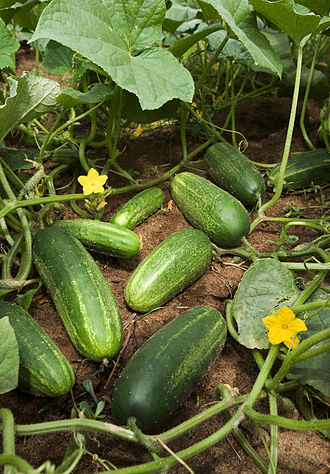
cucumber /ˈkjuːkʌmbɚ/ noun vegetable

"Cool as a cucumber": a common idiom meaning calm and composed. Cucumbers are used as cooling eye treatments in spa contexts.

  • a long green vegetable with watery flesh

    She added cucumber to her salad.

#7135

green beans

green beans
green beans
green beans /ˈɡriːn ˌbiːnz/ plural noun

Also called 'string beans' or 'snap beans' (the whole pod is eaten, unlike shelled beans). British English sometimes says 'French beans'.

  • the long, slender, edible green pods of a bean plant, eaten whole

    She steamed the green beans and tossed them with almonds.

#7134

garlic

garlic
garlic
garlic /ˈɡɑːrlɪk/ uncountable noun vegetable

A single bulb is made up of individual 'cloves'. Long associated in folklore with warding off vampires.

  • a pungent bulb, made up of several cloves, used as a flavoring in cooking

    He crushed two cloves of garlic into the sauce.

#7133

onion

onion
onion
onion /ˈʌnjən/ countable noun vegetable

'Know your onions' = be knowledgeable. Cutting onions releases a gas that makes you cry.

  • a round vegetable with a strong smell and taste, made up of concentric layers

    Fry the onions until they turn golden.

#7132

potato

potato
potato
potato /pəˈteɪtoʊ/ countable noun vegetable

Irregular plural: 'potatoes' (not 'potatos'). "Couch potato" = a lazy person who watches a lot of TV. "Hot potato" = a controversial issue nobody wants to deal with.

  • a starchy root vegetable, usually with brown or red skin and white or yellow flesh

    He mashed the potatoes with butter and milk.

#7131

radish

radish
radish
radish /ˈrædɪʃ/ countable noun vegetable
  • a small, round, red-skinned root vegetable with a crisp, peppery taste, usually eaten raw in salads

    She added thinly sliced radishes to the salad for a peppery crunch.

#7130

carrot

carrot
carrot
carrot /ˈkærət/ countable noun vegetable

"Carrot and stick" - an incentive combined with a threat of punishment. The myth that carrots dramatically improve night vision originated as WWII British propaganda.

  • a long, tapering orange root vegetable

    She peeled and sliced the carrots for the stew.

#7129

parsley

parsley
parsley
parsley /ˈpɑːrsli/ uncountable noun food

Two main types: curly-leaf (decorative) and flat-leaf (Italian, more flavorful). "Parsley" is the P in the song "Scarborough Fair" (parsley, sage, rosemary, and thyme).

  • a herb with bright green leaves, used in cooking

    Sprinkle chopped parsley over the soup.

#7128

basil

basil
basil
basil /ˈbeɪzəl/ uncountable noun food

British pronunciation is /ˈbæzəl/. Sweet basil is central to Italian cooking (pesto, Caprese salad); Thai basil, with a more anise-like flavor, is used in Southeast Asian dishes.

  • an aromatic herb with green leaves, used especially in Italian and Southeast Asian cooking

    He tore fresh basil leaves over the tomato salad.

#7127

Chinese cabbage

Chinese cabbage
Chinese cabbage
Chinese cabbage /ˈtʃaɪniːz ˈkæbɪdʒ/ uncountable noun

Usually refers to napa cabbage: pale, crinkly, tightly-packed elongated leaves, milder and sweeter than Western round cabbage. Distinct from bok choy, which has smooth white stalks and separate dark green leaves.

  • a variety of cabbage with pale, crinkled, tightly wrapped leaves, common in East Asian cooking

    She shredded Chinese cabbage for the dumpling filling.

#7126

cabbage

cabbage
cabbage
cabbage /ˈkæbɪdʒ/ noun vegetable
  • a vegetable with thick green or purple leaves growing in a tight ball

    He shredded the cabbage for coleslaw.

#7125

bok choy

bok choy
bok choy
bok choy /ˌbɑːk ˈtʃɔɪ/ uncountable noun vegetable

American name from Cantonese; British English calls it "pak choi". Mandarin: baicai. Also spelled 'bok choi'.

  • a type of Chinese cabbage with smooth white stalks and dark green leaves

    She stir-fried bok choy with garlic.

#7124

water spinach

water spinach
water spinach
water spinach /ˈwɔːtɚ ˌspɪnɪtʃ/ uncountable noun

Also called 'ong choy' (Cantonese) or 'kangkong' (Southeast Asian). A different plant from true spinach, but similarly cooked, with hollow stems and arrow-shaped leaves; common in Chinese and Southeast Asian stir-fries.

  • a leafy green aquatic vegetable with hollow stems, common in Asian cooking

    The restaurant stir-fried water spinach with fermented bean curd.

#7123

broccoli sprouts

broccoli sprouts
broccoli sprouts
broccoli sprouts /ˈbrɑːkəli ˌspraʊts/ uncountable noun

Young broccoli seedlings, harvested just days after germination, rather than the mature flowering vegetable. Marketed as a health food for their high concentration of sulforaphane, a compound linked to antioxidant effects.

  • the tiny edible shoots of the broccoli plant, harvested a few days after germination

    She added a handful of broccoli sprouts to her salad.

broccoli vs. broccoli sprouts

Both come from the same plant, but broccoli refers to the mature vegetable (the thick stem and flower buds harvested after weeks of growth), while broccoli sprouts are the tiny seedlings harvested just days after germination.

broccoli
The familiar dark green vegetable: a thick stalk topped with dense clusters of unopened flower buds, typically cooked (steamed, roasted, stir-fried) before eating.
broccoli sprouts
Thin, pale-stemmed seedlings with tiny leaves, harvested only 3-5 days after the seed germinates. Usually eaten raw, added to salads or sandwiches, and prized for a much higher concentration of sulforaphane than the mature vegetable.
  • Broccoli sprouts are not a different vegetable species; they are simply broccoli harvested at an immature stage.
  • Broccoli sprouts have a peppery, slightly bitter taste similar to radish sprouts, unlike the milder taste of cooked broccoli.
#7122

crash out

crash out /ˈkræʃ ˌaʊt/ phrasal verb
past: crashed out /ˈkræʃt ˌaʊt/
pp: crashed out /ˈkræʃt ˌaʊt/

Two very different registers: the classic sense (fall asleep from exhaustion, or sleep somewhere temporarily) is decades old and neutral; the newer sense (lose emotional control) is 2020s internet/Gen Z slang, common in gaming and social media contexts.

  1. to fall asleep suddenly from exhaustion, or to sleep somewhere not one's own bed

    After the flight, he crashed out on the couch for twelve hours.

  2. (slang) to have an intense emotional outburst or meltdown, especially from anger or frustration

    She crashed out when she saw the referee's call.

#7121

tissue

tissue /ˈtɪʃuː/ countable noun

Two very different everyday senses: biological (a group of similar cells performing a function, e.g. muscle tissue) and paper product (a disposable sheet for wiping/blowing the nose, often trademarked 'Kleenex' in American usage).

  1. a group of similar cells that together perform a specific function in an organism

    Scar tissue formed around the wound.

  2. a soft disposable piece of absorbent paper

    She grabbed a tissue to blow her nose.

tissue vs. fiber

Both describe building blocks of living things, but tissue is a level of biological organization (a group of cells with a shared function), while fiber is a single thread-like structural unit, often one component that makes up a tissue.

tissue
A collection of similar cells working together for a specific function, such as muscle tissue, nerve tissue, or connective tissue. It is a broad organizational level between cells and organs.
fiber
A single elongated, thread-like strand, whether biological (a muscle fiber, a nerve fiber) or material (a textile or dietary fiber). Many fibers bundled together can make up a tissue.
  • Muscle tissue is made up of individual muscle fibers, so fiber is often a component of a tissue rather than a synonym for it.
  • Outside biology, 'fiber' also means dietary fiber (indigestible plant material) or a material strand (glass fiber, fiber optics), senses 'tissue' does not share.
#7120

bum

bum /bʌm/ countable noun

British informal sense: buttocks (mild, not vulgar). American informal sense: a homeless person or a lazy, worthless person. 'Beach bum' or 'ski bum' (American) means someone who devotes their life to that lifestyle, not necessarily an insult.

  1. (British, informal) the buttocks

    She fell flat on her bum.

  2. (American, informal) a homeless person, or a lazy and irresponsible person

    He's been acting like a bum since he lost his job.

bum /bʌm/ adjective

American informal. 'Bum rap' = an unfair accusation or punishment. 'Bum knee/leg' = an injured or defective one.

  • (informal) of poor quality; not working properly

    He gave me a bum deal on the car.

bum /bʌm/ transitive verb
past: bummed /bʌmd/
pp: bummed /bʌmd/

Informal. 'Bum a ride/cigarette' is a very common collocation.

  • (informal) to obtain by begging or borrowing casually

    Can I bum a cigarette off you?

#7119

bail [family]

bail /beɪl/ uncountable noun
  • the temporary release of an accused person awaiting trial, sometimes on condition that a sum of money be lodged to guarantee their appearance in court

    He has been released on bail.

bail out /ˌbeɪl ˈaʊt/ phrasal verb
past: bailed out /ˌbeɪld ˈaʊt/
pp: bailed out /ˌbeɪld ˈaʊt/
  1. to pay bail to secure someone's release from custody

    His parents bailed him out of jail.

  2. (figurative) to rescue someone or something from a difficult situation

    The government bailed out the failing bank.

bail /beɪl/ intransitive verb
past: bailed /beɪld/
pp: bailed /beɪld/

(informal, American) to leave suddenly or abandon a plan.

  • (informal) to leave abruptly or abandon something

    He bailed on the plan at the last minute.

#7118

lowlife

lowlife /ˈloʊlaɪf/ countable noun

Informal and disparaging. Plural can be 'lowlifes' or 'lowlives'.

  • a person regarded as disreputable or of low social standing

    The bar was full of lowlifes and petty criminals.

#7117

wanker

wanker /ˈwæŋkɚ/ countable noun

British and Australian vulgar slang, mild-to-moderate offensiveness (roughly comparable to 'jerk' or 'idiot' in force, though literally from a masturbation slur). Not standard American usage.

  • (vulgar slang, chiefly British) a contemptible or foolish person

    He cut in line and acted like a total wanker about it.

#7116

aerial

aerial /ˈeriəl/ adjective
  • existing, happening, or operating in the air

    An aerial photograph.

aerial /ˈeriəl/ countable noun

British English; American English says 'antenna'.

  • (British) a metal rod or wire that receives or transmits radio or television signals

    The car's aerial snapped off in the car wash.

#7115

acne

acne
acne
acne /ˈækni/ uncountable noun

Most common in teenagers due to hormonal changes. "Acne vulgaris" is the medical term. Distinguished from pimples (which are individual lesions).

  • a skin condition causing pimples, especially on the face

    She had bad acne as a teenager.

#7114

mercy [family]

mercy /ˈmɝsi/ uncountable noun

"Mercy killing" - euthanasia. "At the mercy of" - completely dependent on. "Mercy" - common dramatic plea.

  • compassion shown toward someone whom it is in one's power to punish

    She begged for mercy.

merciful /ˈmɝsɪfəl/ adjective

"Merciful release" - euphemism for a death that ends suffering.

  • showing or feeling compassion

    The judge was merciful.

merciless /ˈmɝsɪləs/ adjective
  • showing no mercy or pity

    The coach was merciless during practice.

mercifully /ˈmɝsəfəli/ adverb

Often used as a sentence opener expressing relief: "Mercifully, the rain stopped."

  • to a degree that brings relief

    Mercifully, the exam was short.

#7113

merch

merch /mɝtʃ/ uncountable noun

Informal clipping of 'merchandise'. Common in music/entertainment fandom contexts: 'band merch', 'tour merch table'.

  • branded products (clothing, accessories, etc.) sold to fans or customers

    She bought a hoodie from the band's merch table.

#7112

snitch

snitch /snɪtʃ/ intransitive verb
past: snitched /snɪtʃt/
pp: snitched /snɪtʃt/

Informal and derogatory. 'Snitches get stitches' is a slang threat. Also the Golden Snitch in Quidditch.

  • to inform on someone to a person in authority

    Nobody wanted to be the one who snitched.

snitch /snɪtʃ/ countable noun
  • a person who informs on others

    They treated him like a snitch for the rest of the year.

#7111

poker

poker /ˈpoʊkɚ/ noun

Multiple senses: card game, fire tool. "Poker face" - expressionless to hide emotions. Famous: World Series of Poker.

  • a popular card game; a metal rod for stirring a fire

    They played poker until midnight.

#7110

poke

poke /poʊk/ verb
past: poked /poʊkt/
pp: poked /poʊkt/

"Facebook poke": early 2000s social media feature. "Poke" (Hawaiian dish, pronounced /ˈpoʊkeɪ/): different word from Hawaiian language, increasingly trendy.

  • to jab or prod with a finger or pointed object

    He poked her in the ribs.

#7109

as soon as / as long as / as far as / as much as / as well as [group]

as soon as /əz ˈsuːn əz/ conjunction

Introduces a time clause meaning immediately after. Often paired with a present-tense verb even when referring to the future ('as soon as she arrives', not 'will arrive').

  • at the moment that; immediately when

    Call me as soon as you land.

as long as /əz ˈlɔːŋ əz/ conjunction

Two related uses: duration ('for the whole time that') and condition ('provided that'). Context usually makes the sense clear.

  1. for the whole time that; while

    As long as I live here, I'll keep the garden tidy.

  2. provided that; on condition that

    You can borrow the car as long as you fill the tank.

as far as /əz ˈfɑːr əz/ conjunction

Common set phrases: 'as far as I know', 'as far as I'm concerned', 'as far as the eye can see'. Marks the limit or extent of one's knowledge, involvement, or a physical distance.

  • to the extent that; regarding the limit of

    As far as I know, the meeting is still on for Friday.

as much as /əz ˈmʌtʃ əz/ conjunction

Two related uses: concession ('although') and quantity comparison ('to the same degree/amount as').

  1. although; despite the fact that

    As much as I'd like to help, I don't have the time.

  2. to the same degree or amount as

    Take as much as you need.

as well as /əz ˈwɛl əz/ conjunction

Adds an extra item without the emphasis of 'and'; the noun before 'as well as' is usually the main focus. Not to be confused with 'as well' (also), which stands alone at the end of a clause.

  • in addition to; and also

    She speaks French as well as Spanish.

#7108

hold off

hold off /ˈhoʊld ˈɔːf/ phrasal verb
past: held off /ˈheld ˈɔːf/
pp: held off /ˈheld ˈɔːf/

Two common patterns: 'hold off on (doing) something' (delay) and transitive 'hold off' (keep something/someone at a distance): 'hold off the attackers'.

  1. to delay or postpone doing something

    Let's hold off on the announcement until next week.

  2. to keep someone or something from advancing; to resist

    The defenders held off the attack for hours.

#7107

sector [family]

sector /ˈsektɚ/ countable noun

In economics: divided into private and public sectors (plus sometimes the third/voluntary sector).

  • a distinct part or branch of an economy or society

    The tech sector grew rapidly.

private sector /ˈpraɪvət ˌsektɚ/ countable noun

Includes for-profit businesses (large and small). Contrasted with public sector and nonprofit sector.

  • the part of the economy controlled by private individuals and companies

    She left government to work in the private sector.

public sector /ˈpʌblɪk ˌsektɚ/ countable noun

Public sector employees: teachers, police, postal workers, soldiers, civil servants.

  • the part of the economy controlled by the government

    Public sector workers went on strike.

sectorial /sɛkˈtɔriəl/ adjective

Less common alternative to the more standard adjective 'sectoral' (relating to a sector of the economy or industry).

  • relating to a particular sector, especially of an economy or industry

    The report highlighted sectorial differences in wage growth.

#7106

tariff

tariff /ˈtærɪf/ countable noun
  • a tax or duty to be paid on a particular class of imports or exports

    The lower tariffs across the border.

#7105

fair [family]

fair /feɚ/ adjective

Homophone of "fare" (cost of transport).

  1. treating people equally and according to the rules; just

    The judge was known for being firm but fair.

  2. reasonable; satisfactory but not excellent

    She has a fair chance of winning.

  3. (of weather) bright and pleasant

    Tomorrow should be fair and warm.

  4. (of hair or skin) pale; light in color

    She has fair hair and blue eyes.

fair /feɚ/ countable noun
  1. a public event with rides, games, and food stalls; a carnival

    The kids loved the rides at the state fair.

  2. a gathering for the buying and selling of goods, or for showing products and services

    She is exhibiting her paintings at the art fair.

fair enough /ˌfer ɪˈnʌf/ idiom
  • used to say that a statement, decision, or excuse is acceptable or reasonable

    "I'd rather stay home tonight." "Fair enough."

fairly /ˈferli/ adverb

Two senses: justly ("treated fairly") and moderately ("fairly good"). Context usually clarifies. "Fairly" tends to be weaker than "quite".

  1. to a moderate degree

    It's fairly cold today.

  2. in a just manner

    They were treated fairly.

unfair /ˌʌnˈfeɚ/ adjective
  • not fair or just; not in accordance with rules or standards

    It's unfair that she got fired for something she didn't do.

#7104

cease [family]

cease /siːs/ verb
past: ceased /siːst/
pp: ceased /siːst/

Formal. "Cease and desist" = a legal demand to stop. "Without cease" (literary) = continuously.

  • to bring or come to an end

    The factory ceased production last year.

ceasefire /ˈsiːsfaɪɚ/ countable noun
  • a temporary suspension of fighting; a truce

    Both sides agreed to a ceasefire.

ceaseless /ˈsiːsləs/ adjective
  • constant; never-ending

    The ceaseless noise from the construction site is driving us crazy.

cessation /seˈseɪʃən/ noun
  • the fact or process of ending or being brought to an end

    They called for an immediate cessation of hostilities.

#7103

front-load / front-loaded [family]

front-load /ˈfrʌntˌloʊd/ transitive verb
past: front-loaded /ˈfrʌntˌloʊdɪd/
pp: front-loaded /ˈfrʌntˌloʊdɪd/

Figurative sense common in finance and project planning: to schedule or allocate the bulk of something early on.

  • to schedule or allocate the largest part of something at the beginning

    The company front-loaded its marketing budget before the launch.

front-loaded /ˈfrʌntˌloʊdɪd/ adjective

Frequently spelled as one word without a hyphen: 'frontloaded'.

  • weighted or concentrated toward the beginning

    The stimulus package was front-loaded, with most spending in the first year.

#7102

subsidy [family]

subsidy /ˈsʌbsədi/ countable noun
  • a sum of money granted by the government or a public body to assist an industry or business

    Farmers receive subsidies for growing certain crops.

subsidize /ˈsʌbsədaɪz/ transitive verb
past: subsidized /ˈsʌbsədaɪzd/
pp: subsidized /ˈsʌbsədaɪzd/

Note: shares spelling-root but different meaning from subside (subsidy = financial aid, from Latin subsidium).

  • to support (an organization or activity) financially

    The government subsidizes farmers.

#7101

white goods

white goods /ˈwaɪt ɡʊdz/ plural noun

Chiefly British and international business usage, named for the traditional white enamel finish. Contrasts with 'brown goods' (TVs, audio equipment), an older retail classification now less common.

  • large household appliances such as refrigerators, washing machines, and ovens

    The store's white goods section was having a sale on refrigerators.