Vocabulary: Batch 82

#8101 to #8200 (100 entries)

#8200

fuzzy

fuzzy /ˈfʌzi/ adjective
  1. having a frizzy, fluffy, or frayed texture or appearance

    A fuzzy picture.

  2. (figurative) difficult to perceive clearly or understand precisely

    His memory of that night is a bit fuzzy.

#8199

fumble

fumble /ˈfʌmbəl/ verb
past: fumbled /ˈfʌmbəld/
pp: fumbled /ˈfʌmbəld/

In American football, "fumble" specifically means losing the ball.

  1. to use the hands clumsily while doing or handling something

    He fumbled with the keys at the front door.

  2. (sports) to fail to catch or hold the ball

    The receiver fumbled the pass.

#8198

frame [family]

frame /freɪm/ countable noun

Many senses: picture frame, glasses frame, body frame, film frame. "Frame of mind": mental state. "Time frame": period.

  • a rigid structure surrounding something

    The picture has a wooden frame.

frame /freɪm/ transitive verb
past: framed /freɪmd/
pp: framed /freɪmd/

"Framed": falsely accused ("I was framed!"). "Reframe": change perspective on something.

  1. to formulate or surround with a frame

    He framed the photo.

  2. to incriminate by giving false evidence

    He claimed he was framed for the murder.

reframe /riːˈfreɪm/ transitive verb
past: reframed /riːˈfreɪmd/
pp: reframed /riːˈfreɪmd/

Therapy/psychology jargon: "cognitive reframing". Also marketing/political: "reframe the narrative". Literal: replace a picture frame.

  • to express or consider an idea differently

    Let me reframe the question.

#8197

fella

fella /ˈfelə/ countable noun

Plural: "fellas" (informal), used for a group of men or friends of any gender in casual American speech ("Hey fellas!").

  • a man or boy (informal)

    He's a nice fella.

#8196

ensemble

ensemble /ɑːnˈsɑːmbəl/ countable noun

From French. "Ensemble cast" = a movie/show with a balanced group of main actors rather than one star.

  1. a group of musicians, actors, or dancers who perform together

    The jazz ensemble performed at the festival.

  2. a set of clothes worn together as a coordinated outfit

    She wore a stylish ensemble to the party.

#8195

edge / edgy [family]

edge /edʒ/ countable noun
  1. the outer limit or boundary of an area or object

    The town sits on the edge of the desert.

  2. a slight advantage over others

    Her experience gives her an edge over the other candidates.

edge /edʒ/ verb
past: edged /edʒd/
pp: edged /edʒd/
  1. to move slowly and carefully in a particular direction

    She edged closer to the door.

  2. to beat (someone) by a small margin

    He edged out his rival to win the gold medal.

edgy /ˈedʒi/ adjective
  1. nervous, tense, or irritable

    Everyone felt edgy before the announcement.

  2. bold, unconventional, or slightly shocking

    The brand wants an edgy new design.

#8194

desperate [family]

desperate /ˈdespɚət/ adjective

"Desperate Housewives": popular 2000s TV show. "Desperate times call for desperate measures": proverb.

  • feeling or showing a hopeless sense that a situation is impossible to deal with

    She was desperate for help.

desperation /ˌdespəˈreɪʃən/ uncountable noun
  • a state of despair, often leading to rash or extreme action

    In desperation, she called everyone she knew for help.

#8193

despair

despair /dɪˈsper/ noun

From Latin "desperare" (to lose hope). Stronger than "discouragement" or "sadness". "Slough of despond": Pilgrim's Progress reference.

  • the complete loss of hope

    She fell into despair after losing her job.

despair /dɪˈsper/ intransitive verb
past: despaired /dɪˈsperd/
pp: despaired /dɪˈsperd/
  • to lose all hope

    Don't despair; things will get better.

#8192

deposit

deposit /dɪˈpɑːzət/ countable noun

"Security deposit": refundable rent payment. "Direct deposit": automatic paycheck deposit. Geology: "oil deposit", natural reservoir.

  • a sum placed in a bank; a partial payment

    He paid a deposit on the apartment.

deposit /dɪˈpɑːzət/ transitive verb
past: deposited /dɪˈpɑːzətɪd/
pp: deposited /dɪˈpɑːzətɪd/
  • to put money in a bank; to put down

    She deposited the check at the ATM.

#8191

con [family]

con /kɑːn/ transitive verb
past: conned /kɑːnd/
pp: conned /kɑːnd/
  • to deceive someone, especially in order to get money or some other benefit from them

    He conned his elderly neighbor out of her life savings.

con /kɑːn/ countable noun

Short for "confidence trick" or "convention" depending on sense.

  1. a trick or deception, especially one designed to defraud

    The offer turned out to be a con.

  2. an argument or reason against something (used in "pros and cons")

    Let's list the pros and cons before deciding.

  3. (informal) a convicted criminal; a prisoner

    He was an ex-con who had served ten years for fraud.

con man /ˈkɑːn mæn/ countable noun

Not in Merriam-Webster with its own recording, so no audio_mw here. Synonym: con artist.

  • a person who tricks others, especially to get their money

    The con man convinced her to wire him thousands of dollars.

#8190

commission [family]

commission /kəˈmɪʃən/ noun

Multiple institutional senses: a group appointed to investigate (the 9/11 Commission), a fee paid to an agent, a military officer's rank.

  1. a group of people officially appointed to investigate or regulate something

    The commission was asked to investigate the disaster.

  2. a fee, typically a percentage, paid to an agent for a commercial transaction

    He earns 15% commission on every sale.

commission /kəˈmɪʃən/ transitive verb
past: commissioned /kəˈmɪʃənd/
pp: commissioned /kəˈmɪʃənd/
  • to order or authorize the production of something, such as art or equipment

    The portrait was commissioned by the queen.

commissioner /kəˈmɪʃənɚ/ countable noun
  • a person appointed to a role on or by a commission

    A police commissioner.

decommission /ˌdiːkəˈmɪʃən/ transitive verb
past: decommissioned /ˌdiːkəˈmɪʃənd/
pp: decommissioned /ˌdiːkəˈmɪʃənd/

Opposite of "commission" (to put into service). Often used for ships, power plants, military equipment.

  • to take a piece of equipment, ship, weapon, or facility out of active service, typically permanently

    The aging nuclear power plant was decommissioned last year.

#8189

chinchilla

chinchilla
chinchilla
chinchilla /tʃɪnˈtʃɪlə/ countable noun

A small South American rodent, extensively bred in captivity for its extremely soft, dense fur.

  • a small South American rodent with very soft, pearly-gray fur

    She keeps a pet chinchilla in a large cage.

#8188

cede [family]

cede /siːd/ transitive verb
past: ceded /siːdɪd/
pp: ceded /siːdɪd/

Often used for territory, rights, or control.

  • to formally give up control or territory

    The treaty forced the country to cede the island.

recede /rɪˈsiːd/ verb
past: receded /rɪˈsiːdɪd/
pp: receded /rɪˈsiːdɪd/
  • to go or move back or further away from a previous position

    The flood waters began to recede.

#8187

catch [family]

catch /kætʃ/ verb
past: caught /kɔːt/
pp: caught /kɔːt/

Irregular: caught/caught. 'Catch on' = become popular, or understand.

  1. to intercept and hold a moving object

    She caught the ball with one hand.

  2. to capture after a chase

    The police finally caught the thief.

  3. to be in time for (a bus, train, etc.)

    I need to catch the 8 o'clock train.

catch /kætʃ/ countable noun
  1. an act of catching; an amount caught

    It was a spectacular one-handed catch.

  2. a hidden difficulty or drawback

    The deal sounds great - what's the catch?

catch up /ˌkætʃ ˈʌp/ intransitive verb
past: caught up /ˌkɔːt ˈʌp/
pp: caught up /ˌkɔːt ˈʌp/

Phrasal verb. "Catch up with" someone = reach the same point. "Catch up on" something = do something you missed. Also used socially: "Let's catch up" = let's talk and share news.

  1. to reach the same level or position as someone ahead of you

    She ran faster to catch up with the group.

  2. to do something that you did not have time to do earlier

    I need to catch up on my reading.

  3. to talk with someone you have not seen for a while

    We should grab coffee and catch up.

catchy /ˈkætʃi/ adjective
  • (of a tune or phrase) instantly appealing and easy to remember

    The ad has a catchy jingle.

#8186

ballot

ballot /ˈbælət/ countable noun

"Secret ballot": voting without others seeing your choice (a hallmark of democratic elections). "Mail-in ballot": major topic in recent US elections.

  • a process of voting, in writing and typically in secret

    They cast their ballots.

#8185

deal [family]

deal /diːl/ transitive verb
past: dealt /dɛlt/
pp: dealt /dɛlt/
  1. to take part in commercial trading of a particular commodity

    Directors were prohibited from dealing in the company's shares.

  2. to distribute (cards) to players in a card game

    It's your turn to deal.

deal /diːl/ countable noun
  1. an agreement entered into by two or more parties for their mutual benefit, especially in a business or political context

    The UK struck a deal with France.

  2. a large amount or extent, as in 'a great deal'

    It cost her a great deal of money.

dealer /ˈdiːlɚ/ countable noun

Three main contexts: legitimate business (car dealer, art dealer), card games (casino dealer), drug trade (drug dealer).

  1. a person or business that buys and sells goods

    The car dealer offered a discount on the new model.

  2. the person who distributes cards to players in a card game

    The dealer shuffled and dealt each player five cards.

  3. (informal) a person who sells illegal drugs

    Police arrested a drug dealer on the corner.

#8184

manifest [family]

manifest /ˈmænəfest/ adjective
  • clearly apparent to the eye or mind; obvious

    His frustration was manifest in his tone of voice.

manifest /ˈmænəfest/ verb
past: manifested /ˈmænəfestɪd/
pp: manifested /ˈmænəfestɪd/

"Manifest destiny": 19th-century American belief in destined westward expansion. Modern: "manifest" something (self-help) = bring it into reality through intention.

  • to display or show clearly

    The disease manifests itself as a rash.

manifest /ˈmænəfest/ countable noun

Common in shipping and aviation: "cargo manifest", "flight manifest" (passenger list).

  • a list of passengers or cargo for a ship, plane, or other vehicle

    The customs officer checked the ship's manifest.

manifestation /ˌmænəfeˈsteɪʃən/ countable noun
  • an event that clearly shows something

    The strike is a manifestation of growing anger.

manifesto /ˌmænəˈfestoʊ/ countable noun

Famous: "The Communist Manifesto" (Marx and Engels, 1848). Political parties publish manifestos before elections.

  • a public declaration of policy and aims

    The party published its election manifesto.

#8183

diaspora

diaspora /daɪˈæspərə/ countable noun

Capitalized "Diaspora" historically refers specifically to Jews living outside Israel. From Greek diaspeirein (to scatter).

  1. people who have settled far from their ancestral homeland, or the scattering of a people away from it

    The festival celebrated films from across the Caribbean diaspora.

  2. (historical, often capitalized) the Jews living outside Israel, or their settling outside ancient Palestine

    Jewish communities of the Diaspora preserved their traditions across many lands.

#8182

Peugeot

Peugeot
Peugeot
Peugeot /pɜːˈʒoʊ/ proper noun

Not in Merriam-Webster (a brand name), so no audio_mw here. French pronunciation approximated in English; the "t" is silent.

  • a French automobile brand, one of the oldest carmakers still in operation

    She drives a small Peugeot hatchback.

#8181

cue [family]

cue /kjuː/ countable noun

Homophone with "queue". "Cue ball": white ball in pool/billiards. "On cue": at the right moment. "Take a cue from": follow someone's lead. "Cue stick" is a fuller, more explicit informal name for the same billiards stick.

  1. a signal for action

    He waited for his cue to enter.

  2. a long stick used in billiards

    He picked up his cue and lined up the shot.

cue /kjuː/ transitive verb
past: cued /kjuːd/
pp: cued /kjuːd/
  • to give a signal to (someone) to begin an action

    The director cued the actor to enter.

cue ball /ˈkjuː bɔːl/ countable noun

Not in Merriam-Webster with its own recording, so no audio_mw here.

  • the white ball a player strikes with the cue in billiards and pool

    He scratched by knocking the cue ball into a pocket.

#8180

pool [family]

pool
pool
pool /puːl/ countable noun

"Swimming pool" is the fuller, more explicit everyday name for the man-made kind.

  1. a small, deep body of still water, natural or artificial

    They dove into the swimming pool.

  2. a small natural body of standing water, such as in a stream

    Fish gathered in a shady pool below the falls.

pool /puːl/ uncountable noun sport

American variant of billiards, played on a table with six pockets, using a cue ball and numbered object balls.

  • a cue game played on a table with pockets

    They played a game of pool at the bar.

pool /puːl/ transitive verb
past: pooled /puːld/
pp: pooled /puːld/
  • to combine resources for shared use

    The neighbors pooled their money to fix the fence.

billiards vs. pool

"Billiards" is the broader, older umbrella term for cue sports; "pool" is specifically the pocket-table American variant.

billiards
The general/formal name for cue sports. Can refer narrowly to carom billiards, played on a pocketless table with 3 balls, or loosely to any cue game including pool.
pool
The common American name for pocket billiards: a table with six pockets, a cue ball, and numbered object balls (as in 8-ball or 9-ball).
  • In everyday American English, "pool" is what most people mean by "shooting some balls" at a bar; "billiards" sounds more formal or refers to the pocketless carom game.
  • In British English, "billiards" more often specifically means the traditional 3-ball carom game.
#8179

billiards

billiards
billiards
billiards /ˈbɪljɚdz/ uncountable noun sport

Treated as singular ("billiards is fun") despite -s ending. "English billiards": three-ball variant. "Pool": common American variant.

  • a cue sport played on a table

    They played billiards at the club.

billiards vs. pool

"Billiards" is the broader, older umbrella term for cue sports; "pool" is specifically the pocket-table American variant.

billiards
The general/formal name for cue sports. Can refer narrowly to carom billiards, played on a pocketless table with 3 balls, or loosely to any cue game including pool.
pool
The common American name for pocket billiards: a table with six pockets, a cue ball, and numbered object balls (as in 8-ball or 9-ball).
  • In everyday American English, "pool" is what most people mean by "shooting some balls" at a bar; "billiards" sounds more formal or refers to the pocketless carom game.
  • In British English, "billiards" more often specifically means the traditional 3-ball carom game.
#8178

chalk [family]

chalk
chalk
chalk /tʃɔːk/ uncountable noun
  1. a soft white substance used for writing on boards

    The teacher wrote the answer in chalk.

  2. a soft white limestone

    The cliffs are made of chalk.

  3. a small cube of chalk used to coat a cue tip for better grip in billiards or pool

    He chalked his cue before taking the shot.

chalk /tʃɔːk/ transitive verb
past: chalked /tʃɔːkt/
pp: chalked /tʃɔːkt/
  • to write, draw, or mark something with chalk

    The coach chalked the play on the board.

chalkboard /ˈtʃɔːkbɔːrd/ countable noun

Also called a blackboard, especially when the surface is dark.

  • a board that can be written on with chalk

    The math problem covered the whole chalkboard.

#8177

crease [family]

crease /kriːs/ countable noun
  1. a line or ridge made by folding a pliable material

    He pressed a sharp crease into his trousers.

  2. a marked area in front of a goal in some sports, such as hockey or lacrosse

    The goalie stayed inside the crease.

crease /kriːs/ transitive verb
past: creased /kriːst/
pp: creased /kriːst/
  • to make a crease or wrinkle in

    Don't crease the pages of that book.

#8176

pitfall

pitfall /ˈpɪtfɔːl/ countable noun

Originally a covered pit used as an animal trap.

  • a hidden or unsuspected danger or difficulty

    The author lists the pitfalls of starting a business.

#8175

among / amongst [group]

among /əˈmʌŋ/ preposition

More common in modern American English. Style guides often distinguish "among" (more than two) from "between" (two): though "between" is acceptable for more than two when there's a clear pairwise relationship.

  • surrounded by; in the company of

    She felt at home among friends.

amongst /əˈmʌŋst/ preposition

More common in British English; slightly old-fashioned. Same meaning as "among": no real difference.

  • surrounded by; in the company of

    Amongst all the books, he found the rare first edition.

#8174

heed [family]

heed /hiːd/ transitive verb
past: heeded /ˈhiːdɪd/
pp: heeded /ˈhiːdɪd/

Formal. Often: "heed a warning" / "heed advice". Antonym: ignore. The related adjective "heedless" (below) is actually more common than "heed" itself.

  • to pay attention to (advice or warning)

    Heed my words.

heedless /ˈhiːdləs/ adjective

From archaic "heed" (pay attention). Mostly formal/literary. "Heedless of warnings": typical construction.

  • showing no awareness of the consequences

    He drove on, heedless of the danger.

#8173

love [family]

love /lʌv/ uncountable noun

"Fall in love" - common phrase. Tennis: "love" = zero points (from French "l'oeuf", egg-shaped zero).

  • an intense feeling of deep affection

    Their love grew stronger over the years.

love /lʌv/ transitive verb
past: loved /lʌvd/
pp: loved /lʌvd/
  • to feel deep affection for

    He loves his family deeply.

lover /ˈlʌvɚ/ countable noun

In English, "lover" often implies a sexual relationship; in French, "amant" similarly. "Music lover", "book lover": passionate enthusiast (non-romantic).

  1. a person having a romantic or sexual relationship

    They were secret lovers.

  2. a person who loves a particular thing

    She's a real animal lover.

unloved /ʌnˈlʌvd/ adjective
  • not loved by anyone

    The orphan felt unloved and alone.

loving /ˈlʌvɪŋ/ adjective
  • feeling or showing love or great care

    She gave the child a loving hug.

lovingly /ˈlʌvɪŋli/ adverb

M-W lists this only as a curated stem of "loving," with no separate recording, so no audio_mw is set here.

  • in a loving or caring way

    He lovingly restored his grandfather's old watch.

#8172

antique [family]

antique /ænˈtiːk/ countable noun

Generally must be 100+ years old to be a true "antique" (vs. "vintage" = 20-100 years). "Antique Roadshow": popular TV show.

  • a collectible object of high value due to its age

    She collects antiques.

antiqued /ænˈtiːkt/ adjective

"Antiqued" finishes are made deliberately to look old (distressing wood, tarnishing metal).

  • made or finished to look antique

    They bought antiqued furniture.

antiquity /ænˈtɪkwəti/ noun

"Classical Antiquity": period of Greek and Roman civilization (~8th c. BC to 5th c. AD).

  • the ancient past, especially before the Middle Ages

    The vase dates from antiquity.

antiquated /ˈæntɪkweɪtɪd/ adjective
  • old-fashioned or outdated

    This antiquated central heating system.

#8171

put [family]

put /pʊt/ transitive verb
past: put /pʊt/
pp: put /pʊt/

Past tense: put (same). Hundreds of phrasal verbs: put off, put up with, put down, put on, put away, put through.

  1. to move something into a particular place or position

    She put the book on the table.

  2. to express something in a particular way

    To put it bluntly, you're wrong.

off-putting /ˌɔːfˈpʊtɪŋ/ adjective
  • unpleasant, in an unappealing or discouraging way

    His manner is rather off-putting.

put out /pʊt aʊt/ phrasal verb

Reuses the baseball noun "putout"'s M-W recording: identical pronunciation, no separate file for this phrasal verb.

  1. to extinguish (a fire, cigarette, etc.)

    Firefighters put out the blaze within an hour.

  2. to produce or publish

    The band put out a new album last month.

put off /pʊt ɔːf/ phrasal verb

Not in Merriam-Webster with its own recording, so no audio_mw here.

  1. to postpone to a later time

    They put off the meeting until next week.

  2. to disconcert or repel

    His rudeness put me off.

#8170

stratify [family]

stratify /ˈstrætəfaɪ/ verb
past: stratified /ˈstrætəfaɪd/
pp: stratified /ˈstrætəfaɪd/

From Latin 'stratum' = layer. Used in geology and sociology.

  • to arrange or form into layers or distinct social classes

    Wealth increasingly stratifies the city's neighborhoods.

stratified /ˈstrætəfaɪd/ adjective
  • arranged in layers or distinct ranks

    The cliff face showed beautifully stratified rock.

stratification /ˌstrætəfɪˈkeɪʃən/ uncountable noun
  • the arrangement of something into layers or social ranks

    Sociologists study patterns of social stratification.

#8169

outdated

outdated /ˌaʊtˈdeɪtɪd/ adjective
  • no longer current or useful; outmoded

    The software runs on outdated technology.

dated vs. outdated

Both describe something no longer current, but "dated" leans toward style and taste, while "outdated" leans toward function and usefulness.

dated
Feels old-fashioned in style, look, or manner - not necessarily broken or useless, just out of step with current taste (a dated haircut, a dated turn of phrase).
outdated
No longer accurate, useful, or up to standard - often implies it should be replaced or updated (outdated software, outdated information).
  • A dated design can still work perfectly; outdated information may actively mislead you.
  • The two overlap for things like technology or fashion, where looking old-fashioned (dated) often coincides with no longer functioning well (outdated).
#8168

tacky

tacky /ˈtæki/ adjective

Different word from the unrelated "tacky" meaning sticky (a wet homograph). This sense is about taste/style, not texture.

  1. marked by cheap showiness; gaudy

    The wedding decor was gorgeous, but the party favors were a bit tacky.

  2. lacking good taste, refinement, or manners

    Talking about your salary at dinner is tacky.

#8167

fall [family]

fall /fɔːl/ verb
past: fell /fel/
pp: fallen /ˈfɔːlən/

Past tense: fell; past participle: fallen. Tons of phrasal verbs: fall apart, fall behind, fall for, fall through.

  1. to move downward, typically rapidly and without control

    Leaves fall from the trees in autumn.

  2. to decrease in number, amount, or value

    Prices have fallen sharply.

fall /fɔːl/ noun

American for "autumn".

  1. (countable) an act of falling

    She had a bad fall on the ice.

  2. (uncountable, American) the season between summer and winter; autumn

    The leaves change color in the fall.

fall for /fɔːl fɔːr/ phrasal verb

Not in Merriam-Webster with its own recording, so no audio_mw here.

  1. to become a victim of; to be deceived or tricked by

    I can't believe I fell for that scam.

  2. to fall in love with

    He fell for her the moment they met.

#8166

point

point /pɔɪnt/ countable noun
  1. an item, detail, or particular fact or idea

    You have a point there.

  2. the tapered, sharp end of something

    The point of the pencil broke.

  3. a purpose or reason

    What's the point of arguing about it?

  4. a particular moment, stage, or degree in a process

    At this point, I don't think there's much we can do.

point /pɔɪnt/ verb
past: pointed /ˈpɔɪntɪd/
pp: pointed /ˈpɔɪntɪd/
  • to direct a finger or object toward something to indicate it

    She pointed at the map to show him the way.

#8165

over

over /ˈoʊvɚ/ adjective

"Over" here is a predicate adjective (comes after a linking verb: be/get/feel over), not the more common preposition/adverb sense ("over the bridge", "come over"). "I'm over him" = no longer emotionally attached; distinct from the more neutral "the relationship is over" = it has ended.

  1. at an end; finished

    The meeting is finally over.

  2. (informal) no longer emotionally attached to or affected by someone or something

    I'm pretty much over him at this point.

#8164

intent [family]

intent /ɪnˈtent/ noun

In law: "with intent to kill", specifies the mental state of an offender. Distinguishes murder from manslaughter.

  • a person's plan or purpose

    It is unclear what his intent was.

intention /ɪnˈtenʃən/ countable noun

"The road to hell is paved with good intentions": proverb meaning good intent doesn't excuse bad results.

  • a thing intended; a purpose

    He had no intention of leaving.

intentional /ɪnˈtenʃənəl/ adjective

Antonym: accidental, unintentional. "Intentional living": modern self-help concept.

  • done on purpose

    The damage was intentional.

#8163

populism [family]

populism /ˈpɑːpjəlɪzəm/ uncountable noun
  • a political approach that strives to appeal to ordinary people who feel that their concerns are disregarded by established elite groups

    The rise of right-wing populism.

populist /ˈpɑːpjəlɪst/ countable noun

From Latin populus (people). Modern famous: Hugo Chávez, Donald Trump, Marine Le Pen, though "populist" applies across the political spectrum.

  • a politician appealing to ordinary people

    He's a left-wing populist.

populist /ˈpɑːpjəlɪst/ adjective

"Populist rhetoric", "populist movement" - common collocations.

  • relating to or characteristic of populism

    The party adopted populist policies.

#8162

reek [family]

reek /riːk/ intransitive verb
past: reeked /riːkt/
pp: reeked /riːkt/

Almost always negative, unlike the milder "smell". "Reek of" also extends figuratively: "His story reeks of deceit."

  1. to give off a strong, unpleasant smell

    The locker room reeked of sweat.

  2. (figurative) to give a strong impression of something bad

    The deal reeked of corruption.

reek /riːk/ countable noun
  • a strong, unpleasant smell

    There was a reek of garlic in the kitchen.

#8161

moor [family]

moor /mʊr/ transitive verb sailing
past: moored /mʊrd/
pp: moored /mʊrd/
  • to secure a boat in place with cables, lines, or anchors

    They moored the yacht at the marina overnight.

mooring /ˈmʊrɪŋ/ countable noun sailing

"Moorings" (plural) often refers collectively to the lines, chains, and anchors holding a boat in place.

  • a place, or the lines/anchors, by which a boat is secured

    The boat swung gently at its mooring.

#8160

Mediterranean

Mediterranean
Mediterranean
Mediterranean /ˌmedɪtəˈreɪniən/ adjective
  • of or relating to the Mediterranean Sea or the countries bordering it

    A Mediterranean climate.

Mediterranean /ˌmedɪtəˈreɪniən/ proper noun
  • the sea bordered by southern Europe, north Africa, and western Asia

    They went swimming in the Mediterranean.

#8159

prosody [family]

prosody /ˈprɑːsədi/ uncountable noun

Linguistics term. Covers rhythm, stress, and intonation - how a sentence is pitched and paced, not just what words it contains.

  1. the rhythmic and intonational patterns of spoken language

    A flat prosody made him sound bored, even when he wasn't.

  2. the study of versification, especially the patterns of meter in poetry

    The course covered the prosody of Shakespeare's sonnets.

prosodic /prəˈsɑːdɪk/ adjective
  • relating to prosody; concerning rhythm, stress, or intonation

    Prosodic cues help listeners tell a question from a statement.

#8158

ground [family]

ground /ɡraʊnd/ noun
  1. (uncountable) the solid surface of the earth

    He fell to the ground after slipping on the ice.

  2. (uncountable) soil or earth

    Plant the seeds in moist ground.

  3. (countable, usually plural "grounds") an area of land used for a particular purpose

    The school grounds include a soccer field and tennis courts.

  4. (countable, usually plural "grounds") a reason or basis for an action or belief

    He was fired on grounds of misconduct.

ground /ɡraʊnd/ verb
past: grounded /ˈɡraʊndɪd/
pp: grounded /ˈɡraʊndɪd/
  1. to prevent (an aircraft, pilot) from flying

    All flights were grounded due to the volcanic ash.

  2. (of parents) to punish a child by forbidding them to leave the house for a period

    My parents grounded me for two weeks after I came home late.

  3. to base something firmly on a particular foundation (often passive: "be grounded in")

    Her theories are grounded in extensive research.

ground rule /ˈɡraʊnd ruːl/ countable noun
  • a basic rule that controls how something is done

    Let's set some ground rules before the debate.

groundwater /ˈɡraʊndwɔːtɚ/ uncountable noun
  • water stored underground in soil or rock

    The town relies on groundwater for drinking water.

groundwork /ˈɡraʊndwɝk/ uncountable noun
  • basic preparation that makes later work possible

    The first meeting laid the groundwork for a deal.

groundbreaking /ˈɡraʊndbreɪkɪŋ/ adjective

Literally the first digging at a construction site; figuratively = innovative, pioneering.

  • introducing new methods or ideas; pioneering

    Her groundbreaking research changed the field.

groundbreaker /ˈɡraʊndbreɪkɚ/ countable noun
  • a person or thing that pioneers something new

    The startup was a groundbreaker in mobile payments.

groundswell /ˈɡraʊndswel/ countable noun
  • a buildup of opinion or feeling in a large section of the population

    A groundswell of opposition.

aground /əˈɡraʊnd/ adjective sailing
  • (with reference to a ship) touching or fast on the bottom

    The ship ran aground.

#8157

superstructure

superstructure
superstructure
superstructure /ˈsuːpɚˌstrʌktʃɚ/ countable noun

Also used abstractly: "a concept or system built on a more fundamental one" (and, in Marxist theory, the social/political institutions built on the economic base).

  1. the part of a ship's structure above the main deck

    The ship's white superstructure towered over the cargo deck.

  2. all of a building's structure above the foundation or basement

    Workers began erecting the superstructure once the foundation had set.

#8156

oar [family]

oar
1oar
oarlock
2oarlock
oar /ɔːr/ countable noun sailing

'Put/stick your oar in' = interfere uninvited. Homophone of 'or' and 'ore'.

  • 1a long pole with a flat blade, used to row a boat

    He dipped the oars into the calm water.

oarlock /ˈɔːrlɑːk/ countable noun sailing

British equivalent: 'rowlock'.

  • 2a U-shaped fitting on the side of a boat that holds an oar in place

    The oar slipped out of the oarlock.

oar vs. paddle

Both propel a boat by hand, but the key difference is attachment: an oar is anchored to the boat (in an oarlock) and rowed, while a paddle is held freely and not attached to the boat.

oar
A long pole with a flat blade, anchored to the boat at an oarlock; used to row, typically facing backward.
paddle
A short pole with a wide blade, held freely (not attached to the boat); used to paddle a canoe or kayak, typically facing forward.
  • Rowing (oars) uses two hands per oar, one oar per side; paddling (canoe/kayak) uses one or two blades per paddle, both hands on the same paddle.
  • "Up the creek without a paddle" uses paddle, not oar, in the idiom.
#8155

rail

rail
rail
rail /reɪl/ countable noun

"Rail" also = a horizontal bar (handrail, towel rail). "Go off the rails" = lose control. "Rail thin" = very skinny.

  1. a bar serving as a guard or support, such as a handrail or a ship's deck railing

    She gripped the rail as the boat rocked in the waves.

  2. each of two metal bars forming a railway track

    The train ran along the rails.

  3. the railway system

    They traveled by rail.

#8154

dip

dip /dɪp/ verb
past: dipped /dɪpt/
pp: dipped /dɪpt/

"Skinny dip" = swim naked. "Dip out" (slang) = leave. "Buy the dip": investing strategy.

  • to put briefly into a liquid

    He dipped the bread in olive oil.

dip /dɪp/ countable noun
  1. a sauce or mixture for dipping food into

    We served the chips with a spicy dip.

  2. a brief decrease or downward dip in level or value

    The stocks took a sudden dip.

#8153

chain [family]

chain /tʃeɪn/ countable noun

"Chain of command", "chain of events", "chain reaction", "fast-food chain" - all extend the literal linked-metal image to a series or group.

  1. a series of connected metal links used for support, restraint, or towing

    The dog strained against its chain.

  2. a group of stores, restaurants, or hotels under one ownership or brand

    It's part of a national coffee chain.

  3. a series of connected or related things or events

    A chain of events led to the accident.

chain /tʃeɪn/ transitive verb
past: chained /tʃeɪnd/
pp: chained /tʃeɪnd/
  • to fasten or restrain with a chain

    He chained his bike to the fence.

#8152

buoy

buoy
buoy
buoy /ˈbɔɪ, ˈbuːi/ countable noun sailing
  • an anchored float used as a navigation mark or for mooring

    A navigation buoy.

buoy /ˈbɔɪ, ˈbuːi/ transitive verb
past: buoyed /ˈbɔɪd, ˈbuːid/
pp: buoyed /ˈbɔɪd, ˈbuːid/
  1. to keep something afloat in water

    The life jacket buoyed him until help arrived.

  2. (figurative) to keep someone cheerful or confident

    The team's spirits were buoyed by the unexpected win.

#8151

buy [family]

buy /baɪ/ verb
past: bought /bɔːt/
pp: bought /bɔːt/

Past tense: bought. "Buy time" = delay an event. "Buy in (to)" = accept or believe.

  1. to obtain in exchange for payment

    She bought a new car last week.

  2. (informal) to accept or believe something

    I don't buy his excuse.

buy /baɪ/ countable noun
  • a thing one has bought or is being bought, especially considered in terms of value

    The used car was a great buy.

buy-back /ˈbaɪbæk/ countable noun
  • the buying back of goods by the original seller

    A share buy-back.

#8150

stern

stern
stern
stern /stɝn/ adjective
  1. serious and strict; not allowing argument or disobedience

    She gave him a stern look and told him to behave.

  2. (of conditions, challenges) severe and demanding

    The team faces a stern test in tomorrow's match.

stern /stɝn/ countable noun sailing
  • the back end of a ship or boat (opposite: bow)

    The captain stood at the stern, watching the wake.

#8149

upwind

upwind
upwind
upwind /ˈʌpˈwɪnd/ adverb sailing

Also used as an adjective ("the upwind leg of the race"). Common in sailing: sailing upwind (toward the wind) requires tacking in a zigzag, unlike sailing downwind.

  • in the direction from which the wind is blowing

    The boat tacked upwind toward the mark.

#8148

port

port /pɔːrt/ countable noun

"Port": also fortified wine from Portugal. Computing: "USB port". Naval: "port" = left side of ship (vs starboard).

  1. a town with a harbor for ships

    The ship docked at the port.

  2. (sailing) the left side of a ship or aircraft when facing forward, opposite starboard

    The lighthouse appeared off the port side.

#8147

pledge

pledge /pledʒ/ countable noun

"Pledge of Allegiance": American patriotic oath. "Pledge drive": fundraising for public broadcasting (PBS/NPR).

  • a solemn promise

    He made a pledge to donate.

pledge /pledʒ/ transitive verb
past: pledged /pledʒd/
pp: pledged /pledʒd/
  • to formally commit oneself to a course of action

    She pledged $100 to the charity.

#8146

drain [family]

drain /dreɪn/ verb
past: drained /dreɪnd/
pp: drained /dreɪnd/

"Brain drain" = loss of talent to other places. "Down the drain" = wasted. "Drain the swamp": political phrase popularized by Trump.

  1. to remove liquid from

    He drained the bathtub.

  2. to exhaust (someone) physically or emotionally

    That argument drained all her energy.

drain /dreɪn/ countable noun
  • a pipe or channel for carrying off water

    The drain was clogged.

drainage /ˈdreɪnɪdʒ/ uncountable noun
  • the process or system of removing water or liquid

    Poor drainage caused the field to flood.

drainage vs. sewerage

Both are systems for carrying water away, but drainage handles rain and surface/ground water, while sewerage is the network of pipes that carries sewage.

drainage
The removal of surface and underground water from an area, and the channels or pipes that do it. 'Poor drainage left the field waterlogged.'
sewerage
The system of sewers and pipes that carries away sewage (waste water and human waste) for treatment. 'The town is upgrading its sewerage.'
  • Do not confuse sewerage (the pipe system) with sewage (the waste itself flowing through it).
  • Drainage is mainly about rain and groundwater; sewerage is about foul or waste water.
#8145

get-up

get-up /ˈɡetʌp/ countable noun

Informal, often implies the outfit is unusual or noticeable. "What a get-up!": usually a slight critique.

  • a costume or outfit

    What a strange get-up he's wearing.

#8144

walk [family]

walk /wɔːk/ intransitive verb
past: walked /wɔːkt/
pp: walked /wɔːkt/

"Walk around" is not a separate dictionary phrase; it's just "walk" + the preposition "around", meaning to walk with no fixed destination, often to explore or pass time.

  • to move on foot at a normal pace

    We walked around the old town for an hour before dinner.

walk /wɔːk/ countable noun
  • an act of walking, especially for exercise or pleasure

    Let's go for a walk around the park.

#8143

wear [family]

wear /wer/ transitive verb
past: wore /wɔːr/
pp: worn /wɔːrn/
  1. to have on one's body as clothing, decoration, or protection

    He was wearing a suit.

  2. to damage or erode gradually through friction or use

    The steps had worn smooth over the centuries.

wear /wer/ uncountable noun

'Wear and tear' = the ordinary damage from continued use.

  1. clothing of a particular kind

    The store specializes in children's wear.

  2. damage or deterioration from continuous use

    These tires show signs of wear.

worn /wɔːrn/ adjective

Irregular past participle of wear (wear/wore/worn).

  1. damaged and shabby as a result of much use

    His clothes were old and worn.

  2. looking very tired or exhausted

    She had a worn, weary expression.

wear down /wer daʊn/ phrasal verb

Not in Merriam-Webster with its own recording, so no audio_mw here.

  • to weary and overcome (someone) by persistent resistance or pressure

    Her constant questions finally wore him down.

fray vs. wear

Both describe damage from use, but fray is specific to threads or edges unraveling, while wear is the general word for gradual damage from friction or use.

fray
Describes fabric, rope, or (figuratively) nerves or tempers coming apart at the edges through rubbing or strain.
wear
The general, much broader word for gradual damage or thinning caused by ordinary use, not limited to edges or fabric.
  • Use fray specifically for threads or edges unraveling.
  • Use wear as the safe general word for damage from use.
#8142

commute [family]

commute /kəˈmjuːt/ verb
past: commuted /kəˈmjuːtɪd/
pp: commuted /kəˈmjuːtɪd/

Also: "commute a sentence", reduce a prison sentence (legal). "Long commute": common modern complaint.

  • to travel regularly between work and home

    She commutes from New Jersey to Manhattan.

commuter /kəˈmjuːtɚ/ countable noun

"Commuter train", "commuter rail" - common transit terms.

  • a person who travels regularly between work and home

    The commuter train was packed during rush hour.

commuter belt /kəˈmjuːtɚ belt/ countable noun

British term; American: "suburbs" or "bedroom community". The London commuter belt extends ~50 miles into surrounding counties.

  • the area surrounding a city from which people commute to work

    They live in London's commuter belt.

#8141

communicate [family]

communicate /kəˈmjuːnəkeɪt/ verb
past: communicated /kəˈmjuːnəkeɪtɪd/
pp: communicated /kəˈmjuːnəkeɪtɪd/

From Latin communicare (to share). Same root as "common", "community".

  • to share or exchange information

    They communicate mainly by email.

communication /kəˌmjuːnəˈkeɪʃən/ noun

"Communications" (plural) = the systems and infrastructure for transmitting information (mass media, telecom).

  • the imparting or exchanging of information

    Good communication is key to a successful team.

communicative /kəˈmjuːnəkeɪtɪv/ adjective
  • willing or able to share information

    He is not very communicative this morning.

#8140

map [family]

map /mæp/ countable noun
  • a representation, usually on a flat surface, of an area of land or space

    She checked the map to find the fastest route.

map /mæp/ transitive verb
past: mapped /mæpt/
pp: mapped /mæpt/
  • to make a map of an area

    Early explorers mapped the coastline.

map out /mæp aʊt/ phrasal verb

Not in Merriam-Webster with its own recording, so no audio_mw here.

  • to plan the details of something, such as a program or one's future

    They mapped out a five-year plan for the company.

#8139

crave [family]

crave /kreɪv/ transitive verb
past: craved /kreɪvd/
pp: craved /kreɪvd/
  1. to feel a strong desire for something, especially food, drink, or sensation

    I'm craving chocolate right now.

  2. (of a person) to long for something deeply, especially emotionally

    Children crave attention from their parents.

craving /ˈkreɪvɪŋ/ countable noun
  • a powerful desire for something, especially food

    She had a craving for chocolate late at night.

#8138

wrap [family]

wrap /ræp/ transitive verb
past: wrapped /ræpt/
pp: wrapped /ræpt/
  1. to cover something by winding or folding material around it

    She wrapped the present in blue paper.

  2. to finish filming, recording, or an event

    We wrapped the shoot by 6pm.

wrap /ræp/ countable noun

Also common as a food term: a thin flatbread (tortilla, etc.) rolled around a filling.

  1. material used for wrapping something

    Plastic wrap keeps the bread fresh.

  2. a thin flat piece of bread rolled around a filling

    I ordered a chicken wrap for lunch.

wrap up /ræp ʌp/ phrasal verb

Reuses the noun "wrap-up"'s own M-W recording: the phrase and the hyphenated noun are exact homophones.

  1. to bring something to a conclusion; to finish

    Let's wrap up the meeting so people can go home.

  2. to summarize

    To wrap up: sales are up, costs are down.

wrap-up /ˈræpˌʌp/ countable noun
  1. a summarizing report

    Here's a quick wrap-up of today's news.

  2. a concluding part; a finale

    The wrap-up of the conference is at 4pm.

#8137

taste [family]

taste bud
taste bud
taste /teɪst/ countable noun
  1. the flavor of something in the mouth

    The soup has a smoky taste.

  2. a person's liking or judgment in style

    She has excellent taste in music.

  3. a small amount of food or drink sampled to try its flavor

    Have a taste of this sauce and tell me what's missing.

taste /teɪst/ transitive verb
past: tasted /ˈteɪstɪd/
pp: tasted /ˈteɪstɪd/
  • to notice flavor by putting something in the mouth

    Taste the sauce before adding more salt.

taste bud /ˈteɪst bʌd/ countable noun
  1. a small structure on the tongue that senses flavor

    The chili woke up every taste bud in my mouth.

  2. a small amount of food or drink sampled to try its flavor

    Have a taste of this sauce and tell me what's missing.

tasteful /ˈteɪstfəl/ adjective
  • showing good judgment in style or decoration

    The room was simple and tasteful.

tasteless /ˈteɪstləs/ adjective
  1. having little or no flavor

    The soup was watery and tasteless.

  2. rude or offensive because of poor judgment

    That joke was tasteless.

taster /ˈteɪstɚ/ countable noun
  1. someone whose job is to judge flavor

    A professional taster checked the coffee samples.

  2. a small amount of food or drink sampled to try its flavor

    Have a taste of this sauce and tell me what's missing.

distaste /dɪsˈteɪst/ uncountable noun
  • mild dislike or aversion

    He looked at the unappetizing food with distaste.

tasty /ˈteɪsti/ adjective

More casual than "delicious", more positive than "flavorful". Also slang for attractive ("a tasty piece of news"). Antonyms: bland, tasteless.

  • having a pleasant flavor

    That was a tasty meal.

#8136

bite

bite /baɪt/ verb
past: bit /bɪt/
pp: bitten /ˈbɪtən/ or bit /bɪt/ (less common variant)

Irregular: bite/bit/bitten.

  • to use the teeth to cut into or through something

    He bit off a piece of cheese.

bite /baɪt/ countable noun

'A bite to eat' (informal) = a small meal or snack. Standard collocation for the mouthful sense: "take a bite (of)".

  1. an act of biting, or the wound it leaves

    She had a mosquito bite on her arm.

  2. the amount of food taken in at one bite; a mouthful

    He took a big bite of the sandwich.

  3. (informal) a small meal or quick snack

    Let's grab a bite before the movie.

#8135

sip

sip /sɪp/ verb
past: sipped /sɪpt/
pp: sipped /sɪpt/
  • to drink something by taking small quantities into the mouth

    She sipped her tea slowly.

sip /sɪp/ countable noun

Standard collocation: "take a sip (of)" = to drink a small amount.

  • a small mouthful of liquid

    He took a sip of his coffee.

#8134

rather [family]

rather /ˈræðɚ/ adverb

"Would rather" + bare infinitive = expressing preference. "Rather than" introduces a contrast.

  1. to a certain or significant degree

    The room was rather small.

  2. used to indicate preference

    I would rather stay home.

rather than /ˈræðɚ ðæn/ conjunction

Not in Merriam-Webster with its own recording, so no audio_mw here. Also functions as a preposition ("rather than being pleased, she was angry") meaning "instead of".

  1. and not; used to contrast two choices, actions, or qualities

    Why do one thing rather than another?

  2. instead of doing/being (something)

    Rather than continue the argument, he walked away.

#8133

consider [family]

consider /kənˈsɪdɚ/ transitive verb
past: considered /kənˈsɪdɚd/
pp: considered /kənˈsɪdɚd/
  • to think carefully about something before making a decision

    Please consider all the options before you decide.

consideration /kənˌsɪdəˈreɪʃən/ noun
  1. careful thought before making a decision

    The proposal needs further consideration.

  2. kind attention to other people's feelings or needs

    Please show some consideration for your neighbors.

  3. a fact that must be thought about

    Cost is an important consideration.

considerable /kənˈsɪdɚəbəl/ adjective

Common in formal writing as a more elevated alternative to "a lot of" or "much".

  • notably large in size, amount, or extent

    They spent a considerable amount of money.

considerate /kənˈsɪdɚət/ adjective

Common patterns: considerate of someone, considerate toward someone, and 'It was considerate of you to...'. Antonym: inconsiderate. Do not confuse it with considerable, meaning large.

  • careful not to inconvenience, upset, or harm other people

    It was considerate of Maya to warn the neighbors before the noisy repairs began.

considerably /kənˈsɪdɚəbli/ adverb

M-W lists this only as a curated stem of "considerable," with no separate recording, so no audio_mw is set here ("-ably" changes the final syllable from the adjective's "-able").

  • to a notably large degree; a lot

    Prices have risen considerably since last year.

#8132

notice [family]

notice /ˈnoʊtɪs/ countable noun
  • a displayed sheet or placard giving news or information

    He read the notice on the board.

notice /ˈnoʊtɪs/ verb
past: noticed /ˈnoʊtɪst/
pp: noticed /ˈnoʊtɪst/
  • to become aware of

    I noticed that the door was open.

noticeable /ˈnoʊtəsəbəl/ adjective

Note: keeps the "e" of "notice" before "-able" (similar to "manageable"). This avoids changing the soft "c" pronunciation.

  • easily seen or noticed

    There was a noticeable change in her behavior.

noticeably /ˈnoʊtəsəbli/ adverb

M-W lists this only as a curated stem of "noticeable," with no separate recording, so no audio_mw is set here (reusing the adjective's file would be misleading since "-ably" changes the final syllable).

  • in a way that is easily seen or noticed

    Traffic noticeably increased after the new mall opened.

#8131

collocate [family]

collocate /ˈkɑːləkeɪt/ verb
past: collocated /ˈkɑːləkeɪtɪd/
pp: collocated /ˈkɑːləkeɪtɪd/

Linguistic term. "Strong tea" and "powerful car": "strong" and "powerful" collocate differently. Native speakers learn collocations naturally; L2 learners struggle with them.

  • to occur together often as a fixed expression

    The verb "make" collocates with "decision".

collocation /ˌkɑːləˈkeɪʃən/ countable noun
  • the habitual juxtaposition of a particular word with another word or words

    "Make a decision" is a common English collocation.

#8130

contract [family]

contract /ˈkɑːntrækt/ countable noun

Noun stress on first syllable; verb on second. "Sign on the dotted line": common phrase for signing a contract.

  • a legally binding written or spoken agreement

    They signed a five-year contract.

contract /kənˈtrækt/ verb
past: contracted /kənˈtræktɪd/
pp: contracted /kənˈtræktɪd/
  1. to make or become smaller

    Metal contracts when cooled.

  2. to catch (a disease)

    He contracted malaria abroad.

contraction /kənˈtrækʃən/ countable noun

In grammar: contractions like "don't" (do not), "isn't" (is not). In childbirth: "contractions" indicate labor.

  1. the process of becoming smaller

    Muscle contraction produces movement.

  2. a shortened form of a word or words

    "Can't" is a contraction of "cannot".

contractor /ˈkɑːntræktɚ/ countable noun

"General contractor" oversees construction. "Independent contractor": self-employed worker (vs. employee, major modern labor distinction).

  • a person who undertakes a contract, especially for construction

    The contractor built the new wing.

contractual /kənˈtræktʃuəl/ adjective
  • agreed in a contract

    They have contractual obligations.

subcontract /ˌsʌbkənˈtrækt/ verb
past: subcontracted /ˌsʌbkənˈtræktɪd/
pp: subcontracted /ˌsʌbkənˈtræktɪd/

To hire another firm to do part of a job you've been contracted for.

  • to give part of a contracted job to another company or person

    They subcontracted the plumbing to a local firm.

subcontractor /ˌsʌbˈkɑːntræktɚ/ countable noun
  • a company or person hired to do part of another's contract

    The roof was installed by a subcontractor.

#8129

lame

lame /leɪm/ adjective
  1. (especially of an animal) unable to walk normally because of an injured leg or foot

    The horse went lame after the race.

  2. unconvincing and feeble

    A lame excuse.

  3. (informal) uncool; disappointing or unimpressive

    This party is so lame, let's go home.

#8128

irrigate [family]

irrigate /ˈɪrəɡeɪt/ transitive verb
past: irrigated /ˈɪrəɡeɪtɪd/
pp: irrigated /ˈɪrəɡeɪtɪd/

Major topic in agriculture. Famous: Nile irrigation in ancient Egypt; California's water systems for the Central Valley.

  • to supply water to (land or crops)

    They irrigate the fields with river water.

irrigation /ˌɪrəˈɡeɪʃən/ uncountable noun
  • the supply of water to land or crops to help growth

    The valley depends on irrigation for its crops.

#8127

drag [family]

drag /dræɡ/ verb
past: dragged /dræɡd/
pp: dragged /dræɡd/

"Drag queen" - performer in flamboyant feminine dress. "Drag race" - short straight-line race. "Drag and drop" - UI interaction.

  • to pull with effort

    They dragged the boat ashore.

drag /dræɡ/ noun
  • something boring (informal); air resistance

    What a drag!

drag on /ˌdræɡ ˈɑːn/ phrasal verb
past: dragged on /ˌdræɡd ˈɑːn/
pp: dragged on /ˌdræɡd ˈɑːn/

Usually used of an unpleasant, tiring, or unproductive situation.

  • to continue for longer than expected or desired

    The negotiations dragged on for another six months.

take a drag /teɪk ə ˈdræɡ/ idiom

Informal/slang; specifically about cigarettes. Not in Merriam-Webster's Collegiate Dictionary as a defined sense - no audio_mw. Compare the dictionary-standard puff (on a cigarette, pipe, etc.).

  • to inhale smoke from a cigarette

    He took a long drag before answering.

#8126

breath [family]

breath /breθ/ noun

Noun /breθ/ vs. verb "breathe" /briːð/: different vowels and th-sounds. Common ESL pitfall. "Take a deep breath". "Out of breath". "Draw a breath" is a more literary equivalent of "take a breath".

  • air taken in or out of the lungs

    Take a deep breath.

breathe /briːð/ verb
past: breathed /briːðd/
pp: breathed /briːðd/

Voiced "th" /ð/: different from noun "breath" /θ/. "Breathe in", "breathe out". "Breathing": the action.

  • to take air in and out of the lungs

    Breathe slowly and relax.

#8125

meteorology [family]

meteorology /ˌmiːtiəˈrɑːlədʒi/ uncountable noun

From Greek meteoron ("thing in the air") + logia ("study"). Shares root with meteor but the modern meanings are distinct.

  • the science dealing with the atmosphere and weather forecasting

    She studied meteorology in college.

meteorological /ˌmiːtiɚəˈlɑːdʒɪkəl/ adjective
  • relating to meteorology or the weather

    The meteorological office issued a storm warning.

#8124

private [family]

private /ˈpraɪvət/ adjective

"Private eye" - informal for private investigator. "Keep something private" - common collocation.

  • belonging to or for the use of a particular person; not public

    This is a private matter.

privacy /ˈpraɪvəsi/ uncountable noun

US pronunciation: /ˈpraɪ-/. UK: also /ˈprɪ-/. "Privacy policy": required on websites. "Invasion of privacy": common phrase. Common collocations: "violate someone's privacy", "invade someone's privacy" (more natural than "infringe someone's privacy" - infringe pairs with rights/copyright/patent, not privacy directly). Increasingly fraught in digital age.

  • the state of being free from public observation

    The tabloid was accused of invading her privacy.

#8123

hallmark

hallmark /ˈhɔːlmɑːrk/ countable noun

Originally a mark stamped on gold/silver objects at Goldsmiths' Hall in London to certify purity.

  1. a distinctive feature or characteristic

    Attention to detail is the hallmark of his work.

  2. an official mark stamped on items of precious metal certifying their quality

    The silver bears a London hallmark from 1820.

#8122

cold snap

cold snap /ˈkoʊld snæp/ countable noun weather
  • a brief period of very cold weather

    An unexpected cold snap froze the pipes overnight.

cold wave vs. cold snap

Both describe a sudden onset of very cold weather, but cold wave is the meteorological term emphasizing the size and speed of the temperature drop (and often the regional weather system behind it), while cold snap is a more everyday, casual term emphasizing how brief the cold spell is.

cold wave
An unusually large and rapid drop in temperature over a short period, often over a wide region; a term used in weather forecasting and meteorology.
cold snap
A brief period of very cold weather; an everyday, conversational term with no formal meteorological definition.
  • A cold wave is often reported with specific criteria (a minimum temperature drop within 24 hours); a cold snap is described more loosely.
  • "Cold wave" also has an unrelated hairdressing sense (a chemical perm set without heat) that "cold snap" does not share.
#8121

cold wave

cold wave /ˈkoʊld weɪv/ countable noun

Compare cold snap: "cold wave" emphasizes the rapid, large temperature drop and often the weather system driving it; "cold snap" emphasizes the brief duration. Not themed "weather" since this same form also covers an unrelated hair-perm sense.

  1. an unusually large and rapid drop in temperature over a short period, often affecting a wide region

    Forecasters warned of a cold wave moving down from the Arctic.

  2. a permanent hairwave set using chemicals rather than heat

    She got a cold wave at the salon.

cold wave vs. cold snap

Both describe a sudden onset of very cold weather, but cold wave is the meteorological term emphasizing the size and speed of the temperature drop (and often the regional weather system behind it), while cold snap is a more everyday, casual term emphasizing how brief the cold spell is.

cold wave
An unusually large and rapid drop in temperature over a short period, often over a wide region; a term used in weather forecasting and meteorology.
cold snap
A brief period of very cold weather; an everyday, conversational term with no formal meteorological definition.
  • A cold wave is often reported with specific criteria (a minimum temperature drop within 24 hours); a cold snap is described more loosely.
  • "Cold wave" also has an unrelated hairdressing sense (a chemical perm set without heat) that "cold snap" does not share.
#8120

combustible [family]

combustible /kəmˈbʌstəbəl/ adjective

Synonym: flammable. Also figurative: "a combustible mix of personalities" = volatile group.

  • able to catch fire and burn easily

    Gasoline is highly combustible.

combustion /kəmˈbʌstʃən/ uncountable noun

"Internal combustion engine" (ICE): car engine type being phased out for electric. "Spontaneous combustion": rare phenomenon, more myth than fact in people.

  • the process of burning

    Combustion releases energy as heat.

#8119

burst

burst /bɝst/ intransitive verb
past: burst /bɝst/
pp: burst /bɝst/

The past tense and past participle are also burst.

  1. to break open suddenly because of pressure

    The pipe burst during the freeze.

  2. to move or start suddenly

    The children burst into the room.

burst /bɝst/ countable noun
  • a short sudden period of activity, sound, or feeling

    A burst of laughter came from the kitchen.

#8118

silo [family]

silo
silo
silo /ˈsaɪloʊ/ countable noun
  1. a tall cylindrical structure on a farm used for storing grain

    The corn was loaded into the silo for winter storage.

  2. an underground chamber where a missile is housed and from which it is launched

    The country dismantled its remaining nuclear silos.

  3. a group, department, or system that operates in isolation from others, often hindering cooperation

    The departments work in silos and rarely share information.

silo /ˈsaɪloʊ/ transitive verb
past: siloed /ˈsaɪloʊd/
pp: siloed /ˈsaɪloʊd/

Modern business jargon, matching the figurative "work in silos" noun sense.

  1. to isolate (a person, group, or system) in a way that hinders communication and cooperation with others

    The reorganization siloed the engineering team away from marketing.

  2. to store (grain or other material) in a silo

    The harvest was siloed before the first frost.

#8117

populace

populace /ˈpɑːpjələs/ countable noun

More formal than "population"; often used to mean the ordinary people, as distinct from rulers or elites.

  • the common people of a region or country; the general public

    The new tax angered a large part of the populace.

population vs. populace

Both refer to the people of a place, but population is the neutral, statistical term, while populace is more formal and often emphasizes ordinary people as a collective, sometimes in contrast to rulers or elites.

population
The neutral, everyday word for all the inhabitants of a place; used freely in statistics, demographics, and casual speech.
populace
A more formal, literary word for the general public or common people, often used when contrasting ordinary citizens with those in power.
  • "The city's population is 2 million" sounds natural; "the city's populace is 2 million" does not - populace resists being paired with a bare number.
  • "Populace" often appears in political or historical writing ("the populace grew restless"), while "population" is the default in scientific or statistical contexts.
#8116

populate [family]

populate /ˈpɑːpjəleɪt/ transitive verb
past: populated /ˈpɑːpjəleɪtɪd/
pp: populated /ˈpɑːpjəleɪtɪd/
  1. to live in a particular area; to form the population of a place

    Polar bears populate the Arctic regions.

  2. to cause people to live in a particular place

    The government tried to populate the remote islands by offering land grants.

  3. (computing) to fill (a data structure, form, or database) with data

    The script populates the spreadsheet with values from the API.

population /ˌpɑːpjəˈleɪʃən/ countable noun
  • all the inhabitants of a particular place

    The city's population has doubled in twenty years.

population vs. populace

Both refer to the people of a place, but population is the neutral, statistical term, while populace is more formal and often emphasizes ordinary people as a collective, sometimes in contrast to rulers or elites.

population
The neutral, everyday word for all the inhabitants of a place; used freely in statistics, demographics, and casual speech.
populace
A more formal, literary word for the general public or common people, often used when contrasting ordinary citizens with those in power.
  • "The city's population is 2 million" sounds natural; "the city's populace is 2 million" does not - populace resists being paired with a bare number.
  • "Populace" often appears in political or historical writing ("the populace grew restless"), while "population" is the default in scientific or statistical contexts.
#8115

tear [family]

tear /tɪr/ countable noun

Two homonyms: /tɪr/ (eye water) and /ter/ (to rip). "Tear" is one of the most confusing English homographs. "Crocodile tears" = false grief.

  • a drop of salty liquid from the eye

    A tear ran down her cheek.

tear /ter/ verb
past: tore /tɔːr/
pp: torn /tɔːrn/

"Tear apart" = rip apart or criticize harshly. "Tear up": destroy by tearing, or start crying.

  • to pull apart by force

    He tore the letter in half.

tearful /ˈtɪrfəl/ adjective
  • crying or inclined to cry

    A tearful farewell.

torn /tɔːrn/ adjective

Past participle of tear (rip). "Torn between two choices" = unable to decide.

  • ripped or pulled apart; also, unable to decide between two options

    She felt torn between her career and her family.

#8114

conflict [family]

conflict /ˈkɑːnflɪkt/ countable noun
  1. a serious disagreement, fight, or clash

    The conflict between the two teams lasted for years.

  2. a situation in which two things cannot both be true or possible

    There is a conflict between your schedule and mine.

conflict /kənˈflɪkt/ intransitive verb
past: conflicted /kənˈflɪktɪd/
pp: conflicted /kənˈflɪktɪd/

Noun stress is CON-flict; verb stress is con-FLICT.

  • to be different in a way that causes a problem

    The witness statements conflict with each other.

conflicted /kənˈflɪktɪd/ adjective

Distinct from the verb's past-tense "conflicted" (same spelling): this adjective sense describes an internal emotional state, not an external disagreement.

  • experiencing or marked by ambivalence, especially of emotions; torn between competing feelings

    She felt conflicted about accepting the job offer.

#8113

puff [family]

puff pastry
puff pastry
puff /pʌf/ verb
past: puffed /pʌft/
pp: puffed /pʌft/
  1. to breathe in short loud bursts, especially from exertion

    He puffed up the stairs.

  2. to draw on a cigarette, pipe, etc., and blow out smoke

    She puffed on her cigarette.

puff /pʌf/ countable noun
  • a short burst of breath, wind, or smoke

    He took a puff on his pipe.

puffy /ˈpʌfi/ adjective
  • soft, rounded, and light, like something that has been puffed up

    Her eyes were puffy from crying.

puffball /ˈpʌfbɔːl/ countable noun

Releases spore cloud when squeezed or stepped on. Giant puffballs can grow huge. Some are edible (when young, white inside).

  • a round mushroom that releases dust-like spores

    They found puffballs in the meadow.

puffed /pʌft/ adjective

"Puffed up" = swollen with pride. "Puffed sleeves": fashion. "Puffed rice": breakfast cereal.

  • swollen or out of breath

    He was puffed after the run.

puff pastry /ˈpʌf ˌpeɪstri/ uncountable noun food

French: pâte feuilletée. Many layers of butter and dough. Used in croissants, vol-au-vents, palmiers.

  • a light flaky pastry made in many thin layers

    The pie had a golden puff pastry crust.

#8112

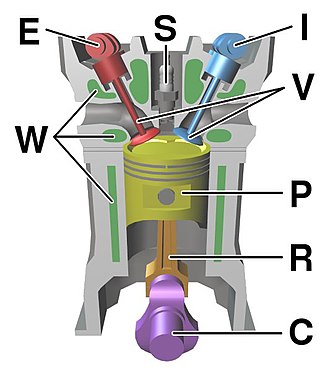
engine

engine
engine
engine /ˈɛndʒɪn/ countable noun

Compare motor: "engine" typically implies internal combustion, "motor" typically implies electric.

  • a machine that converts fuel or another energy source into mechanical power, especially by internal combustion

    The mechanic listened closely to the engine's idle.

motor vs. engine

Both convert energy into mechanical motion, but the words carry different connotations: motor usually implies electric power, while engine usually implies internal combustion (burning fuel).

motor
A machine that converts energy (typically electrical) into motion; used for devices like fans, washing machines, and electric vehicles.
engine
A machine that converts fuel (typically gasoline or diesel) into mechanical power through internal combustion; used for cars, trucks, and aircraft.
  • The distinction is not strict: in casual speech people often say "engine" and "motor" interchangeably for a car's power source.
  • Electric cars have an "electric motor", never called an "engine", even though it does the same job as a combustion engine.
#8111

motor [family]

motor /ˈmoʊtɚ/ countable noun

"Motor": typically electric. "Engine": typically combustion. Often interchangeable in casual speech. "Motorcycle", "motorway" (UK = highway).

  • a machine that converts energy into motion

    The electric motor whirred quietly.

motorway /ˈmoʊtɚweɪ/ countable noun

British.

  • a dual-carriageway road designed for fast traffic

    The M1 motorway.

motor vs. engine

Both convert energy into mechanical motion, but the words carry different connotations: motor usually implies electric power, while engine usually implies internal combustion (burning fuel).

motor
A machine that converts energy (typically electrical) into motion; used for devices like fans, washing machines, and electric vehicles.
engine
A machine that converts fuel (typically gasoline or diesel) into mechanical power through internal combustion; used for cars, trucks, and aircraft.
  • The distinction is not strict: in casual speech people often say "engine" and "motor" interchangeably for a car's power source.
  • Electric cars have an "electric motor", never called an "engine", even though it does the same job as a combustion engine.
#8110

cadence

cadence /ˈkeɪdəns/ countable noun
  1. the rhythmic rise and fall of a voice in speech, or the general rhythm of a piece of writing

    He spoke with a slow, measured cadence.

  2. (music) a chord progression that brings a phrase or section to a close

    The piece ends with a perfect cadence in C major.

#8109

generate [family]

generate /ˈdʒenəreɪt/ transitive verb
past: generated /ˈdʒenəreɪtɪd/
pp: generated /ˈdʒenəreɪtɪd/

"Generate income", "generate interest", "generate electricity" - common collocations.

  1. to produce or bring into existence

    The factory generates a lot of noise.

  2. to produce (electricity or power)

    The dam generates enough electricity for the whole city.

generation /ˌdʒenəˈreɪʃən/ countable noun

Common generational labels: Boomers, Gen X, Millennials, Gen Z, Gen Alpha. "Lost generation" : those who came of age during WWI. "Generation Z" : born ~1997-2012.

  • all people of approximately the same age

    His parents are of an older generation.

generation gap /ˌdʒenəˈreɪʃən ɡæp/ countable noun

Term popularized in the 1960s during cultural shifts. Modern: "OK boomer" : Gen Z phrase dismissing older perspectives.

  • a difference of attitudes between different generations

    There's a real generation gap in the office.

generational /ˌdʒenəˈreɪʃənəl/ adjective

"Generational wealth" = wealth passed down through families.

  • relating to a particular generation or to generations

    There's a generational divide on this issue.

generative /ˈdʒenɚətɪv/ adjective
  1. able to produce or create something; productive

    Sunshine and water are the generative forces behind plant growth.

  2. (in AI / linguistics) producing new content or output based on learned patterns

    Generative AI tools can create text, images, and music from a short prompt.

#8108

cohort

cohort /ˈkoʊhɔːrt/ countable noun

Originally a tactical unit in the Roman army.

  1. a group of people with a shared characteristic, especially studied together

    This is the largest cohort of graduates we've ever had.

  2. (usually disapproving) a companion or supporter

    He and his cohorts were arrested.

#8107

filthy [family]

filthy /ˈfɪlθi/ adjective

"Filthy rich" = extremely wealthy. "Filthy weather" = very bad weather.

  1. disgustingly dirty

    The kitchen was filthy after the party.

  2. morally offensive; obscene

    He shouted filthy insults at the crowd.

filth /fɪlθ/ uncountable noun
  1. disgusting dirt

    The streets were covered in filth.

  2. obscene or offensive material, especially in print or speech

    The book is just filth.

#8106

blight

blight /blaɪt/ uncountable noun
  • a plant disease or something that damages a place or life

    Potato blight destroyed the crop.

blight /blaɪt/ transitive verb
past: blighted /ˈblaɪtɪd/
pp: blighted /ˈblaɪtɪd/
  • to spoil, damage, or ruin something

    The scandal blighted his career.

#8105

bathymetry

bathymetry
bathymetry
bathymetry /bəˈθɪmətri/ uncountable noun

From Greek "bathys" (deep) + "-metry" (measurement). Used to produce nautical charts showing water depth for navigation.

  • the measurement and mapping of the depth of oceans, seas, or lakes

    Sonar surveys provided detailed bathymetry of the harbor entrance.

#8104

right [family]

right /raɪt/ adjective

Homophones: "write", "rite", "wright". Tons of idioms: "right away", "right on", "right of way".

  1. morally good, justified, or acceptable

    It was the right thing to do.

  2. true or correct as a fact

    You are right about that.

  3. on or toward the side opposite the left

    Take the next right turn.

right /raɪt/ countable noun
  • a moral or legal entitlement

    You have the right to remain silent.

by right /baɪ ˈraɪt/ idiom

Distinct from the similar idiom "by rights" (with reason or justice; properly), though the two are often used interchangeably.

  • according to what is legally or morally correct

    By right, this land belongs to the local tribe.

#8103

infringe [family]

infringe /ɪnˈfrɪndʒ/ verb
past: infringed /ɪnˈfrɪndʒd/
pp: infringed /ɪnˈfrɪndʒd/

"Infringe on rights" / "infringe a copyright" / "infringe a patent": common legal collocations. Related: infringement.

  • to actively break the terms of a law or agreement

    They were sued for infringing the patent.

infringement /ɪnˈfrɪndʒmənt/ countable noun

"Copyright infringement", "patent infringement": common legal phrases. Soccer/football: "infringement" = rule violation.

  • a violation of a law or right

    They sued for copyright infringement.

#8102

endorse [family]

endorse /ɪnˈdɔːrs/ transitive verb
past: endorsed /ɪnˈdɔːrst/
pp: endorsed /ɪnˈdɔːrst/
  1. to declare public approval or support for something

    The senator endorsed the new candidate.

  2. to recommend a product publicly, often for payment, as in advertising

    The basketball star endorses several sportswear brands.

  3. to sign your name on the back of a check to receive its value

    You need to endorse the check before depositing it.

endorsement /ɪnˈdɔːrsmənt/ noun
  1. an act of publicly supporting a person, product, or service

    The newspaper's endorsement helped her win the election.

  2. a famous person's recommendation of a product, usually for money

    The shoe company paid him millions for his endorsement.

#8101

leeward

leeward /ˈliːwɚd/ adverb or adjective sailing

Opposite: windward. On boats, often pronounced /ˈluːɚd/ by sailors.

  • toward the direction the wind is blowing, away from the wind

    They sailed leeward with the wind at their backs.