congee
-
a thin rice porridge eaten across East and Southeast Asia, often with savory toppings
He had congee with pickles and pork floss for breakfast.
a thin rice porridge eaten across East and Southeast Asia, often with savory toppings
He had congee with pickles and pork floss for breakfast.
From Cantonese 雲吞.
a small Chinese dumpling of seasoned minced filling, usually served in soup
A steaming bowl of wonton soup.
a starchy tropical root vegetable with purple-flecked flesh, eaten cooked or as a sweet flavor
Taro bubble tea has a pale purple color.
Also "baozi". From Mandarin 包.
a soft steamed Chinese bun, often filled with meat or sweet paste
We ordered pork bao at the dim sum place.
a large fabric balloon kept aloft by heating the air inside it, carrying a basket below
They drifted over the valley in a hot air balloon at dawn.
"-decker" = having a stated number of decks/levels; hence single-decker, double-decker.
a bus with two passenger levels, one above the other
Tourists love the open top deck of a London double-decker bus.
From "magnetic levitation".
a train that floats above its track using magnetic levitation, allowing very high speeds
The Shanghai maglev reaches 430 km/h.
a sled pulled by a team of dogs over snow and ice
They crossed the frozen tundra by dog sled.
Short for "abdominals". Singular "ab" is rare; "a six-pack" = well-defined abs.
(informal) the abdominal muscles
Planks are great for building your abs.
a flat metal disc loaded onto a barbell or machine to add weight
He slid two 20-kilo weight plates onto each end of the bar.
a thin non-slip mat used as a surface for yoga and floor exercises
Unroll your yoga mat and start in a seated pose.
a stretchy elastic band that adds resistance to strength exercises
She loops a resistance band around her thighs for squats.
a firm foam cylinder you roll your body over to release muscle tightness
Roll your IT band on the foam roller after leg day.
British: skipping rope.
a rope swung over the head and under the feet as a cardio exercise; also the activity itself
Boxers use a jump rope to build footwork and stamina.
Also "ab roller".
a small wheel with a handle through its axle, rolled out and back to train the abdominal muscles
He could barely do ten reps on the ab wheel.
a handheld device that delivers rapid percussive pulses to loosen and relax muscles
She used a massage gun on her sore calves after the run.
From Latin culmen (peak). Always "culminate in" + result.
to reach a climax or point of highest development
Their efforts culminated in victory.
the highest point or final stage
The award was the culmination of her career.
The present participle of 'culminate' used adjectivally, describing the final, highest, or decisive point.
forming the climax or highest point of something
The fireworks were the culminating moment of the festival.
Capitalized "Deaf" (with a capital D) refers to the cultural Deaf community and Deaf culture, as distinct from lowercase "deaf" describing the audiological condition.
lacking the ability to hear
She has been deaf since birth.
Common adjective form: "deafening", "deafening silence" is a famous oxymoron.
to make unable to hear, usually temporarily
The explosion deafened him.
Often literal for noise, but also figurative in "deafening silence".
so loud that it is difficult to hear anything else
The applause was deafening after the final song.
Many senses: short sharp sound, burst, visit briefly ("pop in"). "Pop music": popular genre. "Pop" (informal) = father.
to make a short sharp sound
The cork popped out of the bottle.
"Hit the deck!" = take cover. "All hands on deck" = everyone helping. "Deck of cards": pack of 52. "PowerPoint deck": slide presentation.
a floor on a ship or platform; a pack of cards
They sat on the back deck.
a member of a ship's crew who performs manual labor
He worked as a deckhand.
the forward part of a ship's main deck
The crew gathered on the foredeck to hoist the jib.
Not in Merriam-Webster's Collegiate Dictionary, but standard sailing terminology - no audio_mw.
the narrow deck area running along the side of a boat, between the cabin and the rail
She clipped onto the jackline before moving along the side deck.
Famous: Judas betraying Jesus for 30 pieces of silver. "Betray a trust": common collocation.
to expose to an enemy by treachery
He betrayed his friends.
to unintentionally reveal
Her smile betrayed her excitement.
the action of betraying someone
She felt deep betrayal.
Two unrelated senses: tire someone (modern usage), or drill a hole. Past of "bear" is also "bore": different word.
to cause to feel tired and uninterested
His lectures bore the students.
"Bored with" / "bored of": both used. "Bored to death", "bored stiff", "bored to tears": hyperbolic expressions.
feeling weary and uninterested
She was bored at the meeting.
causing boredom
That was a boring movie.
the state of feeling weary because of having nothing interesting to do
He turned to alcohol out of sheer boredom.
Both describe something uninteresting, but dull is broader (also not sharp, not bright, muted), while boring specifically means tedious and unengaging.
to be a tangible or visible form of an idea, quality, or feeling
She embodies the spirit of the company.
to include or contain something as a constituent part
The constitution embodies the principles of democracy.
a tangible or visible form of an idea, quality, or feeling
He is the embodiment of professionalism.
Noun stress on first; adjective on second ("content" = satisfied). "Content creator": modern term for YouTubers, TikTokers, etc.
the things contained in something
He emptied the contents of the bag.
the material in a book, film, or other media
The content of the article was interesting.
satisfied with what one has
She was content with her simple life.
Often compared with "happiness": contentment is more stable and quiet, happiness more intense and fleeting.
a state of happy satisfaction
He sighed with contentment.
quietly happy and satisfied
The dog gave a contented sigh by the fire.
From French para- (protect against) + chute (fall). Sport: skydiving uses parachutes. "Golden parachute" (business slang): generous exec severance package.
a cloth canopy that allows safe descent from heights
The pilot deployed his parachute.
Sacred in Hinduism and Buddhism: symbol of purity rising from muddy water. Also a luxury British sports car brand (Lotus Cars).
1a water plant with large pink or white flowers, sacred in many Asian cultures
The pond was full of blooming lotuses.
Sanskrit: padmasana. The classic meditation pose in yoga.
2a cross-legged sitting position used in yoga and meditation, with each foot placed on the opposite thigh
She sat in the lotus position to meditate.
Roasted chestnuts are a traditional Christmas/winter treat in Europe and America. Don't confuse with "horse chestnut" (conker): different species, inedible.
a large edible nut from a tree
They roasted chestnuts over the fire.
an old joke or story that has become tired
That's an old chestnut.
"Pop-Tart": toaster pastry brand. "Tart": also old British slang for prostitute (offensive). "Treacle tart": Hagrid's favorite in Harry Potter.
1a small open pastry containing fruit or filling
She baked a raspberry tart.
sharp in taste; sharp in tone
The lemon was very tart.
Popular in Hong Kong, Macau (via Portuguese pasteis de nata), and mainland China; typically smaller and flakier than a British custard tart.
2a small pastry shell filled with sweet egg custard, baked until just set
They ordered a box of egg tarts from the bakery.
"Open sesame!": magic phrase from Ali Baba (Arabian Nights). "Sesame Street": children's TV. Common allergen.
a plant whose seeds are used in cooking
She sprinkled sesame seeds on the bread.
"Cellular phone" (US) = mobile phone. Cell phones are named for the "cells" of coverage in the network.
relating to or consisting of living cells
The drug works at the cellular level.
relating to a mobile phone network
There's no cellular service in this area.
"White collar" (office) vs "blue collar" (manual labor): common class distinctions. "Hot under the collar" = angry. Dog collar.
the part of a garment around the neck
He adjusted his shirt collar.
Medical name: clavicle. Most commonly broken bone in the body (often from falls or sports). Sticks out visibly in thin people.
the bone connecting the breastbone to the shoulder
He broke his collarbone in a cycling accident.
made without a collar
He wore a collarless linen shirt.
"Wine cellar": common term for wine storage area. American homes often have basements/cellars; many European homes don't.
a room below the ground floor, used for storage
The wine is stored in the cellar.
"Whirlpool" is also a major American appliance brand (kitchen and laundry).
a rapidly rotating mass of water
The boat was caught in a whirlpool.
Plural: vortices. More technical/scientific than "whirlpool". Common: "polar vortex" (winter cold air pattern). Often used metaphorically ("a vortex of emotions").
a mass of whirling fluid or air
The storm created a vortex over the ocean.
French loanword.
an optical illusion caused by hot air, especially the appearance of water in a desert
The oasis turned out to be a mirage.
something illusory or unattainable that only appears real
Their promise of quick riches was a mirage.
"Culinary arts" = professional cooking.
relating to cooking
She studied at a culinary institute in Paris.
the part of a sentence that says something about the subject
In that sentence, the predicate follows the subject.
to base something on a condition or assumption
The policy is predicated on stable funding.
to distribute or spread over a wide area
The wind dispersed the seeds.
to go in different directions; to scatter
The crowd dispersed after the speech.
distributed or spread over a wide area
The population is widely dispersed across the islands.
the action or process of distributing things or people over a wide area
The dispersion of light through a prism creates a spectrum.
the action of distributing or spreading things or people over a wide area
The crowd's dispersal was orderly.
to physically prevent someone from doing something, especially by holding them back
It took three officers to restrain him.
to keep oneself under control; to hold back from doing or expressing something
She had to restrain herself from laughing.
calm and controlled; not extreme or excessive
His restrained reaction surprised everyone.
(uncountable) self-control; the avoidance of excess or extremes
She showed remarkable restraint in not responding to his insults.
(countable) a measure or means of restraining
Seat belts and child seats are common restraints in cars.
"Retainer": orthodontic device (or fee for ongoing legal services). "Retention": common business metric (customer retention, employee retention).
to continue to have; to keep
She retains her composure under pressure.
Famous for orthodontic retainers; also a legal/professional term.
a fee paid in advance to someone, especially a lawyer, in order to secure their services
He pays his lawyer a monthly retainer.
a device fitted in the mouth to keep teeth straight after braces
She wears her retainer at night.
"Data retention" (tech/legal) refers to how long records are kept before deletion; a major topic in privacy law (e.g. GDPR).
the act of keeping or holding something; the ability to remember information
The school focuses on student retention from year to year.
(medical) the failure to eliminate fluid from the body normally
Salty food can cause water retention.
"Anal retentive" (or anal-retentive): Freudian/informal term for someone excessively concerned with order and detail.
having the ability to retain
She has a remarkably retentive memory.
"In the lap of luxury" = in very comfortable circumstances. "Lap dog" = a small dog that can sit on one's lap.
the flat area between the waist and knees of a seated person
The cat curled up in her lap.
one complete circuit of a racing track
He took the lead on the final lap.
(of an animal) to drink liquid by scooping it up with the tongue
The dog lapped water from the bowl.
(of water) to wash against something gently
Waves lapped against the side of the boat.
to overtake another competitor in a race who is one or more full laps behind
The leader lapped the slowest runner twice.
the descent of a person, animal, or plant from an ancestor
He traces his lineage back to the 17th century.
'dispose of' = throw away or get rid of.
to get rid of by throwing away or giving or selling to someone else
Please dispose of your litter thoughtfully.
(of an article) intended to be used once, or until no longer useful, and then thrown away
Disposable diapers.
"At one's disposal" = available for one's use. "Garbage disposal" (US) = an under-sink appliance that grinds food waste.
the action of getting rid of something
Waste disposal is a major problem.
availability for use
All our resources are at your disposal.
a person's inherent qualities of mind and character; their general mood or temperament
She has a cheerful disposition.
("have a disposition to") an inclination or tendency to do something
He has a disposition to take risks.
(formal) the way in which something is placed or arranged
The disposition of furniture made the room feel cramped.
"Praise be!": religious exclamation. "Damn with faint praise": appear to compliment but actually denigrate.
expression of approval or admiration
The teacher gave him praise.
to express admiration for
They praised her courage.
Vulgar/informal. Polite alternatives: stool, feces (formal), poop (childish/casual). Also used as an insult for a contemptible person.
a piece of solid excrement (vulgar)
A dog turd lay on the sidewalk.
a long piece of wood or metal used for holding pieces of food together while cooking
She threaded chicken onto bamboo skewers.
to pierce with a skewer or other pointed object
He skewered the meat for the kebabs.
(figurative) to criticize or ridicule sharply
The critic skewered the new film.
to distort or make something unfairly biased
One extreme score skewed the average.
not straight or not balanced
The chart gave a skew view of the data.
Short-legged Welsh herding dog; Queen Elizabeth II famously kept Pembroke corgis.
a small Welsh herding dog with very short legs and large upright ears
The corgi trotted after the children on its stubby legs.
Full name Doberman pinscher; a sleek, alert guard dog. Also spelled Dobermann.
a large, sleek breed with a muscular build, often kept as a guard dog
The doberman stood guard at the gate.
Originally bred in China; known for snoring and a flat face.
a small dog breed with a wrinkled flat face, short muzzle, and curled tail
Their pug snores loudly whenever it falls asleep.
Comes in standard, miniature, and toy sizes; coat is curly and low-shedding.
a breed of dog with thick curly hair, often groomed in elaborate styles
Her poodle had just come back from the groomer.
Small scent hound known for a loud, musical bark (a "bay"). Snoopy is a beagle.
a small hound breed with a keen sense of smell, often used for tracking
The beagle picked up the scent and bayed loudly.
Large, powerful sled dog; looks like a husky but bigger, bred for hauling heavy loads.
a large, heavily built Arctic sled dog with a thick coat
An alaskan malamute can pull a loaded sled for miles.
Short for Labrador retriever; one of the most popular breeds, usually yellow, black, or chocolate.
a sturdy, good-natured retriever breed often used as a guide or assistance dog
Their chocolate labrador loves swimming.
Usually means the Siberian husky, a sled dog with a thick coat and often pale-blue eyes. Unrelated adjective "husky" = big and sturdy, or (of a voice) low and rough.
a strong northern sled dog with a thick double coat, bred to pull in cold climates
The husky howled at the sirens.
Friendly, intelligent gun dog bred to retrieve game; a very popular family pet.
a large, friendly dog breed with a dense golden coat
The golden retriever greeted everyone at the door with its tail wagging.
Japanese breed: small, fox-like, alert. The face behind the "doge" internet meme.
a small, agile Japanese dog breed with a thick coat and curled tail
Their shiba inu refuses to walk in the rain.
"At one's wit's end" = exhausted by frustration. "To wit" (archaic/legal) = namely. "Wits" (plural) = intelligence, alertness.
the ability to use words in a clever and humorous way
She is known for her sharp wit.
to deceive or defeat by greater ingenuity
He outwitted his pursuers.
showing or characterized by quick and clever humor
Her witty remarks had everyone laughing throughout dinner.
Past: spoke. Past participle: spoken. "Speak up" : talk louder, or advocate publicly. "Speak for itself" : needs no explanation.
to say words; to use language
He speaks three languages.
Two senses: literally to talk louder, and figuratively to voice an opinion or object, especially on someone's behalf ("speak up for your rights").
to talk more loudly so you can be heard
Could you speak up? I can't hear you at the back.
to say what you think openly, or to defend someone or something
If you disagree with the plan, now is the time to speak up.
frank in stating one's opinions, especially if they are critical or controversial
An outspoken critic of the policy.
a person who speaks, especially to an audience
The keynote speaker gave an inspiring talk.
an electronic device that produces sound
He connected his phone to a wireless speaker.
the ability to speak, or spoken language in general
The stroke temporarily affected her speech.
a formal talk given to an audience
The mayor gave a short speech at the opening.
not said aloud or put into words
There was an unspoken sadness in the room.
understood without being formally stated
They had an unspoken agreement not to discuss the breakup.
Refers especially to implicit norms in workplaces, politics, or social groups that everyone must follow but no one openly states. Singular "unspoken rule" also common. Synonym: unwritten rules.
rules that are commonly understood and followed but not openly stated
There are unspoken rules about how to dress for the interview.
too bad, shocking, or evil to be described in words
He committed unspeakable crimes during the war.
(weaker sense) so unpleasant it is difficult to describe
The traffic this morning was unspeakable.
Informally, "hairy" also means frightening or dangerous: a "hairy situation" is a risky, nerve-racking one.
covered with hair, especially thick or noticeable hair
He has big hairy arms.
(informal) frightening, risky, or difficult
The drive down the icy mountain road got pretty hairy.
a body of troops stationed in a town or fort to defend it
The garrison held the fortress through the siege.
the town or place where such troops are stationed
The soldiers were posted to a remote garrison.
to station troops in (a place) for its defense
The empire garrisoned the border towns.
From Latin "inferus" (lower). Antonym: superior. "Inferior to": common construction.
of lower quality or status
The cheaper model is inferior.
"Inferiority complex" - Adlerian psychology term for persistent feelings of inadequacy.
the state of being lower in quality, status, or rank
He struggled with feelings of inferiority.
Almost always in "get down to the nitty-gritty". Origin uncertain: possibly from "gritty" details. Was sometimes claimed to have racist origins but evidence is weak.
the most important practical details
Let's get down to the nitty-gritty.
a state, period, or place of isolation in which people or animals that have arrived from elsewhere or been exposed to infectious or contagious disease are placed
Many animals die in quarantine.
to isolate (a person, animal, or place) to prevent a disease from spreading
The government quarantined the entire village.
Homophone of 'gild'.
an association of people with the same trade or interests, especially a medieval craftsmen's society
the guild of goldsmiths
(online gaming) a group of players who cooperate within a game
She joined a guild to take on the raid boss.
From Latin salvare ("to save"); same root as salvation, save.
to rescue (a ship, its contents, or other property) from loss at sea
They salvaged the cargo from the wreck.
to retain or preserve (something) in difficult circumstances
He tried to salvage his career after the scandal.
material or items saved from a wreck, fire, or disaster, especially for reuse
The shop sold furniture made from architectural salvage.
the act of saving a ship, its cargo, or other property from loss
The salvage operation took three days.
In Christianity, salvation specifically means deliverance from sin.
the act of saving or being saved from harm, ruin, or loss
The new job was his salvation.
(Christianity) deliverance from the consequences of sin
They preach the message of salvation.
Founded in 1865 by William Booth in London. Famous for its red kettles and bell-ringers during Christmas in the US.
a Christian charitable organization with a quasi-military structure, known for social services and emergency relief
She volunteered at the Salvation Army shelter.
Formed on the pattern of blacksmith/locksmith/wordsmith; not yet in most general dictionaries (M-W has no entry), but standard in crafting-themed games and fantasy fiction.
a person who makes or repairs armor
She visited the armorsmith to upgrade her shield.
articles made of leather, or the craft of making them
The market stall sold handmade leatherwork.
"Savile Row" in London: historic hub of high-end tailoring. Distinct from "seamstress" (sewer of more general garments).
a person who makes or alters men's clothing
The tailor measured him for a new suit.
to adapt something for a specific purpose or person
The program was tailored to her needs.
Often used figuratively: "a tailor-made solution" / "a tailor-made role for her", perfectly suited.
made specifically to suit a particular person or purpose
This job is tailor-made for you.
to make or adapt for a particular purpose
We can tailor-make the package to your budget.
shaped to fit the body closely; specifically adapted
He wore a tailored suit.
From Latin discipulus (pupil): same root as "disciple". Three main senses: training, punishment, and academic field.
the practice of training people to obey rules
Military life requires strict discipline.
a branch of knowledge
Biology is a scientific discipline.
to train (someone) by instruction and exercise; to punish in order to correct
The teacher disciplined the student.
showing controlled behavior or training
Olympic athletes are highly disciplined.
"Disciplinary action" = formal punishment by an organization. "Interdisciplinary" = involving multiple fields of study.
relating to discipline, especially punishment
He faces disciplinary action for misconduct.
"Inter-" prefix = between. Distinct from "multidisciplinary" (multiple fields side by side) and "transdisciplinary" (integrated beyond).
involving two or more academic disciplines
It was an interdisciplinary research project.
Less common than "multidisciplinary". Often hyphenated as "multi-discipline".
involving more than one academic discipline
It's a multidiscipline research program.
Common in academia and modern work. "Interdisciplinary" is a similar but slightly different concept: "inter" implies more integration between fields.
combining several academic disciplines
The team takes a multidisciplinary approach.
Major theme in productivity/self-help literature. Linked to long-term success in research (e.g., Mischel's marshmallow test).
the ability to control one's feelings and behavior
Athletes need great self-discipline.
having self-discipline
She is highly self-disciplined.
Also "in no time at all". Not to be confused with "in time" (early enough).
very quickly; in a very short time
She finished the puzzle in no time.
"Down with" = (1) sick with, (2) opposed to. Also: "down to" = attributable to.
from a higher to a lower point of
She walked down the stairs.
toward or in a lower place or position
Please sit down.
sad or depressed
He's been feeling down all week.
not working; out of operation
The server is down again.
to cause to fall, especially by shooting
Anti-aircraft fire downed the plane.
(informal) to consume, especially quickly
He downed his coffee in one gulp.
"A downed plane" / "downed power lines": caused to fall or crash.
shot down, knocked down, or caused to crash
Rescue teams searched for the downed pilot.
the soft fine feathers of a young bird
The pillow was filled with goose down.
Noun stress on first; verb on second (/əˈlaɪ/). Modern: "ally" (especially "LGBTQ ally") = supporter of marginalized groups.
a country or person joined with another for support
They are political allies.
Stress shifts to the second syllable for the verb (compare the noun, stressed on the first). Usually followed by "with".
to unite or enter into an alliance with
The two factions allied with each other against a common rival.
"NATO": North Atlantic Treaty Organization, major Western military alliance since 1949. "Strategic alliance": common business term.
a union formed for mutual benefit
The two countries formed an alliance.
"Allied Forces" / "the Allies": countries fighting Germany in WWI and WWII (US, UK, France, USSR, etc.).
joined by a formal agreement
The allied nations cooperated on the project.
Related noun: revival (added in batch 71).
to restore to life or consciousness
Paramedics revived the unconscious patient.
to bring back into use
They are trying to revive interest in traditional crafts.
From the verb "revive". "Religious revival" / "theater revival" are common contexts.
an improvement in the condition or strength of something
There has been a revival of interest in folk music.
a new production of an old play, film, or musical
The Broadway revival opened to glowing reviews.
a person who publicly supports a cause
She is an advocate for clean water.
to publicly support or recommend
The group advocates stronger privacy laws.
public support for a cause or policy
Her advocacy changed the law.
"Merchant of Venice": Shakespeare's play. In modern card-payment context, "merchant" = the business that accepts payments.
a person involved in wholesale trade
He was a wealthy wool merchant.
American equivalent: investment bank (the terms are not identical but overlap significantly).
(British) a bank dealing in commercial loans and investment
He worked at a merchant bank in the City.
Often shortened to "merch": especially band merch (t-shirts, posters at concerts).
goods to be bought and sold
The store displayed its merchandise in the window.
a person who promotes the sale of goods
She works as a visual merchandiser.
"Visual merchandising" = the art of displaying products attractively in stores.
the activity of promoting and selling goods
The film made millions through merchandising.
relating to trade or commerce; commercial
The mercantile marine.
"Street vendor" = someone selling from a cart. In business: "vendor" = supplier ("vendor management").
a person or company offering something for sale
The street vendor sold hot dogs.
"Reward system": common in marketing (loyalty programs) and psychology (operant conditioning). "Reward chart": common parenting tool. Compare award: a reward is often tied to an incentive or offered informally (e.g. for lost property); an award is formally bestowed for merit.
a thing given in recognition of service or achievement
They offered a reward for information.
to give a reward to someone for good behavior, service, or achievement
The company rewarded loyal customers with discounts.
"Emotionally rewarding": providing satisfaction. Common in career discussions: "a rewarding job".
providing satisfaction; gratifying
Teaching can be very rewarding.
Both describe something given for merit or achievement, but an award is a formal honor or prize, while a reward is often tied to an incentive and can be given informally.
Compare reward: an award is formally given for merit or achievement; a reward can be more informal and is often tied to an incentive.
a prize or honor given formally for achievement, service, or merit
She received an award for best actress.
to give formally as a prize, reward, or payment
The judge awarded damages to the plaintiff.
Both describe something given for merit or achievement, but an award is a formal honor or prize, while a reward is often tied to an incentive and can be given informally.
"Flock" is the collective noun for sheep, goats, and birds. Cows = herd; fish = school; wolves = pack.
a group of birds, sheep, or goats
A flock of geese flew overhead.
a large number of people
Tourists came in flocks to see the festival.
a Christian congregation under the care of a particular priest
The pastor addressed his flock on Sunday.
(of people) to gather or move in a crowd
Fans flocked to the stadium.
"The Net" (informal, dated) = the internet.
an open-mesh fabric of cord, rope, or wire used to catch fish, confine objects, or as a barrier
The fisherman cast his net into the bay.
to catch with a net
They netted a dozen fish before noon.
to gain (an amount) as a profit
The sale netted her a tidy profit.
"Net" income/profit/weight = after deductions, as opposed to "gross".
remaining after all deductions have been made
Her net pay was much lower than her gross salary.
A material made of net; common compounds: "wire netting", "mosquito netting".
open-mesh material made of knotted, woven, or twisted thread, cord, or wire
They covered the fruit trees with netting to keep birds away.
Both involve a pattern of openings, but mesh describes the material or interlocking structure, while a net is usually a finished object designed to catch, contain, or block something.
a pleasing view, especially one seen through a long, narrow opening
A beautiful vista.
Common in science fiction (Star Trek's "transporter"); no real-world technology accomplishes this for macroscopic objects.
to move (a person or object) instantly across distance, especially by a hypothetical or fictional technology
In the show, the crew could teleport down to the planet's surface.
the hypothetical or fictional act of moving matter instantly from one place to another
Teleportation remains a staple of science fiction.
More formal than "fame".
the condition of being known or talked about by many people; fame
She gained international renown for her research on cancer.
Often followed by "for".
famous; well-known, especially for some skill or quality
The chef is renowned for his innovative French cuisine.
Past tense unchanged: set. One of the most polysemous English words. Hundreds of meanings, dozens of phrasal verbs.
to put or place
She set the book on the table.
a group of related things
He bought a set of golf clubs.
an agricultural policy or program under which farmers are required or encouraged to leave a proportion of their land uncultivated
The field was put into set-aside.
Two common senses: beginning a journey, and beginning with a clear goal or plan.
to begin a journey or trip
They set out for the summit at dawn.
to begin with the intention of achieving something
She set out to prove her theory was correct.
to lay out or arrange clearly
The report sets out the committee's findings.
to use up most or all of something, such as a supply or resource
The expedition depleted their food reserves quickly.
the reduction in the number or quantity of something
Ozone depletion was a major environmental concern in the 1980s.
Common in fantasy fiction and games. From Latin magus (also the root of "magic" and "magi" - the three wise men).
(literary) a magician or learned person
The mage cast a spell to protect the village.
Famous: Shrek (DreamWorks 2001), flipped the trope by making ogre the hero. Often eats humans in folklore.
a large cruel monster in fairy tales
The hero defeated the ogre.
"Stun gun" = a non-lethal weapon that delivers an electric shock.
to knock unconscious or into a dazed state
The blow stunned him.
to astonish or shock
The news stunned everyone.
extremely impressive or attractive
She looked stunning in her red dress.
a strikingly beautiful or impressive person or thing
She looked an absolute stunner.
A standard piece of UI vocabulary, not yet in most general dictionaries (M-W has no entry for it).
a small informational box that appears when a cursor hovers over an on-screen element
Hover over the icon and a tooltip explains what it does.
From Greek bios (life) + graphein (to write). Often shortened to "bio" (social media bios, etc.). Distinct from autobiography (self-written).
an account of someone's life written by another
She wrote a biography of Churchill.
Famous: Benjamin Franklin's, Malcolm X's, Anne Frank's diary. "Memoir" is a related genre: focuses on a period rather than whole life.
an account of a person's life written by that person
He published his autobiography last year.
Both dramatize or record a real person's life, but they differ in medium and form: a biopic is a film, while a biography is a written account.
Past: bound. "In a bind" = in a difficult situation. "Bound to" = certain to. Books are bound.
to tie together
They bound the prisoner with rope.
Past tense/participle of "bind". "Bound" can also mean obligated, certain ("bound to happen"), or heading toward ("southbound train").
certain or destined
She is bound to win.
tied or fastened
His hands were bound.
"Walk the plank": the historical (and largely legendary) pirate punishment of forcing a captive to walk off a board into the sea; now used figuratively for being forced to resign.
a long, flat, thick piece of sturdy wood used in construction or flooring
They repaired the deck with new planks.
(informal, fitness) a core-strengthening exercise in which the body is held rigid in a straight line, supported on the forearms and toes
She held a plank for two minutes during her workout.
to cover, build, or floor with planks
They planked the floor of the barn.
From French. "Sugar sachet", "tea sachet": single-use packets. Also: scented sachets for drawers.
a small sealed packet
She added a sachet of sugar to her tea.
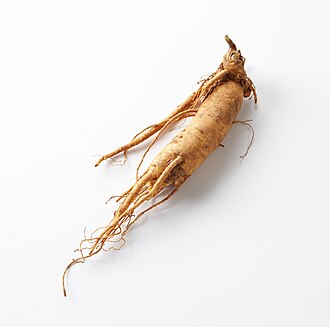
From Chinese renshen. The fleshy, forked root is used in traditional Chinese medicine and as a tonic herb; believed to boost energy and immunity.
the aromatic forked root of certain plants, used in herbal medicine and teas
She drank ginseng tea every morning for energy.
From Latin componere (to put together). Used for music, writing, photography, and physical arrangement.
to create or write (a musical or literary work)
Mozart composed his first symphony at age 8.
(of elements) to make up; constitute
Water is composed of hydrogen and oxygen.
In photography/art, "composition" = the arrangement of elements within the frame. In chemistry: the substances something is made of.
the nature of something's ingredients or make-up
The composition of the air has changed.
a work of music, literature, or art
She played her own composition.
relating to composition
The painting has strong compositional balance.
Largely obsolete profession: replaced by digital typesetting from the 1980s. Also: in software (After Effects, Nuke), a person who combines visual layers for film.
a person who arranged the type in traditional printing
The compositor worked late to finish the newspaper.
a person who combines visual elements in film production
The compositor merged the green-screen footage with the background.
made up of various parts or elements; a thing made up of several parts or elements
A composite drawing.
In tech: "electronic components" (resistors, capacitors, transistors). "React components": building blocks of modern web apps.
a part of a larger whole
Memory is a key component of a computer.
a thing made up of several parts or elements
The final image is a composite of dozens of photographs.
"Red-eye flight" is the fuller, more explicit phrasing of the same thing; both refer to overnight flights that leave passengers tired and bleary-eyed on arrival.
a late-night or overnight airline flight
She took the red-eye from New York to catch the morning meeting in LA.
the reddish glow that can appear in a person's eyes in a flash photograph
He edited out the red-eye before posting the picture.
a late-night or overnight airline flight (the fuller form of "red-eye")
The red-eye flight landed at 6am, and nobody had slept.
American spelling. British English: fibre.
a thin, thread-like strand of natural or synthetic material
The rope is woven from strong synthetic fiber.
plant material in food that the body cannot digest but that aids digestion
Beans are high in fiber.
British spelling; American: fiber. "Moral fiber" = strength of character.
(countable) a thread or filament from which a vegetable tissue, mineral substance, or textile is formed
The shirt is made of natural fibres.
(uncountable) dietary material that helps digestion
You should eat more fibre.
a strong material made by interweaving glass fibres, used as insulation and in boat hulls
The boat's hull is made of fibreglass.
Underlies most modern high-speed internet.
the use of thin flexible glass fibres to transmit light signals, especially for telecommunications
Fibre optics enables fast internet connections.
Both describe building blocks of living things, but tissue is a level of biological organization (a group of cells with a shared function), while fiber is a single thread-like structural unit, often one component that makes up a tissue.
Also written "seafoam" as one word. Used as a color name (a pale green-blue).
the white foam produced when seawater is agitated by wind and waves, caused by dissolved organic matter being whipped into bubbles
Lines of sea foam stretched along the beach after the storm.
a pale greenish-blue color resembling sea foam
The walls were painted sea foam to give the bathroom a beach feel.
From Greek presbys (old) + ops (eye). The normal age-related loss of near-focusing ability, usually becoming noticeable in the 40s, distinct from the separate condition hyperopia (farsightedness from birth).
the gradual, age-related loss of the eye's ability to focus on nearby objects
By her mid-forties, presbyopia meant she needed reading glasses.
affected by or relating to presbyopia
His presbyopic eyes struggled to read the small print.