Vocabulary: Batch 58

#5701 to #5800 (100 entries)

#5800

appreciate [family]

appreciate /əˈpriːʃieɪt/ verb
past: appreciated /əˈpriːʃieɪtɪd/
pp: appreciated /əˈpriːʃieɪtɪd/
  1. to recognize the full worth of something

    I really appreciate your help.

  2. to understand a situation or problem fully

    You don't appreciate how difficult this is.

  3. to grow in monetary value

    The house has appreciated significantly.

appreciable /əˈpriːʃəbəl/ adjective
  • large or important enough to be noticed

    There has been no appreciable change in his condition.

appreciation /əˌpriːʃiˈeɪʃən/ noun
  1. recognition and enjoyment of the good qualities of someone or something

    He expressed his appreciation for her hard work.

  2. an increase in monetary value

    There has been significant appreciation in real estate.

appreciative /əˈpriːʃətɪv/ adjective
  • feeling or showing gratitude or pleasure

    The audience was appreciative of the performance.

#5799

anew

anew /əˈnuː/ adverb

Literary/formal. "Begin anew" is the most common collocation.

  • in a new or different way; again

    They decided to start anew in a different city.

#5798

plump

plump /plʌmp/ adjective

Often a polite alternative to "fat".

  1. pleasantly full and rounded; slightly fat

    She had plump rosy cheeks.

  2. (of food) full and juicy

    He bit into a plump strawberry.

#5797

liven [family]

liven /ˈlaɪvən/ transitive verb
past: livened /ˈlaɪvənd/
pp: livened /ˈlaɪvənd/

Usually "liven up". Root of enliven.

  • to make more lively or interesting

    A few jokes livened up the meeting.

enliven /ɪnˈlaɪvən/ transitive verb
past: enlivened /ɪnˈlaɪvənd/
pp: enlivened /ɪnˈlaɪvənd/
  • to make something more entertaining, interesting, or appealing

    He enlivened the party with his stories.

#5796

mandala

mandala
mandala
mandala /ˈmʌndələ/ countable noun

From Sanskrit for "circle". Tibetan Buddhist sand mandalas are famously destroyed after completion to symbolize impermanence.

  • a geometric circular figure representing the universe in Hindu and Buddhist spiritual symbolism

    The monks spent days creating an intricate sand mandala.

#5795

pastel

pastel /pæˈstel/ adjective
  • (of a color) pale and soft

    The nursery was painted in pastel pink and blue.

pastel /pæˈstel/ noun
  1. (countable) a soft colored crayon made of powdered pigments bound with gum

    She used pastels to create the portrait.

  2. (countable) a picture drawn with pastels

    The gallery displayed several beautiful pastels.

#5794

poignant [family]

poignant /ˈpɔɪnjənt/ adjective

From French/Latin "pungent" - originally meaning sharp-pointed; the English meaning has evolved to emotional sharpness.

  • evoking a keen sense of sadness or regret

    It was a poignant moment when the old soldiers met again.

poignancy /ˈpɔɪnjənsi/ uncountable noun
  • the quality of evoking a keen sense of sadness

    The poignancy of the scene moved her to tears.

#5793

sarcoma

sarcoma /sɑːrˈkoʊmə/ countable noun

From Greek sarx ("flesh"). Compare with carcinoma (cancer of epithelial cells, more common).

  • a malignant tumor of connective or other non-epithelial tissue

    He was diagnosed with a soft tissue sarcoma.

#5792

resent [family]

resent /rɪˈzent/ transitive verb
past: resented /rɪˈzentɪd/
pp: resented /rɪˈzentɪd/
  • to feel bitterness or indignation at (a situation or action)

    She resented being treated like a child.

resentful /rɪˈzentfəl/ adjective
  • feeling or expressing bitterness or indignation

    He grew resentful of his brother's success.

resentment /rɪˈzentmənt/ uncountable noun
  • bitter indignation at having been treated unfairly

    She harbored deep resentment toward her former boss.

#5791

yesteryear

yesteryear /ˈjestɚjɪr/ uncountable noun

Coined by the poet Dante Gabriel Rossetti in 1870 as a translation of French "l'an passé".

  • (literary) last year or the recent past

    He spoke of the heroes of yesteryear.

#5790

seminal

seminal /ˈsemənəl/ adjective

From Latin semen ("seed"). "Seminal work" = a foundational, influential work.

  • strongly influencing later developments

    This is a seminal work in modern philosophy.

#5789

gamut

gamut /ˈɡæmət/ countable noun

"Run the gamut" = the most common usage.

  • the complete range or scope of something

    Her emotions ran the gamut from joy to despair.

#5788

chapel

chapel
chapel
chapel /ˈtʃæpəl/ countable noun

"Sistine Chapel" - the famous Vatican chapel painted by Michelangelo.

  • a small building for Christian worship, typically smaller than a church, or a room within a larger building

    The college has its own chapel.

#5787

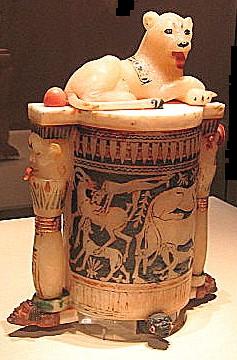
alabaster

alabaster
alabaster
alabaster /ˈæləbæstɚ/ uncountable noun

Famous for its use in ancient Egyptian and Mediterranean carving.

  • a fine-grained translucent form of gypsum, typically white, often carved into ornaments

    The vase was carved from alabaster.

#5786

Nike

Nike
Nike
Nike /ˈnaɪki/ proper noun

The athletic shoe brand Nike (founded 1971) was named after this goddess. The Greek pronunciation is /ˈniːkeɪ/, but the brand and English usage favor /ˈnaɪki/.

  • the Greek goddess of victory

    The statue of Nike of Samothrace is in the Louvre.

#5785

malaria [family]

malaria /məˈleriə/ uncountable noun

From Italian: mal aria ("bad air"). Ancient belief that swamp air caused the disease, before mosquitoes were identified as the carrier.

  • a serious disease caused by a parasite transmitted to humans through the bite of infected mosquitoes

    He contracted malaria during his trip to Africa.

malarial /məˈleriəl/ adjective
  • relating to or affected by malaria

    The clinic treats malarial patients in the region.

#5784

pietà

pietà
pietà
pietà /pieˈtɑː/ countable noun

From Italian for "pity". Michelangelo's Pietà (1499) in St. Peter's Basilica is the most famous example.

  • (art) a depiction of the Virgin Mary holding the dead body of Christ

    Michelangelo carved his famous pietà at age 24.

#5783

jowl [family]

jowl /dʒaʊl/ countable noun

Usually plural "jowls". Common phrase: "cheek by jowl" = very close together.

  • the lower part of a person's or animal's cheek, especially when fleshy or hanging loosely

    His age was showing in his sagging jowls.

jowly /ˈdʒaʊli/ adjective
  • having heavy or prominent jowls

    The jowly bulldog wheezed as it walked.

#5782

colossal [family]

colossal /kəˈlɑːsəl/ adjective
  • extremely large

    The new stadium is a colossal structure.

colossus /kəˈlɑːsəs/ countable noun

The Colossus of Rhodes was one of the Seven Wonders of the Ancient World.

  1. a statue that is much bigger than life size

    The bronze colossus dominated the harbor.

  2. a person or thing of enormous size, importance, or ability

    He was a colossus of 20th-century literature.

#5781

sideline

sideline /ˈsaɪdlaɪn/ countable noun

"On the sidelines" = not participating directly.

  1. either of the two lines that mark the long sides of a sports field; (plural) the area just outside these lines

    The coach paced along the sideline.

  2. a secondary activity or job

    He runs a small bakery as a sideline.

sideline /ˈsaɪdlaɪn/ transitive verb
past: sidelined /ˈsaɪdlaɪnd/
pp: sidelined /ˈsaɪdlaɪnd/
  • to cause someone to be removed from a position, team, or activity

    He was sidelined by an injury for the season.

#5780

preach [family]

preach /priːtʃ/ verb
past: preached /priːtʃt/
pp: preached /priːtʃt/

"Preach to the choir" (American) / "preach to the converted" (British) = make arguments to people who already agree.

  1. to deliver a sermon or religious address to an assembled group

    The pastor preached to a packed church.

  2. to advocate or recommend (something) earnestly

    She preaches the benefits of meditation.

preacher /ˈpriːtʃɚ/ countable noun
  • a person who preaches, especially a member of the clergy

    The preacher gave a powerful sermon.

#5779

grate

grate /ɡreɪt/ verb
past: grated /ˈɡreɪtɪd/
pp: grated /ˈɡreɪtɪd/

"Grate on someone's nerves" = irritate.

  1. to shred (food) by rubbing it on a rough surface

    She grated some cheese over the pasta.

  2. to make an unpleasant rasping sound

    The chalk grated against the blackboard.

grate /ɡreɪt/ countable noun
  • a framework of metal bars used as a partition or covering, or for cooking over a fire

    Wood was burning in the fireplace grate.

#5778

beset

beset /bɪˈset/ transitive verb
past: beset /bɪˈset/
pp: beset /bɪˈset/

Past tense same as present: beset. Often passive: "be beset by/with".

  • (of a problem or difficulty) to trouble persistently

    The project was beset by delays and budget issues.

#5777

spurn

spurn /spɝn/ transitive verb
past: spurned /spɝnd/
pp: spurned /spɝnd/

Stronger than "reject"; suggests contempt.

  • to reject with contempt

    She spurned his offer of marriage.

#5776

guzzle

guzzle /ˈɡʌzəl/ verb
past: guzzled /ˈɡʌzəld/
pp: guzzled /ˈɡʌzəld/

"Gas guzzler" = a vehicle with poor fuel efficiency.

  1. to eat or drink greedily

    He guzzled the entire pitcher of beer.

  2. (of a vehicle or engine) to consume large quantities of fuel

    That old truck guzzles gas.

#5775

onerous

onerous /ˈɑːnɚəs/ adjective

Formal.

  • involving an amount of effort and difficulty that is oppressively burdensome

    The new regulations impose onerous reporting requirements.

#5774

attest [family]

attest /əˈtest/ verb
past: attested /əˈtestɪd/
pp: attested /əˈtestɪd/

Often "attest to" something.

  1. to provide or serve as evidence of something

    Her years of experience attest to her expertise.

  2. to declare that something is true, often in court

    The witness attested to the accuracy of his statement.

attestation /ˌætesˈteɪʃən/ noun
  • evidence or proof that something exists or is the case

    The certificate serves as attestation of his qualifications.

#5773

tendril

tendril
tendril
tendril /ˈtendrəl/ countable noun
  • a slender threadlike appendage of a climbing plant, often growing in a spiral form, that attaches to surfaces for support

    The vine sent out tendrils that wrapped around the trellis.

#5772

bounty [family]

bounty /ˈbaʊnti/ noun

HMS Bounty was the ship of the famous 1789 mutiny.

  1. (uncountable) generosity or abundance

    The harvest provided bounty for the whole village.

  2. (countable) a reward offered for catching or killing someone

    There was a bounty on the outlaw's head.

bounty hunter /ˈbaʊnti ˌhʌntɚ/ countable noun
  • a person who pursues a criminal or fugitive for whom a reward has been offered

    The bounty hunter tracked the fugitive across three states.

#5771

grill

grill
grill
grill /ɡrɪl/ countable noun
  • a metal framework used for cooking food over an open fire

    He fired up the grill for the barbecue.

grill /ɡrɪl/ transitive verb
past: grilled /ɡrɪld/
pp: grilled /ɡrɪld/

"Grill" can also mean question intensely.

  1. to cook food on or under a grill

    She grilled chicken for dinner.

  2. to question intensely

    The detective grilled the suspect for hours.

#5770

turn-off

turn-off /ˈtɝnɔːf/ countable noun

Antonym: turn-on.

  1. a road branching off from a main road

    Take the next turn-off for the airport.

  2. (informal) something that makes someone lose interest, especially sexual interest

    Bad breath is a major turn-off.

#5769

hip

hip
hip
hip /hɪp/ countable noun body

"Shooting from the hip" = speaking impulsively. "Joined at the hip" = inseparable.

  • the projection of the pelvic bone on each side of the body

    She put her hands on her hips.

hip /hɪp/ adjective

Older slang related to "hippie". Also "hipster".

  • (informal) fashionable, especially in being aware of the latest trends

    That cafe is very hip with the college crowd.

#5768

preconception

preconception /ˌpriːkənˈsepʃən/ countable noun
  • a preconceived idea or opinion, especially one based on inadequate information

    Try to approach the issue without preconceptions.

#5767

horoscope

horoscope /ˈhɔːrəskoʊp/ countable noun
  • a forecast of a person's future based on the position of the planets and stars at the time of their birth

    She reads her horoscope every morning.

#5766

fracking

fracking /ˈfrækɪŋ/ uncountable noun

Short for "hydraulic fracturing". Controversial for its environmental impacts.

  • the process of injecting liquid at high pressure into underground rocks to extract oil or gas

    Fracking has transformed the US energy industry.

#5765

roadblock

roadblock /ˈroʊdblɑːk/ countable noun
  1. a barrier or barricade on a road, set up to stop traffic for inspection

    Police set up roadblocks throughout the area.

  2. (figurative) an obstacle to progress

    Funding has been the biggest roadblock to the project.

#5764

sprightly

sprightly /ˈspraɪtli/ adjective

Often used affectionately for older people.

  • (especially of an old person) lively; full of energy

    At 90, she's still sprightly and quick-witted.

#5763

vie [family]

vie /vaɪ/ intransitive verb
past: vied /vaɪd/
pp: vied /vaɪd/

Often "vie for" or "vie with".

  • to compete eagerly with someone in order to do or achieve something

    The two candidates are vying for the nomination.

vying /ˈvaɪɪŋ/ adjective

Present participle of "vie" (compete). Common collocation: "vying for attention", "vying for position".

  • competing eagerly with others

    They were vying for the championship.

#5762

rebuke

rebuke /rɪˈbjuːk/ transitive verb
past: rebuked /rɪˈbjuːkt/
pp: rebuked /rɪˈbjuːkt/
  • to express sharp disapproval of someone for their actions

    The teacher rebuked the students for being late.

rebuke /rɪˈbjuːk/ countable noun
  • an expression of sharp disapproval

    The judge issued a stern rebuke to the lawyer.

#5761

slap down

slap down /ˌslæp ˈdaʊn/ transitive verb
past: slapped down /ˌslæpt ˈdaʊn/
pp: slapped down /ˌslæpt ˈdaʊn/

Informal. The noun form "slapdown" is also used.

  • to reprimand or rebuke someone sharply

    The boss slapped down his proposal.

#5760

brisk

brisk /brɪsk/ adjective

Common collocations: "brisk walk", "brisk business", "brisk pace".

  1. active, fast, and energetic

    They went for a brisk walk before breakfast.

  2. (of weather) pleasantly cold and refreshing

    It was a brisk autumn morning.

#5759

scupper

scupper /ˈskʌpɚ/ transitive verb
past: scuppered /ˈskʌpɚd/
pp: scuppered /ˈskʌpɚd/

British informal.

  • (British) to thwart, ruin, or prevent (a plan)

    The deal was scuppered at the last minute.

#5758

hasty [family]

hasty /ˈheɪsti/ adjective
  • done in a hurry, especially with limited consideration

    Don't make a hasty decision.

haste /heɪst/ uncountable noun

Proverb: "Haste makes waste".

  • excessive speed or urgency

    In her haste, she forgot her keys.

hasten /ˈheɪsən/ verb
past: hastened /ˈheɪsənd/
pp: hastened /ˈheɪsənd/
  1. to be quick to do something

    He hastened to apologize for his mistake.

  2. to cause something to happen sooner

    Stress can hasten aging.

#5757

inchoate

inchoate /ɪnˈkoʊət/ adjective

Formal/literary.

  • just begun and so not fully formed or developed

    She had an inchoate sense that something was wrong.

#5756

freebie

freebie /ˈfriːbi/ countable noun

Informal.

  • a thing given free of charge

    The conference had a lot of freebies in the swag bag.

#5755

moribund

moribund /ˈmɔːrəbʌnd/ adjective

From Latin mori ("to die"). Same root as "mortal", "mortuary".

  • at the point of death; in terminal decline; lacking vigor

    The moribund industry employed only a fraction of its former workforce.

#5754

cursory

cursory /ˈkɝsɚi/ adjective
  • hasty and therefore not thorough or detailed

    He gave the report a cursory glance.

#5753

cursor

cursor /ˈkɝsɚ/ countable noun

From Latin currere ("to run"). Same root as cursory.

  • a movable indicator on a computer screen showing the position where typing or selection will occur

    She moved the cursor to the search box.

#5752

obtuse

obtuse /əbˈtuːs/ adjective

In geometry, an obtuse angle is between 90° and 180°. Antonym in the slow-thinking sense: acute.

  1. annoyingly insensitive or slow to understand

    He's being deliberately obtuse.

  2. (of an angle) greater than 90° but less than 180°

    The triangle had one obtuse angle.

#5751

wingman

wingman /ˈwɪŋmæn/ countable noun

Originally a military term: the pilot flying just behind and to the side of the lead aircraft. Popularized in dating contexts by the 1986 film "Top Gun".

  1. a fighter pilot who flies in support of another

    His wingman covered him during the dogfight.

  2. (informal) a friend or associate who helps another in social situations, especially in pursuing romance

    He brought his wingman along to the bar.

#5750

treat [family]

treat /triːt/ transitive verb
past: treated /ˈtriːtɪd/
pp: treated /ˈtriːtɪd/

Root of untreated.

  1. to behave toward or deal with someone or something in a specified way

    She treats her employees fairly.

  2. to give medical care to (a patient or illness)

    The doctor treated his infection with antibiotics.

treat /triːt/ countable noun
  • an event or item that is out of the ordinary and gives great pleasure

    She bought herself a small treat after the exam.

untreated /ʌnˈtriːtɪd/ adjective
  1. not given medical care

    If left untreated, the infection can spread.

  2. not processed or chemically modified

    They sell untreated lumber for outdoor use.

#5749

stagger [family]

stagger /ˈstæɡɚ/ verb
past: staggered /ˈstæɡɚd/
pp: staggered /ˈstæɡɚd/
  1. to walk or move unsteadily, as if about to fall

    He staggered home drunk.

  2. to amaze or shock deeply

    The price staggered her.

  3. to arrange events or activities at different times to avoid overlap

    The company staggers its employees' shifts.

staggering /ˈstæɡɚɪŋ/ adjective
  • deeply shocking; astonishing

    The cost was staggering.

staggered /ˈstæɡɚd/ adjective
  • (informal) deeply shocked or astonished; arranged at intervals rather than all at once

    I was staggered by the price. The shifts are staggered.

#5748

retroactive

retroactive /ˌretroʊˈæktɪv/ adjective

Often used of laws and pay raises.

  • taking effect from a date in the past

    The pay raise is retroactive to January.

#5747

insidious

insidious /ɪnˈsɪdiəs/ adjective
  • proceeding in a gradual, subtle way, but with harmful effects

    The insidious effects of pollution take years to appear.

#5746

paranormal

paranormal /ˌpærəˈnɔːrməl/ adjective

From para- ("beyond") + normal.

  • denoting events or phenomena beyond the scope of normal scientific understanding

    He had a paranormal experience in the old house.

#5745

paranoia [family]

paranoia /ˌpærəˈnɔɪə/ uncountable noun

From Greek para- ("beyond") + nous ("mind").

  1. a mental condition characterized by delusions of persecution

    The drug can induce paranoia.

  2. unjustified suspicion and mistrust of others

    There's a sense of paranoia in the office.

paranoiac /ˌpærəˈnɔɪæk/ adjective
  • relating to or affected by paranoia

    He had paranoiac fears that everyone was watching him.

paranoid /ˈpærənɔɪd/ adjective
  • excessively suspicious or afraid that others mean harm

    He became paranoid about online tracking.

#5744

fraught

fraught /frɔːt/ adjective

Typically "fraught with" something negative.

  1. filled with or destined to result in (something undesirable)

    The journey was fraught with danger.

  2. causing or affected by great anxiety

    She gave a fraught look at the clock.

#5743

idiosyncrasy [family]

idiosyncrasy /ˌɪdiəˈsɪŋkrəsi/ countable noun

From Greek idios ("one's own") + synkrasis ("mixture"). Note: idiosyncrasy is spelled with -sy, not -cy.

  • a distinctive and peculiar feature of an individual or group

    His habit of humming while reading is one of his idiosyncrasies.

idiosyncratic /ˌɪdiəsɪŋˈkrætɪk/ adjective
  • relating to idiosyncrasy; peculiar to an individual

    He has an idiosyncratic style of cooking.

#5742

elucidate [family]

elucidate /ɪˈluːsədeɪt/ transitive verb
past: elucidated /ɪˈluːsədeɪtɪd/
pp: elucidated /ɪˈluːsədeɪtɪd/

Formal. From Latin lucidus ("light").

  • to make something clear; to explain

    The professor elucidated the complex theory.

elucidation /ɪˌluːsəˈdeɪʃən/ noun
  • an explanation or clarification of something

    The footnote offers useful elucidation of the passage.

#5741

painstaking

painstaking /ˈpeɪnzteɪkɪŋ/ adjective
  • done with or employing great care and thoroughness

    The restoration was a painstaking process.

#5740

redeem [family]

redeem /rɪˈdiːm/ transitive verb
past: redeemed /rɪˈdiːmd/
pp: redeemed /rɪˈdiːmd/
  1. to compensate for the faults or bad aspects of (something)

    His sincere apology redeemed him in her eyes.

  2. to gain or regain in exchange for payment

    You can redeem your points for cash.

  3. (Christianity) to save (someone) from sin

    Jesus came to redeem mankind.

redeemable /rɪˈdiːməbəl/ adjective
  • able to be exchanged for cash or goods

    The coupon is redeemable at any store location.

Redeemer /rɪˈdiːmɚ/ proper noun

Capitalized, refers specifically to Christ in Christianity.

  • (Christianity) Jesus Christ as the savior of mankind

    The hymn praised the Redeemer.

redemption /rɪˈdempʃən/ uncountable noun
  1. the action of saving or being saved from sin, error, or evil

    God's plans for the redemption of his world.

  2. the action of regaining or gaining possession of something in exchange for payment, or clearing a debt

    The redemption of the mortgage.

#5739

nimble

nimble /ˈnɪmbəl/ adjective
  1. quick and light in movement

    She is nimble on her feet.

  2. (of the mind) quick to understand or think

    He has a nimble mind.

#5738

ancillary

ancillary /ˈænsəleri/ adjective

Formal/technical.

  • providing necessary support to the primary activities of an organization or system

    Ancillary services include billing and customer support.

#5737

hound

hound /haʊnd/ countable noun animal

"Hounds" specifically refers to hunting dogs (e.g., greyhound, foxhound).

  • a dog used for hunting

    The hounds chased the fox through the woods.

hound /haʊnd/ transitive verb
past: hounded /ˈhaʊndɪd/
pp: hounded /ˈhaʊndɪd/
  • to harass or persecute relentlessly

    Reporters hounded the celebrity for an interview.

#5736

flair

flair /fler/ noun

Homophone of "flare" (a bright light). "Flair" suggests style; "flare" suggests sudden burst.

  1. (uncountable) a special or instinctive aptitude or ability for doing something well

    She has a flair for languages.

  2. (uncountable) stylishness and originality

    He dresses with flair.

#5735

fortify [family]

fortify /ˈfɔːrtəfaɪ/ transitive verb
past: fortified /ˈfɔːrtəfaɪd/
pp: fortified /ˈfɔːrtəfaɪd/

"Fortified wine" = wine with added spirits, like port or sherry.

  1. to strengthen a place against attack

    They fortified the town with high walls.

  2. to give strength or vigor

    A hot meal fortified them for the journey.

  3. to add nutrients to (food or drink)

    This cereal is fortified with iron and vitamins.

fortification /ˌfɔːrtəfəˈkeɪʃən/ countable noun
  • a defensive wall or other structure built to strengthen a place against attack

    The ancient fortifications still stand around the old city.

#5734

hibiscus

hibiscus
hibiscus
hibiscus /hɪˈbɪskəs/ countable noun

The state flower of Hawaii. Some species are used to make hibiscus tea.

  • a tropical plant with large brightly colored flowers

    She wore a red hibiscus in her hair.

#5733

nudge

nudge /nʌdʒ/ verb
past: nudged /nʌdʒd/
pp: nudged /nʌdʒd/

"Nudge theory" (behavioral economics) - using small interventions to influence decisions.

  1. to prod someone gently, typically with one's elbow, to draw attention

    She nudged him to look at the funny sign.

  2. to coax or gently persuade

    He nudged me toward the door.

nudge /nʌdʒ/ countable noun
  • a light prod, typically with the elbow

    She gave him a nudge in the ribs.

#5732

caricature [family]

caricature
caricature
caricature /ˈkærɪkətʃɚ/ countable noun
  • a picture, description, or imitation of a person that exaggerates certain features for comic or satirical effect

    The street artist drew a caricature of the tourists.

caricature /ˈkærɪkətʃɚ/ transitive verb
past: caricatured /ˈkærɪkətʃɚd/
pp: caricatured /ˈkærɪkətʃɚd/
  • to make or give a caricature of

    The cartoonist caricatured the politician.

caricaturist /ˈkærɪkətʃɚɪst/ countable noun
  • a person who draws caricatures

    The caricaturist worked the crowd at the festival.

#5731

cathode / anode [group]

cathode /ˈkæθoʊd/ countable noun

In a battery providing power, the cathode is the positive terminal; during charging, polarity reverses. Pair with anode.

  • the negatively charged electrode in an electrolytic cell, or the positive terminal of a battery providing current

    Electrons flow from the cathode in the circuit.

anode /ˈænoʊd/ countable noun

Antonym/pair: cathode.

  • the positively charged electrode in an electrolytic cell, or the negative terminal of a battery providing current

    Oxidation occurs at the anode.

#5730

relent [family]

relent /rɪˈlent/ intransitive verb
past: relented /rɪˈlentɪd/
pp: relented /rɪˈlentɪd/
  • to abandon or mitigate a harsh intention or cruel treatment

    After hours of arguing, he finally relented and agreed to go.

relentless /rɪˈlentləs/ adjective
  1. oppressively constant; incessant

    The relentless rain flooded the streets.

  2. harsh or inflexible

    She is a relentless pursuer of justice.

#5729

tyrant [family]

tyrant /ˈtaɪrənt/ countable noun
  • a cruel and oppressive ruler

    The tyrant was finally overthrown.

tyrannical /tɪˈrænɪkəl/ adjective
  • exercising power in a cruel or arbitrary way

    He was a tyrannical boss who terrorized his staff.

tyrannize /ˈtɪrənaɪz/ verb
past: tyrannized /ˈtɪrənaɪzd/
pp: tyrannized /ˈtɪrənaɪzd/
  • to rule or treat oppressively or unjustly

    The dictator tyrannized his people for decades.

tyranny /ˈtɪrəni/ noun
  1. cruel and oppressive government or rule

    They fled the tyranny of the regime.

  2. (figurative) the oppressive influence of something

    He resented the tyranny of fashion trends.

#5728

total [family]

total /ˈtoʊtəl/ adjective

Root of totality.

  • complete; entire

    The show was a total disaster.

total /ˈtoʊtəl/ countable noun
  • the whole amount or sum of something

    The total came to $45.

total /ˈtoʊtəl/ transitive verb
past: totaled /ˈtoʊtəld/
pp: totaled /ˈtoʊtəld/
  • to add up to a specified whole amount

    The bill totaled $200.

totality /toʊˈtæləti/ noun
  • the whole of something

    The plan must be considered in its totality.

#5727

totalitarian [family]

totalitarian /toʊˌtælɪˈteriən/ adjective
  • relating to a system of government that is centralized and dictatorial and requires complete subservience to the state

    North Korea is a totalitarian regime.

totalitarianism /toʊˌtælɪˈteriənɪzəm/ uncountable noun
  • a system of government with absolute, centralized control over every aspect of public and private life

    The 20th century saw the rise of totalitarianism.

#5726

swindle

swindle /ˈswɪndəl/ transitive verb
past: swindled /ˈswɪndəld/
pp: swindled /ˈswɪndəld/
  • to use deception to deprive someone of money or possessions

    She was swindled out of her life savings.

swindle /ˈswɪndəl/ countable noun
  • a fraudulent scheme or action

    The whole investment turned out to be a swindle.

#5725

undertake [family]

undertake /ˌʌndɚˈteɪk/ transitive verb
past: undertook /ˌʌndɚˈtʊk/
pp: undertaken /ˌʌndɚˈteɪkən/

Past tense: undertook; past participle: undertaken.

  1. to commit oneself to and begin (a task or project)

    She undertook the difficult task of writing a biography.

  2. to formally guarantee or promise something

    He undertook to deliver the goods by Friday.

undertaker /ˈʌndɚteɪkɚ/ countable noun

American synonym: "funeral director".

  • a person whose business is preparing dead bodies for burial or cremation and arranging funerals

    The undertaker arrived to make arrangements.

undertaking /ˌʌndɚˈteɪkɪŋ/ countable noun
  1. a formal pledge or promise to do something

    He gave an undertaking to repay the loan.

  2. a task that is taken on; an enterprise

    Building the bridge was a massive undertaking.

#5724

hydraulic [family]

hydraulic /haɪˈdrɔːlɪk/ adjective

From Greek hydor ("water") + aulos ("pipe"). Used in countless machines: brakes, lifts, presses, excavators.

  • operated by liquid moving in a confined space under pressure

    The car has hydraulic brakes.

hydraulics /haɪˈdrɔːlɪks/ uncountable noun
  • the branch of science and technology concerned with the conveyance of liquids through pipes

    He studied hydraulics at engineering school.

#5723

allude [family]

allude /əˈluːd/ intransitive verb
past: alluded /əˈluːdɪd/
pp: alluded /əˈluːdɪd/

Always "allude to". Don't confuse with "elude" (to escape).

  • to suggest or call attention to indirectly

    She alluded to her past difficulties without giving details.

allusion /əˈluːʒən/ countable noun
  • an indirect or passing reference

    The poem contains many literary allusions.

#5722

awry

awry /əˈraɪ/ adverb

"Go awry" is the most common usage. Pronunciation surprises many learners.

  • away from the appropriate, planned, or expected course

    Their plans went awry.

awry /əˈraɪ/ adjective
  • out of the normal or correct position

    His tie was awry.

#5721

doppelgänger

doppelgänger /ˈdɑːpəlɡæŋɚ/ countable noun

From German: Doppel ("double") + Gänger ("goer"). Often spelled doppelganger without umlaut in English.

  • a person who looks identical to another but is unrelated

    He looks just like a doppelgänger of my brother.

#5720

tantalize

tantalize /ˈtæntəlaɪz/ transitive verb
past: tantalized /ˈtæntəlaɪzd/
pp: tantalized /ˈtæntəlaɪzd/

From Greek myth: Tantalus was punished by being placed in water that receded when he tried to drink, beneath fruit that pulled away when he tried to eat.

  • to torment or tease with the sight or promise of something unobtainable

    The aroma from the kitchen tantalized the hungry guests.

#5719

prosaic

prosaic /proʊˈzeɪɪk/ adjective

From "prose" (vs. poetry). Implies dull/ordinary.

  • having or using the style or diction of prose as opposed to poetry; lacking imagination

    He gave a prosaic explanation for the strange event.

#5718

portend [family]

portend /pɔːrˈtend/ transitive verb
past: portended /pɔːrˈtendɪd/
pp: portended /pɔːrˈtendɪd/

Formal/literary. Usually of negative omens.

  • to be a sign or warning that something is likely to happen, especially something bad

    The dark clouds portended a storm.

portent /ˈpɔːrtent/ countable noun
  • a sign or warning that something, especially something momentous or calamitous, is likely to happen

    They saw the comet as a portent of disaster.

portentous /pɔːrˈtentəs/ adjective
  • of great significance, especially in a foreboding way

    He spoke in a portentous tone.

#5717

pediatrics [family]

pediatrics /ˌpiːdiˈætrɪks/ uncountable noun

From Greek paidos ("child") + iatrikos ("healing"). British spelling: paediatrics.

  • the branch of medicine dealing with children and their diseases

    She specializes in pediatrics.

paediatrics /ˌpiːdiˈætrɪks/ uncountable noun
  • British spelling of pediatrics

    He works in paediatrics at the children's hospital.

pediatrician /ˌpiːdiəˈtrɪʃən/ countable noun
  • a doctor who specializes in the medical care of children

    We took our baby to the pediatrician for her checkup.

paediatrician /ˌpiːdiəˈtrɪʃən/ countable noun
  • British spelling of pediatrician

    The paediatrician examined the child.

#5716

despise

despise /dɪˈspaɪz/ transitive verb
past: despised /dɪˈspaɪzd/
pp: despised /dɪˈspaɪzd/

Stronger than "dislike" or "hate".

  • to feel contempt or a deep repugnance for

    She despises dishonesty.

#5715

schlep

schlep /ʃlep/ verb
past: schlepped /ʃlept/
pp: schlepped /ʃlept/

From Yiddish. Also spelled "shlep".

  • (informal) to haul or carry (something heavy or awkward)

    I had to schlep my luggage across the airport.

schlep /ʃlep/ countable noun
  • (informal) a tedious or difficult journey

    It's such a schlep to get to their place.

#5714

beachhead

beachhead /ˈbiːtʃhed/ countable noun

Originally military term, famously associated with the D-Day landings in Normandy (1944).

  1. a fortified position on a beach taken from the enemy by landing forces, from which an attack can be launched

    The marines established a beachhead at dawn.

  2. (figurative) an initial position from which expansion can occur

    The company established a beachhead in the European market.

#5713

ratchet

ratchet /ˈrætʃət/ countable noun
  • a device with a notched wheel or bar engaged by a pawl, allowing motion in one direction only

    He used a ratchet to tighten the bolt.

ratchet /ˈrætʃət/ verb
past: ratcheted /ˈrætʃətɪd/
pp: ratcheted /ˈrætʃətɪd/

"Ratchet up" = increase by small, often irreversible amounts.

  • to cause something to rise (or fall) as a step in what is regarded as an irreversible process

    The country has ratcheted up its military spending.

#5712

chafe

chafe /tʃeɪf/ verb
past: chafed /tʃeɪft/
pp: chafed /tʃeɪft/

"Chafe under" = become resentful of restrictions.

  1. to make sore by rubbing

    The new shoes chafed her heels.

  2. to feel irritation or impatience

    He chafed at the restrictions.

#5711

well [family]

well /wel/ adverb

Many idioms: "as well as", "well off", "well, well, well".

  1. in a good or satisfactory manner

    She speaks French well.

  2. to a great or considerable extent

    It's well past midnight.

well /wel/ adjective
  • in good health

    I hope you're well.

well /wel/ countable noun
  • a deep hole or shaft sunk into the earth to obtain water or oil

    They drew water from the well.

wellness /ˈwelnəs/ uncountable noun

Often used in corporate and consumer contexts. "Wellness industry" covers yoga, supplements, spas, etc.

  • the state of being in good health, especially as an actively pursued goal

    The company introduced a wellness program for employees.

#5710

vogue

vogue /voʊɡ/ noun

"Vogue" is also the famous fashion magazine (founded 1892), which gave its name to a Madonna song and dance style.

  • the prevailing fashion or style at a particular time

    Mini skirts came into vogue in the 1960s.

#5709

relative [family]

relative /ˈrelətɪv/ adjective

Root of relativism.

  • considered in relation to something else; not absolute

    The relative merits of the two proposals are worth discussing.

relative /ˈrelətɪv/ countable noun
  • a person connected by blood or marriage

    She invited all her relatives to the wedding.

relativism /ˈrelətəvɪzəm/ uncountable noun

Common in philosophy, anthropology, and ethics.

  • the doctrine that knowledge, truth, and morality exist in relation to culture, society, or historical context, and are not absolute

    His paper argues against moral relativism.

#5708

blather

blather /ˈblæðɚ/ intransitive verb
past: blathered /ˈblæðɚd/
pp: blathered /ˈblæðɚd/

Disapproving.

  • to talk long-windedly without making very much sense

    He blathered on about his vacation for hours.

blather /ˈblæðɚ/ uncountable noun
  • long-winded talk with no real substance

    The speech was complete blather.

#5707

eminent [family]

eminent /ˈemənənt/ adjective

"Eminent domain" (American) = the right of the government to seize private property for public use.

  • famous and respected within a particular sphere or profession

    She is an eminent historian.

eminently /ˈemənəntli/ adverb
  • to a notable degree; very

    He is eminently qualified for the job.

eminence /ˈemənəns/ noun

"Your Eminence": formal address for a Catholic cardinal. "Éminence grise" (French): power behind the scenes.

  • the condition of being famous or respected

    He rose to eminence in his field.

pre-eminent /priˈemənənt/ adjective

Sometimes spelled "preeminent" without hyphen.

  • surpassing all others; very distinguished

    She is the pre-eminent expert in her field.

pre-eminently /priˈemənəntli/ adverb
  • to a great or extreme degree; especially

    He is pre-eminently qualified for the job.

#5706

replenish [family]

replenish /rɪˈplenɪʃ/ transitive verb
past: replenished /rɪˈplenɪʃt/
pp: replenished /rɪˈplenɪʃt/
  • to fill (something) up again

    He went to the kitchen to replenish their drinks.

replenishment /rɪˈplenɪʃmənt/ uncountable noun
  • the action of filling something up again

    The store has a constant cycle of replenishment.

#5705

belittle

belittle /bɪˈlɪtəl/ transitive verb
past: belittled /bɪˈlɪtəld/
pp: belittled /bɪˈlɪtəld/
  • to dismiss as unimportant or to make someone seem unimportant

    He belittles his colleagues in front of clients.

#5704

scant [family]

scant /skænt/ adjective

Often used with abstract nouns: "scant evidence/attention/regard".

  • barely sufficient or adequate

    There is scant evidence to support that claim.

scanty /ˈskænti/ adjective
  1. small or insufficient in quantity or amount

    The harvest was scanty this year.

  2. (of clothing) revealing; barely covering the body

    She wore a scanty bikini.

#5703

tenuous

tenuous /ˈtenjuəs/ adjective
  • very weak or slight

    The connection between the two events is tenuous at best.

#5702

stigma [family]

stigma /ˈstɪɡmə/ countable noun

In Christianity, "stigmata" are wounds resembling those of the crucified Christ.

  • a mark of disgrace associated with a particular circumstance, quality, or person

    There is still a stigma attached to mental illness.

stigmatize /ˈstɪɡmətaɪz/ transitive verb
past: stigmatized /ˈstɪɡmətaɪzd/
pp: stigmatized /ˈstɪɡmətaɪzd/
  • to describe or regard as worthy of disgrace or great disapproval

    He felt stigmatized by his criminal record.

#5701

entrench [family]

entrench /ɪnˈtrentʃ/ transitive verb
past: entrenched /ɪnˈtrentʃt/
pp: entrenched /ɪnˈtrentʃt/

Often used in the passive: "deeply entrenched". Distinct from retrench (to cut back).

  • to establish (an attitude, habit, or belief) so firmly that change is very difficult

    Prejudice is entrenched in the community.

entrenchment /ɪnˈtrentʃmənt/ noun
  • the establishment of something as firmly fixed

    The entrenchment of the two-party system is a problem for reform.