#2600
bedstead
/ˈbedsted/
countable noun
bedstead
-
the frame of a bed
The antique bedstead was made of iron.
the frame of a bed
The antique bedstead was made of iron.

one of the two male sex organs that produce sperm and testosterone
The exam checks for lumps in the testicles.
relating to the testicles
Testicular cancer is often treatable when found early.
Metric tonne = 1,000 kilograms. Pronounced like ton.
a metric unit of weight equal to 1,000 kilograms
The shipment weighed two tonnes.
the carrying capacity or total weight of ships or goods
The port handled record tonnage this year.
In the US, a ton usually means 2,000 pounds; a metric tonne is 1,000 kilograms.
a large unit of weight, often 2,000 pounds in the US
The truck can carry a ton of gravel.
a machine that makes paper copies
The office copier is out of toner.
a person who copies something
The teacher caught a copier during the exam.
Informal and critical; man + explain.
to explain something patronizingly, especially by a man to a woman
He mansplained her own research to her.
the main character in a story
The protagonist changes a lot by the end.
a leading supporter of a cause
She was a protagonist of education reform.
a person or force opposing the main character or goal
The antagonist tries to stop the hero.
to make someone angry or hostile
His comments antagonized the committee.
British spelling of antagonize.
to make someone angry or hostile
The article antagonised many readers.
showing opposition or hostility
The meeting became openly antagonistic.
active hostility or opposition
The antagonism between them.
a competition
She entered a writing contest.
Noun stress is CON-test; verb stress is con-TEST.
to challenge or dispute something
The lawyer contested the will.
a person who takes part in a contest
Each contestant had two minutes to answer.
something ugly or unpleasant to look at
The abandoned building is an eyesore.

a thick Louisiana stew often made with meat or seafood
The restaurant serves spicy seafood gumbo.

American English. British English usually says petrol.
liquid fuel used in cars and other engines
Gasoline prices rose again this week.
away from the coast or border
The storm moved into inland areas.
toward or in the interior of a country
We drove inland after leaving the beach.
Political/media phrase: spin = biased framing of news.
an organized effort to shape public opinion through favorable messaging
The campaign's spin machine moved quickly after the debate.

an expensive edible fungus that grows underground
The pasta was topped with shaved truffle.
a small rich chocolate candy
She bought a box of chocolate truffles.
Gender-neutral alternative to spokesman or spokeswoman.
a person who speaks officially for a group
A company spokesperson denied the rumor.
a woman who speaks officially for a group
The spokeswoman answered reporters' questions.
Gender-specific. Female equivalent: spokeswoman. Gender-neutral alternative: spokesperson.
a male spokesperson who speaks on behalf of a group or organization
The spokesman read a statement to the press.
a long narrow way through or between parts of a building
The storage room is at the end of the passageway.
From Latin "incubare" (to lie upon). Three senses: eggs, diseases (incubation period), and ideas/startups.
to keep eggs warm so they hatch; (of disease) to develop
Birds incubate their eggs.
Medical: for premature babies. Lab: for cultures. Business: "startup incubator", supports early-stage companies (Y Combinator, Techstars).
a device for warming eggs or babies; a startup support organization
The premature baby was placed in an incubator.
"Incubation period" - the time between infection and the appearance of symptoms.
the process of keeping eggs warm until they hatch, or a disease developing before symptoms appear
The virus has an incubation period of about five days.

UK: "patience". "Klondike": most familiar variant, included in Windows since 1990. "Solitaire ring": single-gem ring (jewelry).
a card game played alone
He played solitaire on his computer.
From "cock" (rooster): known for strutting confidently. Less neutral than "confident"; less negative than "arrogant".
conceited or arrogant
Don't get too cocky after one win.
(of fruit or grain) developed to the point of readiness for harvesting and eating
A ripe tomato.
'Ripe for' = ready or suitable for (something, often change)
The industry was ripe for disruption.
"-en" verbal suffix (deepen, soften). Fruit ripens after picking due to ethylene gas (why bananas in a bag speed others up).
to become ripe
The tomatoes are ripening on the vine.
Unripe fruit can be intentional: green papaya for salad, unripe mango for sour treats.
not yet ripe
These mangoes are still unripe.

Cocktail toothpicks (for olives, fruit). Most countries discourage public picking. Often offered after meals in some cuisines.
a small pointed stick for removing food from teeth
He had a toothpick in his mouth.
"Pimp my ride": early-2000s MTV show. "Pimp" (verb) also slang: decorate flashily. Sex-trade meaning is the original/primary one.
a man who controls prostitutes
The film portrayed pimps and the women they exploited.
Homophone of "seem". "Bursting at the seams": overcrowded. "Come apart at the seams": fall apart (mental or physical).
a line where two pieces of cloth are joined
The seam on his shirt was torn.
Female-gendered (the modern preference is gender-neutral "sewer" or "tailor"). Historically working-class trade.
a woman who sews professionally
The seamstress altered the dress.
Literal (without seams) and figurative (smooth, without interruption).
smooth and without interruptions or gaps; (of fabric) made without seams
The transition between scenes was seamless.
"Stalker": person who creepily follows another (legal term). Modern: "to social-media stalk" = look up someone's online profile thoroughly.
to follow stealthily
The cat stalked the bird.
the stem of a plant
He cut the broccoli stalk.
Two main uses: road that avoids a town (UK common), and medical heart surgery ("coronary bypass"). Also tech: bypass a security restriction.
to go around or avoid
The road bypasses the town center.
a road that lets traffic avoid a town center, or a surgical route that reroutes blood flow
He had heart bypass surgery last year.

"Skull and crossbones": pirate flag (Jolly Roger), poison warning. "Numbskull": fool. "Get something through your thick skull" = make someone understand.
the bony structure of the head
The skull protects the brain.
"Hit a snag": encounter a problem. "Snag" (verb) also: catch/grab quickly ("I snagged the last seat").
an unexpected small problem
There's a snag in our plan.
to catch or damage something on a sharp point; (informal) to grab quickly
She snagged her stockings on a nail.
Three senses: airless room, blocked nose, or boring/old-fashioned person. "Stuffy nose": cold symptom. "Stuffy old man": pejorative.
poorly ventilated; (of a person) formal and dull
The room was hot and stuffy.
From Latin "legere" (to read). Same root as "legend", "lecture". Antonym: illegible.
clear enough to read
His handwriting is barely legible.
"Il-" + "legible". "Doctor's handwriting is famously illegible": common joke/cliché.
impossible to read
The signature was illegible.
"Power outage", "internet outage", "service outage". Increasingly common in tech contexts to refer to system downtime.
a period when a service is unavailable
The power outage lasted three hours.

"Washington Monument", "Lincoln Memorial". "National Monument": US designation. Distinct from "memorial" (which always commemorates someone/something).
a structure built to commemorate a person or event
The monument honors fallen soldiers.
great in importance, extent, or size
It was a monumental achievement.
relating to a monument
The cathedral has a monumental brass door.
Math: base-3 numbers (rare). Programming: "ternary operator" (condition ? a : b), common shorthand for if-else. Music: ternary form (ABA).
composed of three parts
The ternary operator is concise but can be hard to read.
American term. UK: "cling film". Brand names: Saran Wrap (US), Glad Wrap. Mostly PVDC or polyethylene.
thin clear plastic film for wrapping food
She covered the bowl with plastic wrap.
Bright orange or yellow for visibility. Invented 1940 by Charles Scanlon. "Pylon": alternative American name.
a cone-shaped marker for traffic control
Traffic cones blocked off the lane.
Slang/drug culture. From Thai "baung" (cylinder). Also onomatopoeic for a deep bell sound ("Big Ben bonged the hour").
a water pipe for smoking, often cannabis
He bought a glass bong at the head shop.
Two main senses: outside marriage ("illegitimate child", once a major social stigma), or politically/legally invalid ("illegitimate government").
not authorized; (of a child) born to unmarried parents
They denounced it as an illegitimate election.
Social stigma around birth illegitimacy has largely disappeared in Western countries since the 1960s.
the state of being illegitimate
The illegitimacy of the regime was widely recognized.
Past participle of "be". UK pronunciation can be /biːn/ (rhymes with "bean"). "Been there, done that": common dismissive phrase.
past participle of be
I have been to Paris twice.
Common in negotiations, treaty talks, business deals. Implies a specific blocker, not just general difficulty.
an issue that prevents agreement or progress
The price was the main sticking point.
"Budget deficit", "trade deficit": economic terms. Medical: "neurological deficit". Sports: "overcome a deficit".
the amount by which something is too small or insufficient
The government ran a large deficit.
a lack or shortage; a failing or weakness
a vitamin deficiency
not having enough of something; insufficient
a diet deficient in iron
Antonym: euphoria. "Gender dysphoria": distress from a mismatch between assigned sex and gender identity. Medical/psychiatric term.
a state of unease or general dissatisfaction
He spoke about his struggle with gender dysphoria.
"Picket fence": iconic American suburban image. Military: an outpost or sentry. "White picket fence": symbol of bourgeois domesticity.
a pointed stake; a person protesting outside a workplace
He drove the picket into the ground.
"Crossing the picket line": strongly disapproved by union members. Important concept in labor history.
a line of striking workers protesting outside a workplace
They refused to cross the picket line.
Antonym: diurnal (active in day). Owls, bats, raccoons: nocturnal. "Nocturnal emission": euphemism for wet dream.
active at night
Owls are nocturnal birds.
Made famous by Chopin's 21 nocturnes. Whistler painted a series called Nocturnes. Both art forms evoke nighttime atmosphere.
a musical or artistic composition inspired by the night
She played Chopin's E-flat major nocturne.
"Tuck Everlasting": popular YA novel about immortality. "Everlasting Gobstopper": Willy Wonka invention.
lasting forever
They promised everlasting love.

Humans have 23 pairs. "Chromo-" = color (originally stained for microscopy). "X" and "Y" chromosomes determine biological sex.
a thread-like structure in cells carrying genes
Humans have 46 chromosomes.
Past: babysat. Often a first job for teenagers. "Babysitter": paid temporary caregiver. "Babysitting club": popular book series.
to look after a child while their parents are out
She babysat her neighbor's kids.
Short for babysitter, pet sitter, house sitter. Modern "sitter apps": Care.com, etc.
a person who looks after children or pets temporarily
We hired a sitter for the evening.
a person, often a teenager, paid to look after a child while the parents are out
They hired a babysitter for Saturday night.

"Peregrine falcon": fastest animal alive (320+ km/h in dive). "Maltese Falcon": classic noir film. SpaceX rockets ("Falcon 9").
a fast bird of prey
The falcon swooped down on its prey.
Falconry has practiced for thousands of years (oldest depictions ~3000 BC). UNESCO Intangible Cultural Heritage.
a person who keeps and trains falcons
The falconer wore a thick glove.
the sport or art of hunting with falcons
Falconry was popular among medieval nobility.
Singular: "magus". From Persian magus (priestly caste). "The Gift of the Magi": O. Henry short story (1905). Same root as "magic".
the three wise men who visited the infant Jesus
The magi brought gifts of gold, frankincense, and myrrh.
Mushrooms, ferns, mosses, fungi, some bacteria all reproduce via spores. Can survive extreme conditions. Differs from seed (more complex).
a reproductive cell of fungi and lower plants
Mushrooms release millions of spores.
Both literal (criminal) and figurative ("the real culprit was the leaky pipe"). From Anglo-French legal jargon abbreviation.
a person responsible for a wrongdoing
Police are searching for the culprit.
"Guerrilla warfare", "trench warfare", "cyber warfare". Distinct from "war" (the conflict itself): warfare refers to the conducting of war.
the activity of fighting a war
Modern warfare relies on technology.
"Manhunt": also a controversial video game series. Police-jargon for organized chase. Sometimes "womanhunt" for clarity but rare.
an organized search for a person, especially a criminal
The manhunt lasted three days.
Strongly pejorative. Legal: "declared incompetent", formally unable to manage one's own affairs.
not having the necessary skill or ability
He was fired for being incompetent.
"Peter Principle": people rise to their level of incompetence in hierarchies. Common political insult.
lack of ability or skill
The disaster was caused by sheer incompetence.
From Latin "crux" (cross). "Crux of the matter": most common usage. Climbing: "crux" = hardest part of a route.
the most important point
That's the crux of the problem.
Often confused with "perimeter" (boundary). Programming: function arguments. Statistics: characteristic of a population. AI: model parameters.
a limit defining the scope of something
The parameters of the study were narrow.
Common in Spanish colonial architecture (patio). Also in monasteries, schools, palaces. Often features fountains, plants.
an open area surrounded by buildings or walls
They sat in the sunny courtyard.
From Greek "kudos" (glory). Singular noun despite "-s" ending ("kudos is..."). Often misused as plural. "Kudos to you": congratulations.
praise or recognition
Kudos to her for finishing the marathon.
"No Trespassing": common property sign. "Forgive us our trespasses", Lord's Prayer (religious sense: sins). Both legal and old religious senses.
to enter someone's land without permission
He was arrested for trespassing.
a person who enters someone's land without permission
The sign warned trespassers would be prosecuted.
From obsolete "interlope" (run between). Pejorative: implies unwelcome intrusion.
a person who interferes in something they're not part of
They treated him as an interloper.

"W" silent. "Christmas wreath": door decoration. "Funeral wreath": placed at burial site. Olympic victors received olive wreaths.
a ring of flowers or leaves
They hung a wreath on the door.
Voiced th /ð/: different from noun "wreath" /θ/. "Wreathed in smiles", common phrase: face all smiles.
to encircle or wrap
His face was wreathed in smiles.
Plural: lives /laɪvz/. "Life": vast metaphorical reach. "Get a life!": get more interesting things to do. "That's life": accepting fate.
the existence of a living thing
She enjoyed a long happy life.
the indispensable factor or influence that gives something its strength and vitality
Information is the lifeblood of a successful company.
dead or apparently dead
His lifeless body lay on the floor.
From Greek "euangelion" (good news = gospel). Also modern: "technology evangelist", enthusiastic advocate for a product.
a person who preaches the Christian gospel
The evangelist drew huge crowds.
of or relating to the Christian gospel or evangelicalism, a movement emphasizing personal conversion and scripture
Evangelical Christianity.
a member of the evangelical movement
Evangelicals make up a significant voting bloc.
British spelling: evangelise.
to preach the gospel with the aim of converting others
Missionaries traveled abroad to evangelize.
Also used loosely for zealous promotion of any cause or product ("tech evangelism").
the practice of spreading the Christian gospel
Evangelism is central to many Protestant denominations.
British spelling: hypothesise. Common in scientific writing. Implies tentative proposal for testing.
to put forward as a hypothesis
They hypothesized that the drug would reduce symptoms.
Plural: hypotheses. "Null hypothesis": statistics. Distinct from "theory" (well-supported explanation).
a proposed explanation made on limited evidence
The hypothesis was supported by the data.
More common in adjective form "daunting" (intimidating task). "Undaunted" = not discouraged. Famous: "Nothing daunted, he pressed on."
to make someone feel intimidated or discouraged
The task did not daunt her.
seeming difficult to deal with in anticipation; intimidating
A daunting task.
From "daunt" (intimidate). Literary/heroic word. Antonym: cowardly. "Dauntless": also faction name in Divergent series.
showing fearlessness and determination
He was a dauntless leader.
From "amalgam": alloy of mercury (used in dental fillings). Modern senses are usually about merging companies, ideas, data.
to combine or unite to form one organization
The two banks amalgamated last year.
the action or process of combining or uniting
The amalgamation of the two companies took a year to complete.
"Hold hostage", also figurative: "holding the budget hostage". "Hostage crisis": common news term. Stockholm syndrome: psychological response.
a person held by force as a bargaining tool
The kidnappers released the hostages unharmed.
From Latin "caro" (flesh) + "vorare" (devour). Trio with herbivore and omnivore. "Carnivore diet": extreme meat-only fad diet.
a meat-eating animal
Lions are carnivores.
"Carnivorous plants": Venus flytrap, pitcher plant. Mostly trap insects to supplement nitrogen-poor soils.
meat-eating
Sharks are carnivorous fish.

"America's pastime". Major League Baseball (MLB): top US/Canada league. World Series: annual championship. Famous: Babe Ruth.
a bat-and-ball team sport
They played baseball in the park.
In Anglican Church: senior priest of a parish. In universities: top administrator (in many non-US systems). From Latin "rector" (ruler).
a priest in charge of a parish; a head of a university
The rector greeted the congregation.
Often a grand old house, especially in England. Many former rectories now privately owned.
the house of a rector
The rectory was next to the church.
Often heard in business strategy: "overarching goal", "overarching theme". Implies a broad concept under which others fall.
covering or applying to everything
Climate change is the overarching challenge of our time.

"Terrible twos": developmental phase known for tantrums. "Throw a tantrum": common phrase. Also used metaphorically for adult outbursts.
an uncontrolled outburst of anger, especially by a child
The toddler threw a tantrum in the supermarket.
From Greek "epilēpsia" (seizure, lit. "a taking hold"). ~1% of population affected. Famous epileptics: Julius Caesar, Vincent van Gogh.
a neurological disorder causing seizures
He has had epilepsy since childhood.
"Epileptic fit": older term for seizure. Many people now prefer "person with epilepsy" over "epileptic".
relating to epilepsy
He had an epileptic seizure.
Also spelled "savanna". From Taino (Caribbean indigenous). African Serengeti is iconic savannah. "Savannah": also a city in Georgia, US.
a grassy plain in tropical regions
Lions and elephants roam the African savannah.
"Temperate zone": between tropical and polar latitudes, where most agriculture happens. Distinct from "temperance" (moderation, especially with alcohol).
of a climate or region having mild temperatures
England has a temperate climate.
Major ecosystem: prairie (North America), pampas (South America), steppe (Eurasia), savanna (Africa). Often endangered by agriculture.
a large area covered mostly with grass
Bison roam the American grasslands.
From Latin "pax" (peace). "Pacifier" (US) = UK "dummy": baby's sucking object. "Pacifist": person opposed to war.
to calm or quiet someone
She tried to pacify the crying baby.
American term. UK: "dummy". Also called "binky", "soother". Controversial: some research on dental/speech effects, but generally considered safe.
(US) a rubber nipple for a baby to suck
The baby calmed when given a pacifier.
A person opposed to war or violence as a means of settling disputes.
a person who believes war and violence are never justifiable
She was a committed pacifist who refused to serve in the military.
the belief that violence is never justifiable and disputes should be settled peacefully
Pacifism was central to Gandhi's philosophy.
Onomatopoeic. Hearts thrum, engines thrum, guitar strings thrum. Suggests rhythmic, low-pitched vibration.
to make a continuous rhythmic humming sound
The engine thrummed steadily.
Often figurative: "hammer blow to the economy". Suggests severe and decisive damage.
a heavy and damaging strike, often figurative
The verdict was a hammer blow to her career.
"Jolt of caffeine" / "jolt of adrenaline": sudden surge. "Jolt": Jolt Cola was caffeine-heavy 1980s soda.
a sudden rough movement; a shock
The bus stopped with a jolt.
Informal short form. Also a common male name (Michael). "Hot mike": accidentally on, picking up private conversation.
informal abbreviation for microphone
He grabbed the mike and started rapping.
Often shortened to "mic" (pronounced "mike"). "Drop the mic": slang for ending dramatically. Types: dynamic, condenser, ribbon.
a device that converts sound into an electrical signal
Speak into the microphone, please.
Brief involuntary reaction. "Wince-inducing": common adjective for something cringeworthy. Distinct from "flinch" (more startled).
to make a brief face from pain or embarrassment
She winced at the loud noise.
Multiple unrelated senses: financial institution, river edge, slope, collection ("bank of seats"). "Bank holiday": UK public holiday. "Blood bank".
an institution for keeping or lending money
He works at a bank.
the land alongside a river
They sat on the bank fishing.
"Investment banker": Wall Street profession. "Central banker": runs national bank. "Banker" suit: pinstriped formal attire.
a person who works at a bank
The banker reviewed the loan application.
Used in development economics and fintech.
not having access to the services of a bank
Mobile payment apps target the unbanked population.
American equivalent: "bill" (a five-dollar bill).
a piece of paper money issued by a bank
He pulled out a wad of banknotes.
a large number or amount
There were a slew of complaints.
"Wiggle room" = flexibility, leeway. "Wiggle your toes": basic medical instruction post-anesthesia. "Worm wiggles": childhood phrase.
to move with small quick movements
She wiggled her toes.
Slower than "leak" or "flow". Often figurative: "truth seeped out". "Seepage": noun form, especially in building inspection.
to flow slowly through small openings
Water seeped through the cracks.
the slow leaking of liquid through a material
The inspector found signs of water seepage in the basement.
Modern: remote-controlled aircraft (camera drones, military drones). Original: male bee that doesn't work. Also: monotonous sound.
an unmanned aircraft; a continuous low sound
The drone captured aerial footage.
to speak in a monotonous tone
The teacher droned on for an hour.
Originally meant a small attached structure (penthouse = pendant house). Now: luxury top-floor apartment. "Penthouse" magazine: adult publication.
a luxury apartment on the top floor
They lived in a Manhattan penthouse.

Sea otters hold hands while sleeping to avoid drifting apart: popular internet fact. River otters and sea otters are different species.
a furry water mammal
The otters played in the river.

Famous for building dams. National animal of Canada. "Eager beaver": overly enthusiastic person. "Leave it to Beaver": classic 1950s US sitcom.
a large rodent that builds dams
Beavers had built a dam across the stream.
"Copycat killer": imitating a previous murderer. Children's playground insult. "Copycat product": knockoff.
a person who imitates others
Stop being a copycat!
"Be fruitful and multiply", Genesis 1:28. Antonym: fruitless. Often used in business: "fruitful collaboration".
producing good results
It was a fruitful discussion.

Officially defined by sustained wind speed + visibility + duration. "Blizzard" (game studio): World of Warcraft, Diablo. Dairy Queen "Blizzard": soft-serve dessert.
a severe snowstorm with strong winds
The blizzard closed all the roads.
Plural: atria or atriums. Roman houses had open central atria. Modern shopping malls and hotels often feature them. Also anatomical: heart's upper chambers.
a large open central space in a building
The hotel's atrium reached the roof.
Different from "forget": misremember implies remembering wrongly, not failing to remember at all. Common in eyewitness testimony research.
to remember something incorrectly
He must have misremembered the address.
"General ledger": main accounting record. "Blockchain": modern distributed ledger technology. Heath Ledger: actor (Brokeback Mountain, The Dark Knight).
a book in which financial accounts are recorded
She updated the company ledger.
"Window ledge", "mountain ledge", "cliff ledge". Implies a place to perch on the edge of something. "On the ledge": figurative for suicidal thoughts.
a narrow horizontal surface projecting from a wall or cliff
He climbed onto the narrow ledge.
From Latin "impetere" (attack). Physics origin: force of motion. Modern: momentum behind a project, movement, or idea.
the force that drives something forward
His speech gave new impetus to the campaign.
"Impetuous youth": common pairing. Different from "impulsive" (more about momentary urges); impetuous suggests rashness driven by passion.
acting quickly without thought or care
He made an impetuous decision.
the quality of being impetuous
Her impetuosity often got her into trouble.
Always plural: no singular "cattle" (use "cow" or "head of cattle"). "Cattle call": mass open audition. "Treat people like cattle": pejorative.
large farm animals kept for meat or milk
The rancher owned 200 cattle.
Also figurative: "wean someone off" something, gradually reduce dependence (caffeine, screen time). Past: weaned.
to gradually stop feeding a baby with milk
She weaned the baby at six months.
From Latin "bos" (ox). Also figurative (mildly insulting): "bovine expression", dull, unintelligent look. "Bovine spongiform encephalopathy" = mad cow disease.
relating to cattle
Bovine diseases can be contagious.
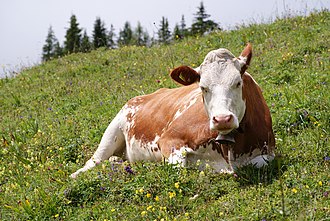
Technically only adult female cattle, but informally used for all bovines. "Holy cow!": mild exclamation. "Sacred cow": figurative for untouchable institution. "Cash cow": reliable profit source.
a large female farm animal kept for milk or meat
The cows grazed in the field.


"Scapegoat": person blamed for others' wrongs (biblical origin). Modern slang: "GOAT" = Greatest Of All Time. "Get your goat" = annoy you.
1a horned farm animal kept for milk or meat
The goats ate the weeds.
2a small pointed beard like that of a goat
He grew a goatee.