Vocabulary: Batch 30

#2901 to #3000 (100 entries)

#3000

snivel

snivel /ˈsnɪvəl/ intransitive verb
past: sniveled /ˈsnɪvəld/
pp: sniveled /ˈsnɪvəld/

Often pejorative: "snivelling brat", pathetic crying child. "Stop snivelling!": common command to stop the self-pity.

  • to cry or complain in a whining way

    He snivelled about his bad luck.

#2999

sniffle

sniffle /ˈsnɪfəl/ verb
past: sniffled /ˈsnɪfəld/
pp: sniffled /ˈsnɪfəld/

Common when crying quietly or with a cold. "The sniffles" = a mild cold (informal).

  • to sniff repeatedly, often from crying or cold

    She sniffled into her tissue.

sniffle /ˈsnɪfəl/ countable noun
  • an act or sound of sniffling

    She let out a small sniffle.

#2998

duck

duck
duck
duck /dʌk/ countable noun bird

"Lame duck" = ineffectual outgoing official. "Like water off a duck's back" = no effect. "Sitting duck" = easy target. "Ugly Duckling": fairy tale.

  • a water bird with webbed feet

    They fed the ducks at the pond.

duck /dʌk/ verb
past: ducked /dʌkt/
pp: ducked /dʌkt/
  • to lower the head quickly

    She ducked to avoid the branch.

#2997

whizz

whizz /wɪz/ verb
past: whizzed /wɪzd/
pp: whizzed /wɪzd/

Also spelled "whiz". Onomatopoeic. "Whizz kid": exceptionally talented young person. "Math whizz": gifted at math.

  • to move very fast

    Cars whizzed past on the highway.

#2996

milkman

milkman /ˈmɪlkmæn/ countable noun

Largely obsolete in US (supermarkets replaced home delivery). Returning slowly with sustainability movement. "Joke's on you, milkman!": cultural cliche about adultery.

  • a man who delivers milk to homes

    The milkman came every morning.

#2995

tulip

tulip /ˈtuːlɪp/ countable noun

Most associated with the Netherlands. "Tulip mania" (1630s Holland): first famous speculative bubble. Originated from Turkey/Central Asia.

  • a bulb plant with cup-shaped flowers

    The garden was full of tulips.

#2994

board [family]

board /bɔːrd/ countable noun

Many senses: plank, committee (board of directors), meals ("room and board"). "On board" = on a ship or in agreement. "Above board" = legitimate.

  • a flat piece of wood; a committee

    He served on the board for ten years.

board of directors /ˌbɔːrd əv dɪˈrektɚz/ noun
  • a group of individuals elected to represent shareholders and oversee a company or organization

    The board of directors approved the merger.

#2993

fruitcake

fruitcake /ˈfruːtkeɪk/ noun

Traditional Christmas cake (often given as gift, often criticized as inedible). Also slang: "fruitcake" = crazy person. "Nutty as a fruitcake": eccentric.

  • a cake with dried fruits and nuts

    Aunt Mary made fruitcake every Christmas.

#2992

steal

steal /stiːl/ verb
past: stole /stoʊl/
pp: stolen /ˈstoʊlən/

Past: stole. Past participle: stolen. "Steal the show" = outperform everyone. "Steal a glance" = look quickly without being noticed.

  • to take without permission

    Someone stole my bike.

#2991

round [family]

round /raʊnd/ adjective

Vast variety of uses. "Round the world": common adverb. "Round of applause". "Round of drinks": buying one for everyone in the group.

  • shaped like a circle or sphere

    The ball was perfectly round.

round /raʊnd/ countable noun
  • one stage in a competition

    She won the first round.

rounded /ˈraʊndəd/ adjective

"Well-rounded", about a person: skilled in many areas. "Rounded vowels", phonetics term: lips rounded.

  • having curved edges or surfaces

    She had rounded shoulders.

#2990

wheeze

wheeze /wiːz/ verb
past: wheezed /wiːzd/
pp: wheezed /wiːzd/

Asthma sufferers wheeze. Often described in detective fiction (the wheezing villain). The whistling caused by narrowed airways.

  • to breathe with difficulty making a whistling sound

    He wheezed after climbing the stairs.

#2989

baffle [family]

baffle /ˈbæfəl/ transitive verb
past: baffled /ˈbæfəld/
pp: baffled /ˈbæfəld/

Stronger than "confuse": implies complete inability to understand. Often passive: "I'm baffled by this problem."

  • to bewilder completely

    The puzzle baffled everyone.

bafflement /ˈbæfəlmənt/ uncountable noun

Noun form of "baffle". Stronger than "confusion": implies total inability to understand.

  • a state of being totally confused

    His questions were met with bafflement.

#2988

turtle

turtle
turtle
turtle /ˈtɝtəl/ countable noun animal

In US: "turtle" covers all (sea, land, fresh). In UK: "turtle" mostly = sea turtle; "tortoise" for land. "Turtleneck": high-collared sweater. "Turtle Beach": many famous beaches with this name.

  • a reptile with a hard shell

    The sea turtle laid eggs on the beach.

#2987

tortoiseshell

tortoiseshell /ˈtɔːrtəsʃel/ noun

"Tortoiseshell": also a cat coloring pattern. "Tortoiseshell glasses": classic eyewear style. Real tortoiseshell now mostly banned (CITES protections).

  • the patterned shell of a tortoise, or its imitation

    She wore tortoiseshell sunglasses.

#2986

bawl

bawl /bɔːl/ verb
past: bawled /bɔːld/
pp: bawled /bɔːld/

Homophone of "ball". "Bawl one's eyes out" = cry very hard. "Bawl someone out" = scold loudly.

  • to cry or shout loudly

    The baby bawled all night.

#2985

air rifle

air rifle /ˈer ˌraɪfəl/ countable noun

"A Christmas Story" film features a famous air rifle ("Red Ryder BB gun"). Lower power than firearms but can cause serious injury.

  • a gun that fires pellets using compressed air

    He shot tin cans with his air rifle.

#2984

dangle

dangle /ˈdæŋɡəl/ verb
past: dangled /ˈdæŋɡəld/
pp: dangled /ˈdæŋɡəld/

"Dangle a carrot": offer a tempting reward. "Dangling participle": grammar error where modifier isn't clearly connected.

  • to hang loosely

    His legs dangled over the edge.

#2983

keyhole [family]

keyhole /ˈkiːhoʊl/ countable noun

"Look through the keyhole": common scenario for spying or eavesdropping in old buildings.

  • the hole for a key in a lock

    She peered through the keyhole.

keyhole surgery /ˈkiːhoʊl ˌsɝdʒɚi/ uncountable noun

Also called laparoscopic surgery. Less invasive, faster recovery. Standard for many procedures (gallbladder removal, appendix).

  • surgery done through small holes using cameras

    He had keyhole surgery on his knee.

#2982

stuff

stuff /stʌf/ uncountable noun

Very informal. "Stuff and nonsense!": old expression of disbelief. "Strut your stuff" = show off your abilities.

  • unspecified material or things

    He has so much stuff in his garage.

stuff /stʌf/ verb
past: stuffed /stʌft/
pp: stuffed /stʌft/
  • to fill tightly

    She stuffed the suitcase with clothes.

#2981

whelk

whelk /welk/ countable noun

Traditional British seaside food, often eaten at the beach with vinegar. Found in cold waters worldwide.

  • an edible marine snail

    He ate a plate of whelks.

#2980

elastic band / rubber band [group]

elastic band /ɪˌlæstɪk ˈbænd/ countable noun

More common in British English. "Elastic": refers to the material's stretchiness.

  • (British) a rubber band

    She tied her hair with an elastic band.

rubber band /ˈrʌbɚ bænd/ countable noun

More common in American English. Distinct from "hair tie" / "hair band". "Rubber Band Man": song.

  • (American) a thin loop of rubber for holding things

    The papers were held together with a rubber band.

#2979

twang

twang /twæŋ/ noun

Two related senses: the sound (guitar string twang), or a regional accent ("Texan twang", nasal quality).

  • a sharp vibrating sound; a nasal accent

    He had a Southern twang.

#2978

doormat

doormat /ˈdɔːrmæt/ countable noun

Also figurative: "don't be a doormat" = don't let others walk all over you. Common item: "Welcome" doormat at the entrance.

  • a mat at a door for wiping shoes; a passive person

    Wipe your feet on the doormat.

#2977

bang

bang /bæŋ/ countable noun

"Big Bang": universe's origin. "Bang for the buck" = value for money. "With a bang" = dramatically. "Bangs" (US) = fringe (UK): hairstyle.

  • a sudden loud sharp noise

    There was a loud bang from the kitchen.

#2976

dishcloth

dishcloth /ˈdɪʃklɔːθ/ countable noun

"Dishrag": alternative term, more American. UK: "dishcloth" most common. "Tea towel": for drying dishes.

  • a cloth used to wash dishes

    She wiped the counter with a dishcloth.

#2975

tuba

tuba
tuba
tuba /ˈtuːbə/ countable noun musical instrument

Largest and lowest-pitched brass instrument. Distinctive deep "oompah" sound. Often the comic instrument in cartoons.

  • a large brass instrument with a deep tone

    He played the tuba in the band.

#2974

tub [family]

tub /tʌb/ countable noun

"Bathtub": full word. "Hot tub": heated leisure tub. "Tub of ice cream": small carton.

  • a large open container or bathtub

    She filled the tub with warm water.

bathtub /ˈbæθtʌb/ countable noun
  • a large container for water, used for immersing and washing the body

    She filled the bathtub.

#2973

grown-up

grown-up /ˈɡroʊnʌp/ countable noun

Childish term for adult. "When I grow up": common phrase. "Grown-up table": adults' table at family dinners.

  • an adult

    Ask a grown-up to help you.

#2972

boater

boater /ˈboʊtɚ/ countable noun

Hard straw hat with flat top. Associated with rowing, summer formal wear, and barbershop quartets. Now mostly costume/historical.

  • a flat-topped straw hat

    He wore a boater at the regatta.

#2971

tuxedo

tuxedo /tʌkˈsiːdoʊ/ countable noun

Named after Tuxedo Park, NY (1880s). Often shortened to "tux". UK: "dinner jacket" or "DJ". Worn for black-tie events.

  • a man's formal evening jacket

    He rented a tuxedo for the wedding.

#2970

tailcoat

tailcoat /ˈteɪlkoʊt/ countable noun

Worn at white-tie events (the most formal dress code). Conductor's traditional attire. Charlie Chaplin's tramp wore an ill-fitting tailcoat.

  • a formal jacket with long divided tails at the back

    He wore a tailcoat to the opera.

#2969

maroon

maroon
maroon
maroon /məˈruːn/ noun color

Two unrelated senses: dark red color (from French "marron" = chestnut), and verb "to maroon" = abandon on island. Maroon 5: pop band.

  • a dark brownish red color

    The team's uniform was maroon and gold.

maroon /məˈruːn/ transitive verb
past: marooned /məˈruːnd/
pp: marooned /məˈruːnd/
  • to abandon someone in a remote place

    The sailors were marooned on the island.

#2968

round trip

round trip /ˌraʊnd ˈtrɪp/ countable noun

Antonym: one-way. "Round-trip ticket": return ticket. Important when booking flights/trains.

  • a journey to a place and back

    The round trip takes two hours.

#2967

work out [family]

work out /wɝk aʊt/ phrasal verb
past: worked out /wɝkt aʊt/
pp: worked out /wɝkt aʊt/

Three main senses: exercise, solve, end up. As noun: "a workout" = exercise session.

  • to exercise; to solve or figure out

    He works out at the gym every day.

workout /ˈwɝkaʊt/ countable noun
  • a session of physical exercise

    She had a tough workout at the gym.

#2966

against

against /əˈɡenst/ preposition

"Against all odds": despite expectations. "Against the grain" = contrary to natural inclination. "Against the clock": racing time.

  • opposing; in contact with

    He leaned against the wall.

#2965

capture [family]

capture /ˈkæptʃɚ/ verb
past: captured /ˈkæptʃɚd/
pp: captured /ˈkæptʃɚd/

"Capture the imagination": figurative. "Capture the flag": game. "Motion capture": tech for animating CGI from real motion.

  • to take by force; to record

    They captured the fortress.

captor /ˈkæptɚ/ countable noun
  • a person who captures and holds someone prisoner

    The hostage escaped from his captors.

captive /ˈkæptɪv/ adjective

"Captive audience" = an audience that cannot leave easily.

  • imprisoned or confined

    The captive soldiers were held for months.

captive /ˈkæptɪv/ countable noun
  • a person who has been taken prisoner

    The captives were freed after the war.

captive breeding /ˈkæptɪv ˌbriːdɪŋ/ uncountable noun
  • the breeding of animals in confined conditions, often in conservation programs

    Captive breeding has saved several species from extinction.

captivity /kæpˈtɪvəti/ uncountable noun
  • the condition of being imprisoned or confined

    The hostages were released after months in captivity.

captivate /ˈkæptəveɪt/ transitive verb
past: captivated /ˈkæptəveɪtɪd/
pp: captivated /ˈkæptəveɪtɪd/
  • to attract and hold the interest and attention of; charm

    Her performance captivated the audience.

captivating /ˈkæptəveɪtɪŋ/ adjective
  • capable of attracting and holding interest; charming

    She gave a captivating performance.

#2964

captain

captain /ˈkæptən/ countable noun

Multiple senses: ship/plane officer, sports team leader, military rank. "Captain Obvious": meme for stating the obvious. "Captain America".

  • the leader of a ship, team, or military unit

    The captain steered the ship.

#2963

cafeteria

cafeteria /ˌkæfəˈtɪriə/ countable noun

Self-service restaurant. From Mexican Spanish "cafetería" (coffee shop). Common in schools, hospitals, large workplaces.

  • a self-service restaurant

    The school cafeteria served pizza on Fridays.

#2962

buzz [family]

buzz /bʌz/ verb
past: buzzed /bʌzd/
pp: buzzed /bʌzd/

Bees buzz. Alarm clocks buzz. "Buzz": also figurative for excitement ("there was a real buzz about the new product"). "BuzzFeed": viral news site.

  • to make a continuous low humming sound

    Bees buzzed in the garden.

buzzword /ˈbʌzwɝd/ noun
  • a word or phrase, often an item of jargon, that is fashionable at a particular time or in a particular context

    'Diversity' is the new buzzword.

#2961

bunch

bunch /bʌntʃ/ countable noun

"A bunch of" (informal) = a lot of. "Bunch of grapes", "bunch of flowers". "The whole bunch": entire group of people.

  • a group of things gathered together

    She bought a bunch of bananas.

#2960

casket

casket /ˈkæskət/ countable noun

American term mostly replaced "coffin" by the 19th-century funeral industry (more polite). Originally meant a small box for jewels.

  • a coffin

    The casket was carried into the church.

#2959

husk

husk /hʌsk/ countable noun

"Husking": removing outer covering. "Husk", also figurative for empty shell: "a husk of his former self".

  • the dry outer covering of seeds

    They removed the husks from the corn.

#2958

buffalo

buffalo /ˈbʌfəloʊ/ countable noun animal

Plural: buffalo or buffaloes. American "buffalo" usually = bison (technically a different animal). True buffalo are in Africa and Asia. "Buffalo wings": spicy chicken from Buffalo, NY.

  • a large wild ox-like animal

    A herd of buffalo crossed the plain.

#2957

merry

merry /ˈmeri/ adjective

"Merry Christmas": standard holiday greeting. "Merry Old England": nostalgic phrase. "Merry-making": festive celebration. "Eat, drink, and be merry."

  • cheerful and lively

    They had a merry Christmas.

#2956

brandy

brandy
brandy
brandy /ˈbrændi/ uncountable noun beverage

Cognac and Armagnac are famous French brandies. "Brandy snifter": specific tulip-shaped glass. Often served as digestif after meals.

  • a strong alcoholic drink made from wine

    He sipped his brandy slowly.

#2955

gibber [family]

gibber /ˈdʒɪbɚ/ intransitive verb
past: gibbered /ˈdʒɪbɚd/
pp: gibbered /ˈdʒɪbɚd/

Often: "gibbering wreck", someone reduced to nonsensical speech by stress.

  • to speak rapidly and unintelligibly

    He gibbered with fear.

gibberish /ˈdʒɪbɚɪʃ/ uncountable noun

Often used to dismiss arguments or specialized jargon: "This contract is gibberish." Also = nonsense made-up speech.

  • unintelligible or meaningless speech

    He was talking gibberish in his sleep.

#2954

uncoil

uncoil /ʌnˈkɔɪl/ verb
past: uncoiled /ʌnˈkɔɪld/
pp: uncoiled /ʌnˈkɔɪld/

Snakes uncoil to strike. Garden hoses uncoil. Also figurative: "tension uncoiled in his shoulders".

  • to undo a coil

    The snake uncoiled itself.

#2953

waddle

waddle /ˈwɑːdəl/ intransitive verb
past: waddled /ˈwɑːdəld/
pp: waddled /ˈwɑːdəld/

Penguins waddle. Pregnant women may waddle in late stages. Implies slow side-to-side motion.

  • to walk with short steps swaying from side to side

    The duck waddled to the water.

#2952

jab

jab /dʒæb/ verb
past: jabbed /dʒæbd/
pp: jabbed /dʒæbd/

Boxing: "jab", straight punch. UK informal: "jab" = injection/vaccination ("flu jab", "booster jab").

  • to poke quickly with a pointed object

    She jabbed him with her finger.

#2951

moan

moan /moʊn/ verb
past: moaned /moʊnd/
pp: moaned /moʊnd/

Two senses: low cry of pain/pleasure, or complaining. "Have a moan" (UK) = complain. "Moan and groan" = complain repeatedly.

  1. to make a long low sound of suffering

    He moaned in pain.

  2. to complain

    Stop moaning about the weather.

#2950

glisten

glisten /ˈɡlɪsən/ intransitive verb
past: glistened /ˈɡlɪsənd/
pp: glistened /ˈɡlɪsənd/

"T" silent. Often used for wet surfaces, eyes (with tears), or sweat. More poetic than "shine".

  • to shine with a soft sparkling light

    The dew glistened on the grass.

#2949

fast

fast /fæst/ adjective

Multiple senses unified by "firm" origin: quick, secure ("hold fast"), not eating ("break one's fast" = breakfast). "Fast food", "fast lane", "fast asleep".

  • moving or able to move quickly

    He drove a fast car.

fast /fæst/ intransitive verb
past: fasted /ˈfæstɪd/
pp: fasted /ˈfæstɪd/
  • to go without food

    Muslims fast during Ramadan.

#2948

slither [family]

slither /ˈslɪðɚ/ intransitive verb
past: slithered /ˈslɪðɚd/
pp: slithered /ˈslɪðɚd/

Associated with snakes. Harry Potter's Slytherin house: named after Salazar Slytherin, snake symbol.

  • to slide smoothly along, like a snake

    The snake slithered through the grass.

slithery /ˈslɪðɚi/ adjective
  • slippery and squirming

    He held the slithery fish.

#2947

hoodlum

hoodlum /ˈhuːdləm/ countable noun

American slang from late 19th century. Origin uncertain. Somewhat dated: "thug" or "hood" more common today.

  • a violent young criminal

    The neighborhood was plagued by hoodlums.

#2946

maniac [family]

maniac /ˈmeɪniæk/ countable noun

From Greek "mania". Often hyperbolic: "driving like a maniac", not literally insane. Original psychiatric meaning largely outdated.

  • a person who behaves wildly

    He drives like a maniac.

mania /ˈmeɪniə/ noun
  • extreme enthusiasm or desire; (psychiatry) a period of abnormally elevated mood and energy

    the mania for tulips in 17th-century Holland

maniacal /məˈnaɪəkəl/ adjective
  • behaving wildly or as if insane

    maniacal laughter

#2945

puppet [family]

puppet
puppet
puppet /ˈpʌpət/ countable noun

"Puppet government": figurative for regime controlled by another power. Famous: Punch and Judy (UK), Sesame Street puppets, Bunraku (Japanese).

  • a doll moved by strings or hand

    The children watched the puppet show.

puppeteer /ˌpʌpəˈtɪr/ countable noun
  • a person who operates puppets

    The puppeteer brought the characters to life.

#2944

tape

tape /teɪp/ noun

Many senses: adhesive tape, cassette tape, video tape. "Red tape" = bureaucratic obstacles. "Tape recorder": now mostly obsolete tech.

  • a long narrow strip of material

    She wrapped the package with tape.

#2943

scrawl

scrawl /skrɔːl/ verb
past: scrawled /skrɔːld/
pp: scrawled /skrɔːld/

Suggests hasty, careless writing. Different from "scribble" (which can also mean meaningless marks).

  • to write quickly in a messy way

    He scrawled a note on the napkin.

#2942

frantic

frantic /ˈfræntɪk/ adjective

From Greek "phrenitis" (brain inflammation). Same root as "frenzy" and "frenetic". Implies wild distress or hurry.

  • wildly anxious or hurried

    She was frantic with worry.

#2941

snail [family]

snail
snail
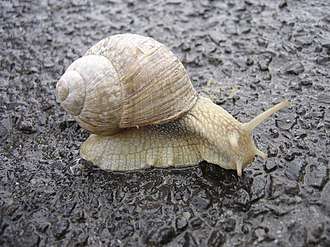
snail /sneɪl/ countable noun

"At a snail's pace" = very slowly. Edible variety: escargot (French cuisine). Garden pests in many regions.

  • a small slow-moving creature with a spiral shell

    A snail crawled across the path.

snail mail /ˈsneɪl meɪl/ uncountable noun

Coined in the 1980s to contrast with email. Slightly humorous, sometimes pejorative. Implies postal service is comically slow.

  • physical postal mail (as opposed to email)

    I prefer snail mail for birthday cards.

#2940

wolf

wolf
wolf
wolf /wʊlf/ countable noun animal

Plural: wolves. "Wolf in sheep's clothing" = deceitful person. "Cry wolf" = give a false alarm. "Lone wolf" = independent person.

  • a wild carnivorous mammal of the dog family

    A wolf howled in the distance.

wolf /wʊlf/ verb
past: wolfed /wʊlft/
pp: wolfed /wʊlft/
  • to eat greedily

    He wolfed down his sandwich.

#2939

screech

screech /skriːtʃ/ verb
past: screeched /skriːtʃt/
pp: screeched /skriːtʃt/

"Screech to a halt": common phrase for sudden stop. "Screech owl": small owl with shrill call.

  • to make a long high harsh sound

    The car screeched around the corner.

#2938

shrill

shrill /ʃrɪl/ adjective

Often gendered/pejorative when applied to women's voices. "Shrill criticism": figurative for harsh complaint.

  • high-pitched and piercing

    She let out a shrill scream.

#2937

blonde [family]

blonde /blɑːnd/ adjective

"Blonde" (with -e): French feminine form, often used for women; "blond" (no -e): masculine or general. Distinction softening in modern English. "Blonde Bombshell": sexy blonde stereotype.

  • having yellow or pale-brown hair

    She has long blonde hair.

blond /blɑːnd/ adjective

Masculine or general form (no "-e"); "blonde" is often reserved for women.

  • having yellow or pale-brown hair

    Her brother has short blond hair.

#2936

bonnet

bonnet /ˈbɑːnət/ countable noun

Two unrelated senses: old-fashioned head covering (esp. in period dramas), and UK term for car hood. "A bee in one's bonnet" = obsession.

  • a hat tied under the chin; (UK) the hood of a car

    She wore a straw bonnet.

#2935

mantelpiece

mantelpiece
mantelpiece
mantelpiece /ˈmæntəlpiːs/ countable noun

Also spelled "mantlepiece". Traditional display spot for clocks, photos, ornaments. "On the mantelpiece": common location in domestic stories.

  • a shelf above a fireplace

    Her photo sat on the mantelpiece.

#2934

fate [family]

fate /feɪt/ uncountable noun
  • the events that will necessarily happen to someone, seen as outside their control

    It was her fate to become a great leader.

fateful /ˈfeɪtfəl/ adjective

Distinct from "fatal" (causing death). "Fateful" implies historically significant. "That fateful day": common dramatic phrase.

  • having major consequences for the future

    It was a fateful decision.

#2933

privet

privet /ˈprɪvət/ countable noun

Common British garden hedge. "Privet Drive": fictional street where Harry Potter grew up with the Dursleys.

  • a shrub used for hedges

    The garden was bordered by privet.

#2932

prod

prod /prɑːd/ verb
past: prodded /ˈprɑːdɪd/
pp: prodded /ˈprɑːdɪd/

Tech: "prod", short for "production" environment. Also figurative: "prod someone into action" = push someone to act.

  • to poke with a finger or pointed object

    He prodded the campfire with a stick.

#2931

breeze

breeze
breeze
breeze /briːz/ countable noun weather

"Shoot the breeze" = chat casually. "Breeze through" = do easily. "A breeze" (informal) = something easy.

  • a light gentle wind

    A cool breeze blew off the sea.

#2930

hedge

hedge
hedge
hedge /hedʒ/ countable noun

"Hedge maze": a labyrinth made of hedges. "Hedge fund": investment vehicle that uses risk-management strategies ("hedging").

  • a row of bushes forming a boundary

    He trimmed the hedge.

hedge /hedʒ/ verb
past: hedged /hedʒd/
pp: hedged /hedʒd/
  • to avoid giving a direct answer

    She hedged when asked about her plans.

#2929

slink

slink /slɪŋk/ intransitive verb
past: slunk /slʌŋk/
pp: slunk /slʌŋk/

Past: slunk. Implies stealthy, often guilty movement. "Slinky": both an adjective (sinuous) and a famous toy (spring that walks downstairs).

  • to move in a stealthy way

    The cat slunk away.

#2928

reply

reply /rɪˈplaɪ/ verb
past: replied /rɪˈplaɪd/
pp: replied /rɪˈplaɪd/

"Reply all": common email function (often regrettable). "In reply to": formal phrase. "Reply guy": internet slang for habitual male commenter.

  • to answer someone

    She replied to his email.

#2927

mucus [family]

mucus /ˈmjuːkəs/ uncountable noun

Different from "mucous" (the adjective: mucous membrane). "Mucus": the noun, the substance itself. Common confusion.

  • slimy fluid produced by the body

    His nose was full of mucus.

mucous /ˈmjuːkəs/ adjective

The adjective form; distinct from the noun "mucus".

  • relating to or covered with mucus

    The mucous membrane lines the nose and mouth.

#2926

muffle [family]

muffler
muffler
muffle /ˈmʌfəl/ transitive verb
past: muffled /ˈmʌfəld/
pp: muffled /ˈmʌfəld/

"Muffle one's voice" = speak quietly with hand over mouth. "Muffled sound": common collocation.

  • to wrap up to deaden sound

    He muffled the sound with a pillow.

muffled /ˈmʌfəld/ adjective
  • deadened or made quieter

    There were muffled voices from next door.

muffler /ˈmʌflɚ/ countable noun car part

US: car part that reduces engine noise (UK: silencer). Also: a scarf (dated). "Midas": famous US muffler shop chain.

  • a device to reduce engine noise; a scarf

    The car needed a new muffler.

#2925

shine

shine /ʃaɪn/ verb
past: shone /ʃoʊn/ (chiefly British, and figurative senses) or shined /ʃaɪnd/ (American English, especially for polishing)
pp: shone /ʃoʊn/ (chiefly British, and figurative senses) or shined /ʃaɪnd/ (American English, especially for polishing)

Past: shone (UK) or shined (US, for polishing). "Make hay while the sun shines": proverb. "Take a shine to someone" = like them.

  • to give out bright light

    The sun shines brightly today.

#2924

bundle

bundle /ˈbʌndəl/ countable noun

"Bundle of joy": baby. "Bundle": software packaging concept. "Cost a bundle" = expensive.

  • a group of things tied together

    He carried a bundle of firewood.

#2923

gingerly

gingerly /ˈdʒɪndʒɚli/ adverb

Etymology unrelated to "ginger" (the spice). From Old French "gensor" (delicate). Both adverb and adjective.

  • in a careful or cautious way

    He stepped gingerly over the broken glass.

#2922

grip

grip /ɡrɪp/ verb
past: gripped /ɡrɪpt/
pp: gripped /ɡrɪpt/

"Get a grip" = control yourself. "In the grip of" = controlled by. Film industry: "grip" = crew member who handles rigging.

  • to hold tightly

    He gripped the railing.

grip /ɡrɪp/ countable noun
  • a firm hold

    She lost her grip on the rope.

#2921

spot [family]

spot /spɑːt/ countable noun

"On the spot" = immediately, or in a difficult situation. "Hit the spot" = exactly satisfy. "Spot on" (UK) = exactly right.

  • a small round mark; a particular place

    There was a spot on his shirt.

spot /spɑːt/ verb
past: spotted /ˈspɑːtɪd/
pp: spotted /ˈspɑːtɪd/
  • to notice or see

    She spotted him in the crowd.

spotted /ˈspɑːtəd/ adjective

"Spotted dick" : British steamed pudding with raisins (the dotted appearance). "Spotted owl" : endangered species.

  • having spots

    The leopard's spotted coat camouflaged it.

spotter /ˈspɑːtɚ/ countable noun

Often used in weightlifting or aviation.

  • a person who looks for or observes something

    The sniper worked with a spotter.

spotless /ˈspɑːtləs/ adjective
  • absolutely clean or pure; immaculate

    A spotless white shirt.

spotty /ˈspɑːti/ adjective
  1. irregular, inconsistent, or patchy; not uniformly good

    His attendance at school has been spotty this year.

  2. covered with spots, marks, or pimples

    He had a spotty complexion as a teenager.

#2920

sob

sob /sɑːb/ verb
past: sobbed /sɑːbd/
pp: sobbed /sɑːbd/

Stronger than "cry": implies convulsive breathing. "Sob story" = emotional tale meant to elicit sympathy.

  • to cry with loud catching breaths

    She sobbed into her pillow.

#2919

hiss

hiss /hɪs/ verb
past: hissed /hɪst/
pp: hissed /hɪst/

Snakes hiss. Cats hiss when threatened. Audiences hiss at villains (booing). Onomatopoeic.

  • to make a sound like a long "s"

    The snake hissed at him.

#2918

whisker [family]

whisker
whisker
whisker /ˈwɪskɚ/ countable noun animal

"By a whisker" = by a very small margin. Cats' whiskers are sensitive sensors. Also: facial hair (often plural "whiskers").

  • a long stiff hair near the mouth of some animals

    The cat's whiskers twitched.

whiskery /ˈwɪskɚi/ adjective
  • having whiskers

    The whiskery old man chuckled.

#2917

jet black

jet black /ˌdʒet ˈblæk/ adjective

"Jet" here refers to the gemstone (a deep black variety of lignite), not the aircraft. Often hyphenated when used attributively.

  • a deep glossy black

    She had jet black hair.

#2916

tuft

tuft /tʌft/ countable noun

"Tuft of hair", "tuft of grass". Lyrebirds and lynxes have distinctive ear tufts.

  • a small bunch of hair, grass, or fibers

    A tuft of hair stuck up at the back.

#2915

bush [family]

bush /bʊʃ/ countable noun
  • a shrub or clump of shrubs

    They trimmed the rose bush.

bushy /ˈbʊʃi/ adjective

"Bushy eyebrows": common collocation (often male feature). "Bushy tail": squirrels.

  • thick and shaggy

    He had a bushy beard.

#2914

roar [family]

roar /rɔːr/ verb
past: roared /rɔːrd/
pp: roared /rɔːrd/

Lions roar. "The Roaring Twenties": 1920s in US. "Roar": Katy Perry hit song. Crowds roar with approval.

  • to make a loud deep sound

    The lion roared.

roaring /ˈrɔːrɪŋ/ adjective

"Roaring success": very successful. "Roaring fire": large fire making crackling/roaring sound.

  • loud and continuous

    They sat by the roaring fire.

#2913

hour hand / minute hand / second hand [group]

hour hand /ˈaʊɚ hænd/ countable noun

"H" silent in "hour". Shortest and slowest hand on an analog clock.

  • the shorter hand on a clock that shows the hour

    The hour hand pointed to three.

minute hand /ˈmɪnət hænd/ countable noun

Stress: /MIN-ət/ (the time unit), not /maɪˈnjuːt/ (small). Same spelling, different pronunciation.

  • the longer hand on a clock that shows the minutes

    The minute hand was on the six.

second hand /ˈsekənd hænd/ countable noun

Compare with "second-hand" (with hyphen) = used, previously owned: different word. Thinnest hand on a clock.

  • the thin hand on a clock that shows seconds

    The second hand swept silently around.

#2912

dab

dab /dæb/ verb
past: dabbed /dæbd/
pp: dabbed /dæbd/

"Dab on cologne": apply lightly. "The dab": viral 2015 dance move. "A dab of": small amount.

  • to press lightly with quick movements

    She dabbed at her eyes with a tissue.

#2911

glum

glum /ɡlʌm/ adjective

Synonyms: gloomy, morose, downcast. "Look glum" = appear sad. Less severe than "depressed".

  • looking or feeling dejected

    He looked glum after the loss.

#2910

press [family]

press /pres/ verb
past: pressed /prest/
pp: pressed /prest/

"Press on" = continue. "Press release": news announcement. "Press conference": formal media event.

  • to apply steady force

    He pressed the button.

press /pres/ noun
  • the news media

    The press covered the event.

pressing /ˈpresɪŋ/ adjective
  • requiring quick or immediate action or attention

    Pressing problems.

pressure /ˈpreʃɚ/ noun
  • continuous physical force exerted on or against an object

    The slight pressure of his hand.

pressure /ˈpreʃɚ/ transitive verb
past: pressured /ˈpreʃɚd/
pp: pressured /ˈpreʃɚd/
  • to persuade or intimidate someone into doing something

    They pressured him into signing the contract.

#2909

ruffle [family]

ruffle /ˈrʌfəl/ verb
past: ruffled /ˈrʌfəld/
pp: ruffled /ˈrʌfəld/

"Ruffle feathers" = annoy or upset someone. "Ruffle hair": affectionate gesture, often parent to child.

  • to disturb the smooth surface of

    The wind ruffled his hair.

ruffled /ˈrʌfəld/ adjective
  • disturbed; gathered into decorative folds

    She wore a ruffled blouse.

#2908

convulse [family]

convulse /kənˈvʌls/ verb
past: convulsed /kənˈvʌlst/
pp: convulsed /kənˈvʌlst/

Can be physical (seizures) or figurative ("convulsed with laughter"). Implies uncontrollable shaking.

  • to shake uncontrollably

    He convulsed with laughter.

convulsion /kənˈvʌlʃən/ countable noun

Medical: usually associated with seizures (epilepsy, fever convulsions in children).

  • an uncontrolled violent shaking

    The child had a convulsion from the fever.

convulsive /kənˈvʌlsɪv/ adjective
  • involving sudden uncontrolled movements

    He gave a convulsive sob.

#2907

shower [family]

shower /ˈʃaʊɚ/ countable noun

"Baby shower" / "bridal shower": pre-baby/wedding party with gifts. "April showers bring May flowers": proverb. Meteor shower.

  • a quick wash under spraying water; a brief rainfall

    He took a hot shower.

shower gel /ˈʃaʊɚ dʒel/ uncountable noun
  • liquid soap used for washing the body in a shower

    I packed shampoo and shower gel for the trip.

showery /ˈʃaʊɚi/ adjective

Weather word: showery means with short periods of rain.

  • having frequent short rain showers

    The forecast says it will be showery in the afternoon.

#2906

sight [family]

sight /saɪt/ uncountable noun
  • the ability to see; the action of seeing something

    Her sight has gotten worse with age.

sighting /ˈsaɪtɪŋ/ countable noun

"UFO sighting", "celebrity sighting". Often used for rare or unexpected observations.

  • an instance of seeing something unusual

    There was a UFO sighting last week.

#2905

mottled

mottled /ˈmɑːtəld/ adjective

Often describes skin, animal coats, leaves, or paper. Suggests irregular spotting.

  • marked with spots or patches of color

    Her hands were mottled with age spots.

#2904

unstick [family]

unstick /ʌnˈstɪk/ verb
past: unstuck /ʌnˈstʌk/
pp: unstuck /ʌnˈstʌk/

"Come unstuck": common idiom for plans/situations going wrong. Past: unstuck.

  • to separate stuck things

    He tried to unstick the pages.

unstuck /ʌnˈstʌk/ adjective

"Come unstuck" (UK) = fail or go wrong (figurative).

  • no longer stuck

    The label came unstuck.

#2903

flinch [family]

flinch /flɪntʃ/ verb
past: flinched /flɪntʃt/
pp: flinched /flɪntʃt/

"Don't flinch": common in suspense scenes. "Without flinching": bravely. Often involuntary, suggests nervous reaction.

  • to make a sudden small movement from fear or pain

    She didn't flinch when the needle went in.

unflinching /ʌnˈflɪntʃɪŋ/ adjective
  • not showing fear or hesitation in the face of danger or difficulty

    She gave an unflinching account of her experiences.

#2902

breast

breast /brest/ countable noun body

"Breast cancer": second-most-common cancer in women. "Chicken breast": popular cut. "Make a clean breast of it" = confess fully.

  • either of two soft fleshy organs on a woman's chest

    Many women get yearly breast exams.

#2901

brave

brave /breɪv/ adjective

"Brave face": pretend everything's fine. "Brave New World": Huxley's dystopian novel. "Home of the brave": US national anthem.

  • showing courage

    It was a brave thing to do.